Dwi Wanna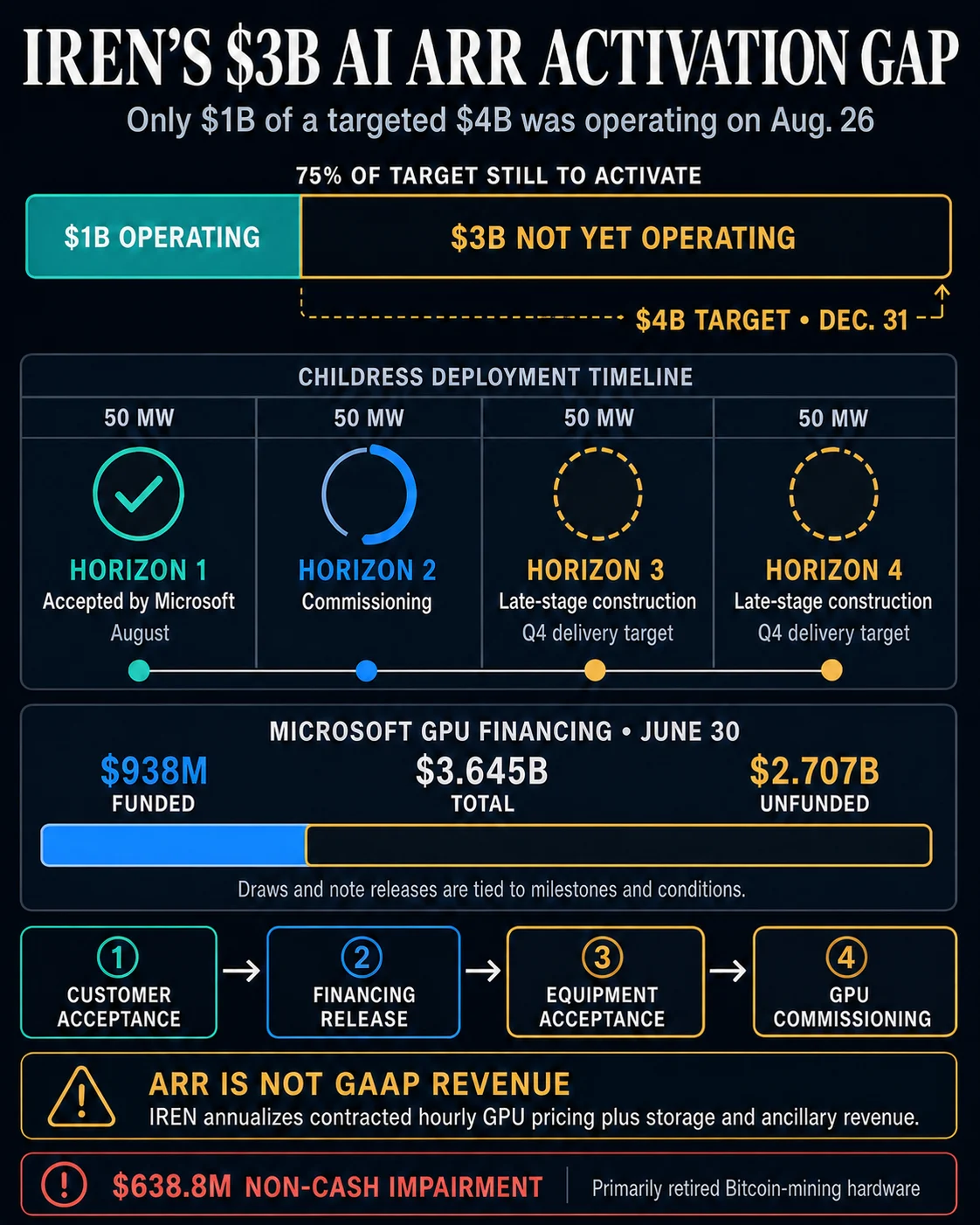
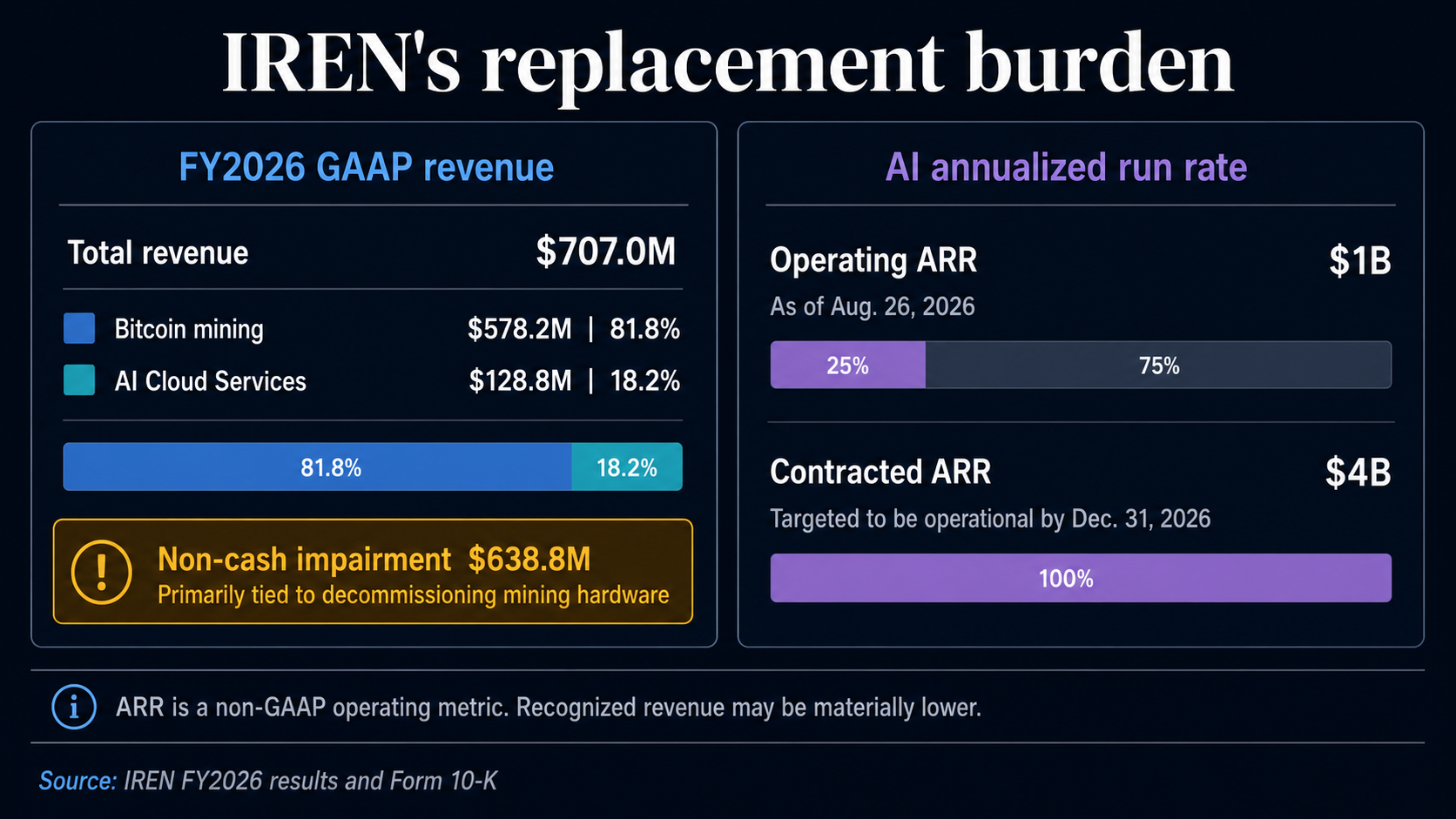
The fiscal 2026 financial results released by IREN, formerly known as Iris Energy, reveal a company in the midst of a profound structural metamorphosis. While the firm has aggressively marketed its transition into a high-performance computing (HPC) and artificial intelligence (AI) infrastructure provider, the underlying revenue data underscores a persistent reliance on its legacy Bitcoin mining operations. According to the company’s regulatory filings for the fiscal year ending June 30, 2026, Bitcoin mining accounted for $578.2 million of the $707 million in total annual revenue, representing roughly 81.8% of the company’s top-line performance. In contrast, the nascent AI Cloud Services division contributed $128.8 million, highlighting the significant distance the company must still travel to realize its vision of becoming a dominant player in the AI infrastructure sector.
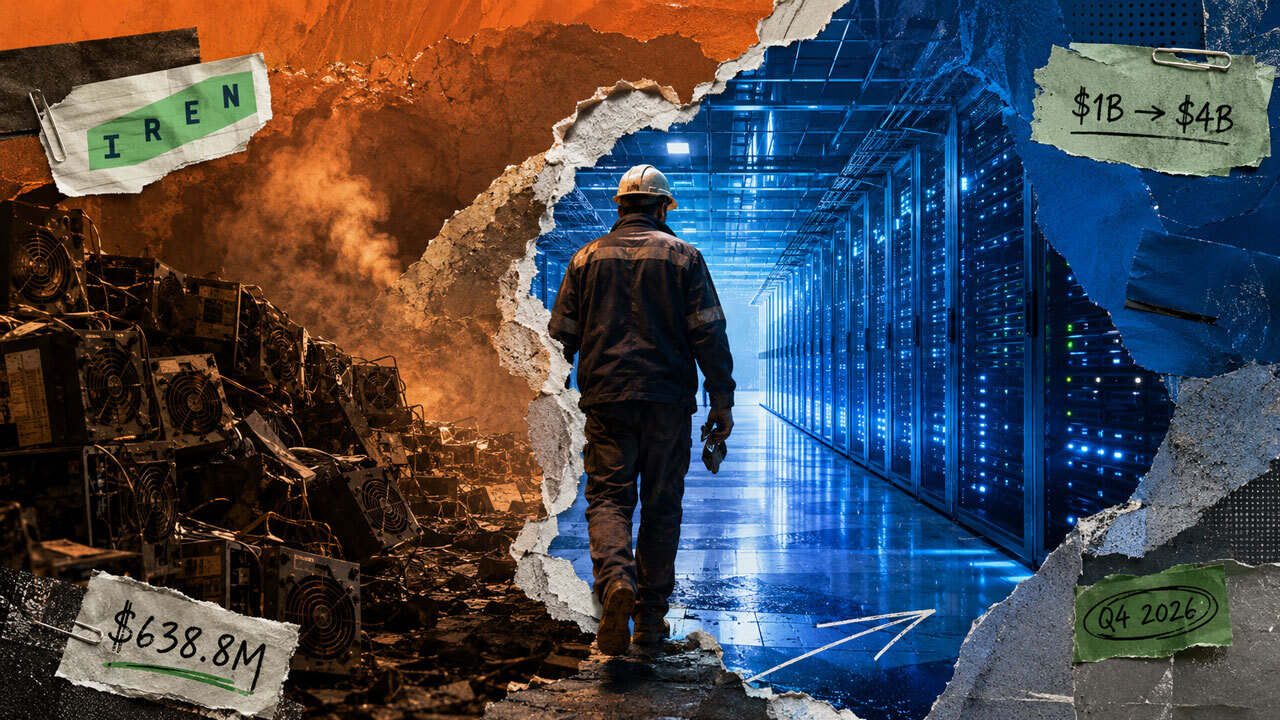
The financial weight of this transition is further evidenced by a staggering $702.6 million net loss for the fiscal year. This loss was heavily influenced by a $638.8 million non-cash impairment charge. This impairment primarily stems from the decommissioning of older Bitcoin mining hardware and the repurposing of data center sites to accommodate the specialized power and cooling requirements of AI workloads. While the charge does not represent an immediate cash outflow, it serves as a stark accounting acknowledgment of the lost value of assets retired before the replacement AI business reached full operational maturity.
The Revenue Gap and the Path to $4 Billion ARR
Central to IREN’s growth narrative is its projected Annualized Run-Rate (ARR), a metric that the company uses to signal future earning potential to investors. As of late August 2026, IREN reported an operating ARR of $1 billion. However, the company has set an ambitious target of $4 billion in contracted ARR for its 2026 capacity, aiming to have this fully operational by the end of the calendar year.
This $3 billion gap between current operating levels and contracted targets represents a significant execution risk. IREN calculates its ARR based on contracted GPU pricing multiplied by a full year of operation, including ancillary services such as data storage. However, the company’s Form 10-K filing explicitly warns that these figures are operating measures rather than Generally Accepted Accounting Principles (GAAP) revenue. Actual recognized revenue could be materially lower if the company fails to meet rigorous delivery and customer acceptance milestones.
The transition from a Bitcoin mining facility to an AI-ready data center is not merely a matter of swapping hardware. AI workloads, particularly those involving large language models (LLMs), require significantly higher power density, advanced liquid cooling systems, and ultra-low-latency networking infrastructure. Closing the $3 billion revenue gap depends entirely on the physical infrastructure being delivered, energized, and accepted by high-profile clients like Microsoft.
Chronology of the Strategic Pivot
IREN’s evolution from a pure-play Bitcoin miner to a diversified infrastructure provider has followed a multi-year trajectory, accelerated by the shifting economics of the cryptocurrency sector and the explosive demand for AI compute.
- Initial Expansion (2021–2023): IREN established its footprint as a "green" Bitcoin miner, focusing on renewable energy-rich regions in Canada and the United States. During this period, the company built a massive fleet of Application-Specific Integrated Circuits (ASICs).
- The AI Pivot (Late 2024–2025): Following the 2024 Bitcoin halving, which reduced mining rewards by 50%, IREN began exploring the repurposing of its "Tier 1" data centers for HPC applications. The company secured initial partnerships with NVIDIA to procure H100 and B200 Blackwell GPUs.
- The Microsoft Milestone (August 2026): Microsoft officially accepted the first phase of the "Horizon 1" project. This marked IREN’s formal entry into the elite tier of cloud service providers, moving beyond the pilot phase into large-scale commercial deployment.
- Future Phases (Q4 2026–Q2 2027): The company is currently working toward the phased delivery of Horizons 2 through 4. While the target for completion is the end of 2026, contractual grace periods allow for potential delays extending into the second quarter of 2027.
Operational Hurdles and Infrastructure Conversion
As of June 30, 2026, IREN still maintained a substantial Bitcoin mining capacity of 23.2 exahashes per second (EH/s) distributed across approximately 380 megawatts (MW) of power capacity. The logistical challenge facing the firm is the "hot swap" of this capacity. To make room for AI racks, mining hardware must be removed, and the electrical distribution systems must be upgraded to support the high-density requirements of NVIDIA’s latest chips.
In a standard Bitcoin mining setup, power density may hover around 5 to 10 kilowatts (kW) per rack. In contrast, modern AI deployments can require 40 kW to 100 kW per rack. This requires a total overhaul of the data center’s cooling architecture, moving from simple forced-air cooling to more complex rear-door heat exchangers or direct-to-chip liquid cooling.
The company’s ability to recognize revenue is gated by several factors:
- Construction and Energization: Facilities must be fully built and connected to the grid with sufficient redundancy.
- Equipment Commissioning: Thousands of GPUs must be installed and integrated into a cohesive cluster.
- Performance Testing: Customers like Microsoft conduct rigorous stress tests to ensure the infrastructure can handle sustained AI training and inference loads.
- Acceptance: Only after the customer signs off on the performance does the revenue recognition clock begin.
Any delay in these stages not only postpones revenue but can also trigger service credits or penalties, further impacting the bottom line.
Financing and the Cost of Transformation
The capital expenditure (CapEx) required for this transition is immense. IREN has utilized a variety of financing mechanisms to fund its GPU acquisitions and data center retrofits. The company secured GPU-specific financing through a delayed-draw loan priced at the one-month Secured Overnight Financing Rate (SOFR) plus 2.25%. Additionally, it issued senior notes at a fixed rate of 5.96%.

More notably, IREN entered into a financing agreement with Mackenzie for up to $2.4 billion. This facility carries a 9% fixed interest rate and matures 30 months after each funding tranche. While this provides the necessary liquidity to compete in the AI arms race, it also places a heavy debt-servicing burden on the company. The high interest rate reflects the perceived risk of the transition and the volatile nature of the collateral (GPUs and mining hardware).
Financial analysts note that the cost of capital is a critical variable. If the transition to AI cloud revenue happens slower than anticipated, the interest payments on the Mackenzie facility could begin to erode the company’s cash reserves, potentially forcing further equity dilution or asset sales.
Broader Impact and Industry Implications
IREN is not alone in its pursuit of the AI "holy grail." The entire Bitcoin mining industry is currently bifurcating into two groups: those who remain focused on pure-play mining and those who are pivoting to HPC. Competitors such as Core Scientific, which recently signed a multi-billion dollar deal with CoreWeave, and TeraWulf have set a precedent for this shift.
The implications of this trend are twofold. First, it suggests that the "stranded energy" model—where miners set up in remote areas with excess renewable power—is evolving. AI data centers require not just cheap power, but also proximity to fiber-optic backbones and a skilled technical workforce, which may limit the number of mining sites that can successfully transition.
Second, the pivot reflects a strategic hedge against Bitcoin’s volatility. By securing long-term contracts with enterprise-grade clients like Microsoft, IREN is attempting to replace the unpredictable "spot" revenue of Bitcoin mining with the stable, recurring revenue of a traditional SaaS or infrastructure business. However, as the fiscal 2026 results show, this stability remains a goal rather than a current reality.
Analysis of Counterparty and Market Risks
While the involvement of Microsoft and NVIDIA provides IREN with significant credibility, it also introduces substantial counterparty concentration risk. According to the company’s filings, these two entities represent the vast majority of contracted revenue. Should Microsoft adjust its capital expenditure strategy or should there be a shift in the demand for NVIDIA-based cloud compute, IREN would be disproportionately affected.
Furthermore, the AI hardware market is moving at a breakneck pace. The $638.8 million impairment on mining hardware serves as a cautionary tale; the GPUs IREN is currently installing could face similar obsolescence in a matter of years as more efficient AI-specific silicon enters the market.
Conclusion
IREN’s fiscal 2026 performance is a study in industrial transition. The company has successfully secured the contracts and the hardware necessary to compete in the global AI infrastructure market, yet its financial foundation remains firmly rooted in the world of Bitcoin. The $4 billion ARR target is a bold vision of the future, but the $3 billion gap between that target and current operations represents the "valley of death" that the company must cross.
The next twelve months will be the true test for IREN. Investors and industry observers will be looking for GAAP revenue growth in the AI sector that matches the company’s ambitious run-rate projections. Until then, IREN remains a Bitcoin miner in an AI wrapper, working feverishly to turn its contracted promises into tangible financial results. The successful delivery of the remaining "Horizon" phases will determine whether the company becomes a pioneer of the AI-crypto crossover or a casualty of an expensive and complex technological pivot.