admin
admin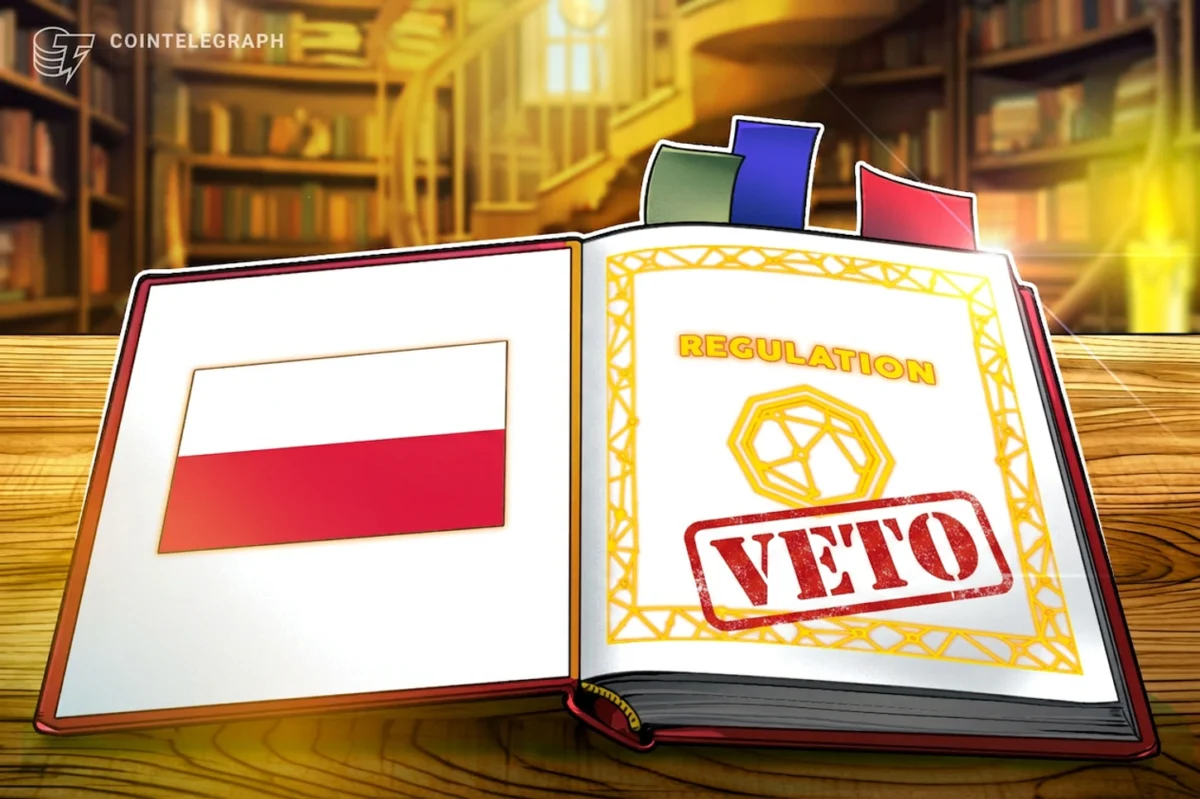
Polish lawmakers have once again failed to secure the necessary three-fifths majority to overturn President Karol Nawrocki’s persistent veto of legislation designed to bolster oversight of the nation’s burgeoning crypto market. This latest parliamentary setback, occurring on Friday, marks a significant moment in an ongoing political and regulatory struggle, leaving Poland without a designated national authority to implement the European Union’s landmark Markets in Crypto-Assets Regulation (MiCA), despite the framework already applying across the bloc. The legislative gridlock is further complicated by a deepening scandal involving the defunct crypto exchange Zondacrypto, which Prime Minister Donald Tusk has leveraged to push for more stringent regulatory measures, citing an expanding criminal investigation with alleged links to political corruption.
The Persistent Political Stalemate: A Repeated Veto
The Sejm, Poland’s lower house of parliament, convened on Friday for yet another attempt to advance the crucial crypto market legislation. The vote saw 241 members in favor of overriding the presidential veto, with 198 against and three abstentions. While a clear majority of those present supported the override, it fell short by 25 votes of the 266 required to achieve the constitutionally mandated three-fifths threshold. This result is not an isolated incident but rather the latest chapter in a protracted battle over crypto regulation. President Karol Nawrocki has now vetoed crypto legislation a remarkable three times, consistently arguing that the proposed rules would impose an undue burden through overregulation on the nascent industry. His concerns have also reportedly extended to the potential for excessive regulatory costs and the broad powers authorities might gain to block websites, signaling a fundamental disagreement over the scope and nature of state intervention in the digital asset space.
The repeated presidential intervention highlights a clear ideological divide within Polish governance regarding the approach to emerging technologies and financial markets. While the government, led by Prime Minister Donald Tusk, emphasizes the need for robust consumer protection and financial stability, President Nawrocki has positioned himself as a defender of business interests, wary of regulations that could stifle innovation or create prohibitive barriers for companies operating in the crypto sector. This political dynamic sets the stage for a prolonged legislative deadlock, with significant implications for Poland’s economic landscape and its standing within the European Union.
MiCA’s Shadow: Poland’s Regulatory Void
At the heart of this regulatory dispute is the European Union’s Markets in Crypto-Assets Regulation (MiCA), a pioneering legislative package designed to provide a comprehensive and harmonized framework for crypto assets across all member states. MiCA, which began its phased implementation in mid-2023, aims to standardize rules for crypto-asset issuers and service providers, enhance investor protection, ensure market integrity, and prevent market abuse and financial crime. Its ultimate goal is to foster innovation while mitigating the inherent risks associated with the volatile and often opaque crypto market. For MiCA to be fully effective, each member state is required to establish its national framework for application, including designating a competent authority responsible for supervising the crypto market.
The vetoed Polish legislation was specifically crafted to fulfill this critical requirement, proposing to place oversight of the crypto market under the purview of the Polish Financial Supervision Authority (KNF). The KNF, a key regulatory body responsible for the supervision of the Polish financial market, issued a statement on Friday explicitly noting the country’s continued lack of a designated authority for crypto asset market supervision. This vacuum is particularly problematic given that MiCA has already begun to apply across the European Union, leaving Poland in a unique and potentially precarious position. Without a national framework, Polish crypto businesses and investors face uncertainty, and the country risks falling behind its EU counterparts in terms of regulatory clarity and market development. This regulatory void not only creates legal ambiguity but also poses challenges for legitimate businesses seeking to operate within a compliant framework, potentially driving innovation and investment to more accommodating jurisdictions.
The Unfolding Zondacrypto Saga: A Catalyst for Urgency
The urgency underpinning the Polish government’s push for tighter crypto oversight is largely fueled by the expanding scandal surrounding the defunct crypto exchange Zondacrypto. This controversy has become a powerful political tool for Prime Minister Tusk, who argues that the situation underscores the critical need for robust regulation to protect citizens and maintain financial integrity.
Origins and Early Investigations: The roots of the Zondacrypto scandal stretch back further than recent headlines suggest, intertwined with the disappearance of Sylwester Suszek, the founder of BitBay, an exchange that was later rebranded as Zondacrypto. Suszek vanished in 2022 under mysterious circumstances, sparking initial investigations into potential foul play and financial irregularities. In July of the following year, Polish prosecutors took a significant step by merging the investigation into Suszek’s disappearance with the broader probe into suspected fraud and money laundering connected to Zondacrypto. This merger signaled a widening scope of inquiry, indicating that authorities believe the two cases are intrinsically linked and potentially point to systemic issues within the exchange’s operations.
Escalating Allegations and Political Links: The scandal took a dramatic turn just ahead of Friday’s parliamentary vote, when Prime Minister Donald Tusk publicly disclosed excerpts from what he asserted was testimony by a key witness in the Zondacrypto investigation. Tusk’s revelations painted a picture of deep-seated corruption, alleging a 2 million Polish zloty (approximately $550,000 USD) payment arrangement involving a foundation linked to Zbigniew Ziobro, a prominent figure and former Justice Minister in Poland’s previous government. This allegation directly implicates high-level political figures, suggesting attempts to influence politicians and potentially shield illicit activities. In separate testimony cited by the Prime Minister, the witness reportedly alleged that an unnamed individual had promised to secure a presidential pardon if the witness were to be convicted, further intensifying the political dimensions of the scandal and raising serious questions about the integrity of public office. These explosive claims have ignited a firestorm of debate, transforming the regulatory discussion into a proxy battle over political accountability and transparency.
Financial Fallout and Bankruptcy: The financial repercussions of the Zondacrypto collapse are substantial. Polish prosecutors in April estimated the losses linked to the exchange at no less than 350 million Polish zlotys, equating to approximately $95 million USD. This staggering figure represents significant financial devastation for thousands of investors who entrusted their funds to the platform. The operational entity behind Zondacrypto, BB Trade Estonia, was officially declared bankrupt by an Estonian court in August, formalizing the legal and financial demise of the exchange. The first creditors’ meeting is reportedly scheduled for September 17, marking a crucial step in the arduous process of liquidating assets and attempting to recover funds for affected parties. The bankruptcy proceedings in Estonia will undoubtedly be closely watched by Polish authorities and defrauded investors alike, as they seek to understand the full extent of the financial mismanagement and criminal activity.
Broader Implications and Future Trajectory
The ongoing regulatory impasse and the deepening Zondacrypto scandal carry profound implications for Poland’s digital economy, its reputation within the European Union, and the domestic political landscape.
Impact on the Polish Crypto Market: The lack of a clear and stable regulatory framework creates an environment of uncertainty that can deter both domestic and international legitimate crypto businesses from establishing or expanding operations in Poland. This regulatory ambiguity can stifle innovation, limit investment, and potentially push crypto activities into less regulated or even illicit channels. Investors, both retail and institutional, are likely to view Poland’s crypto market with increased caution, impacting liquidity and growth. While the absence of explicit regulation might be seen by some as freedom, the reality is that a stable, predictable legal environment is often crucial for long-term growth and mainstream adoption of any financial technology. The Zondacrypto scandal further erodes public trust, reinforcing perceptions of the crypto market as a high-risk, unregulated frontier susceptible to fraud.
Poland’s Stance in the European Union: As a member of the EU, Poland is expected to harmonize its national laws with the bloc’s overarching regulations, particularly in critical financial sectors. The persistent failure to implement MiCA’s national framework puts Poland out of step with its European partners. This could lead to a fragmented European crypto market, where businesses might choose to operate in jurisdictions with clearer regulatory landscapes, potentially creating "regulatory arbitrage" where firms seek out the weakest links. Such a situation undermines the EU’s goal of a unified digital single market and could draw scrutiny from Brussels. Furthermore, the inability to designate a supervisory authority for crypto assets hinders effective cross-border cooperation in combating financial crime, a key objective of MiCA.
The Political Battleground: The crypto regulation debate has become inextricably linked to broader political rivalries in Poland. Prime Minister Tusk’s government, having inherited the Zondacrypto investigation, has seized upon the scandal as a potent symbol of past governance failures and a justification for immediate, stringent regulatory action. This positions the government as a protector of citizens against financial malfeasance. Conversely, President Nawrocki’s repeated vetoes, based on arguments against overregulation, could be interpreted as a defense of individual economic freedom and a critique of perceived governmental overreach. The allegations of political influence and potential corruption tied to the previous administration further complicate this dynamic, turning crypto regulation into a highly charged issue within Poland’s domestic political discourse. The intertwined nature of these issues suggests that resolution will require not only legislative compromise but also a careful navigation of deep-seated political divisions.
Next Steps and Uncertainties: With the latest veto override attempt having failed, the path forward for Poland’s crypto regulation remains unclear. The government could attempt to draft new legislation, hoping to address the President’s concerns while still establishing a MiCA-compliant framework. However, this would likely be a time-consuming process, and there is no guarantee that a revised bill would escape another presidential veto. Alternatively, the government might explore other legal avenues or even political pressure campaigns to break the deadlock. The escalating Zondacrypto investigation will continue to exert pressure, potentially providing more impetus for regulatory action as new details emerge. The upcoming creditors’ meeting for BB Trade Estonia on September 17 will be a significant event, providing more clarity on the financial state of the defunct exchange and the recovery prospects for affected individuals.
Ultimately, Poland finds itself at a critical juncture regarding its crypto future. The interplay of a determined President, an assertive Prime Minister, a landmark EU regulation, and a high-profile financial scandal creates a complex and volatile environment. Until a consensus is reached and a clear regulatory path is established, Poland’s crypto market will continue to operate in a state of uncertainty, with potential ramifications for its economic development and its standing on the European stage. The resolution of this impasse will not only shape the future of digital assets in Poland but also serve as a significant test of the country’s legislative and political resilience.