admin
admin
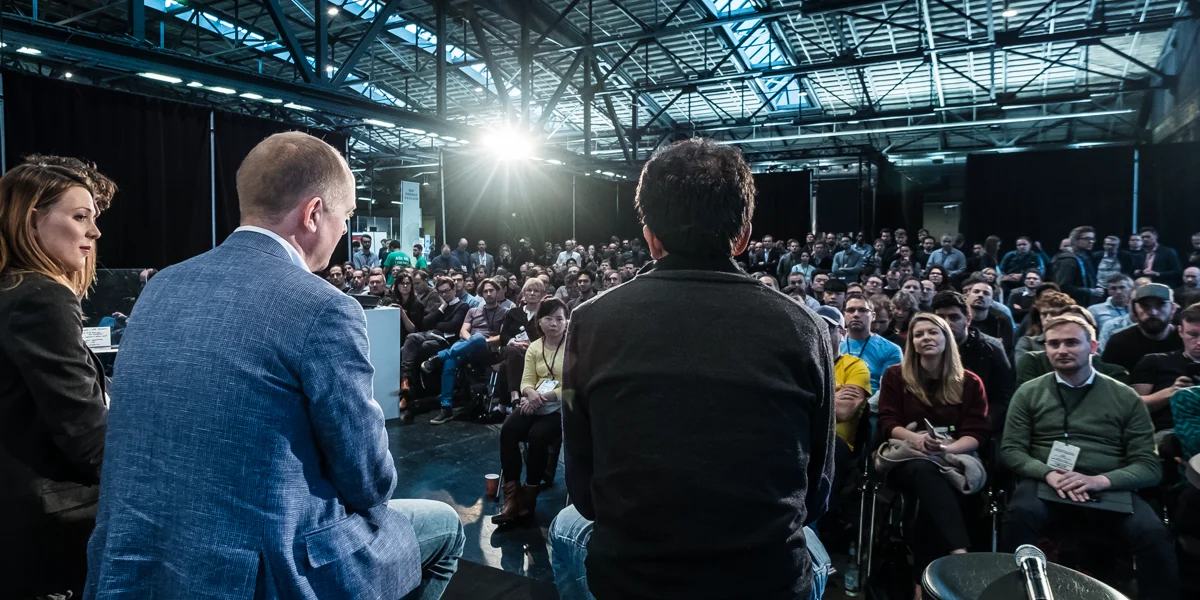
The 2026 iteration of Disrupt arrives at a pivotal moment for the tech sector. Following several years of market recalibration and a fundamental shift in how startups are valued, the upcoming conference is expected to host more than 10,000 attendees, ranging from early-stage entrepreneurs to seasoned venture capitalists. The Builders Stage, one of six industry-focused environments at the event, will prioritize "real-world" case studies over theoretical discussions, featuring a roster of leaders from organizations such as Google, Gusto, and Bessemer Venture Partners.
A Legacy of Innovation: The Evolution of TechCrunch Disrupt
Since its inception, TechCrunch Disrupt has functioned as a bellwether for the technology industry. Historically known for the "Startup Battlefield" competition—which has seen the debut of companies that would eventually become household names, including Dropbox, Mint, and Fitbit—the event has evolved to address the holistic needs of the startup lifecycle. In the early 2010s, the focus remained largely on consumer social media and mobile application growth. However, by the mid-2020s, the focus shifted toward infrastructure, deep tech, and the enterprise application of large language models (LLMs).
The return of the Builders Stage reflects a growing demand for "how-to" expertise in an era where the barriers to entry for starting a company have lowered, but the barriers to scaling have arguably heightened. Industry analysts note that while AI tools have accelerated product development cycles, they have also created a more crowded and competitive marketplace, making go-to-market (GTM) strategies and human capital management more complex than in previous decades.
Navigating the AI Frontier: Defensibility and Multi-Model Architectures
A significant portion of the Builders Stage agenda is dedicated to the existential and operational questions posed by the AI revolution. One of the most anticipated sessions, "What Happens When OpenAI Ships Your Roadmap," features Michel Tricot of Airbyte, Rob Toews of Radical Ventures, and Linda Tong of Webflow. This discussion aims to address the "thin wrapper" dilemma—a scenario where startups building on top of foundational models find their core value proposition absorbed by the platform providers themselves. The panel will explore where true defensibility exists, whether through proprietary data moats, specialized workflows, or vertical-specific integrations.
Complementing this is a technical and strategic deep dive titled "The Real Tokenmaxxing: How the Best AI Companies Navigate a Multi-Model World." Featuring Mo Jomaa of Capital G and Zuzanna Stamirowska of Pathway, the session will analyze the shift away from reliance on a single provider toward an orchestrated, multi-model approach. As model performance fluctuates and costs fluctuate, the ability for a startup to remain model-agnostic is increasingly viewed as a prerequisite for long-term technical stability.

The Financial Landscape: Fundraising Realities from Pre-Seed to Series A
The 2026 agenda also addresses the changing expectations of the venture capital community. In the session "Winning Pre-Seed Without a Product," investors from True Ventures and Slauson & Co. will discuss the resurgence of "conviction-based" investing. Data from the 2025 fiscal year suggests that while total venture volume has stabilized, the criteria for initial checks have become more rigorous, often requiring founders to demonstrate deep "founder-market fit" and a compelling narrative before a single line of code is written or a minimum viable product (MVP) is launched.
Further up the capital stack, "The Series A in 2027" session will provide a forward-looking analysis of what "fundable" metrics will look like in the near future. Jahanvi Sardana of Index Ventures and Shailendra Singh of Peak XV are expected to discuss how the traditional milestones for Series A—once centered primarily on recurring revenue—have expanded to include capital efficiency, unit economics, and "revenue quality." This shift reflects a broader market move away from the "growth at all costs" mentality that dominated the previous decade.
Operational Excellence and the New Scaling Baseline
Perhaps the most aggressive shift in startup expectations is highlighted in the session "The 90-Day GTM: Why $0–$10M ARR Is the New Baseline." Featuring Ryan Meadows of Lovable and Tomasz Tunguz of Theory Ventures, this track examines how AI-enabled execution is compressing the time it takes for startups to reach significant revenue milestones. Historically, reaching $10 million in Annual Recurring Revenue (ARR) was a multi-year journey; however, with automated sales development, AI-driven marketing, and rapid product iteration, the industry is seeing a new class of "hyper-efficient" startups.
Scaling, however, is not merely about revenue. Robby Stein, VP of Product at Google, will lead a fireside chat on the transition "From MVP to Billions of Users." Stein’s perspective from one of the world’s largest product organizations will offer founders a blueprint for how decision-making must evolve when updates impact a global user base. This includes balancing the need for rapid innovation with the necessity of maintaining system reliability and user trust.
The Human Element: Hiring, Culture, and Mental Performance
Despite the focus on automation, the Builders Stage recognizes that the human element remains the most volatile variable in the startup equation. "Hiring When AI Is a Co-Founder," featuring Josh Reeves of Gusto, will explore the concept of the "hybrid team," where AI agents handle engineering and support tasks, allowing human employees to focus on high-level strategy and creative problem-solving.
This technological shift has created a highly competitive talent market. A session titled "Hiring, Compensation and Culture in the Most Competitive Market Ever" will bring together experts from Redpoint Ventures and Wylder.co to discuss how startups can compete for talent against tech giants who offer lucrative packages. The discussion will likely touch upon the use of secondary sales, equity structures, and the importance of a mission-driven culture in retaining top-tier engineers.

Furthermore, the Builders Stage will break from purely tactical advice to host "Yes, It’s Hard to Be a Founder: An Honest Conversation." This panel, featuring mental health experts and founders like Jack Withinshaw of Airspeeder, aims to destigmatize the psychological toll of entrepreneurship. Recent studies have indicated that founders are significantly more likely to experience burnout and depression than the general population, and this session provides a framework for building personal resilience and sustainable leadership habits.
Strategic Exits: M&A as an Early-Stage Strategy
The 2026 program also highlights a shift in how founders view the "endgame." In "M&A Is Now an Early-Stage Strategy," Karl Alomar of M13 and Aklil Ibssa of Coinbase will discuss why the smartest founders are building with acquisition in mind from day one. With the IPO window remaining selective, strategic acquisitions by larger incumbents or private equity firms have become the primary liquidity event for many successful startups. The session will detail how to structure partnerships and product roadmaps to maximize attractiveness to potential buyers without sacrificing the company’s independent growth potential.
Conclusion and Broader Market Implications
TechCrunch Disrupt 2026 and its Builders Stage represent more than just a gathering of tech enthusiasts; they serve as a reflection of a maturing industry. The focus on "Builders" suggests a return to fundamentals—revenue, efficiency, and defensibility—tempered by the radical possibilities of artificial intelligence. For the 10,000 participants expected at the Moscone Center, the insights shared on this stage will likely dictate the strategies used to navigate the 2027 funding cycle and beyond.
As the tech ecosystem continues to decentralize and the "standard" startup playbook is rewritten by AI, the need for centralized knowledge-sharing platforms becomes even more acute. By bringing together the architects of the current AI boom with the veterans of previous tech cycles, Disrupt 2026 aims to provide a comprehensive roadmap for the next generation of global companies. Registration for the event remains open, with organizers offering early-bird incentives as the industry prepares for three days of intense dialogue, networking, and innovation in the heart of San Francisco.