admin
admin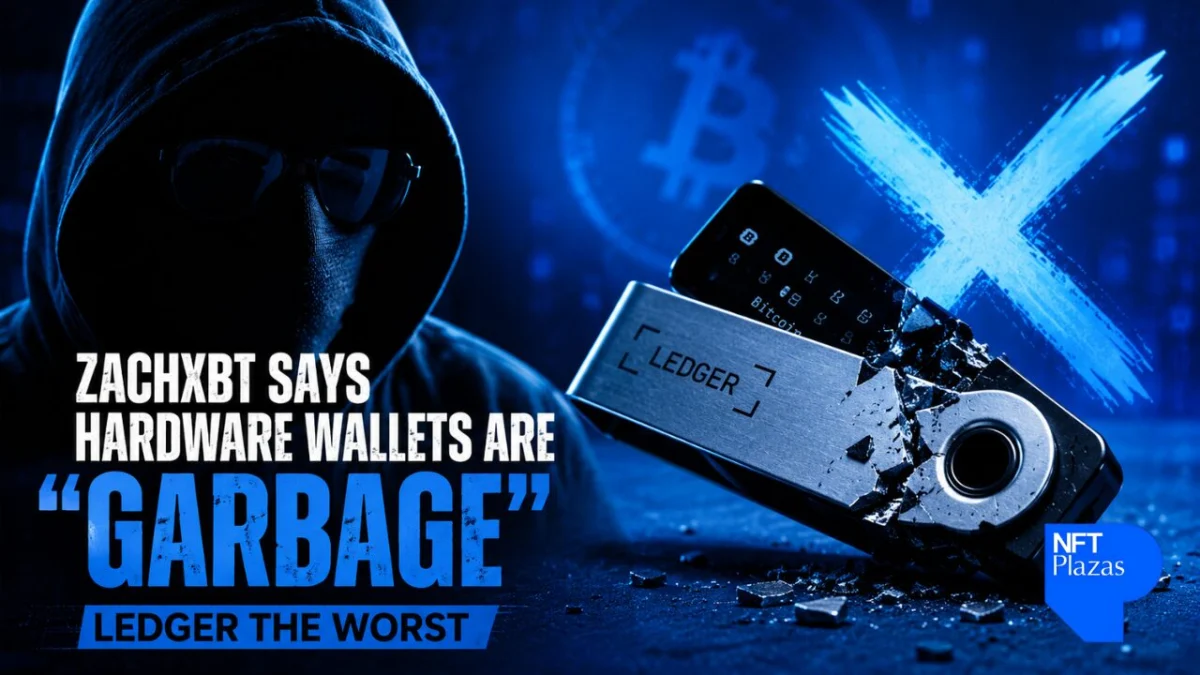
The pronouncements, initially disseminated via a Telegram post and subsequently reverberating across various crypto forums and social media platforms, have polarized opinion, drawing both staunch support from those disillusioned with current hardware solutions and sharp criticism from proponents of established self-custody methods. While ZachXBT’s remarks are presented as a personal assessment rather than a disclosure of a new, specific vulnerability impacting hardware devices, they emerge at a critical juncture for the crypto ecosystem, coinciding with a pervasive increase in sophisticated phishing campaigns, deceptive wallet applications, and advanced social engineering tactics that continue to strip millions of dollars from unsuspecting crypto holders globally. This debate underscores a pivotal shift in the understanding of digital asset security, moving beyond mere cryptographic strength to encompass the broader user experience, software dependencies, and the ever-present human element.
The Foundation of Self-Custody: Hardware Wallets as the Gold Standard
For over a decade, hardware wallets, epitomized by brands such as Ledger and Trezor, have been universally lauded as the pinnacle of self-custody solutions for cryptocurrencies. Their core value proposition centers on the principle of isolating private keys—the cryptographic codes that grant access to digital assets—from internet-connected devices. By storing these critical keys offline within a secure element or secure chip, hardware wallets aim to create an air-gapped environment, rendering them impervious to common malware, viruses, and remote hacking attempts that plague traditional software wallets or online exchanges. This "cold storage" methodology was designed to significantly mitigate the risk of digital theft, offering users unparalleled control and security over their assets.
Companies manufacturing these devices have consistently marketed their products around this fundamental tenet, emphasizing the physical security of the device and the impossibility of private keys ever leaving the secure hardware during normal operation. This robust security model has historically instilled a high degree of trust among investors, making hardware wallets a cornerstone recommendation for anyone holding significant amounts of cryptocurrency. The rationale was clear: if your keys are offline, they cannot be stolen by online adversaries.
ZachXBT’s Dissent: Questioning Operational Reliability
However, ZachXBT, a prominent onchain investigator renowned for his forensic analysis of crypto hacks and scams, starkly challenges this long-standing assessment. In his widely circulated Telegram post, he unequivocally stated his reluctance to recommend hardware wallets for "important tasks like signing transactions or storing funds," declaring "every current solution inadequate." This statement, particularly coming from an individual deeply entrenched in analyzing crypto security breaches, sent ripples through the community.
Instead of traditional hardware devices, ZachXBT controversially proposed an alternative for technically competent users: a dedicated iPhone. This device, he suggested, should be exclusively configured for crypto wallet management and transaction signing, meticulously stripped of all other functionalities such as social media, messaging, web browsing, or any superfluous applications. His argument pivots not on a fundamental flaw in the cryptographic security of hardware wallets, but rather on their operational reliability and the increasingly convoluted ecosystem surrounding them.

ZachXBT’s critique delves into the practical complexities that have, in his view, eroded the user-friendliness and inherent security advantages of these devices. He argues that the contemporary hardware wallet landscape has become excessively intricate, characterized by a proliferation of mandatory software updates, companion applications, and evolving interfaces. These elements, while often introduced with intentions of enhancing features or security, can inadvertently introduce points of friction, potential vulnerabilities, and user confusion. He implies that the added layers of software interaction, far from simplifying security, have instead created a more complex attack surface that users must navigate.
Ledger Under Scrutiny: The Sharpest Edge of Criticism
Among the various hardware wallet manufacturers, Ledger, a market leader, bore the brunt of ZachXBT’s most incisive criticism. He singled out Ledger as "the worst," primarily citing issues related to its companion software, Ledger Live. According to ZachXBT, the frequent updates to Ledger Live unnecessarily modify the user interface and application functionalities, occasionally leading to disruptions in basic wallet operations. This criticism appears to be aimed predominantly at the software experience and its implications for user interaction and reliability, rather than at the underlying Secure Element technology that safeguards users’ private keys.
Ledger, for its part, steadfastly continues to champion its hardware-based signing mechanism as one of the most secure methodologies for protecting digital assets. The company recently underscored its commitment to enhancing user experience and security by rebranding Ledger Live simply as "Ledger Wallet" and releasing version 4.8.0. This update, as per company statements, introduced interface improvements, security enhancements, and bug fixes, reflecting ongoing software development efforts. Ledger consistently maintains that users’ private keys are designed never to leave their physical devices during standard operational procedures, a core tenet of their security architecture.
It is crucial to emphasize that ZachXBT did not allege any new compromise of Ledger’s devices or any breach of its Secure Element technology. His arguments are rooted in the perceived usability challenges, software complexity, and the broader ecosystem of applications and updates that have come to define the modern hardware wallet experience. This distinction is vital: the debate is less about the impregnability of the hardware itself and more about the practical realities of interacting with these devices in a rapidly evolving digital landscape.
The Unwavering Weakest Link: Human Error
The unfolding debate instigated by ZachXBT serves to highlight an increasingly critical distinction within the realm of cryptocurrency security: the delineation between technological robustness and human vulnerability. While modern hardware wallets are generally highly effective at safeguarding private keys from sophisticated malware residing on internet-connected computers, their efficacy is severely limited when confronted with the insidious vectors of human error, manipulation, and social engineering. These devices, irrespective of their cryptographic strength, cannot inherently prevent users from voluntarily divulging their recovery phrases, unwittingly approving malicious transactions, or inadvertently downloading counterfeit software.
This stark reality has become progressively evident throughout 2026, punctuated by a series of high-profile incidents that underscore the evolving threat landscape. Earlier this year, ZachXBT himself reported on one of the most substantial individual crypto thefts on record, wherein a crypto holder suffered a staggering loss exceeding $282 million worth of Bitcoin and Litecoin. Crucially, ZachXBT’s meticulous investigation revealed that this colossal theft was not attributable to a technical compromise of the hardware wallet device itself. Instead, it was the direct outcome of an elaborate social engineering scam, where the victim was manipulated into actions that facilitated the attacker’s access. The subsequent laundering operation involved sophisticated tactics, including funneling funds through multiple instant exchanges, converting substantial portions into privacy coins like Monero, and bridging Bitcoin across various blockchain networks utilizing platforms like Thorchain, illustrating the attackers’ advanced capabilities in fund obfuscation.

This incident, among others, has reinforced a growing consensus among cybersecurity researchers and blockchain forensics experts: the primary target for attackers is increasingly the person behind the crypto assets, rather than the intricate cryptography protecting the assets themselves. Attackers have shifted their focus from exploiting technical vulnerabilities in hardware or software to exploiting psychological vulnerabilities in users, leveraging deception, urgency, and misinformation to achieve their objectives.
The Persistent Threat of Fake Applications
A particularly pervasive and damaging form of attack targeting hardware wallet owners involves fraudulent software designed to mimic legitimate wallet applications. These fake apps capitalize on users’ trust in established brands and the often-complex process of securely managing digital assets.
A notable illustration of this threat occurred in April, when a counterfeit Ledger Live application briefly infiltrated Apple’s App Store. This deceptive application successfully duped numerous users into inputting their crucial 24-word recovery phrases (seed phrases), which effectively grant complete control over their crypto wallets. Before its eventual removal by Apple, the scam managed to pilfer at least $9.5 million in various cryptocurrencies from over 50 victims. The stolen assets comprised a diverse portfolio, including Bitcoin, Ethereum, Solana, Tron, and XRP, vividly demonstrating the widespread efficacy of social engineering even among users who possess legitimate, high-security hardware wallets.
Significantly, this attack did not exploit any inherent flaw in Ledger’s hardware or its Secure Element technology. The victims were not hacked in a traditional sense; rather, they voluntarily entered their sensitive recovery phrases into what they believed was genuine software, inadvertently handing over complete control of their digital assets to the attackers. Cases such as these are precisely why ZachXBT posits that device isolation alone, while valuable, may no longer suffice if the surrounding software ecosystem and user interfaces remain susceptible to impersonation and sophisticated phishing attempts. The physical security of the device becomes irrelevant if the user is tricked into revealing the keys through a fake digital interface.
A Divergent Path: The Dedicated iPhone Proposal
ZachXBT’s controversial proposal of utilizing a dedicated iPhone for crypto activities represents a fundamentally different philosophy of self-custody rather than a universally accepted security best practice. The theoretical advantages of such a setup are noteworthy. A smartphone meticulously configured solely for crypto—devoid of social media, messaging apps, general web browsing, or any non-essential applications—could theoretically reduce exposure to a multitude of attack vectors commonly associated with everyday device usage. Modern iPhones, in particular, integrate Apple’s Secure Enclave, a dedicated hardware security module that provides robust, hardware-backed protection for sensitive cryptographic operations, similar in principle to the secure elements found in dedicated hardware wallets. This enclave isolates cryptographic keys and operations from the main processor, making it highly resistant to software-based attacks.
However, security professionals are quick to point out the inherent limitations and potential vulnerabilities of this approach. Crucially, smartphones, by their very nature, remain internet-connected devices. Their security is intrinsically dependent on the integrity of the underlying operating system (iOS in this case), the security of the applications installed, rigorous backup practices, and, perhaps most critically, diligent user behavior. They fundamentally differ from traditional cold storage solutions, which are designed to remain offline as much as possible, thereby minimizing their exposure to network-based threats. An iPhone, even a dedicated one, still receives software updates, connects to Wi-Fi, and interacts with app stores, each representing a potential attack surface. While Apple’s ecosystem is generally considered secure, it is not impenetrable, and zero-day exploits or sophisticated malware could still pose risks.

For the vast majority of cryptocurrency investors, the prevailing consensus among security experts is that hardware wallets, when acquired directly from official manufacturers and operated with correct security hygiene, continue to offer a significantly superior level of protection compared to leaving assets on centralized exchanges (which carry counterparty risk) or relying solely on standard software wallets installed on everyday devices. The physical isolation of private keys remains a powerful defense mechanism against many forms of digital theft.
The Broader Implications for Self-Custody and User Education
Ultimately, ZachXBT’s provocative comments serve as a critical reflection of a growing disillusionment within segments of the crypto community regarding how hardware wallets are often marketed. They are frequently presented as complete, foolproof security solutions, yet the reality on the ground indicates that the most significant and prevalent risks increasingly originate outside the confines of the physical device itself. This debate is not merely about the technical merits of one device over another; it is about the holistic security posture required in the digital asset space.
The implications of this discussion are far-reaching. It underscores the urgent need for enhanced user education that moves beyond simply recommending a device to fostering a comprehensive understanding of the entire security chain. It highlights the responsibility of hardware wallet manufacturers not only to maintain robust hardware but also to simplify their software ecosystems, improve user interfaces, and proactively address the human element in their security models. Furthermore, it places a spotlight on the broader industry’s collective effort to combat phishing, fake applications, and social engineering through improved app store vetting, clearer communication, and collaborative threat intelligence sharing.
Whether users ultimately opt for established dedicated hardware wallets, explore ZachXBT’s proposed dedicated iPhone method, or choose other self-custody strategies, the foundational principles of digital asset security remain constant and paramount. Experts consistently reiterate the same critical fundamentals:
- Never Share Recovery Phrases: These are the master keys to your funds; sharing them, even with what appears to be legitimate support, is equivalent to handing over your assets.
- Verify Software Authenticity: Always download companion applications and firmware updates exclusively from official, verified sources. Double-check URLs and developer identities.
- Purchase Devices Only Through Official Channels: Buying hardware wallets from third-party resellers or used markets introduces the risk of tampered devices.
- Remain Vigilant Against Phishing and Social Engineering: Be inherently skeptical of unsolicited messages, urgent requests, or offers that seem too good to be true. Understand common scam tactics.
- Practice Defense in Depth: Implement multiple layers of security, including strong unique passwords, two-factor authentication (2FA), and regular security audits of your practices.
ZachXBT’s controversial stance, while disruptive, serves as a vital catalyst for introspection and improvement within the self-custody sector. It compels the industry and users alike to re-evaluate the true nature of security in the complex, rapidly evolving landscape of digital assets, emphasizing that technology alone is insufficient without unwavering user vigilance and a comprehensive understanding of the surrounding threat environment. The goal remains empowering users with true sovereignty over their digital wealth, but the path to achieving that is clearly more nuanced and challenging than ever before.