admin
admin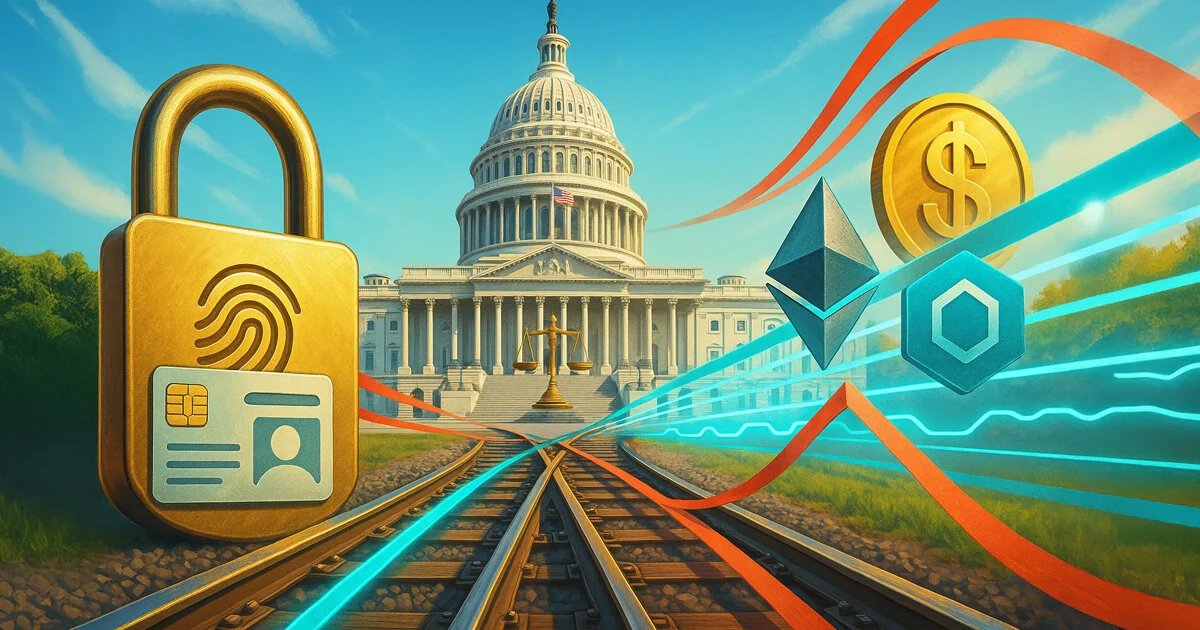
A confidential draft bill circulating within the Democratic caucus of the U.S. Senate has ignited a firestorm of controversy, proposing extensive new regulatory oversight for Decentralized Finance (DeFi). The ambitious legislation, if enacted, would extend Know-Your-Customer (KYC) and Anti-Money-Laundering (AML) obligations to a broad spectrum of DeFi participants, including interfaces, validators, and even individual node operators. This move is reportedly intended as a Democratic counterpoint to a market-structure bill advanced by their Republican counterparts in the House of Representatives. However, internal dissent within the Senate Banking Committee has reportedly stalled broader discussions on the matter.
The leaked framework outlines a significant expansion of regulatory reach, mandating that all DeFi applications facilitating financial transactions implement front-end KYC controls. This could encompass widely used tools such as browser-based wallets and liquidity aggregation interfaces, potentially impacting millions of users. Furthermore, the draft proposes placing new responsibilities on oracle operators, making them vulnerable to enforcement actions if their price feeds are linked to protocols deemed "sanctioned." The Treasury Department would also be granted enhanced authority to establish a "restricted list" of protocols deemed too risky for U.S. consumers, a move that could effectively cordon off American users from certain segments of the decentralized ecosystem.
Senator Ruben Gallego has publicly asserted that the Democratic proposal represents a genuine effort to forge bipartisan consensus on the complex issue of crypto market structure. He stated, "Democrats have shown up ready to work. They asked for paper and substance, and we delivered." This assertion, however, has been met with considerable skepticism and strong opposition from various stakeholders within the cryptocurrency industry and among Republican lawmakers.
The Unfolding Regulatory Landscape
The emergence of this draft legislation marks a significant escalation in the ongoing debate surrounding cryptocurrency regulation in the United States. For years, the industry has operated in a relatively nascent and often ambiguous regulatory environment. While centralized exchanges have faced increasing scrutiny and a patchwork of state-by-state licensing requirements, the decentralized nature of DeFi has presented a unique challenge for regulators seeking to apply traditional financial rules.
The core tenets of DeFi – its permissionless nature, user control over assets, and reliance on smart contracts rather than intermediaries – fundamentally differ from the centralized financial systems that existing AML/KYC frameworks were designed to govern. This proposed bill appears to represent a concerted effort by Senate Democrats to bridge this regulatory gap, albeit with measures that industry participants argue are fundamentally incompatible with DeFi’s core principles.
The timing of this proposal is also noteworthy. It emerges at a time when both the House and Senate are grappling with how to best regulate the rapidly evolving digital asset market. The House-backed bill, which has seen some bipartisan traction, focuses more on market structure and investor protection within existing frameworks. The Democratic proposal, by contrast, appears to adopt a more aggressive stance, directly targeting the decentralized infrastructure itself.
Deepening Partisan Divide and Industry Alarms
The leaked bill has immediately amplified partisan tensions in Washington, drawing sharp criticism from Republican lawmakers and a wave of alarm from the crypto industry. Critics warn that the proposed measures could stifle innovation, drive capital away from U.S. shores, and ultimately undermine America’s position as a leader in financial technology.
A key concern revolves around the potential for a significant exodus of liquidity and talent. Data from Newhedge highlights the existing concentration of crypto trading volume offshore. U.S.-based trading venues currently account for less than 10% of the global trading volume. The top eight global platforms, predominantly located outside the U.S., collectively handle approximately 90% of global market depth. This data underscores a pre-existing trend where liquidity naturally gravitates towards jurisdictions with less stringent regulatory environments.
The Senate proposal’s mandate for protocol-level compliance, including KYC/AML requirements for interfaces, validators, and node operators, could dramatically accelerate this flight of capital. If U.S. users are compelled to interact solely through verified front-ends, or if the Treasury gains the power to block access to specific protocols, traders seeking anonymity, greater flexibility, and lower transaction friction are likely to seek alternative venues. This could include offshore exchanges, decentralized exchanges operating outside U.S. jurisdiction, or other cross-border bridges.
Economic Implications and Competitive Disadvantage
The long-term economic implications of such a regulatory shift are substantial. Over time, a sustained migration of liquidity could entrench offshore platforms as dominant hubs, further consolidating the market share of non-U.S. exchanges and fragmenting trading activities across multiple jurisdictions. This fragmentation would inevitably lead to reduced liquidity within U.S. markets, characterized by wider bid-ask spreads, shallower order books, and decreased trading depth. Such conditions not only hinder efficient price discovery but also stifle innovation and diminish the overall competitiveness of the U.S. in the global digital asset landscape.

Moreover, the proposed regulations could significantly impact how ordinary Americans engage with the burgeoning DeFi sector. Recent research from the DeFi Education Fund indicates that a considerable portion of the American population harbors distrust towards the traditional financial system. Many are increasingly exploring DeFi as an alternative, attracted by the promise of greater financial autonomy, control over their assets, and potentially lower transaction costs. The proposed bill, by imposing stringent KYC/AML requirements on DeFi interfaces, could erect significant barriers to entry for these individuals, effectively limiting their access to innovative financial tools and services.
Industry Leaders Voice Strong Opposition
The reaction from prominent figures within the cryptocurrency industry has been swift and overwhelmingly negative, with many characterizing the proposal as unworkable and detrimental to the sector.
Jake Chervinsky, Chief Legal Officer at Variant Fund, expressed a strong sentiment of disbelief and opposition. He stated, "Many aspects of the proposal are fundamentally broken and unworkable. This is not a ‘first offer’ in a negotiation, it’s a list of demands that appear designed to kill the bill." Chervinsky further elaborated, labeling the proposal an "unprecedented [and] unconstitutional government takeover of an entire industry." He warned that the bill is "not just anti-crypto, it’s anti-innovation, and a dangerous precedent for the entire tech sector."
Zack Shapiro, Head of Policy at the Bitcoin Policy Institute, echoed these concerns, highlighting what he views as an overreach of existing illicit finance laws. Shapiro argued that the draft bill "stretches illicit-finance laws to target software and software developers rather than criminal conduct." He cautioned that this approach sets a dangerous precedent for censoring lawful private exchange, drawing parallels to previous government actions against entities like Tornado Cash and developers of Samourai Wallet.
Brian Armstrong, CEO of Coinbase, a leading U.S.-based cryptocurrency exchange, articulated a stark warning about the bill’s potential to hinder American leadership in the digital asset space. Armstrong declared, "We absolutely won’t accept this. It’s a bad proposal, plain and simple, that would set innovation back, and prevent the U.S. from becoming the crypto capital of the world." He emphasized that such measures would "set innovation back years" and block America’s path to global leadership in crypto finance.
Hayden Adams, the founder of Uniswap, a prominent decentralized exchange, conveyed a similar sentiment, stating that the language in the draft bill "would kill DeFi domestically." Adams called for a "huge shift from Democratic senators" if any meaningful progress on market structure reform is to be achieved.
The Path Forward: Negotiation or Stalemate?
The stark divergence in perspectives between Senate Democrats pushing for expanded DeFi oversight and the crypto industry’s vocal opposition sets the stage for a contentious legislative battle. While Senator Gallego frames the proposal as a constructive attempt to build consensus, industry leaders perceive it as an outright assault on the foundational principles of decentralized finance.
The internal backlash within the Senate Banking Committee suggests that the current draft may face significant hurdles even before reaching a broader floor vote. The practical challenges of implementing KYC/AML requirements at the protocol level, the potential for stifling innovation, and the risk of driving U.S. talent and capital offshore are all substantial concerns that will need to be addressed.
The coming weeks and months will likely see intense lobbying efforts from both sides. The industry will seek to educate lawmakers on the unique nature of DeFi and the potential negative consequences of overly broad regulations. Meanwhile, proponents of the bill will likely continue to emphasize the need for robust consumer protection and the prevention of illicit financial activities within the digital asset space.
The outcome of this legislative effort will have profound implications for the future of cryptocurrency regulation in the United States and could significantly shape the global trajectory of decentralized finance. Whether this draft bill serves as a genuine starting point for negotiation or a rigid set of demands that ultimately leads to a legislative stalemate remains to be seen. However, it is clear that the debate over how to regulate DeFi has reached a critical juncture.