admin
admin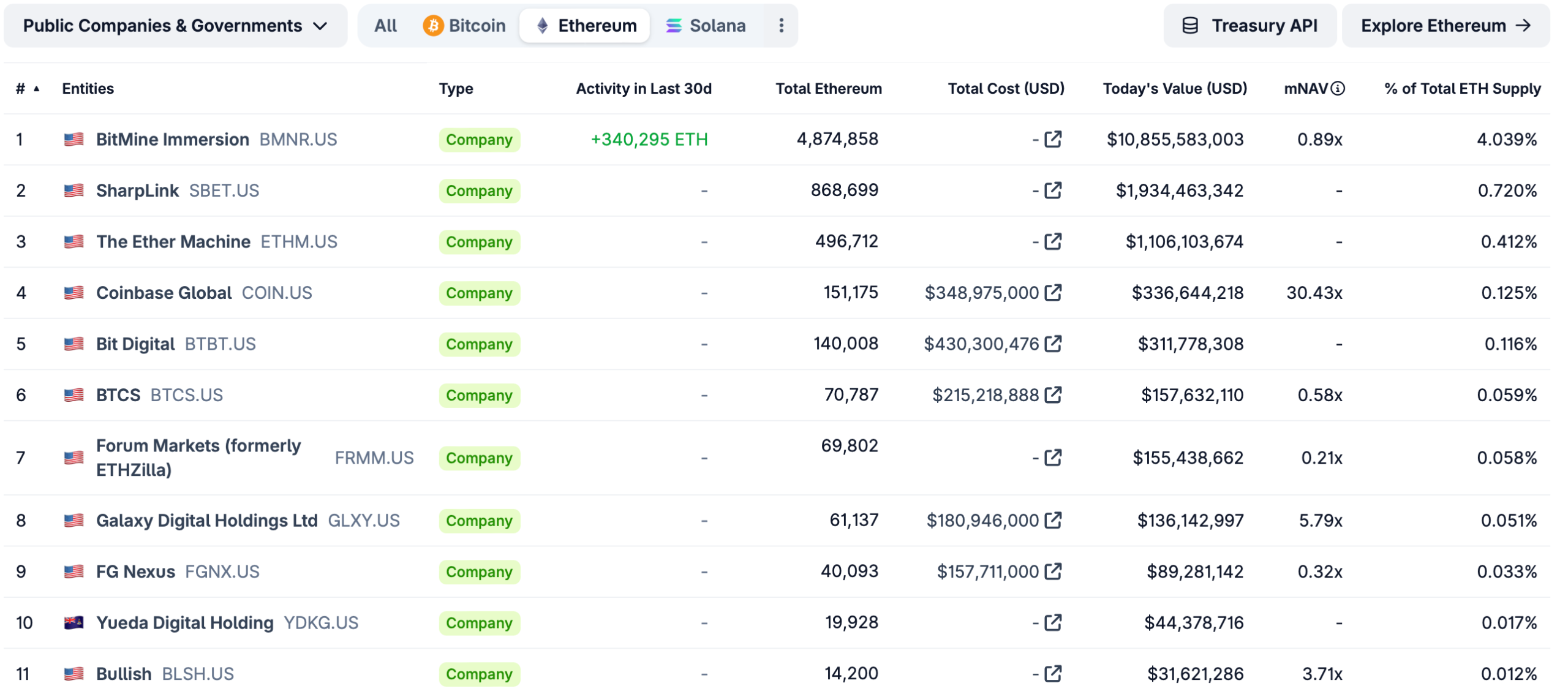
In a week marked by escalating naval blockades in the Middle East and the fallout from failed diplomatic overtures in Islamabad, the cryptocurrency market presented a stark divergence: aggressive institutional accumulation contrasted sharply with a hurried exit by smaller participants and miners. This period saw Michael Saylor’s Strategy and Bitmine Immersion Technologies make substantial, record-breaking acquisitions of Bitcoin and Ethereum, respectively, collectively injecting nearly $1.2 billion into digital assets. Their unwavering commitment occurred even as global energy markets grappled with heightened geopolitical instability and a dramatic $530 million liquidation event swept through leveraged crypto positions, underscoring a deepening trend where major firms increasingly integrate digital currencies into their primary treasury reserves, seemingly impervious to immediate geopolitical turbulence emanating from critical regions like the Strait of Hormuz.
Geopolitical Undercurrents and Market Eruption: A Detailed Chronology
The volatile week commenced with a significant geopolitical development that sent immediate ripples through global financial markets, including cryptocurrencies. Early on Monday, April 8, 2026, the administration of President Donald Trump initiated a naval blockade of Iranian ports. This assertive maneuver was explicitly designed to compel Tehran back to the negotiating table following a period of stalled diplomacy and escalating tensions in the region. The Strait of Hormuz, a narrow chokepoint through which approximately one-fifth of the world’s total oil consumption passes, became the focal point of global concern. Any disruption in this vital waterway carries the potential for severe repercussions on international oil prices and, by extension, the global economy.
Prior to the blockade, peace talks held in Islamabad had collapsed, further exacerbating anxieties about regional stability. The failure of these talks signaled a breakdown in diplomatic efforts, paving the way for more confrontational strategies. As news of the naval blockade broke, market participants reacted swiftly. Contrary to what some might expect during a period of geopolitical uncertainty, Bitcoin experienced a notable surge, climbing towards a four-week high of $75,000. This rally was largely fueled by traders betting on a rapid diplomatic resolution, anticipating that an embattled Iranian leadership, facing economic pressure from the blockade, would be forced to de-escalate.
This unexpected upward movement triggered a violent short squeeze, catching a significant number of traders off guard. Many had positioned themselves for a market downturn, anticipating that the geopolitical instability would lead to a broader risk-off sentiment. According to data compiled by CoinGlass, the market witnessed the liquidation of 177,000 traders within a mere 24 hours, totaling an staggering $530 million in losses. A substantial 80% of these liquidations were attributed to leveraged short positions in Bitcoin and Ethereum, highlighting the outsized impact of derivatives trading on price movements during periods of high volatility. The rapid price appreciation also led to a substantial increase in overall crypto market capitalization. Prominent crypto analyst "Bull Theory" noted on X (formerly Twitter) that these liquidations contributed to over $100 billion being added to the total crypto market capitalization in just a few hours on April 13, 2026. This confluence of events underscored the crypto market’s complex relationship with geopolitics, often acting as a high-beta play where prices react dramatically to shifts in global stability, or the perception thereof.

Later in the week, news of a potential ceasefire or de-escalation surfaced, and Bitcoin almost instantly reclaimed the $70,000 mark, reinforcing the market’s sensitivity to diplomatic signals. Jeff Mei, COO at BTSE, offered an insightful perspective, suggesting that Iran’s profound economic reliance on oil exports makes a diplomatic resolution, despite the current hostile rhetoric, almost inevitable in the long run. This analysis implies that the market’s initial surge might have been a rational anticipation of an eventual, if not immediate, return to stability.
Strategy’s Unwavering Conviction: Michael Saylor’s Billion-Dollar Bitcoin Play
Amidst this turbulent backdrop, Strategy, under the visionary leadership of Chairman Michael Saylor, continued its aggressive Bitcoin acquisition strategy, further cementing its position as the largest corporate holder of the digital asset. Despite facing significant unrealized losses, which totaled an estimated $14.46 billion in the first quarter of 2026, Strategy demonstrated an unyielding resolve, refusing to deviate from its long-term vision in the face of macroeconomic uncertainty and market fluctuations.
Between April 6 and April 12, 2026, Strategy executed a massive purchase, scooping up an additional 13,927 Bitcoin. This acquisition was made at an average price of $71,902 per coin, representing a total investment of nearly $1 billion. What makes this move particularly noteworthy is the firm’s financing mechanism: the acquisition was funded through the sale of 10 million Stretch (STRC) perpetual preferred equity shares. This innovative approach demonstrates Strategy’s adeptness at leveraging traditional capital markets to bolster its digital balance sheet, providing a blueprint for how public companies can integrate Bitcoin into their corporate treasury strategies without directly impacting operational cash flow.
With this latest purchase, Strategy’s total Bitcoin holdings reached an astonishing 780,897 BTC. This places the company tantalizingly close to its much-anticipated milestone of 800,000 BTC, a target that has been closely watched by the crypto community. Across the industry, analysts view Saylor’s persistence and unwavering conviction as a powerful signal. Historically, whenever the Chairman hints at or confirms a significant purchase on social media platforms, the market often interprets it as a strong indicator of an impending price floor for Bitcoin, inspiring confidence among investors.
Notably, Strategy’s recent acquisition was executed at a price point below its overall average cost basis of $75,577. This strategic move, known as "averaging down," allows the firm to reduce its average purchase price over time, potentially enhancing future profitability. This aggressive strategy stands in stark contrast to the more cautious approach adopted by many other public companies. For instance, Japan’s Metaplanet, another corporate Bitcoin adopter, added a more modest 5,075 BTC during the same period. Meanwhile, a significant number of other corporate treasury holders of Bitcoin either remained stagnant or actively sold off portions of their digital asset reserves, highlighting Strategy’s unique and often counter-cyclical investment philosophy. This bold stance, taken while the rest of the world watched the Strait of Hormuz with bated breath, further solidifies Saylor’s reputation as a steadfast Bitcoin maximalist.

Bitmine’s Strategic Advance: Pushing for Ethereum Dominance
While Strategy focused on Bitcoin, Bitmine Immersion Technologies demonstrated an equally aggressive expansion strategy centered on Ethereum. Over the past seven days, Bitmine reported a massive intake of 71,524 ETH, an acquisition valued at approximately $170 million. This substantial purchase underscores Bitmine’s strategic pivot towards establishing a dominant position within the Ethereum ecosystem.
With this latest acquisition, Bitmine now commands approximately 4.04% of the total circulating ETH supply, a stake currently valued at over $10 billion. The company is rapidly approaching its publicly stated goal of owning 5% of all Ethereum tokens in circulation, a target that would solidify its influence and operational leverage within the network. Unlike many of its peers who have remained on the sidelines, deterred by price volatility and market uncertainty, Bitmine strategically leveraged its recent uplisting to the New York Stock Exchange (NYSE). This move provided the company with enhanced access to institutional capital, which it then deployed to fund this significant expansion into Ethereum.
A core component of Bitmine’s strategy revolves around staking. Through its proprietary in-house MAVAN platform, Bitmine currently stakes an impressive 3.33 million ETH. Based on the current network yields for staked Ethereum, these assets are estimated to generate approximately $310 million in annual rewards. This substantial passive income stream not only contributes significantly to Bitmine’s revenue but also provides a stable financial foundation, mitigating some of the risks associated with price fluctuations.
Chairman Tom Lee attributed this aggressive stance on Ethereum to two primary macroeconomic trends: the rising demand for tokenization on Wall Street and the increasing reliance of artificial intelligence (AI) systems on public blockchain infrastructure. Tokenization, the process of converting real-world assets into digital tokens on a blockchain, is gaining traction in traditional finance, with Ethereum being a leading platform for such initiatives. Furthermore, as AI systems become more pervasive, their need for transparent, immutable, and decentralized data storage and processing, often provided by public blockchains like Ethereum, is projected to grow exponentially. Bitmine’s strategy positions it to capitalize on these converging technological and financial shifts.
In stark contrast to the institutional buying spree led by Bitmine and Strategy, other players in the crypto ecosystem took a different route. Bitcoin miners, exemplified by major publicly traded firms like MARA Holdings and Riot Platforms, collectively offloaded over 17,000 BTC during the same period. This selling activity by miners is often a response to shifting economic tides, including rising operational costs, increased network difficulty, and the need to secure profits or maintain liquidity in a volatile market. Their actions highlight the diverse motivations and operational pressures within the broader crypto market.

Broader Implications and Expert Perspectives: A Maturing Market?
The events of the past week paint a compelling picture of a crypto market undergoing a significant evolution, particularly concerning institutional involvement. The unwavering commitment of firms like Strategy and Bitmine to digital assets, even amidst profound geopolitical and market turbulence, signals a profound shift in how these assets are perceived and utilized. Digital assets are increasingly being viewed not merely as speculative instruments but as strategic treasury reserves, a hedge against inflation, and a component of a diversified corporate balance sheet.
This institutional conviction is rooted in several factors. For one, the perceived long-term value proposition of decentralized networks and scarce digital assets remains strong, offering a potential uncorrelated asset class that can perform differently from traditional financial instruments during periods of macroeconomic stress. Furthermore, the increasing transparency and regulatory clarity around digital assets, albeit still evolving, contribute to greater institutional comfort.
However, not all experts view the recent market movements as a definitive sign of organic growth. Valerius Labs, for example, suggested that the rapid price surge was not indicative of a "true breakout" but rather a "forced rally" driven primarily by the liquidation of short positions. Their analysis points to the fact that serious institutional buyers typically enter the market when the price holds above the 200-day moving average, a key technical indicator of long-term trend strength. With Bitcoin sitting approximately 15% below this critical moving average at the time, Valerius Labs’ perspective suggests that while the short squeeze created a significant price spike, underlying fundamental buying might not yet be strong enough to sustain a prolonged rally.
Nonetheless, the broader narrative among investors increasingly frames crypto as a "high-beta play on geopolitical stability." This means that digital assets, particularly Bitcoin, tend to exhibit magnified reactions to global political and economic events. The rapid recovery of Bitcoin to $70,000 upon news of a potential ceasefire earlier in the week perfectly illustrates this sensitivity. This characteristic makes digital assets attractive to certain institutional investors seeking amplified returns in response to global developments, even if it comes with increased volatility.
Looking ahead, the sustained institutional accumulation by entities like Strategy and Bitmine, coupled with the ongoing geopolitical volatility, suggests that digital assets will continue to be a significant focus for both traditional finance and tech sectors. The integration of cryptocurrencies into corporate treasury strategies, the leveraging of capital markets for digital asset acquisition, and the strategic positioning in foundational blockchains like Ethereum for tokenization and AI infrastructure represent a maturing landscape. As regulatory frameworks continue to develop and the utility of blockchain technology expands, the interplay between global geopolitics and the trajectory of digital assets will remain a critical dynamic to observe, shaping the future of finance and technology alike.