Dwi Wanna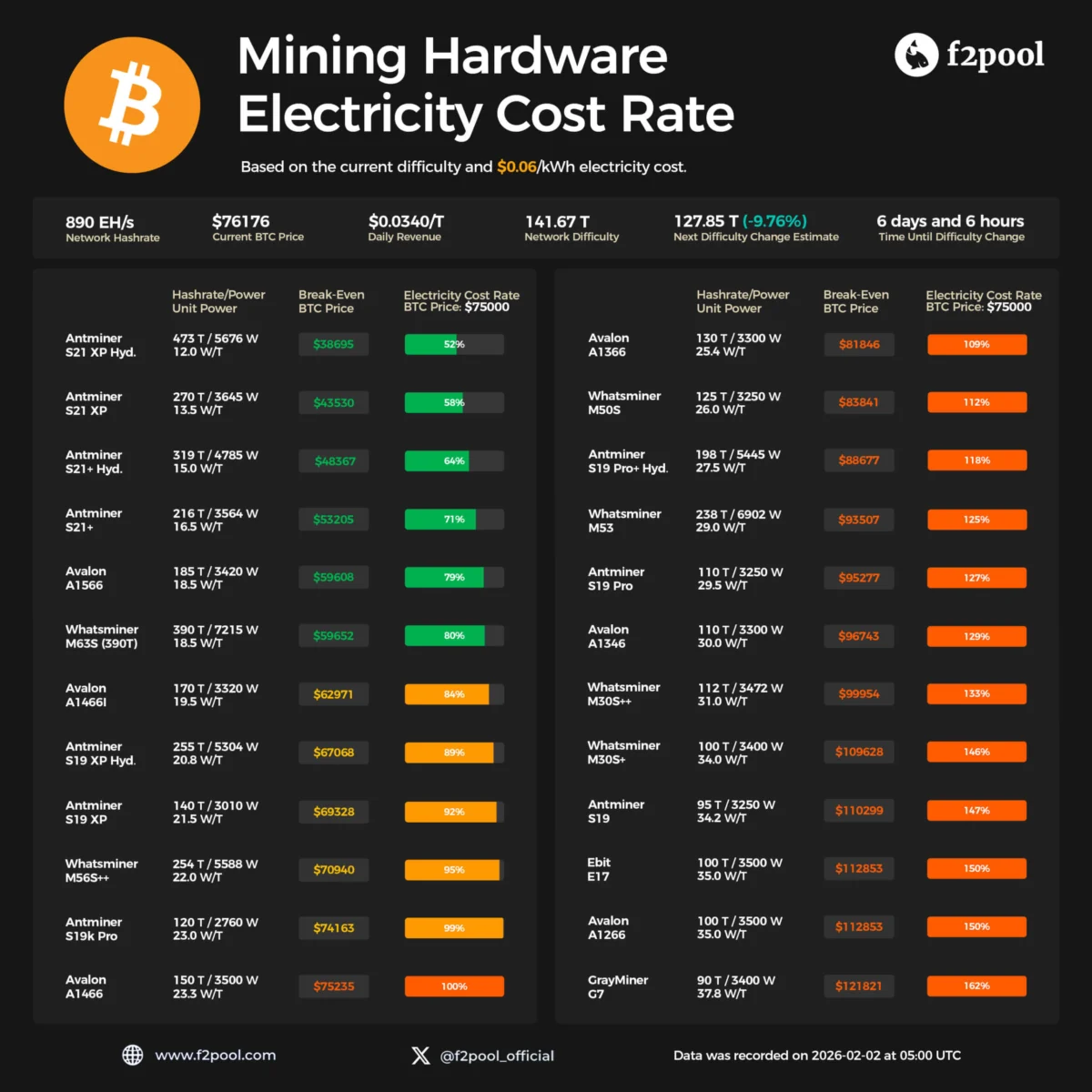
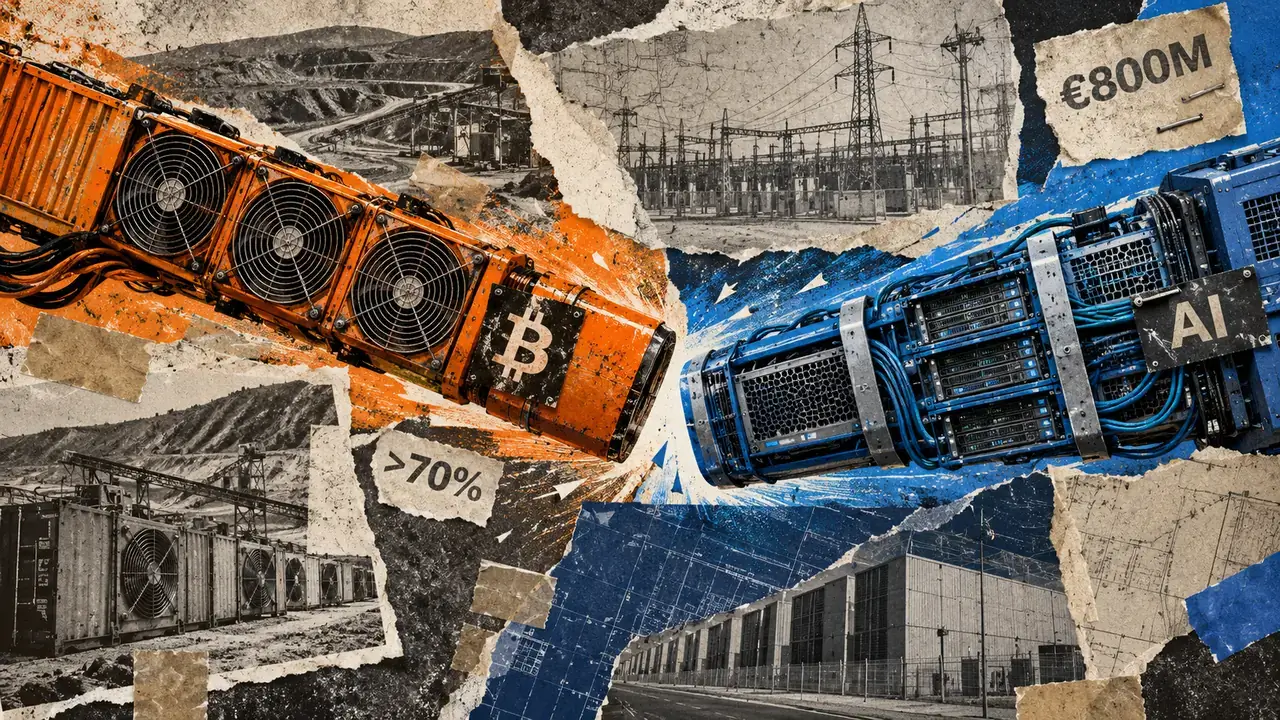
The industrial foundation of the Bitcoin network is currently navigating a period of unprecedented financial turbulence, as a sharp decline in asset prices converges with record-high operational costs and a structural shift toward artificial intelligence (AI) compute. Following a historic peak in October 2024, when Bitcoin reached an all-time high exceeding $126,000, the flagship digital asset has retreated to approximately $78,000—a decline of over 38% in just four months. This price contraction has triggered a massive "miner capitulation," leading to a significant reduction in the network’s total hashrate and raising fundamental questions about the long-term security model of the world’s largest decentralized ledger.
The current crisis is characterized by a "perfect storm" of economic pressures. While the Bitcoin network’s difficulty remains at near-record levels, the revenue generated per unit of compute—often referred to as "hashprice"—has plummeted to all-time lows. This squeeze is forcing industrial-scale operators to evaluate whether their energy-intensive infrastructure is better suited for the burgeoning AI sector, which offers stable, long-term contracts that contrast sharply with the volatile and currently depressed rewards of Bitcoin mining.
The Economics of Miner Capitulation and Revenue Compression
The financial health of Bitcoin miners is typically measured by the sustainability of their profit-and-loss margins. According to recent data from the analytics firm CryptoQuant, the miner profit-and-loss sustainability index has slumped to 21, its lowest reading since late 2024. This metric indicates that miners are "extremely underpaid" relative to the amount of computational work required to secure the network.
The physical manifestation of this financial strain is the declining hashrate. Since November 2024, Bitcoin’s total hashrate has dropped by approximately 12%, marking the most significant drawdown since the 2021 China mining ban. This contraction has brought the network’s total computational power back to levels not seen since September 2025, effectively erasing months of infrastructure growth.
New data from the mining pool f2pool provides a granular look at the hardware economics currently at play. With Bitcoin trading near $76,000 and the network hashrate hovering around 890 exahashes per second (EH/s), daily revenue has fallen to approximately $0.034 per terahash (TH) for operators paying a mainstream electricity rate of $0.06 per kilowatt-hour (kWh). At these levels, the vast majority of active mining rigs are operating at a cash loss.

For example, the Bitmain Antminer S21 XP Hydro, one of the most efficient machines on the market, currently sees electricity costs consume roughly 52% of its generated revenue. However, for mid-generation hardware such as the Antminer S19 XP, the electricity cost rate jumps to between 92% and 100%. For older or less efficient models like the Whatsminer M50S or the S19 Pro, the cost of power alone represents 109% to 162% of revenue, meaning these machines lose money for every second they remain plugged in.
A Chronology of the 2024-2025 Mining Crisis
To understand the severity of the current situation, one must look at the sequence of events that led to this infrastructure pivot:
- October 2024: The Peak. Bitcoin reaches an all-time high of $126,000. Mining profitability is robust, and capital expenditure on new ASIC (Application-Specific Integrated Circuit) hardware reaches record levels.
- November 2024: The Initial Slide. Market volatility begins to set in, and the network hashrate hits its peak. However, as prices dip, the first signs of revenue compression appear.
- December 2024 – January 2025: The Efficiency Gap. As Bitcoin falls toward the $90,000 level, older hardware fleets become unprofitable. Large-scale miners begin to "curtail" operations during peak energy price periods.
- February 2025: The AI Pivot Accelerates. With Bitcoin trading below $80,000, several publicly traded mining firms announce major pivots to AI and High-Performance Computing (HPC). The gap between "hashprice" and the value of power contracts becomes too large to ignore.
- Present Day: Structural Realignment. The total network hashrate registers a 12% drawdown. Infrastructure that was once dedicated to securing the Bitcoin blockchain is being physically retrofitted to house GPUs for AI model training.
The Strategic Shift to Artificial Intelligence Infrastructure
Unlike previous "crypto winters" where miners simply waited for a price recovery, the current downturn is defined by the emergence of a viable alternative for their most valuable assets: power contracts and data center space. The global demand for AI compute has created an "escape hatch" for distressed mining operations.
Hyperscale AI providers are currently seeking the same infrastructure that miners spent years developing—large-scale grid connections, cooling systems, and specialized data center shells. The valuation gap between these two industries is stark. While Bitcoin mining revenue is cyclical and subject to the "halving" of rewards every four years, AI data center leases are often 10-to-15-year contracts with fixed or escalating payments.
CoreWeave, a former Ethereum mining operation that transitioned to AI, has become the blueprint for this transformation. Recently, CoreWeave secured a $2 billion equity investment from Nvidia to expand its data center footprint. The company’s attempt to acquire the miner Core Scientific in a multibillion-dollar deal highlighted the fact that mining sites are now viewed as prime real estate for GPUs rather than Bitcoin ASICs.
Other industry leaders are following suit. Hut 8, a prominent Canadian operator, recently finalized a 15-year, 245-megawatt AI data center lease. The deal is valued at approximately $7 billion, providing a level of fiscal certainty that Bitcoin mining cannot match in the current price environment. For shareholders of these companies, the pivot is often seen as a rational move to swap volatile, low-margin mining for high-margin, contracted AI cash flows.

Implications for Bitcoin Network Security
The migration of infrastructure from Bitcoin to AI is not a temporary shutdown; in many cases, it is a permanent loss of hashrate. Once a data center is re-racked with GPUs and committed to a decade-long AI contract, that power capacity is effectively removed from the Bitcoin security budget.
Industry analysts, including Jeff Feng of Sei Labs, have noted that this represents the most significant structural change to the network since the 2021 China ban. While the absolute security of Bitcoin remains high—it would still require an astronomical amount of capital to launch a 51% attack—the direction of the trend is concerning for decentralization.
As marginal and high-cost miners exit the market or pivot to AI, the production of new blocks becomes concentrated among a smaller number of ultra-efficient, well-capitalized operators. This concentration can lead to a "fragility" in the network that is not immediately apparent in headline hashrate figures. If a small group of entities controls the majority of the hashrate, the network’s resistance to censorship or regulatory pressure could be diminished.
Furthermore, a sustained decline in the security budget—the total value of block rewards and transaction fees—lowers the cost for a motivated adversary to disrupt the network. While Bitcoin is designed to adjust its difficulty every 2,016 blocks (roughly every two weeks), the difficulty adjustment only ensures that blocks are found every 10 minutes; it does not inherently guarantee that the total amount of energy protecting the network remains at a specific level.
Potential Paths Toward Mining Stability
The Bitcoin ecosystem is now at a crossroads, with several potential outcomes for how the mining industry will evolve to survive the "AI era."
Path 1: Consolidation and Efficiency
The most likely short-term outcome is a period of quiet consolidation. As less efficient miners shut down, the network difficulty will adjust downward, increasing the share of rewards for the remaining operators. This "survival of the fittest" model favors miners with access to the cheapest electricity (often stranded or renewable energy) and the most advanced hardware. In this scenario, hashrate growth slows, but the network remains secure through a leaner, more specialized industrial base.

Path 2: Transition to Fee-Based Security
Bitcoin’s long-term security model relies on transaction fees eventually replacing the block subsidy. If the price of Bitcoin remains suppressed relative to energy costs, the network may be forced to accelerate this transition. This would require a significant increase in on-chain activity, potentially driven by Layer-2 scaling solutions or high-value settlement use cases. If users are willing to pay higher fees for the scarcity and security of the Bitcoin base layer, miners may find the revenue necessary to compete with AI returns.
Path 3: Institutional and Sovereign Backstops
A more speculative path involves the "normalization" of Bitcoin as a strategic asset. As spot Bitcoin ETFs become staples of institutional portfolios, the financial entities managing billions in Bitcoin may begin to view network security as a systemic risk that requires proactive management. This could lead to industry-funded incentives for miners or strategic investments in mining infrastructure by sovereign entities seeking to ensure the stability of a global digital reserve asset.
Conclusion: A Fundamental Stress Test
The current f2pool and CryptoQuant data serve as a stark reminder that Bitcoin’s security is an economic product, not a mathematical certainty. The system is currently paying roughly 3.5 cents per terahash per day for its security. Whether that rate is sufficient to retain the necessary infrastructure in a world where AI giants are willing to pay a premium for power remains the most critical question facing the network today.
As the industry moves forward, the "negotiation" between the Bitcoin network and the global energy market will determine the future composition of the hashrate. For now, the sell-off of infrastructure to AI firms represents a permanent alteration of the network’s landscape, forcing Bitcoin to prove its value proposition not just as a financial asset, but as a competitive consumer of the world’s most precious resource: energy.