admin
admin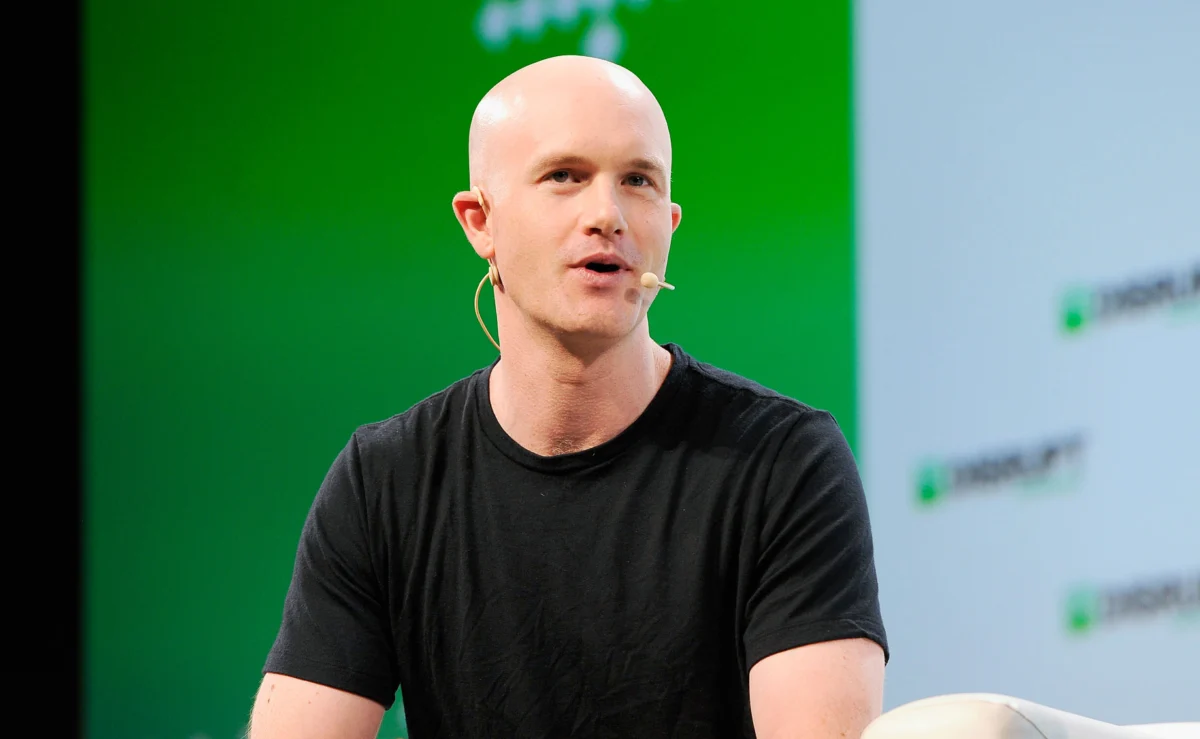
The conclusion of Coinbase’s third-quarter earnings call on Thursday took an unconventional turn when Chief Executive Officer Brian Armstrong admitted to being "distracted" by external prediction markets. During the final moments of the high-stakes financial briefing, Armstrong acknowledged that he had been monitoring real-time wagers on platforms such as Kalshi and Polymarket, specifically those concerning the vocabulary he would use during the call. In an move that has since ignited a debate over corporate governance and market integrity, Armstrong deliberately uttered a string of industry keywords—Bitcoin, Ethereum, Blockchain, Staking, and Web3—to ensure that participants in these "mention markets" could collect on their bets.
The incident occurred as Coinbase reported its financial results for the quarter, a period of significant strategic transition for the largest cryptocurrency exchange in the United States. While earnings calls are typically characterized by rigorous financial disclosure and forward-looking guidance for institutional investors, Armstrong’s detour into the world of speculative betting has raised questions about the professional standards expected of leaders in the digital asset space.
The Mechanics of Mention Markets and the Earnings Call Stunt
Prediction markets, which allow users to trade on the outcome of future events, have seen a surge in popularity and volume throughout 2024 and into 2025. Within this ecosystem, "mention markets" represent a specialized niche where participants wager on whether specific words or phrases will be spoken by public figures during televised events, speeches, or, in this case, corporate earnings calls.
According to data reported by Bloomberg, approximately $84,000 had been wagered across Kalshi and Polymarket regarding the specific terminology Armstrong would employ during the Q3 call. By his own admission, Armstrong was aware of these markets in real-time. "I just want to add here the words Bitcoin, Ethereum, Blockchain, Staking, and Web3 to make sure we get those in before the end of the call," Armstrong stated, effectively settling the outstanding bets in favor of those who had wagered on the inclusion of those terms.
The move was later characterized by Armstrong on the social media platform X (formerly Twitter) as a spontaneous decision. "lol this was fun — happened spontaneously when someone on our team dropped a link in the chat," he wrote. However, what the CEO viewed as a lighthearted engagement with the crypto community was viewed through a much more critical lens by institutional observers and industry veterans.
Institutional Backlash and Concerns Over Market Manipulation
The reaction from the broader financial community was swift and largely critical. Critics argued that the CEO of a multi-billion dollar publicly traded company should not be actively participating in, or influencing, speculative markets that involve his own public appearances. Jeff Dorman, the Chief Investment Officer at digital assets investment firm Arca, was among the most vocal detractors.
In a post on X, Dorman expressed frustration with the optics of the situation, suggesting that such behavior undermines years of effort to legitimize the cryptocurrency industry in the eyes of traditional finance. "You need your head examined if you think it’s cute or clever or savvy that the CEO of the biggest company in this industry openly manipulated a market," Dorman wrote. He further emphasized that such "stunts" make it difficult to educate institutional investors on the value of crypto as a serious, investable asset class. "It’s not fun working tirelessly for 8 years… while one of the supposed ‘leaders’ openly mocks the industry with crap like this," he added.
The sentiment highlights a long-standing tension within the digital asset sector: the divide between the "move fast and break things" ethos of Silicon Valley and the stringent regulatory and ethical requirements of Wall Street. For institutional investors, the integrity of an earnings call is paramount, and any perception of manipulation—even in a niche prediction market—can be seen as a red flag regarding corporate maturity.
Chronology of the Event and Subsequent Reactions
To understand the impact of the event, it is necessary to look at the timeline of the afternoon:
- The Earnings Release: Coinbase released its Q3 2025 financial results, detailing revenue streams, user growth, and the expansion of its institutional services.
- The Formal Call: The executive team, including Armstrong and CFO Alesia Haas, conducted the standard portion of the call, answering questions from analysts regarding the company’s balance sheet and regulatory hurdles.
- The Intervention: Toward the end of the session, Armstrong made his remarks regarding the prediction markets, explicitly listing the keywords required for the "mention market" payouts.
- Market Settlement: Almost immediately, platforms like Polymarket and Kalshi updated their ledgers to reflect that the conditions of the bets had been met, resulting in the distribution of roughly $84,000 to winning bettors.
- Social Media Reaction: Polymarket’s official account described the move as "diabolical work," a slang term often used to describe audacious or chaotic actions.
- Corporate Clarification: A Coinbase spokesperson later told Bloomberg that the company maintains strict internal policies prohibiting employees from participating in prediction markets or related activities that involve the company’s own performance or public statements.
Coinbase’s Strategic Interest in Prediction Markets
The irony of the situation is compounded by Coinbase’s own strategic investments in the prediction market sector. The company has been a vocal supporter of the industry’s growth, having invested in both Kalshi and Polymarket. Furthermore, during the very same earnings call, Armstrong touted the development of the "Everything Exchange," a Coinbase initiative aimed at supporting a wide array of trading assets, including prediction markets.
Prediction markets have recently secured significant legal victories in the United States. Kalshi, for instance, won a landmark court case against the Commodity Futures Trading Commission (CFTC), allowing it to offer election-based contracts to U.S. traders. This legal clarity has seen the valuation of these platforms skyrocket, with Kalshi recently hitting a $5 billion valuation and Polymarket securing backing that values the platform at $8 billion.
By engaging with these markets during an official call, Armstrong may have intended to demonstrate the real-world utility and "fun" aspect of the products Coinbase is championing. However, the overlap between his role as an executive and his role as a "market mover" for these platforms creates a complex conflict of interest that regulatory bodies like the SEC or CFTC may eventually scrutinize.
Broader Implications for Corporate Governance and the SEC
While "mention markets" are relatively small in terms of total dollar value compared to traditional derivatives, the principle of an executive influencing a financial outcome remains a sensitive topic. In the United States, the Securities and Exchange Commission (SEC) maintains strict rules regarding the conduct of executives during "quiet periods" and earnings disclosures. While the SEC typically focuses on the manipulation of stock prices, the lines are blurring as digital assets and prediction markets become more integrated into the broader financial ecosystem.
Legal experts suggest that while Armstrong’s actions might not constitute a direct violation of existing securities laws—given that he was manipulating a prediction market rather than Coinbase’s stock price (COIN)—it sets a precarious precedent. If a CEO can influence a $84,000 mention market, the question arises as to whether they could, or would, influence larger markets with more significant financial stakes.
Furthermore, the incident raises questions about the internal controls at Coinbase. If the CEO is "distracted" by social media links and niche betting markets during a call intended for shareholders, it may signal a lack of discipline that could worry conservative investment firms.
Fact-Based Analysis of the Future of Prediction Markets
Despite the controversy, the growth of prediction markets appears inevitable. These platforms are increasingly viewed as more accurate barometers of public opinion and future outcomes than traditional polling or expert analysis. The "wisdom of the crowd" reflected in the prices of these contracts provides a unique data set for economists and traders alike.
Coinbase’s pivot toward the "Everything Exchange" suggests that the company views prediction markets as a pillar of the next generation of finance. However, for these markets to achieve mainstream adoption and institutional respect, they must distance themselves from the perception of being easily manipulated by the very subjects they are tracking.
The Armstrong incident serves as a case study in the growing pains of the Web3 era. It illustrates a moment where the "founder-led" culture of crypto directly clashed with the expectations of the institutional financial world. As Coinbase continues to bridge the gap between these two spheres, its leadership will likely face increasing pressure to balance the community-driven, often irreverent nature of crypto with the gravity of presiding over a major public corporation.
In the long term, this event may lead to more formalized guidelines regarding how executives interact with decentralized and prediction-based platforms. For now, it remains a stark reminder of the volatility and unpredictability that define the current state of the digital asset industry, where a few spoken words can instantly trigger financial consequences across the globe.