admin
admin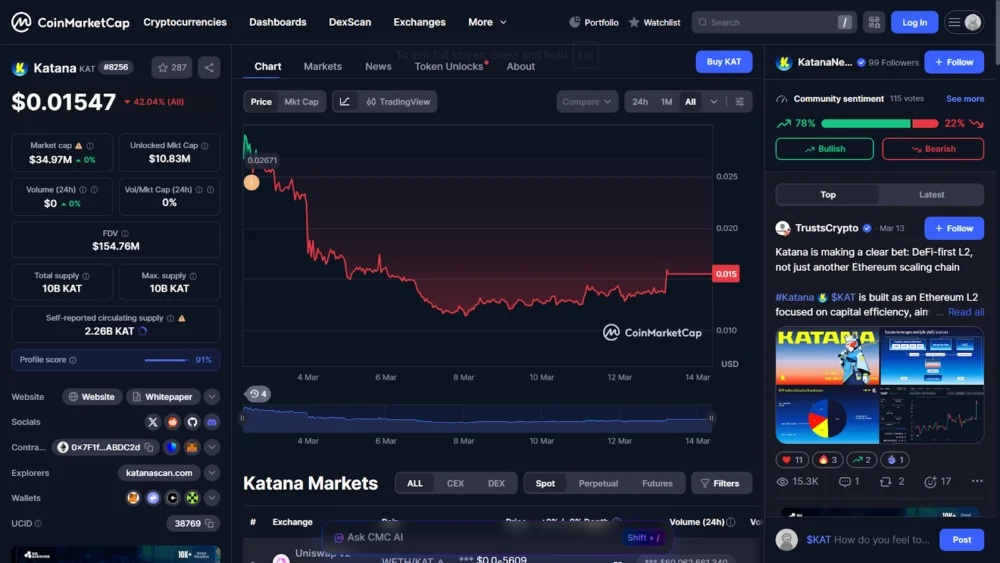
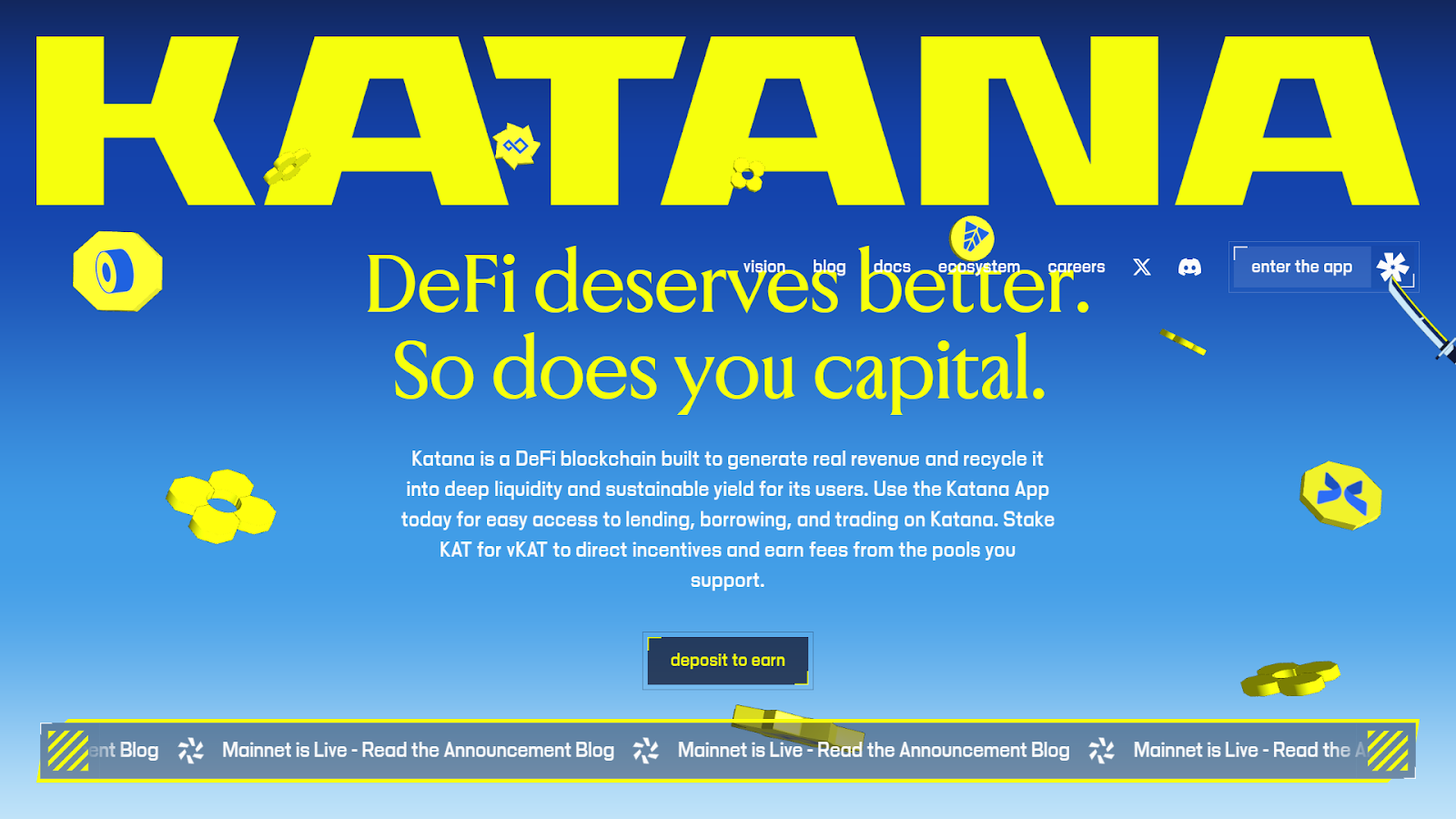
The decentralized finance (DeFi) landscape is continuously evolving, with numerous projects vying for attention by promising innovative solutions. Amidst this dynamic environment, Katana (KAT) has emerged as a notable platform, drawing interest from crypto users seeking robust DeFi projects that transcend fleeting market hype. Katana distinguishes itself by integrating yield generation, liquidity provision, and user rewards within a unified system engineered for practical application and sustained utility. This comprehensive analysis delves into the operational mechanics of Katana, the intrinsic value and functions of the KAT token, the various avenues available for users to earn rewards, and critical risks and considerations associated with engagement, providing an objective overview of its position in the DeFi sector.
Understanding Katana (KAT): A Paradigm Shift in DeFi
Katana (KAT) is a decentralized finance platform meticulously engineered to streamline and enhance interactions with smart contracts and digital assets. It operates on blockchain technology, leveraging self-executing smart contracts to forge a secure and transparent ecosystem conducive to earning, trading, and efficient liquidity management. The native KAT token is central to this ecosystem, functioning dually as a utility and governance token. This dual role empowers token holders with the ability to participate in crucial decision-making processes and access exclusive platform features, fostering a community-driven development model.
The Genesis of Katana: Addressing DeFi’s Challenges
The rapid expansion of the DeFi sector has, at times, led to challenges such as fragmented liquidity, unsustainable yield models, and complex user interfaces that deter broader adoption. Katana was conceived to address these prevalent issues by offering a more integrated, efficient, and user-centric DeFi experience.
Katana’s development is underpinned by a consortium of seasoned contributors and industry luminaries, signaling a strong foundational backing. Notably, the project received incubation from Polygon Labs, a preeminent blockchain ecosystem renowned for its scalable Layer-2 solutions. This strategic partnership provides Katana with access to Polygon’s extensive technical resources and network effects. Further bolstering its credibility, Katana has garnered support from GSR, a global leader in crypto market-making and algorithmic trading. Prominent figures like Marc Boiron, CEO of Polygon Labs, have also contributed significantly, focusing their expertise on critical areas such such as liquidity optimization, robust governance frameworks, and seamless chain-level coordination. The project’s participation in the AggLayer Breakout Program further underscores its commitment to innovation and integration within the broader blockchain infrastructure. This collective expertise and institutional support are pivotal in propelling Katana’s mission to revolutionize decentralized finance through deep liquidity and the cultivation of sustainable yields, positioning it as a significant contender in the competitive DeFi landscape.
Architecting Efficiency: How Katana Operates
Katana’s operational framework is designed as a closed-loop system, where user activity, network fee sharing, and core product offerings are synergistically integrated to maintain capital productivity and foster ecosystem growth. When users stake crypto assets on the Katana Network, these assets are seamlessly incorporated into a sophisticated system engineered to sustain active liquidity across the entire ecosystem. This process begins with the integration of selected assets onto chain upgrades via VaultBridge, subsequently linking these assets to various income-generating sources, and ultimately channeling that value into crucial on-chain markets.
Instead of fragmenting capital across a multitude of disparate applications, Katana strategically consolidates activity into a focused suite of core applications dedicated to swaps, loans, and perpetual trading. This targeted approach is engineered to cultivate deeper market depth, enhance capital efficiency, and deliver more robust user incentives.
Furthermore, Katana proactively builds its own liquidity base by capturing sequencer trading fees and revenue generated from its applications. This self-sustaining reserve is instrumental in supporting stable pricing, optimizing borrowing spread conditions, and bolstering pool strength, particularly during periods of significant market volatility. This model is further complemented by AUSD, Katana’s native stablecoin, which injects additional value and stability into the ecosystem.
VaultBridge: Transforming Bridged Assets into Productive Yield
Central to Katana’s design is VaultBridge, a mechanism that innovatively converts bridged assets into productive yield. This system seamlessly integrates external assets into Katana’s native liquidity ecosystem. By channeling these assets into the platform’s core applications, VaultBridge ensures they consistently generate returns for users while upholding stringent standards of security and operational efficiency. The resultant "vbTokens" represent these yield-generating positions, providing users with a liquid representation of their staked assets within Katana.
Chain-Owned Liquidity (CoL): The Engine of Stability
Katana distinguishes itself through its Chain-Owned Liquidity (CoL) model, which establishes a self-sustaining and concentrated liquidity framework. Unlike traditional DeFi protocols that often rely on external liquidity providers and face fragmentation issues, CoL ensures that liquidity remains robust and stable, even amidst pronounced market fluctuations. This is achieved by systematically recycling fees and yields back into the ecosystem, thereby driving continuous and organic growth. The CoL model reduces reliance on fickle external capital, promoting greater predictability and resilience for the entire network.

The Core Application Stack: Powering Seamless DeFi Interactions
Katana’s integrated ecosystem is powered by a carefully curated core application stack comprising industry-leading protocols: Sushi, Morpho, and Vertex. These applications are pivotal in optimizing liquidity, facilitating lending markets, and enabling advanced trading functionalities.
- Sushi: As a prominent decentralized exchange (DEX), Sushi contributes to Katana’s robust swapping capabilities, ensuring efficient and low-slippage trades for a wide array of digital assets.
- Morpho: This lending protocol enhances Katana’s capital efficiency by providing optimized lending and borrowing opportunities. Morpho’s design allows for greater capital utilization and competitive interest rates, benefiting both lenders and borrowers within the Katana ecosystem.
- Vertex: Focusing on perpetual trading, Vertex equips Katana with sophisticated derivatives trading capabilities, catering to advanced users seeking leveraged positions and hedging strategies.
The strategic integration of these powerful protocols within a single stack provides users with streamlined access to high-performance DeFi tools, minimizing the need to navigate multiple platforms and optimizing the overall user experience.
AUSD: Katana’s Native Stablecoin for Ecosystem Stability
AUSD, Katana’s proprietary stablecoin, serves as a fundamental anchor for the ecosystem by offering a reliable and stable medium of exchange. Its integration supports the platform’s liquidity concentration efforts and significantly enhances Katana’s capacity to deliver predictable and sustainable yields. AUSD mitigates volatility risks within internal transactions and lending protocols, fostering a more secure and reliable environment for users.
The KAT Token: Governance, Utility, and Incentives
The KAT token is the foundational asset of the Katana Network, meticulously designed to power its ecosystem and empower its user base. Its multifaceted utility includes:
- Governance: KAT holders possess the right to influence key decisions pertaining to the network’s development, parameter adjustments, and future direction through a decentralized governance mechanism. This ensures that the platform evolves in alignment with its community’s interests.
- Utility: Holding KAT grants users access to exclusive platform features, enhanced reward structures, and reduced transaction fees, thereby incentivizing active participation.
- Incentives: By staking KAT tokens or contributing to liquidity programs within the network, users are eligible to earn additional benefits and rewards, making the KAT token a central driver of engagement and value accrual within the ecosystem.
KAT Tokenomics and Distribution Strategy
Katana’s tokenomics are crafted to foster a balanced and sustainable ecosystem. The distribution model allocates a significant portion of incentive tokens to reward active participation, with a specific focus on liquidity programs powered by the Chain-Owned Liquidity (CoL) model. This strategic approach ensures that liquidity remains concentrated and stable, which is crucial for the platform’s long-term growth and operational efficiency. By aligning rewards with user engagement, Katana cultivates a thriving network where participants directly benefit from the ecosystem’s success and contribute to its resilience. While specific figures for total supply, circulating supply, and vesting schedules are not fully detailed in the provided text, the emphasis on a "distributed model" and "incentive tokens for participation" suggests a mechanism designed to promote broad ownership and active involvement rather than concentrated control.
Pathways to Participation: Earning KAT Tokens
Katana Network provides diverse opportunities for users to earn KAT tokens, encouraging active participation and maximizing their earning potential within the innovative platform.
- Depositing via VaultBridge (vbTokens): Users can deposit supported assets into VaultBridge, receiving vbTokens in return. These vbTokens act as yield-generating assets within Katana’s liquidity model, seamlessly integrating into the system to generate consistent returns. This method provides a direct and efficient avenue for earning KAT while simultaneously bolstering the ecosystem’s liquidity and stability.
- Liquidity Mining on Integrated Platforms (Sushi & Morpho): By supplying assets to liquidity pools on integrated platforms like Sushi and Morpho, users engage in liquidity mining. This contribution enhances trading efficiency and reduces slippage across the network, for which users are rewarded with KAT tokens. This mutually beneficial process not only increases individual holdings but also strengthens the platform’s underlying liquidity infrastructure.
- KAT Pre-Staking & avKAT: The pre-staking mechanism allows users to lock their KAT tokens, securing the network while earning avKAT, a representation of their staked assets. This process demonstrates a commitment to the network’s long-term stability and success, with avKAT reflecting the proportional contribution and accruing additional rewards as the ecosystem expands.
- External Earn Programs (Binance & OKX): For broader accessibility, Katana has partnered with major centralized exchanges such as Binance and OKX to offer dedicated earning programs. These programs allow users to stake or lend their assets through familiar interfaces, earning KAT in return. These partnerships are crucial for diversifying earning strategies and reaching a wider audience within established and trusted crypto environments.
Katana’s Competitive Edge: A Comparative Analysis
In the crowded landscape of DeFi Layer-2 solutions, Katana presents several distinct advantages that differentiate it from many counterparts.
- Integrated Core Application Stack: Katana’s utilization of a tightly integrated stack comprising Sushi, Morpho, and Vertex contrasts sharply with many Layer-2s where applications often exist in fragmented ecosystems, leading to compatibility issues and a disjointed user experience. This integration on Katana results in stronger performance and a smoother user flow across various DeFi primitives.
- Robust Ecosystem Support: Backing from Polygon Labs and GSR provides Katana with significant institutional endorsement, technical expertise, and financial resources. This level of support is crucial for long-term growth, product development, and navigating regulatory complexities, an advantage not uniformly present across all DeFi Layer-2 projects which may lack strong institutional foundations.
- Chain-Owned Liquidity (CoL) Model: Katana’s CoL model directly addresses the challenge of liquidity fragmentation prevalent in many DeFi protocols. By concentrating liquidity and recycling fees, CoL ensures stability and reduces reliance on external liquidity providers. In contrast, many other Layer-2s often depend on fragmented liquidity pools, which can lead to inefficiencies, increased slippage, and greater susceptibility to market volatility.
- Native Stablecoin (AUSD): The presence of AUSD provides Katana with an internal, stable asset for trading, lending, and overall ecosystem growth. Many other Layer-2 solutions lack a native stablecoin and must rely on external options, which can introduce additional dependencies and potential points of failure or friction. AUSD enhances the platform’s self-sufficiency and financial stability.
- Innovative Yield Generation: Katana’s VaultBridge mechanism is designed to actively transform bridged assets into yield-producing positions. This focus on asset productivity and capital efficiency often surpasses the narrower yield options available on other Layer-2s, which may offer more conventional or less integrated approaches to yield generation.
Navigating the Landscape: Risks and Considerations
Engaging with any cryptocurrency project, including Katana, necessitates a thorough understanding of potential risks and critical considerations. While Katana offers innovative features and opportunities, users must evaluate inherent challenges within the DeFi space.
- Smart Contract Risks: As with all blockchain protocols, Katana is reliant on the integrity of its smart contracts. Despite rigorous auditing, vulnerabilities, bugs, or exploits could lead to loss of funds. Users should acknowledge the inherent risks associated with decentralized code.
- Market Volatility: The value of the KAT token, like most cryptocurrencies, is subject to extreme market volatility driven by supply and demand, speculative trading, and broader market sentiment. Significant price fluctuations can impact the value of investments and rewards.
- Impermanent Loss: For users providing liquidity to pools, particularly in pairs with volatile assets, impermanent loss remains a risk. This occurs when the price ratio of deposited assets changes after they are deposited, potentially resulting in a lower dollar value than if the assets had simply been held.
- Regulatory Uncertainty: The regulatory landscape for cryptocurrencies and DeFi is still evolving globally. Future regulations could impact Katana’s operations, token utility, and market accessibility, potentially affecting its value and growth trajectory.
- Competition: The DeFi sector is highly competitive, with new Layer-2 solutions and protocols emerging regularly. Katana must continuously innovate and adapt to maintain its competitive edge and attract users from other platforms.
- Centralization Risks (Despite Decentralization Goals): While aiming for decentralization, any project relies on its core development team and initial backers. The level of true decentralization in governance and operational control is a continuous journey, and initial dependencies could pose risks.
Market Performance and Trajectory of the KAT Token
The KAT token has demonstrated notable activity within the cryptocurrency market since its inception. Recent data from platforms like Binance Futures indicates a price of approximately $0.01597, reflecting a significant 15.72% increase over a 24-hour period. During this timeframe, the token experienced a daily high of $0.01708 and a low of $0.01328, accompanied by a substantial trading volume exceeding 866 million KAT, equivalent to approximately $13.57 million. This level of trading volume underscores considerable market interest and liquidity.
On Coinbase, Katana operates on the zkSync Era platform. While the last recorded price on Coinbase was $0.00062011, it is important to note that token prices can vary across exchanges due to liquidity differences and market dynamics. The circulating fixed supply of KAT tokens stands at 256 million, out of a total supply of 2 billion tokens. Historically, the KAT token achieved an all-time high of $0.0580. These figures collectively illustrate KAT’s dynamic market performance and its potential as a growing asset within the cryptocurrency ecosystem, albeit with the inherent volatility typical of nascent digital assets. The discrepancy in reported prices between platforms like Binance Futures and Coinbase suggests differing market depths and possibly different token contract representations or trading pairs, which is a common characteristic in the fragmented crypto market.
The Future Outlook for Katana Network
The future trajectory of Katana appears promising, underpinned by its continuous innovation within the burgeoning DeFi space. The platform’s strategic emphasis on VaultBridge yield farming remains a core focus, offering users compelling opportunities to earn rewards while simultaneously contributing to the platform’s liquidity infrastructure and mitigating fragmentation. Katana’s unwavering commitment to its Chain-Owned Liquidity (CoL) model is instrumental in ensuring a stable, efficient, and resilient ecosystem, a critical differentiator that sets it apart from many other crypto projects.
As the adoption of Katana’s platform expands, the project aims to broaden its ecosystem through additional integrations and strategic partnerships. Such expansions are vital for solidifying its market position and extending its reach within the broader blockchain economy. The dedication to developing user-centric features and implementing sustainable growth strategies highlights Katana’s significant potential to emerge as a leading force in decentralized finance, driving both innovation and long-term value for its participants. This includes potential integrations with other Layer-1 and Layer-2 solutions, expanding the range of supported assets, and developing new DeFi primitives that leverage its core liquidity model.
Conclusion
Katana’s strategic blueprint, centered on sophisticated yield farming mechanisms, a robust Chain-Owned Liquidity model, and an ambitious ecosystem expansion roadmap, firmly positions it as a competitive and potentially transformative player within the decentralized finance landscape. To fully realize its potential and achieve widespread adoption, the project must prioritize several key areas. These include ensuring seamless integrations with a diverse array of blockchain networks and applications, implementing robust security measures to protect user assets and maintain trust, and upholding transparent governance practices that empower its community. Strengthening partnerships with established platforms and continuously innovating its product offerings will be paramount for ensuring long-term sustainability and relevance in a rapidly evolving sector. Furthermore, clear and consistent communication of its unique value proposition, coupled with diligent execution of its development roadmap, will be critical in building enduring trust and fostering deep engagement within the global crypto community. Katana’s journey exemplifies the ongoing evolution of DeFi, where efficiency, stability, and user empowerment are increasingly becoming the hallmarks of successful projects.
Frequently Asked Questions (FAQs)
What is Katana (KAT) network in simple terms?
Katana (KAT) network is a decentralized finance (DeFi) platform designed to optimize yield generation and liquidity management. It utilizes a Chain-Owned Liquidity model to ensure stability and provides users with innovative methods to earn rewards by participating in its crypto ecosystem.
Is there a KAT token airdrop for Polygon stakers?
Yes, information indicates there is a KAT token airdrop for Polygon stakers. Eligible participants who stake on the Polygon network may receive KAT tokens as rewards, incentivizing engagement within the broader ecosystem.
Is KAT a good investment in 2026?
Evaluating whether KAT is a suitable investment in 2026 depends on individual financial objectives, risk tolerance, and the evolving market conditions. The project’s strategic focus on yield farming, ecosystem growth, and innovative liquidity incentives positions it as a promising option within the DeFi space, but all investments carry inherent risks.
What wallets support KAT token?
The KAT token is supported by a variety of compatible wallets, including popular options such as MetaMask, Trust Wallet, and other wallets that are compatible with the zkSync Era platform. These wallets enable users to securely store, manage, and interact with their KAT tokens.
How does Katana ensure liquidity stability?
Katana ensures liquidity stability primarily through its Chain-Owned Liquidity (CoL) model. This approach centralizes and optimizes liquidity management, minimizing fragmentation and significantly enhancing the overall efficiency and resilience of the platform’s liquidity pools.