admin
admin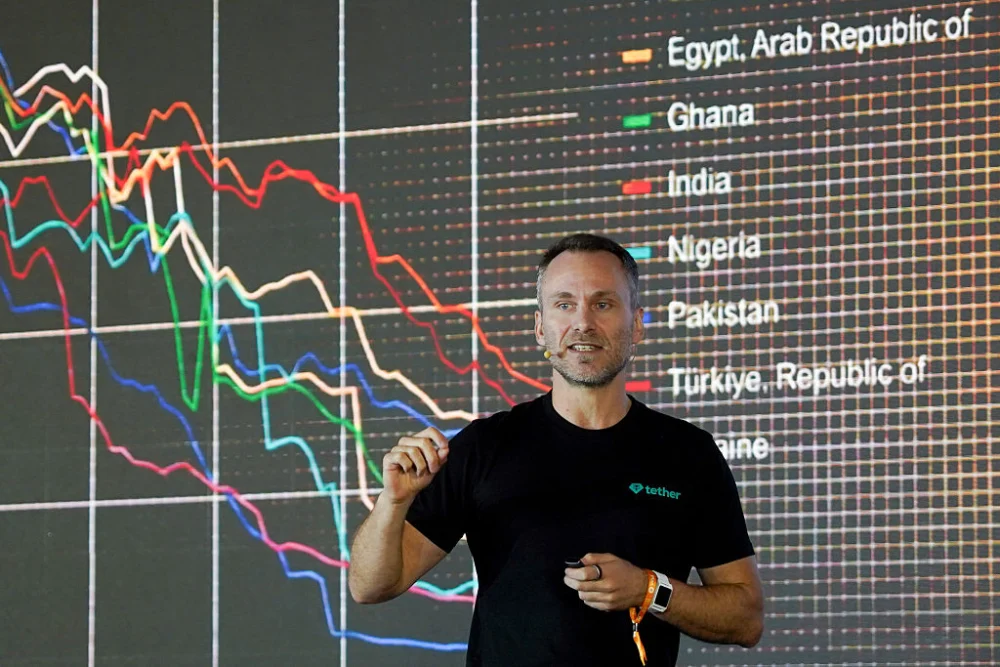
The digital asset landscape underwent a significant transformation this week as Tether, the issuer of the world’s most widely used stablecoin, USDT, initiated an aggressive media and regulatory blitz to signal its transition into the American mainstream. Led by CEO Paolo Ardoino, the company’s recent activities—including high-profile features in Fortune, Bloomberg, and Reuters—mark a calculated departure from its historical status as an offshore entity often at odds with Western regulators. The centerpiece of this campaign is the launch of USAT, a U.S.-regulated stablecoin issued through Anchorage Digital Bank, designed specifically to meet federal requirements and challenge the domestic dominance of Circle’s USDC.
This strategic move comes at a time of intensifying competition within the stablecoin sector. On Wednesday, Fidelity Investments entered the fray with its own "FIDD" token, joining a growing list of traditional financial heavyweights including JPMorgan Chase and PayPal. As the stablecoin market matures into a multi-trillion-dollar infrastructure for global payments, Tether is attempting to shed its reputation for opacity and rebrand itself as a transparent, compliant, and indispensable pillar of the U.S. dollar’s global influence.
A Decadal Evolution: From 2014 to the USAT Launch
To understand Tether’s current trajectory, one must look at its decade-long evolution. Founded in late 2014, Tether was originally conceived as a way to provide liquidity to crypto exchanges that lacked access to traditional banking. Paolo Ardoino joined the firm just two months after its inception, witnessing its rise from a niche utility to a global financial phenomenon. For much of its history, Tether operated from the periphery, avoiding U.S. jurisdictions while facing intense scrutiny from the Department of Justice and the Commodity Futures Trading Commission (CFTC) regarding the composition of its reserves.
The company’s relationship with the United States reached a nadir in mid-2024 when reports in The Economist characterized the platform as a "money launderer’s dream," citing allegations that Russian operatives and drug cartels utilized USDT to bypass international sanctions. However, the launch of USAT signifies a definitive shift in strategy. Unlike USDT, which remains the global flagship with $187 billion in circulation but does not meet specific U.S. regulatory frameworks, USAT is built from the ground up to comply with emerging federal standards. By partnering with Anchorage Digital, the first crypto-native firm to receive a national bank charter from the Office of the Comptroller of the Currency (OCC), Tether is positioning itself as a legitimate partner to the U.S. government.
Market Dominance and Financial Performance Data
The scale of Tether’s operations remains unmatched in the digital asset industry. As of early 2026, USDT maintains a market capitalization larger than all its competitors combined, supported by a user base of approximately 536 million people. According to internal data shared by Ardoino, the platform is expanding at a rate of 30 million new users per quarter, a growth trajectory he compares to the early days of Facebook rather than traditional fintech applications.
The financial windfall from this growth has been unprecedented. In 2025, Tether reported a record-breaking profit of more than $15 billion. These earnings are primarily derived from the yield on its massive holdings of U.S. Treasury bills, which serve as the reserve backing for its tokens. Unlike traditional banks, Tether does not share this interest with its token holders—a model that has allowed it to amass approximately $30 billion in excess reserves. Ardoino maintains that for its core users in hyper-inflationary economies, the stability of the dollar is a greater priority than a 4% or 5% annual yield.
The Cantor Fitzgerald Connection and Reserve Management
A critical component of Tether’s newfound institutional credibility is its relationship with Cantor Fitzgerald, the prominent Wall Street brokerage led by Howard Lutnick. Lutnick, who recently transitioned into a role as the U.S. Secretary of Commerce, has been a vocal advocate for Tether, publicly vouching for the existence and security of its reserves.
Cantor Fitzgerald manages a significant portion of Tether’s Treasury portfolio, creating a direct link between the stablecoin issuer and the highest levels of American commerce policy. Ardoino argues that this structure makes Tether more resilient than traditional banks, which operate on fractional reserve systems. While a typical bank might only hold 10% of deposits in liquid form, Ardoino asserts that Tether remains over-collateralized, claiming that even if the price of Bitcoin—which makes up a small portion of its reserves—were to drop to zero, the company would still have more than enough capital to redeem every USDT token in circulation.
Regulatory Cooperation and Law Enforcement Integration
In a bid to silence critics who associate the platform with illicit finance, Tether has aggressively expanded its compliance and law enforcement departments. The company currently collaborates with nearly 300 law enforcement agencies across more than 60 countries, including the FBI and the U.S. Secret Service.
Ardoino highlights that Tether has proactively frozen approximately $3.5 billion in tokens linked to criminal activity, including $225 million connected to "pig-butchering" scams—a sophisticated form of investment fraud. He argues that blockchain technology provides a level of traceability that cash cannot match. "If there are cash pallets of hundreds of billions of dollars roaming around the world, U.S. law enforcement can hardly do anything about it," Ardoino stated. "But with USDT, we demonstrated that we could quickly freeze the funds."
Despite these efforts, Tether continues to face skepticism from credit rating agencies. In late 2025, S&P Global Ratings assessed USDT’s stability as "weak." Ardoino has dismissed these assessments, pointing to the company’s performance during the May 2022 collapse of the TerraLuna ecosystem. During that period of market contagion, Tether processed $7 billion in redemptions within 48 hours and $20 billion over 20 days without failing to meet a single request—a feat Ardoino claims few traditional banks could replicate during a run.
Diversification: Gold, AI, and Sovereign Wealth Aspirations
Tether’s ambitions now extend far beyond the realm of stablecoins. The company is effectively transforming into a diversified investment powerhouse, reminiscent of a sovereign wealth fund. One of its most significant plays is in the precious metals market. Tether currently holds approximately 140 tons of physical gold, valued at roughly $24 billion. This makes the company one of the largest private holders of gold in the world, surpassing the reserves of many sovereign central banks.
In addition to gold, Tether is making a massive bet on decentralized artificial intelligence through its platform, Qvac. Named after a concept in Isaac Asimov’s "The Last Question," Qvac aims to provide AI capabilities to users in developing nations who may be priced out of centralized services like OpenAI or Google Gemini. By running AI models locally on smartphones, Tether hopes to leverage its 536 million users to create the world’s largest decentralized AI network.
The company’s investment portfolio also includes:
- $1 billion committed to Neura, a German AI robotics firm.
- $775 million invested in the social media platform Rumble.
- Hundreds of millions allocated to satellite technology, data centers, and sustainable agriculture.
- Strategic stakes in sports, including the Juventus Football Club.
Ardoino defines this eclectic mix of investments as a "stability" strategy, ensuring that the company has tangible assets in land, food production, and communication infrastructure to support its digital ecosystem for decades to come.
Broader Implications and the Legislative Landscape
The success of Tether’s pivot to the U.S. will likely depend on the passage of the CLARITY Act, a piece of legislation currently moving through Congress. The act seeks to establish a clear federal framework for stablecoins while potentially prohibiting issuers from paying interest to holders—a move intended to protect traditional bank deposits. Such a law would codify Tether’s existing business model while creating hurdles for competitors who use yield-sharing as a marketing tool.
From a geopolitical perspective, Tether frames its mission as a tool for "financial inclusion." By providing a digital dollar to citizens in countries like Argentina and Turkey—where local currencies have lost over 80% of their value in five years—Tether argues it is single-handedly preserving the global dominance of the U.S. dollar.
As the 2026 election cycle approaches, Ardoino is betting that the narrative of "dollarizing the world" will resonate with both sides of the political aisle. Whether the U.S. government views Tether as a systemic risk or a strategic asset remains the most critical question for the company’s future. For now, with billions in profit and a growing alliance with Wall Street, Tether is no longer an outsider looking in; it is an architect of the new global financial order.