Dwi Wanna
The Bitcoin network is currently traversing a period of profound contradiction, characterized by a "high-security, low-profitability" environment that is reshaping the industrial landscape of digital asset production. While the network’s aggregate computing power, known as the hashrate, has solidified its position above the historic one-zettahash (ZH) threshold, the financial rewards for maintaining this security have dwindled to all-time lows. This divergence has triggered what market analysts describe as a "slow-motion liquidation" within the capital markets, as the mining sector grapples with the fallout of the April 2024 halving and the rising costs of global energy.
The Zettahash Paradox: Record Security Amid Financial Strain
At the protocol level, Bitcoin has never been more resilient. The hashrate—the total computational power dedicated to securing the network—recently crossed the 1,000 exahash per second (EH/s) mark, or one zettahash. This represents a monumental achievement in decentralized infrastructure, making the cost of a "51% attack" prohibitively expensive for even nation-state actors. However, for the commercial entities providing this power, the economics are increasingly dire.
The primary metric for mining health, "hashprice," which measures the daily revenue generated per unit of compute (specifically dollars per petahash per second), has collapsed. In recent weeks, hashprice plummeted nearly 50%, reaching an all-time low of approximately $34.20 per PH/s. To put this in perspective, during the 2021 bull market, hashprice frequently exceeded $300 per PH/s. The current valuation leaves little to no room for operational errors, effectively evaporating the gross margins of all but the most efficient operators.
The Mechanism of Difficulty and Recent Retargets
The Bitcoin protocol is designed to adjust its mining difficulty approximately every two weeks (2,016 blocks) to ensure that blocks are found every ten minutes on average. According to data from Cloverpool, Bitcoin mining difficulty experienced a downward adjustment of approximately 2% at block height 925,344 on November 27, settling at 149.30 trillion. This marked the second consecutive decline within a single month, a rare occurrence in an era otherwise defined by aggressive hashrate expansion.
Despite these difficulty drops, which theoretically make it easier to mine Bitcoin, the total hashrate has remained stubbornly high. This suggests that as inefficient miners shut down their machines, they are being replaced almost instantly by more powerful, next-generation hardware deployed by industrial-scale firms. The ten-minute block interval remains steady, indicating that the network is successfully calibrating, even as the participant pool undergoes a radical transformation.
The Breakeven Math: Efficiency as a Survival Strategy
The current economic climate has created a stark bifurcation in the mining industry. Data analyzed by Nico Smid, founder of Digital Mining Solution, highlights the precarious nature of modern mining fleets. For operators running hardware with an efficiency rating below 30 joules per terahash (J/TH)—such as the Bitmain Antminer S19 series—survival depends on securing ultra-low energy costs.

When factoring in rent, labor, insurance, and maintenance, these operators require "all-in" power costs below 5 cents per kilowatt-hour ($0.05/kWh) just to reach a break-even point. In many developed markets, industrial electricity rates have climbed well above this threshold due to inflation and grid demand, forcing thousands of older rigs to go "dark."
In contrast, the miners currently expanding are those with access to specialized energy arrangements. These include:
- Sovereign-Linked Facilities: Operations in nations like Bhutan or Ethiopia, where state-owned energy surpluses are diverted to mining.
- Power Purchase Agreements (PPAs): Long-term, fixed-rate contracts that shield miners from spot-market volatility.
- Off-Grid Generation: Operations utilizing stranded natural gas or co-located renewable energy sources.
Consolidation Through Distress and the Tether Exit
The resilience of the aggregate hashrate masks a significant consolidation of power. As revenue compresses, distressed mining fleets are often forced into liquidation or acquisition. Creditors are increasingly seizing inefficient mining sites, while brokers repackage used hardware for shipment to regions with lower energy costs, such as parts of Africa or Southeast Asia.
The difficulty of maintaining operations in the current climate is evidenced by the recent retreat of major players. Tether, the issuer of the world’s largest stablecoin (USDT), reportedly halted its mining venture in Uruguay. The company cited high energy costs and uncertainty regarding tariffs as the primary drivers for the exit. Industry analysts suggest that if a firm with Tether’s massive cash reserves and "deep pockets" finds a specific jurisdiction untenable, smaller independent miners in similar regions face almost certain insolvency.
This consolidation carries systemic risks. As the number of entities capable of funding the network’s security shrinks, the network becomes more exposed to single points of failure. These include localized regulatory crackdowns, extreme weather events affecting specific grids, or changes in tax policy within the few remaining "miner-friendly" jurisdictions.
The Evolution of the Business Model: The AI and HPC Pivot
Faced with the volatility of Bitcoin mining revenue, public mining companies are undergoing a fundamental identity shift. Many are no longer positioning themselves as "pure-play" Bitcoin miners but rather as energy-infrastructure and data-center businesses.
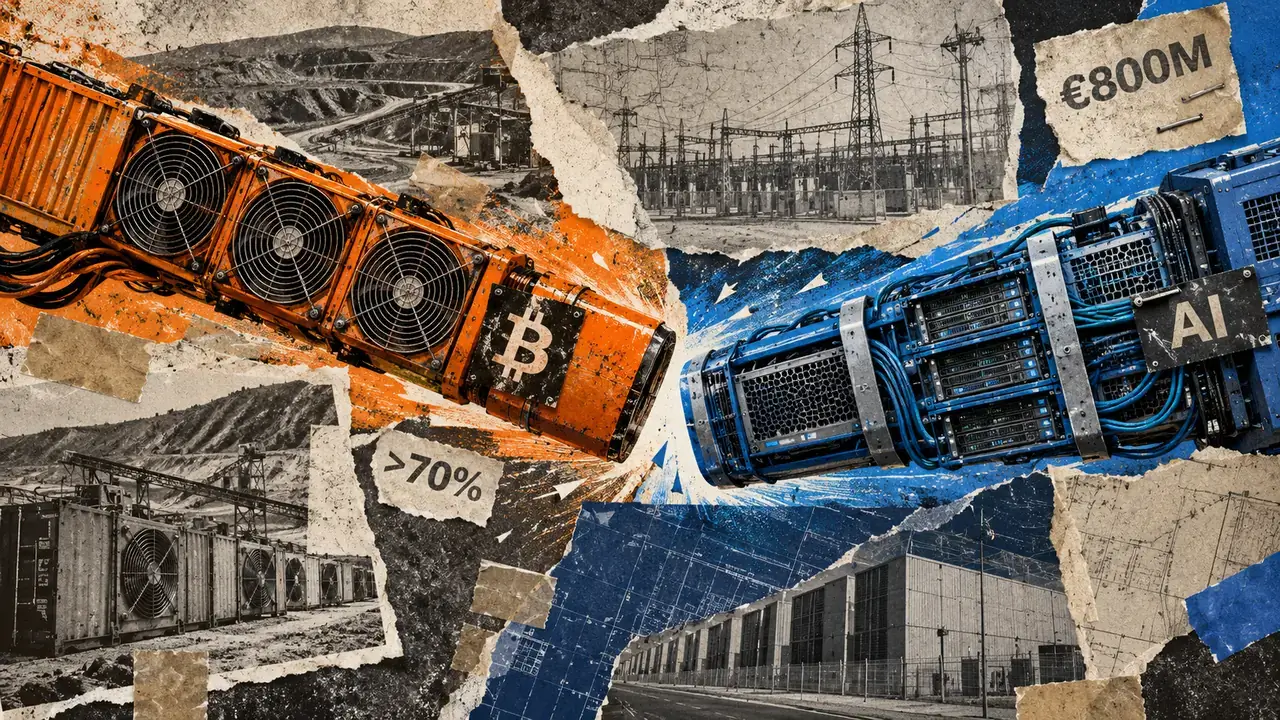
A significant trend in 2024 has been the pivot toward High-Performance Computing (HPC) and Artificial Intelligence (AI) workloads. Estimates suggest that up to 70% of leading public Bitcoin miners are now exploring or actively implementing AI-related income streams. By hosting GPUs for AI training alongside their ASIC miners, these firms can secure steady, fiat-denominated cash flow through multi-year contracts. This "dual-track" model allows them to survive the "lean years" of Bitcoin mining while retaining the "upside" of mining if Bitcoin prices or transaction fees spike.

The capital markets have responded to this shift with extreme volatility. In November, public mining stocks saw nearly $30 billion in market value erased as investors reassessed the sector’s profitability. Total market capitalization for the sector slid from a peak of $87 billion to $55 billion, before a modest recovery toward the $65 billion mark. Investors are increasingly favoring companies like Core Scientific and IREN (formerly Iris Energy), which have made the most aggressive strides into the AI data center space.
Geopolitical Shifts: China’s "Zombie Capacity" and the Global Map
The geography of Bitcoin mining is also witnessing a surprising resurgence. Despite the 2021 blanket ban on mining in China, recent data from Hashrate Index suggests that China still accounts for approximately 14% of the global hashrate. This "underground" or "gray-market" capacity operates largely off the radar, utilizing surplus hydroelectric power in rural provinces or coal-adjacent industrial loads.
This "zombie capacity" acts as a permanent competitive pressure on compliant Western miners. These underground operations often bypass the stringent environmental disclosures, labor laws, and financing costs that public Western miners must navigate. Furthermore, as Western miners face narrowing paths due to rising interconnection costs and stricter grid curtailment rules, the presence of a large, unregulated Chinese mining contingent keeps the network difficulty high, further squeezing the margins of transparent operators.
Chronology of Recent Mining Milestones
To understand the current crisis, one must look at the timeline of events leading into the "Zettahash Age":
- April 20, 2024: The fourth Bitcoin Halving occurs, reducing the block reward from 6.25 BTC to 3.125 BTC. Overnight, the "issuance" component of miner revenue is cut in half.
- May – August 2024: Post-halving "shakeout" begins. Older generation hardware (S19s and M30s) begins to disconnect as hashprice dips below $50/PH/s.
- September 2024: Bitcoin hashrate hits a milestone 700 EH/s, signaling that industrial deployments of Bitmain S21 and MicroBT M60 miners are offsetting the decommissioning of older rigs.
- October 2024: Major public miners announce significant AI hosting deals, signaling a shift in corporate strategy.
- November 2024: Hashprice hits a record low of $34.20. Two consecutive difficulty drops occur as high-cost miners finally capitulate.
- Late November 2024: Aggregate hashrate stabilizes above 1 ZH (1,000 EH/s) despite record-low profitability.
Broader Impact and Future Outlook
The industry is now watching three critical indicators to determine the next phase of this restructuring:
- Transaction Fee Volatility: While the base block reward is fixed, transaction fees are market-driven. The rise of "Inscriptions" and "Runes" on the Bitcoin blockchain provided a temporary revenue cushion in early 2024. If a new wave of on-chain activity drives fees higher, it could provide a lifeline for marginal miners.
- Energy Policy and Supply Chain: The cost of capital for mining is heavily influenced by policy. In the United States, the regulatory stance on grid interconnection for data centers will determine how quickly miners can expand or pivot to AI. Any escalation in export controls on high-efficiency chips could also disrupt the hardware replacement cycle.
- The "Flexible Sink" Model: Bitcoin mining is increasingly being viewed by grid operators as a "flexible load" that can be turned off during periods of high demand. This synergy with the energy grid may become the primary survival mechanism for miners, allowing them to earn "curtailment credits" that offset their energy costs.
In conclusion, the Bitcoin network is currently experiencing a paradox of strength and struggle. While the protocol remains at its most secure in history, the commercial entities providing that security are facing an existential test of efficiency and adaptability. The "Zettahash Era" is likely to be defined not by how many miners exist, but by the sophistication of the few that remain. As the sector matures, the "pure-play" Bitcoin miner may become a relic of the past, replaced by diversified energy-infrastructure giants that treat Bitcoin as just one of many ways to monetize an electron.