admin
admin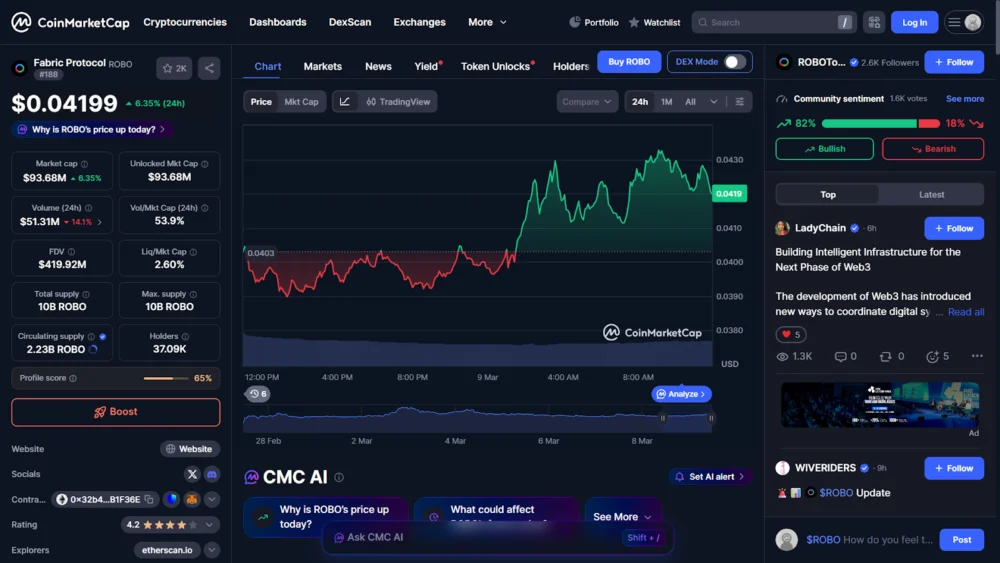
Fabric Protocol (ROBO) represents a pivotal development at the intersection of robotics, blockchain technology, and verifiable automation, garnering significant attention within the rapidly evolving decentralized network space. This comprehensive overview aims to dissect how Fabric Protocol seamlessly integrates robotic operations with distributed ledger technology, fostering a new paradigm of transparency, efficiency, and trust. Readers will gain an in-depth understanding of the ROBO token’s utility, the project’s distinguishing features, and its potential implications for investors and the broader technological landscape leading up to 2026. This article will meticulously break down the operational mechanics of Fabric Protocol, elucidate the intrinsic value proposition of the ROBO token, and offer a forward-looking perspective on its projected trajectory and market relevance.
The Dawn of Decentralized Robotics: Understanding Fabric Protocol (ROBO)
Fabric Protocol (ROBO) emerges as a groundbreaking blockchain project engineered to unify robots, autonomous systems, and on-chain coordination within a singular, cohesive framework. Its core innovation lies in empowering machines with the capacity to establish immutable identities, receive and execute tasks, verify the completion of assigned work, and interact autonomously with smart contracts—all without the need for a singular, centralized intermediary. This architectural design provides a compelling real-world application of blockchain technology, demonstrating its utility far beyond conventional financial transactions, extending into the realm of physical machine activity and the nascent robot economy.
The project operates in close conjunction with the Fabric Foundation, an entity dedicated to nurturing the overarching vision and ensuring the long-term, sustainable development of the protocol. Fundamentally, Fabric Protocol is meticulously designed to imbue robotic operations with unprecedented levels of transparency, traceability, and on-chain verifiability. This foundational objective grants the ROBO token a crucial role within an ecosystem where intelligent machines, critical data, and economic incentives converge under a rigorously defined, trustless rule set.
The Genesis and Vision: OpenMind’s Foray into Robotic Decentralization
The conceptualization and initial development of Fabric Protocol are attributed to OpenMind, a dedicated team at the forefront of advancing robotics and blockchain integration. OpenMind’s significant contribution includes the introduction of the OM1 OS, an open-source operating system conceived as a universal platform for a diverse range of robotic entities. This foundational software layer meticulously laid the groundwork for Fabric Protocol, facilitating seamless and secure collaboration across a heterogeneous robot ecosystem.
OpenMind has strategically implemented a transparent token distribution model to ensure the robust operation of the protocol and to provide incentives for active participation within its burgeoning network. This carefully considered approach to resource allocation is designed to foster organic growth and sustained innovation within the global robot economy, aligning the interests of all stakeholders, from developers and robot operators to end-users. The team’s vision extends beyond mere technological integration; it seeks to create a truly autonomous and self-governing robotic infrastructure.
Addressing Critical Challenges in the Robot Economy
Fabric Protocol systematically addresses several long-standing and emerging challenges within the robot economy, paving the way for a more efficient, secure, and collaborative operational paradigm. The project’s solutions are designed to mitigate risks associated with centralized control, enhance operational integrity, and unlock new economic opportunities for autonomous systems. Here are five key problems it aims to solve:
- Lack of Standardized and Verifiable Robot Identity: In traditional systems, robots often lack a universally recognized, tamper-proof identity, making it difficult to verify their authenticity, track their activities, and establish trust in collaborative environments. Fabric Protocol provides a unique, on-chain machine identity for each robot, fostering accountability and security.
- Inefficient and Centralized Task Allocation: Current robotic operations frequently rely on centralized management systems for task distribution, which can lead to bottlenecks, single points of failure, and suboptimal resource utilization. The protocol introduces decentralized task allocation via smart contracts, enabling robots to bid for and execute tasks autonomously and efficiently.
- Difficulty in Verifying Robotic Work and Ensuring Accountability: Proving that a robot has accurately completed a task can be challenging, especially in complex or sensitive operations. This lack of verifiable proof hinders trust and fair compensation. Fabric Protocol’s Proof of Robotic Work (PoRW) mechanism provides an immutable, on-chain record of completed tasks, ensuring transparency and enabling automated rewards.
- Security Vulnerabilities and Data Integrity Issues: Centralized control points in robotic networks are susceptible to cyberattacks and data manipulation, posing significant risks to operational safety and data integrity. By leveraging blockchain’s inherent security features, Fabric Protocol ensures that all interactions and data exchanges are transparent, tamper-proof, and resilient against malicious actors.
- Limited Economic Participation for Autonomous Machines: Robots, despite their productive capabilities, have historically been relegated to mere tools, unable to participate directly in economic value creation. Fabric Protocol transforms robots into independent economic agents, capable of earning, spending, and contributing to a decentralized marketplace, thereby unlocking new dimensions of economic activity.
Deconstructing Fabric Protocol’s Operational Mechanics
Fabric Protocol functions as a sophisticated decentralized network, meticulously engineered to enable robots to operate as independent, self-governing participants within the broader robot economy. It provides the essential infrastructure for autonomous machines to seamlessly interact, collaborate, and execute tasks with unprecedented levels of autonomy and security. Its main components are:
Robot Identity & On-Chain Registry
At the core of Fabric Protocol is the assignment of a unique, immutable machine identity to each participating robot, meticulously recorded on the blockchain. This on-chain identity serves as a digital passport, allowing robots to securely authenticate themselves, engage with other entities within the network, and maintain a transparent, verifiable ledger of all their activities. This system mitigates risks of impersonation and ensures a high degree of accountability.
Decentralized Task Allocation
The protocol harnesses the power of smart contracts to facilitate the decentralized allocation of tasks across its expansive network. Robots are empowered to autonomously evaluate and bid for tasks based on their specialized capabilities, current availability, and operational parameters. This creates a highly efficient and self-organizing system where work is dynamically distributed without any reliance on a centralized command-and-control authority, optimizing resource utilization and fostering a competitive marketplace for robotic services.
Proof of Robotic Work (PoRW)
Proof of Robotic Work (PoRW) stands as a cornerstone mechanism designed to validate the successful completion of tasks by robots. This innovative system meticulously records verified work on the blockchain, providing an undeniable and immutable audit trail. Upon successful verification, robots are automatically rewarded for their contributions, establishing a transparent, accountable, and incentive-driven process. The verification process can involve sensor data feeds, attestations from other network participants, or even AI-driven validation, ensuring robustness.

Verifiable Compute & Smart Contracts
Fabric Protocol profoundly leverages smart contracts to enable robots to execute complex tasks and exchange critical data in a secure and trustless environment. The concept of "verifiable compute" is paramount here, guaranteeing that all computational operations performed by robots are transparent, auditable, and demonstrably tamper-proof. This makes Fabric Protocol an ideal candidate for AI crypto investments, as it ensures the integrity of AI-driven decisions and actions in autonomous systems.
Key Features Driving the Robot Economy
Fabric Protocol introduces a comprehensive suite of features that are poised to redefine the dynamics of how robots interact and operate within a decentralized network. These capabilities are strategically designed to catalyze the growth of the global robot economy and significantly enhance collaboration across the entire ecosystem:
- Decentralized Autonomous Robot Identities (DARI): Providing tamper-proof, blockchain-based identities for robots, enabling secure authentication, reputation building, and compliance.
- Trustless Task Marketplace: An open and transparent marketplace where robots can autonomously discover, bid on, and execute tasks, fostering efficiency and fair compensation.
- Verifiable Execution Environment: Ensures that all robotic operations and data processing are auditable and immutable, preventing fraud and ensuring operational integrity.
- On-Chain Reputation System: A mechanism for robots to build and maintain a reputation based on their performance and verified work, incentivizing high-quality contributions.
- Interoperability Framework: Designed to integrate with existing robotic hardware and software frameworks, minimizing barriers to adoption and fostering a broad ecosystem.
- Scalable Infrastructure: Initially deployed on a robust Layer 2 solution (Base, EVM-compatible), with strategic plans for transitioning to a dedicated Layer 1 blockchain optimized for machine-native operations, ensuring future scalability and performance.
- Incentive Mechanisms: A robust system of rewards, facilitated by the ROBO token, to incentivize participation, secure the network, and ensure the continuous contribution of robotic resources.
The ROBO Token: Fueling the Decentralized Robot Economy
The ROBO token serves as the native utility asset of the Fabric Protocol, acting as the indispensable fuel that powers the decentralized network and underpins the burgeoning robot economy. It occupies a central position in facilitating transactions, incentivizing active participation, and enabling decentralized governance within the Fabric ecosystem. Its intricate design ensures that every critical function within the protocol is intrinsically linked to the ROBO token, thereby cementing its value and utility.
ROBO Tokenomics & Supply
The ROBO token is characterized by a fixed total supply of 10 billion tokens, a strategic decision aimed at ensuring long-term stability and value alignment for its holders. This fixed supply model can potentially introduce deflationary pressures as adoption grows, contributing to its intrinsic value. The tokenomics are meticulously structured to support a wide array of network operations:
- Network Transaction Fees: ROBO tokens are utilized to pay for all transaction fees within the Fabric Protocol, including task bidding, work verification, and data exchange.
- Staking for Network Security: Participants can stake ROBO tokens to contribute to the network’s security and stability, earning rewards in return.
- Governance Participation: ROBO holders can stake their tokens to acquire veROBO, granting them voting rights in the protocol’s decentralized governance decisions.
- Payments for Robotic Services: Robots receive ROBO tokens as payment for successfully completed tasks, directly integrating them into the economic fabric of the protocol.
- Incentivization for Data Providers: Entities providing valuable data for robotic operations or network functionality can be rewarded with ROBO tokens.
Functions of the ROBO Token
- Medium of Exchange: ROBO serves as the primary currency for all economic transactions within the Fabric Protocol, including payments for robotic services, access to data, and smart contract execution.
- Staking and Security: Holders can stake ROBO tokens to secure the network, validate transactions, and participate in consensus mechanisms, earning passive rewards.
- Governance: Through a voting-escrow model (veROBO), token holders gain the ability to influence key decisions regarding protocol upgrades, fee structures, and future developments, ensuring decentralized control.
- Incentivization: ROBO tokens are distributed as rewards to robots for verifiable work, to validators for securing the network, and to developers for contributing to the ecosystem.
- Access to Resources: Holding ROBO tokens may grant priority access or discounted rates for specific robotic services or computational resources within the network.
ROBO Real-World Use Cases
The practical applications of Fabric Protocol and the ROBO token extend across numerous industries, demonstrating its potential to revolutionize existing paradigms:
- Autonomous Logistics & Delivery: Decentralized networks of delivery robots utilizing Fabric Protocol can coordinate tasks, verify deliveries, and receive payments in ROBO, enhancing efficiency and reducing operational costs.
- Industrial Automation & Manufacturing: Robots in smart factories can use Fabric Protocol for verifiable task execution, maintenance scheduling, and supply chain tracking, improving transparency and auditability.
- Smart City Infrastructure Management: Autonomous drones and ground robots can monitor infrastructure, collect environmental data, and perform maintenance tasks, with their work verified on-chain and compensated with ROBO tokens.
- Environmental Monitoring & Data Collection: Robots deployed in remote or hazardous environments can collect critical data, which is then verified and recorded on the blockchain, ensuring data integrity for scientific research or regulatory compliance.
- Robotics R&D and Collaboration: Researchers and developers can utilize the protocol to facilitate collaborative robotics projects, share resources, and verify experimental outcomes in a trustless environment.
ROBO vs. Ethereum: A Comparative Analysis
While both ROBO (Fabric Protocol) and Ethereum operate on blockchain principles, their fundamental design philosophies and target applications diverge significantly. Understanding these differences is crucial for appreciating Fabric Protocol’s specialized niche.
| Feature | ROBO (Fabric Protocol) | Ethereum |
|---|---|---|
| Primary Purpose | Focused on the global robot economy, enabling robots as independent economic agents. | General-purpose blockchain for decentralized applications (dApps) and smart contracts. |
| Consensus Mechanism | Proof of Robotic Work (PoRW) validates robotic tasks and contributions. | Proof of Stake (PoS) secures the network and validates transactions. |
| Native Token | ROBO token, used for fees, staking, governance, and task payments. | ETH, used for transaction fees (gas), staking, and executing smart contracts. |
| Target Users | Robots, robot operators, industrial enterprises, and AI/robotics developers. | Developers, businesses, and users building or interacting with dApps. |
| Task Allocation | Decentralized task allocation specifically built for robotic operations and machine-to-machine interaction. | General-purpose smart contracts for a wide range of use cases, requiring custom logic for specific task allocation. |
| Identity System | On-chain identity registry provides unique, verifiable identities for robots (DARI). | No native identity system; relies on third-party solutions or wallet addresses. |
| Scalability | Plans to transition to a dedicated Layer 1 blockchain optimized for machine operations and high throughput. | Uses Layer 2 solutions (e.g., Optimism, Arbitrum, zk-Rollups) to improve scalability and reduce transaction costs. |
| Governance | Decentralized governance through token holder voting with veROBO, specifically tailored for protocol evolution. | Governance through Ethereum Improvement Proposals (EIPs) and broader community consensus. |
| Use Cases | Autonomous delivery, industrial automation, smart cities, environmental monitoring, robotic R&D. | DeFi, NFTs, gaming, supply chain management, general-purpose decentralized apps. |
| Transaction Fees | Lower fees tailored for high-frequency robotic operations and micro-task settlements. | Variable gas fees based on network congestion and demand, can be high during peak times. |
| Interoperability | Initially deployed on Ethereum Layer 2 (Base), with plans for its own Layer 1 blockchain, potentially with cross-chain bridges. | Highly interoperable with multiple blockchains through various bridges and Layer 2 solutions. |
Fabric Protocol’s specialization in the robot economy grants it a distinct advantage in addressing the unique requirements of autonomous machines, from verifiable identity to efficient task allocation and specialized proof mechanisms. While Ethereum provides a robust foundation for general dApps, Fabric Protocol is custom-built to be the operating system for a decentralized robotic future.
Fabric Protocol (ROBO) Price Prediction for 2026: A Forward Look
The future price trajectory of Fabric Protocol (ROBO) is intrinsically linked to a confluence of market dynamics, the rate of technological adoption, and ongoing advancements within its ecosystem. Any projection must be considered speculative, subject to the inherent volatility of the cryptocurrency market.
Expected Price Range
Under conditions of sustained market stability and continued developmental progress, ROBO is realistically projected to trade within a range of $0.03 to $0.06. During periods of broader market bullishness, particularly if accompanied by increased institutional and industrial adoption in the robotics and blockchain sectors, the price could potentially ascend towards the $0.08 level. Exceptional circumstances or significant partnerships could even push it higher, though such scenarios carry higher uncertainty.
Key Drivers of Price Movement
- Technological Milestones: Successful implementation of the Layer 1 blockchain, deployment of new core features, and enhancements to the PoRW mechanism will significantly boost investor confidence.
- Adoption Rates: The rate at which robot manufacturers, logistics companies, smart city initiatives, and other industries integrate Fabric Protocol into their operations will be a primary determinant of demand.
- Partnerships and Collaborations: Strategic alliances with major robotics firms, AI companies, or industrial conglomerates could accelerate adoption and expose ROBO to a wider user base.
- Regulatory Environment: Favorable regulatory frameworks for blockchain and AI could reduce uncertainty and encourage investment, while restrictive policies could impede growth.
- Overall Cryptocurrency Market Trends: As with most altcoins, ROBO’s price will also be influenced by the general sentiment and performance of the broader cryptocurrency market, particularly Bitcoin and Ethereum.
- Community Growth and Developer Activity: A vibrant and active community, coupled with continuous developer contributions to the OM1 OS and Fabric Protocol, signals long-term health and innovation.
Future Growth Prospects
Should Fabric Protocol successfully continue its trajectory of expanding its crucial role in the robotics and decentralized infrastructure industries, its intrinsic value and market capitalization could witness sustained growth. The strategic integration of cutting-edge robotics with robust blockchain technology positions ROBO as a unique and pioneering asset in the market. This distinct positioning offers substantial potential for significant appreciation as real-world adoption of autonomous agents and verifiable automation proliferates across diverse sectors.
Is Fabric Protocol (ROBO) a Good Investment? An Objective Assessment
Fabric Protocol (ROBO) distinguishes itself as a compelling candidate among the leading AI crypto projects, ingeniously combining blockchain technology with advanced robotics to forge a decentralized network for autonomous AI agents. By anchoring robot identity, sophisticated task coordination, and incentive structures directly on-chain, it directly addresses critical operational and trust deficits prevalent in the contemporary robotics industry. This unparalleled focus positions ROBO as a forward-thinking and potentially transformative solution within the rapidly converging AI and blockchain landscapes, making it an attractive consideration for investors seeking exposure to innovative, high-growth potential projects.
The protocol’s meticulously designed token distribution model underscores a commitment to long-term alignment and sustainable ecosystem growth. With a significant market capitalization of approximately 1.60 billion (as of recent data) and a fixed supply of 10 billion tokens, ROBO is architected to seamlessly support network fees, staking mechanisms, and decentralized governance. This robust economic structure not only incentivizes active participation but also ensures that the token remains an indispensable component of the ecosystem’s operational integrity. As the adoption of Fabric Protocol continues to expand across industrial and consumer robotics, the demand for ROBO tokens is logically anticipated to increase, thereby strengthening its value proposition.
For investors keenly interested in the future of robotics, artificial intelligence, and decentralized economies, Fabric Protocol presents a potentially compelling investment opportunity. Its dedicated focus on empowering autonomous AI agents and fostering decentralized coordination creates a solid foundation for future growth and technological leadership. However, like all investments in emerging technologies, ROBO carries inherent risks, including but not limited to market volatility, competitive pressures, and evolving regulatory challenges. Prospective investors are strongly advised to meticulously evaluate their individual risk tolerance, conduct comprehensive due diligence, and consult with financial professionals before committing capital to ROBO or any other cryptocurrency asset.
How to Acquire Fabric Protocol (ROBO) Tokens
The process of acquiring cryptocurrency, including Fabric Protocol (ROBO) tokens, is generally straightforward and can be completed through a few simple steps on supported platforms:
- Choose a Reputable Exchange: Select a cryptocurrency exchange that lists ROBO, such as those offering ROBO/USDT or ROBO/ETH trading pairs. Ensure the exchange is known for its security and liquidity.
- Create and Verify Your Account: Register an account on your chosen exchange, completing all necessary Know Your Customer (KYC) verification steps, which typically involve providing identification.
- Fund Your Account: Deposit fiat currency (e.g., USD, EUR) via bank transfer, credit/debit card, or transfer existing cryptocurrencies (e.g., USDT, ETH) into your exchange wallet.
- Place Your Order: Navigate to the ROBO trading pair (e.g., ROBO/USDT) and place a buy order. You can typically choose between market orders (buying at the current market price) or limit orders (setting a specific price you wish to buy at).
- Secure Your Tokens: Once purchased, it is highly recommended to transfer your ROBO tokens from the exchange to a secure, non-custodial wallet (hardware or software) to maintain full control over your assets.
The Strategic Future of Fabric Protocol
The future trajectory of Fabric Protocol is singularly focused on its profound potential to revolutionize the robotics industry through the seamless integration of advanced blockchain technology. As a truly decentralized network, its ambitious aim is to establish a global ecosystem where robots not only operate autonomously but also function as independent economic agents, thereby driving unparalleled levels of efficiency, innovation, and trust across various sectors.
Key strategic developments, most notably the planned transition to a dedicated Layer 1 blockchain, are anticipated to significantly enhance scalability, optimize operational throughput for machine-native tasks, and reduce transaction costs. This critical evolution is poised to firmly position Fabric Protocol as a frontrunner and thought leader within both the robotics and blockchain sectors, possessing the inherent capacity to attract widespread industrial adoption and foster a new era of human-machine interaction.
With its unwavering focus on verifiable contributions, decentralized governance, and efficient task coordination, Fabric Protocol is exceptionally well-positioned to play a pivotal role in shaping the foundational infrastructure of future robotics. As its adoption expands and its technological capabilities mature, it holds the potential to fundamentally redefine how robots interact, collaborate, and contribute value to the global economy, ushering in an era of truly autonomous and economically integrated machines.
Conclusion
Fabric Protocol represents a monumental leap forward in the convergence of robotics and blockchain technology, offering a robust, decentralized framework for autonomous operations and verifiable contributions. By meticulously addressing critical industry challenges such as identity, task allocation, and accountability, it establishes a new standard for trust and efficiency in the robot economy. With its strategic focus on scalability through a planned Layer 1 transition, robust governance mechanisms, and tangible real-world applications, Fabric Protocol is poised to transform the robotics industry and catalyze innovation in decentralized infrastructure. While its ultimate success hinges on sustained adoption and continuous technological advancements, Fabric Protocol is strategically positioned to emerge as a key player in the evolving landscape of artificial intelligence and blockchain, paving the way for a more autonomous and intelligent future.
FAQs
Where can I buy ROBO tokens?
You can purchase ROBO tokens on supported cryptocurrency exchanges that list Fabric Protocol, typically offering trading pairs such as ROBO/USDT or ROBO/ETH. Always ensure you are using a reputable exchange.
What blockchain does Fabric Protocol run on?
Fabric Protocol currently operates on Base, an EVM-compatible Layer 2 blockchain. There are strategic plans for it to transition to its own dedicated Layer 1 blockchain in the future to optimize for machine-native operations.
What is the "Proof of Robotic Work" (PoRW) mechanism?
The "Proof of Robotic Work" (PoRW) mechanism is a core innovation that validates and immutably records robotic contributions and task completions on-chain, ensuring transparency, accountability, and enabling automated rewards for verified work.
Is ROBO available for spot trading?
Yes, ROBO is generally available for spot trading on major cryptocurrency exchanges, providing liquidity and accessibility for investors and users looking to acquire or trade the token.