admin
admin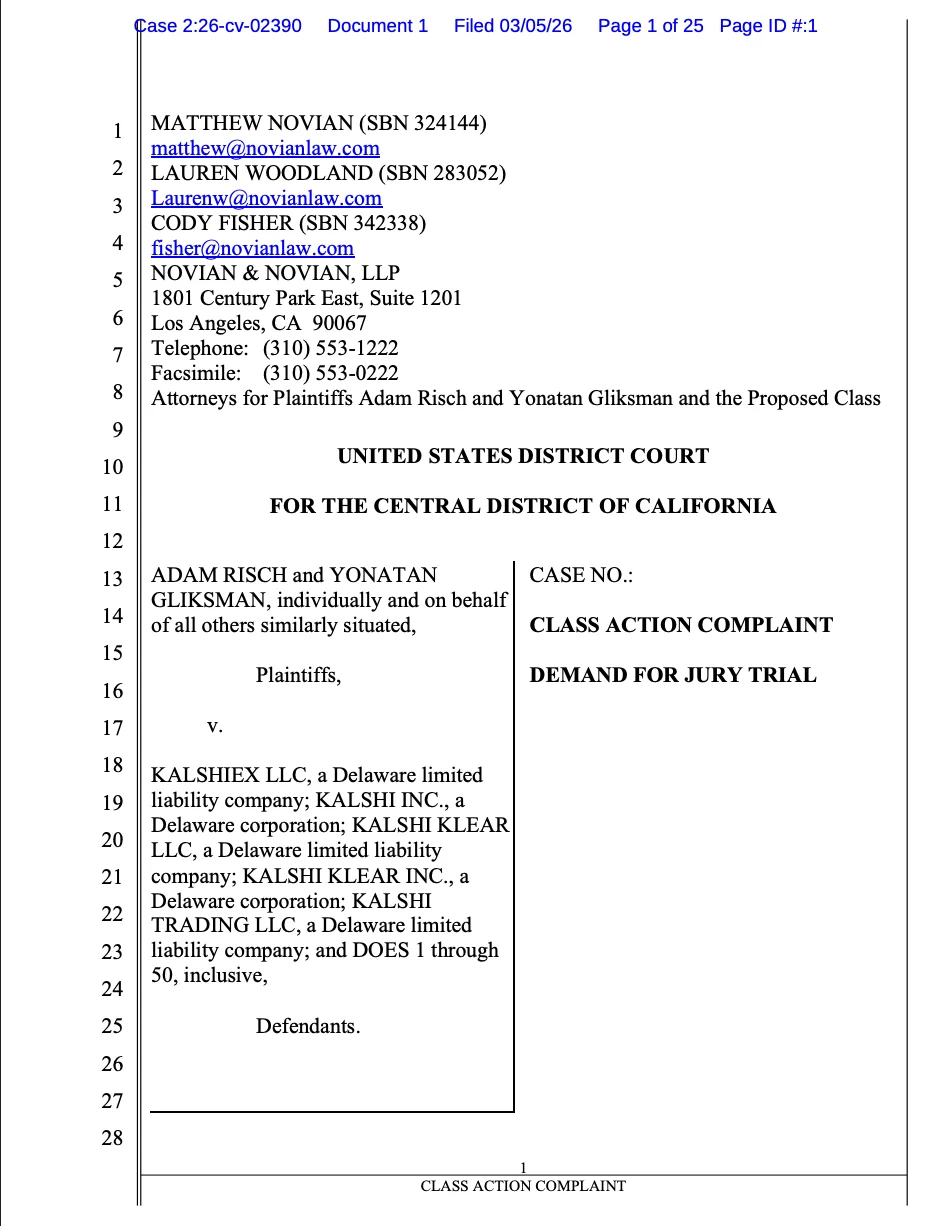
A class action lawsuit has been filed against Kalshi, a regulated prediction market, alleging that a crucial "death carveout" in its "Ali Khamenei out as Supreme Leader" market was inadequately disclosed to users, leading to the platform’s failure to pay out what plaintiffs contend were winning trades. This legal challenge casts a spotlight on the complexities of contract design, disclosure requirements, and the ethical considerations surrounding event-based trading, particularly in politically sensitive contexts. The plaintiffs characterize the death carveout as "deceptive" and "predatory," arguing that it fundamentally altered the market’s perceived risk and reward profile without proper notification.
The Core of the Dispute: Unclear Disclosures and Unpaid Trades
The lawsuit, initiated by a group of aggrieved traders, centers on the "Ali Khamenei out as Supreme Leader" market that was active on Kalshi. The plaintiffs contend that the market’s rules, as presented to users, did not clearly incorporate a policy that would void trades if the former Iranian Supreme Leader, Ali Khamenei, were to leave office due to death. According to the court filing, the death carveout policy was "not incorporated into the user-facing rules summary" and was not displayed in a manner that would adequately inform a "reasonable consumer" of its existence or implications. This alleged lack of transparency forms the bedrock of the plaintiffs’ claim that Kalshi engaged in unfair business practices and breached its contractual obligations to its users.
Adding weight to the plaintiffs’ argument, the lawsuit notes that Kalshi itself later acknowledged ambiguities in its disclosures. "Defendants, themselves, later acknowledged that their prior disclosures were ‘grammatically ambiguous,’" the lawsuit filing states, suggesting that even the platform recognized shortcomings in its communication regarding the market’s specific terms. This admission, the plaintiffs argue, further substantiates their claim of inadequate disclosure, which they believe directly led to their financial losses.
The Geopolitical Context: A Market Steeped in Speculation
The "Ali Khamenei out as Supreme Leader" market was inherently tied to a highly sensitive geopolitical situation. Ali Khamenei, at 85 years old, is a pivotal figure in global politics, and speculation surrounding his health and potential succession has long been a subject of intense international interest. The lawsuit highlights this context, arguing that the likelihood of Khamenei’s death was a significant, if not primary, factor for many participants in the market.
"With an American naval armada amassed on Iran’s doorstep and military conflict not merely foreseeable but widely anticipated, consumers understood that the most likely, and in many cases the only realistic, mechanism by which an 85-year-old autocratic leader would ‘leave office’ was through his death," the lawsuit contends. "Defendants understood this as well." This assertion suggests that market participants were not merely betting on a peaceful transition of power or a voluntary resignation, but rather on any event that would lead to his departure, including natural causes or other unforeseen circumstances. The plaintiffs argue that given this context, the death carveout fundamentally misrepresented the nature of the event being traded.
Kalshi’s Stance: Adherence to Policy and Ethical Considerations
Following the confirmed death of Khamenei, Kalshi voided trading positions for the market, preventing it from resolving to a "yes" outcome. This decision sparked immediate outrage among users who believed their "yes" positions should have been paid out. Kalshi co-founder Tarek Mansour publicly defended the platform’s actions, citing a standing policy against "death markets."
"We don’t list markets directly tied to death. When there are markets where potential outcomes involve death, we design the rules to prevent people from profiting from death," Mansour stated on social media. This policy, according to Kalshi, is rooted in ethical considerations, aiming to avoid scenarios where individuals might profit directly from tragic events. Mansour has consistently maintained that the policy was clearly stated in the market rules, despite the plaintiffs’ claims of ambiguity. He also stressed that Kalshi did not profit from the situation, stating, "Kalshi made no money here and even reimbursed all losses out of pocket. Not a single user walked away losing money from this market."
A Chronology of Controversy: From Voided Trades to Legal Action
The sequence of events leading to the class action lawsuit unfolded rapidly:

- Market Listing: Kalshi listed the "Ali Khamenei out as Supreme Leader" market, allowing users to trade on the outcome of Khamenei leaving his position.
- Reported Death: News broke regarding the death of Ali Khamenei. This event immediately triggered widespread activity and anticipation among market participants who had placed "yes" bets.
- Market Voidance: Kalshi, citing its policy against "death markets," voided all trading positions in the market, declaring it would not resolve to "yes." This decision effectively nullified potential winnings for those who had bet on Khamenei’s departure.
- Initial User Backlash: The voiding of trades led to immediate and significant pushback from users on social media and other platforms, many of whom felt cheated out of legitimate winnings.
- Reimbursement Offer: In response to the growing discontent, Mansour announced a reimbursement policy for affected users. The reimbursement was calculated using the "last traded price" for the market before Khamenei’s death was confirmed.
- Further User Dissatisfaction: The reimbursement policy itself became a point of contention. Plaintiffs in the lawsuit argue that the methodology and precise timestamps used to calculate the "last traded price" were neither disclosed nor transparent. Many users felt the reimbursement amount was insufficient or arbitrarily determined, failing to reflect the true value of their positions at the time of the event.
- Lawsuit Filing: Faced with what they considered inadequate resolution, a class action lawsuit was filed against Kalshi, seeking redress for damages incurred due to the alleged deceptive practices and non-payment of winning trades. The lawsuit was filed in March 2026, solidifying the dispute in the legal arena.
The Reimbursement Conundrum: Transparency and Valuation
The controversy surrounding Kalshi’s reimbursement policy highlights a critical aspect of prediction market operations: the clarity and fairness of resolution mechanisms, especially when unforeseen circumstances arise. While Kalshi’s co-founder asserted that "not a single user walked away losing money from this market" due to the reimbursements, the plaintiffs vehemently disagree with this assessment.
Their primary objection lies in the lack of transparency regarding the "last traded price" methodology. In volatile markets, the exact timestamp used for a "last traded price" can significantly impact the calculated value. If this price was determined at a point when market participants were unaware of the impending voidance or were reacting to unconfirmed news, it might not accurately reflect the true value of a "yes" position had the market been allowed to resolve normally. Users’ inability to scrutinize the data, timestamps, and algorithms behind the reimbursement calculation fueled suspicions that the process was opaque and potentially unfair. This aspect of the dispute underscores the need for robust, pre-defined, and transparent resolution rules in prediction markets, particularly those dealing with high-stakes geopolitical events.
Kalshi’s Regulatory Status and Industry Implications
Kalshi operates as a regulated exchange, authorized by the Commodity Futures Trading Commission (CFTC) to offer event contracts. This regulatory oversight distinguishes Kalshi from many unregulated prediction platforms and places a higher burden on the company to ensure transparency, fair dealing, and clear contractual terms. The CFTC’s mandate includes protecting market participants from fraud and manipulation, making the allegations of "deceptive" practices particularly serious for a regulated entity.
The lawsuit against Kalshi arrives at a time when prediction markets are experiencing a surge in popularity. Trading volumes on these platforms hit new record highs in 2026, indicating a growing mainstream interest in using event contracts for speculation and information aggregation. This growth, however, also brings increased scrutiny from regulators and consumer advocates. The outcome of this lawsuit could set a significant precedent for the entire prediction market industry, particularly concerning:

- Disclosure Standards: It may force platforms to adopt stricter, more explicit disclosure requirements for market rules, especially for nuanced "carveouts" or exceptions.
- Contract Design: It could influence how prediction markets design contracts for politically sensitive events or those with potentially tragic outcomes, pushing them towards greater clarity and foresight in anticipating all possible resolutions.
- Consumer Protection: The case highlights the need for robust consumer protection mechanisms in an evolving financial landscape, particularly when dealing with complex derivatives.
- Ethical Boundaries: The debate over "death markets" underscores the ongoing ethical challenges for prediction platforms, which must balance the desire for diverse trading opportunities with societal norms and regulatory expectations.
Broader Impact and Future Scrutiny
The Kalshi lawsuit is more than just a dispute over a single market; it is a test case for the future of regulated prediction markets. Should the plaintiffs prevail, it could lead to substantial financial penalties for Kalshi and compel the platform, and potentially others, to re-evaluate their entire approach to market rule disclosure and resolution protocols. Conversely, if Kalshi successfully defends its actions, it could affirm the validity of its "death carveout" policy, albeit with lessons learned about the importance of clearer communication.
Beyond the immediate legal ramifications, the case will undoubtedly invite further scrutiny from regulatory bodies like the CFTC. They will be closely watching how the courts interpret the adequacy of disclosure in the context of complex financial instruments. For users, the incident serves as a stark reminder of the importance of thoroughly understanding the terms and conditions of any financial product, especially in the fast-paced and sometimes opaque world of prediction markets. As these platforms continue to grow and cover an ever-broader range of events, the need for transparent, unambiguous, and fair operational practices will only intensify. The outcome of Risch v. KalshiEx LLC will likely shape the regulatory and operational landscape for prediction markets for years to come.