admin
admin
Cryptocurrency markets experienced a notable downturn on Thursday, reversing a portion of the gains accrued in the preceding days as investor sentiment soured amidst escalating geopolitical concerns. The primary catalyst for this renewed caution was a reported attack by Iran on an oil tanker, sending ripples of uncertainty across global financial markets and compelling a widespread de-risking among investors. This event underscored the continued sensitivity of nascent asset classes like cryptocurrencies to macro-geopolitical developments, even as underlying institutional adoption signals, such as sustained Bitcoin Exchange-Traded Fund (ETF) inflows, continued to exhibit strength.
Market Contraction Amidst Heightened Risk Aversion
Bitcoin (BTC), the world’s largest cryptocurrency by market capitalization, found itself consolidating around the $71,000 mark, registering a 24-hour decline of approximately 3.5%. This movement pushed it back from recent highs, reflecting a broader retreat across the digital asset ecosystem. Ethereum (ETH) and Solana (SOL), two other prominent cryptocurrencies, mirrored this downward trend, experiencing more significant dips of roughly 4%. ETH traded near $2,060, while SOL hovered around $88. Binance Coin (BNB) also saw a decline, shedding 2% of its value within the same timeframe. The cumulative effect of these individual asset corrections led to a 3% contraction in the overall crypto market capitalization, bringing it down to an estimated $2.48 trillion, according to data aggregated by Coingecko. This broad-based decline illustrated a pervasive "risk-off" mood, where investors divest from perceived higher-risk assets in favor of more stable alternatives or cash.
The Geopolitical Flashpoint: Iran Oil Tanker Incident
The immediate trigger for this market apprehension stemmed from reports emanating from Iran. Specifically, Iran’s Islamic Revolutionary Guard Corps (IRGC) claimed responsibility for an attack on an American oil tanker in the Persian Gulf. This incident, while details were still unfolding, immediately injected a fresh wave of instability into an already tense geopolitical landscape, particularly concerning the critical shipping lanes and energy supplies flowing through the Middle East.
The repercussions of this alleged attack were swiftly observed in the commodities markets. U.S. crude oil (WTI) futures surged above $79 per barrel following the news, marking a substantial increase of over 17% for the week and pushing prices to their highest levels since January 2025. Energy markets are acutely sensitive to disruptions in the Persian Gulf, a vital artery for global oil trade. Any perceived threat to this region, whether real or imminent, often triggers a rapid escalation in oil prices, impacting everything from transportation costs to manufacturing expenses and ultimately consumer inflation.
Beyond crude oil, broader investor sentiment was further dampened by subsequent reports and analyses suggesting that the ongoing conflict and regional instability could potentially prolong beyond initial expectations. This prolonged uncertainty weighed heavily on equity markets, with major indices like the S&P 500 and the Nasdaq Composite slipping by approximately 1%. In contrast, traditional safe-haven assets presented a mixed picture. While gold and silver, often seen as stores of value during times of crisis, posted modest losses, the U.S. dollar strengthened significantly. A strengthening dollar typically indicates a flight to safety, as global investors seek liquidity and stability in the world’s reserve currency during periods of heightened risk.
A Chronology of Market Reactions and Geopolitical Events
The events unfolded rapidly, setting the tone for Thursday’s market activity:
- Early Wednesday (Pre-Market): Cryptocurrency markets had been showing signs of recovery, with many assets, including Bitcoin, posting modest gains. This upward momentum was attributed to a general easing of immediate geopolitical fears and a slight resurgence in risk appetite.
- Late Wednesday/Early Thursday (Asian Trading Hours): Reports began to surface from Iranian state media, notably Tasnim News Agency, claiming the IRGC’s involvement in an attack on an oil tanker. Specifics regarding the vessel’s identity, precise location, and extent of damage were initially sparse but sufficient to ignite market concern.
- Thursday Morning (European Trading Hours): As the news disseminated globally, crude oil futures reacted almost immediately, spiking upward. Traditional equity markets in Asia and Europe began to show signs of weakness.
- Thursday Morning (U.S. Market Open): The sentiment of caution and de-risking intensified. U.S. equity markets opened lower, and the U.S. dollar continued its ascent against major currencies. Simultaneously, cryptocurrency markets, highly correlated with broader risk assets, began their descent, with Bitcoin, Ethereum, and Solana leading the decline.
- Throughout Thursday: The sell-off in cryptocurrencies became more pronounced, affecting nearly all of the Top 100 digital assets. The narrative of prolonged conflict further solidified investor apprehension, contributing to sustained downward pressure on risk assets.
Supporting Data and Market Mechanics
The widespread nature of the market correction was evident across the entire digital asset landscape. Data indicated that almost all of the Top 100 digital assets by market capitalization registered losses over the 24-hour period. This comprehensive decline highlighted the systemic impact of macro-level fear, where even fundamentally strong projects struggle against a tide of selling pressure.
A significant consequence of such sharp market movements, particularly in volatile asset classes like cryptocurrencies, is a wave of liquidations for leveraged traders. According to data from CoinGlass, a prominent crypto derivatives tracker, approximately 99,000 leveraged traders faced liquidation within the past 24 hours, resulting in a staggering total loss of $322 million. Bitcoin positions accounted for the largest share of these liquidations, totaling $120 million, underscoring the high leverage often employed in BTC trading. Ethereum positions followed, contributing $90 million to the liquidation tally. These forced closures of leveraged positions can exacerbate market downturns, as automatic selling pressure from exchanges further drives prices down in a cascading effect.
The Resilience of Bitcoin ETFs Amidst Turmoil
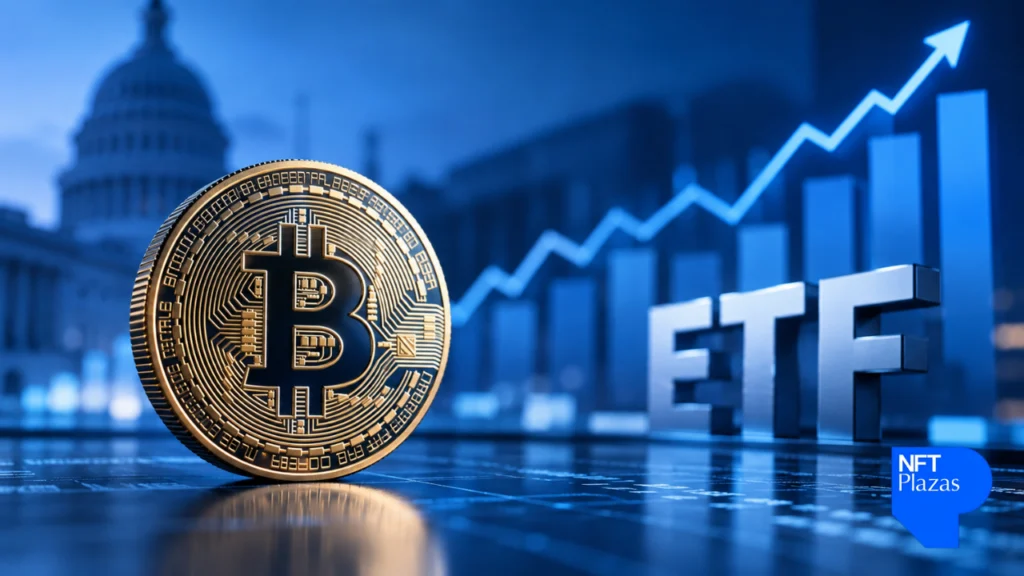
Amidst the broad market downturn and geopolitical anxieties, a striking counter-narrative emerged from the Bitcoin Exchange-Traded Fund (ETF) sector. These newly launched spot Bitcoin ETFs continued to demonstrate remarkable resilience and sustained investor interest. On Tuesday, prior to the peak of the geopolitical concerns, these ETFs pulled in another $461 million in net inflows. This marked the third consecutive day of substantial inflows, bringing the total capital injection into these vehicles to nearly $2 billion since the previous week.
The persistent demand for spot Bitcoin ETFs, even as the underlying asset experiences volatility and the broader market faces headwinds, is a significant indicator. It suggests a strong underlying institutional and retail appetite for Bitcoin exposure through regulated investment vehicles. This steady accumulation of Bitcoin by major financial institutions and long-term investors through ETFs could act as a crucial stabilizing force, potentially cushioning larger downturns and providing a foundational demand layer that was absent in previous market cycles. Analysts suggest that these inflows represent strategic, long-term positioning by investors who view Bitcoin as a viable asset for diversification and inflation hedging, irrespective of short-term price fluctuations driven by external events.
An Outlier Performer: OKB’s Strategic Investment Boost
While the vast majority of digital assets were in the red, one notable outlier defied the market trend: OKB, the native token of the OKX crypto exchange. OKB surged by more than 20%, positioning itself as the top gainer among major cryptocurrencies. This impressive performance was directly attributed to a significant corporate development: the disclosure of a strategic investment in OKX by Intercontinental Exchange (ICE). ICE, the parent company of the New York Stock Exchange (NYSE) and a global operator of exchanges and clearing houses, made this investment at a reported $25 billion valuation for OKX.
This investment is a landmark event, signifying a deepening integration between traditional finance (TradFi) behemoths and the burgeoning cryptocurrency sector. For OKX, the infusion of capital and strategic partnership with an entity like ICE lends immense credibility, potentially opening doors to broader institutional adoption, enhanced regulatory compliance frameworks, and expanded product offerings. For ICE, it represents a strategic foray into the rapidly evolving digital asset space, allowing it to tap into new growth avenues and leverage its expertise in market infrastructure. This move by ICE, a deeply entrenched player in global financial markets, sends a strong signal to the industry about the long-term viability and strategic importance of crypto exchanges, even in a volatile market environment.
Memecoins: The Biggest Losers in a Risk-Off Environment
At the other end of the performance spectrum were memecoins, with Dogecoin (DOGE) and Pepe (PEPE) registering the most significant losses, plunging approximately 9%. Memecoins are inherently highly speculative assets, often driven by social media trends, community sentiment, and viral marketing rather than fundamental utility or technological innovation. During periods of heightened market risk and uncertainty, investors typically shed such speculative assets first, prioritizing capital preservation. Their substantial declines underscore their sensitivity to market sentiment and their vulnerability when a broad "risk-off" mentality takes hold, illustrating the adage that "the first to rise in a bull market are often the first to fall in a bear market."
Broader Implications and Future Outlook
The events of Thursday served as a stark reminder of the interconnectedness of global financial markets and the pervasive influence of geopolitical factors on asset prices, including cryptocurrencies. The alleged oil tanker attack in the Persian Gulf highlights the fragile stability of international relations and the potential for regional conflicts to trigger far-reaching economic consequences. For the cryptocurrency market, specifically, it reinforced the notion that while it operates on decentralized networks, its valuation remains tethered to global macro-economic and political sentiment.
Looking ahead, the trajectory of both traditional and crypto markets will heavily depend on the de-escalation or further escalation of geopolitical tensions. If the situation in the Middle East stabilizes, and fears of prolonged conflict subside, risk assets could see a rebound as investor confidence slowly returns. Conversely, any further exacerbation of tensions could lead to continued pressure on volatile assets, potentially driving investors further into traditional safe havens like the U.S. dollar and, possibly, gold.
The resilience of Bitcoin ETF inflows, however, offers a glimmer of long-term optimism for the crypto space. It suggests that a growing segment of sophisticated investors views Bitcoin not merely as a speculative gamble but as a legitimate and increasingly integrated part of the broader financial ecosystem. This sustained institutional interest, coupled with strategic investments like ICE’s into OKX, indicates that the foundational growth and maturation of the crypto industry are continuing, even as it navigates the turbulent waters of global geopolitical uncertainty and short-term market volatility. The ability of the crypto market to absorb such shocks and maintain a baseline of institutional demand will be crucial in determining its long-term stability and widespread adoption.