admin
admin
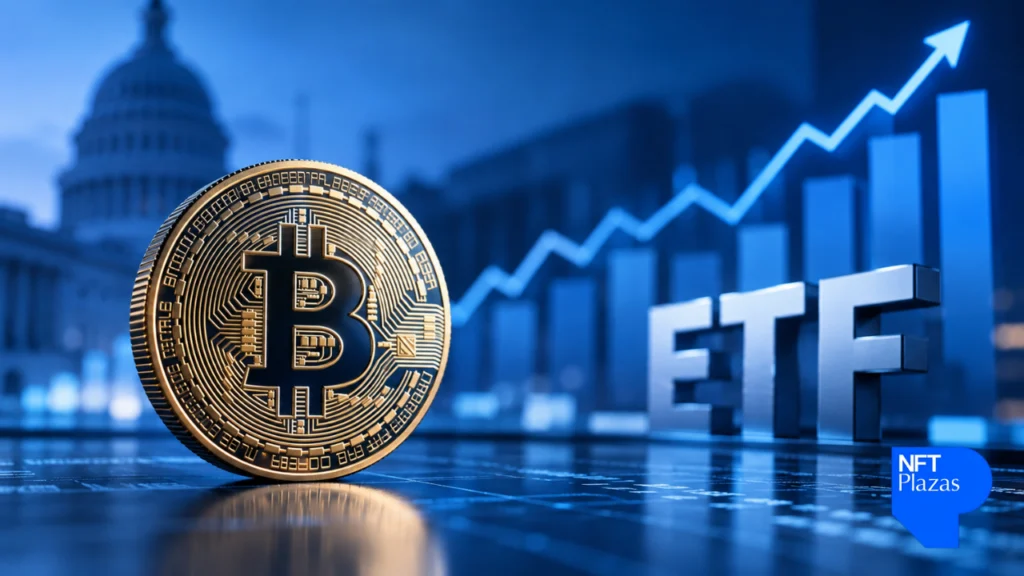
The digital asset market witnessed a significant surge this week, primarily propelled by robust inflows into Bitcoin Exchange-Traded Funds (ETFs) and a broader bounce in global financial markets. Since last week, Bitcoin ETFs have attracted nearly $1.5 billion in capital, with a notable $225 million recorded on Tuesday alone, marking a second consecutive day of substantial gains. This influx of institutional capital has coincided with a sharp rally across major cryptocurrencies, even as global geopolitical tensions persist in the Middle East. Traditional financial markets, including stocks and precious metals, also posted gains, while oil and natural gas experienced slight dips, signaling a shifting risk appetite among investors.
Bitcoin (BTC), the world’s largest cryptocurrency by market capitalization, demonstrated remarkable strength, trading around $73,500. This represents an impressive 8% increase over the past 24 hours and marks a four-week high for the digital asset. The positive momentum was not confined to Bitcoin alone; other prominent cryptocurrencies also experienced significant upward trajectories. Ethereum (ETH) surged 9% to approximately $2,140, while Solana (SOL) mirrored this gain, reaching about $91. Binance Coin (BNB) also saw a respectable 4% increase on the day, underscoring a market-wide bullish sentiment. According to data from Coingecko, the overall crypto market capitalization climbed nearly 6% to reach $2.54 trillion, reflecting a renewed wave of investor confidence and liquidity flowing into the sector.
The Genesis of the ETF-Driven Surge
The current rally is deeply rooted in the long-awaited approval and subsequent launch of spot Bitcoin ETFs in the United States. Following years of regulatory scrutiny and multiple rejections, the U.S. Securities and Exchange Commission (SEC) finally gave the green light to several spot Bitcoin ETFs in early January. This landmark decision was hailed as a watershed moment for the cryptocurrency industry, effectively bridging the gap between traditional finance and the nascent digital asset space. Prior to this, institutional investors and retail traders seeking exposure to Bitcoin faced hurdles such as direct ownership complexities, security concerns, and regulatory ambiguities. The introduction of ETFs provided a regulated, accessible, and familiar investment vehicle, allowing investors to gain exposure to Bitcoin’s price movements through conventional brokerage accounts.
The initial weeks post-launch saw a mix of significant inflows into the new ETFs and outflows from Grayscale’s converted Bitcoin Trust (GBTC), which had previously operated as a closed-end fund. However, as the market absorbed these dynamics, a clearer trend of net positive inflows began to emerge. The sustained accumulation by these ETFs signifies a profound shift in market structure, indicating a growing demand from institutional players and a broader acceptance of Bitcoin as a legitimate asset class. The nearly $1.5 billion in inflows since last week, culminating in the $225 million on Tuesday, demonstrates a accelerating appetite for Bitcoin exposure through these regulated products. This consistent buying pressure from institutional entities acts as a powerful demand driver, directly impacting Bitcoin’s price action and bolstering overall market sentiment.
Macroeconomic Tailwinds and Investor Sentiment
The crypto market’s rally is not occurring in isolation but is intricately linked to broader macroeconomic developments, particularly in the United States. Investor sentiment has been significantly buoyed by recent upbeat U.S. economic data, which has signaled resilience and strength in key sectors. Earlier this week, the ADP report indicated that the private sector added more jobs than expected in February, surpassing analysts’ forecasts. This positive employment data suggests a robust labor market, which is often a precursor to sustained economic growth. Furthermore, the Institute for Supply Management (ISM) services index rose to 56.1 in February, exceeding expectations and reinforcing the notion that the non-manufacturing sector remains resilient. A reading above 50 generally indicates expansion, and the latest figures underscore healthy activity in services, which constitutes a significant portion of the U.S. economy.
These optimistic economic indicators tend to foster a "risk-on" environment among investors. When the economy appears stable and growing, market participants are more inclined to allocate capital to riskier assets, including equities and, increasingly, cryptocurrencies. This sentiment was evident in the performance of traditional stock markets, with the S&P 500 gaining around 1% and the Nasdaq Composite advancing approximately 1.8%. Even safe-haven assets like gold and silver posted modest gains, suggesting a broad-based recovery in investor confidence. The slight dip in oil and natural gas prices further contributes to this narrative, as it may alleviate concerns about inflationary pressures and energy costs, freeing up capital for other investments. The confluence of these factors creates a fertile ground for assets like Bitcoin and other cryptocurrencies, which are often perceived as higher-beta plays within the broader financial landscape.
A Deeper Dive into Market Dynamics: The Short Squeeze Phenomenon
Beyond the direct demand from ETFs and positive economic data, a significant factor contributing to the sharpness of the recent crypto rally has been a massive short squeeze. According to data from CoinGlass, approximately 129,000 leveraged traders were liquidated for a staggering $530 million in the past 24 hours. Of this substantial amount, Bitcoin accounted for $293 million in liquidations, while Ethereum positions made up $126 million. Critically, more than 80% of these liquidations involved short positions.
A short squeeze occurs when the price of an asset suddenly surges, forcing traders who had bet on its decline (i.e., held short positions) to buy back the asset to cover their losses and avoid further margin calls. This forced buying creates additional upward pressure on the price, accelerating the rally. The high percentage of short liquidations indicates that a significant number of traders were positioned for a market downturn, possibly expecting a correction after previous gains or reacting to lingering geopolitical uncertainties. When the market moved against their expectations, triggered by strong ETF inflows and positive macro news, their positions were rapidly closed out, fueling the dramatic price increases observed across the crypto market. This mechanism often leads to rapid, volatile price movements and can amplify initial bullish signals into significant rallies. The magnitude of these liquidations underscores the intensity of the current market momentum and the potential for rapid unwinding of bearish bets.
Performance Across the Digital Asset Spectrum
The positive sentiment permeated nearly the entire digital asset ecosystem, with almost all of the Top 100 digital assets posting gains over the last 24 hours. While Bitcoin, Ethereum, and Solana led the charge among the large-cap assets, specific altcoins registered even more pronounced increases. Dogecoin (DOGE), a prominent meme coin, rallied an impressive 14%, showcasing renewed speculative interest and retail engagement. Other notable gainers included SKY, which climbed 10%, and Ethereum (ETH), reinforcing its position as a strong performer with a 9% surge.
However, not every asset participated in the widespread rally. Near Protocol (NEAR) emerged as an outlier, being today’s biggest loser with a fall of 5%. Such isolated declines are not uncommon even in strong bull markets, often attributable to project-specific news, profit-taking, or technical resistance levels unique to that asset. The overall breadth of the market rally, with the vast majority of assets in the green, highlights the pervasive optimism and capital rotation within the crypto space. This broad participation suggests that the current uptrend is not merely concentrated in a few large-cap assets but is indicative of a more general recovery and growth across various segments of the digital asset market.
Broader Implications and Future Outlook
The current confluence of significant Bitcoin ETF inflows, positive macroeconomic indicators, and a powerful short squeeze has profound implications for the future trajectory of the digital asset market. The consistent institutional demand channeled through ETFs is a pivotal development, signaling a maturation of Bitcoin as an investable asset. This institutional adoption is expected to bring greater stability, liquidity, and legitimacy to the market over the long term, potentially reducing its historical volatility as more diverse and patient capital enters the space.
Furthermore, the growing interconnectedness between traditional financial markets and the crypto ecosystem is becoming increasingly evident. The performance of Bitcoin and other digital assets is no longer solely driven by internal crypto-specific narratives but is now significantly influenced by global economic health, interest rate expectations, and broader investor risk appetite. This integration suggests that cryptocurrencies are solidifying their position within the global financial landscape, evolving from niche assets to a more mainstream investment class.
Looking ahead, market observers will be closely watching several key factors. Continued inflows into Bitcoin ETFs will be a critical indicator of sustained institutional interest. The global macroeconomic environment, particularly inflation data, central bank policies, and geopolitical stability, will also play a crucial role in shaping investor sentiment towards risk assets. The upcoming halving event for Bitcoin, expected later this year, is another significant chronological marker that historically has preceded periods of price appreciation due to a reduction in new supply.
While the current rally is robust, market participants remain mindful of inherent volatilities. The rapid price movements and substantial liquidations serve as a reminder of the leverage prevalent in the market and the potential for swift reversals. Nevertheless, the recent events underscore a significant turning point for the crypto market, driven by powerful structural changes and a renewed sense of optimism that positions digital assets for continued integration into the global financial system. The journey of Bitcoin from a fringe digital currency to an asset embraced by mainstream investment vehicles through ETFs marks a defining chapter in its evolution, promising a dynamic and potentially transformative future for the entire digital asset landscape.