admin
admin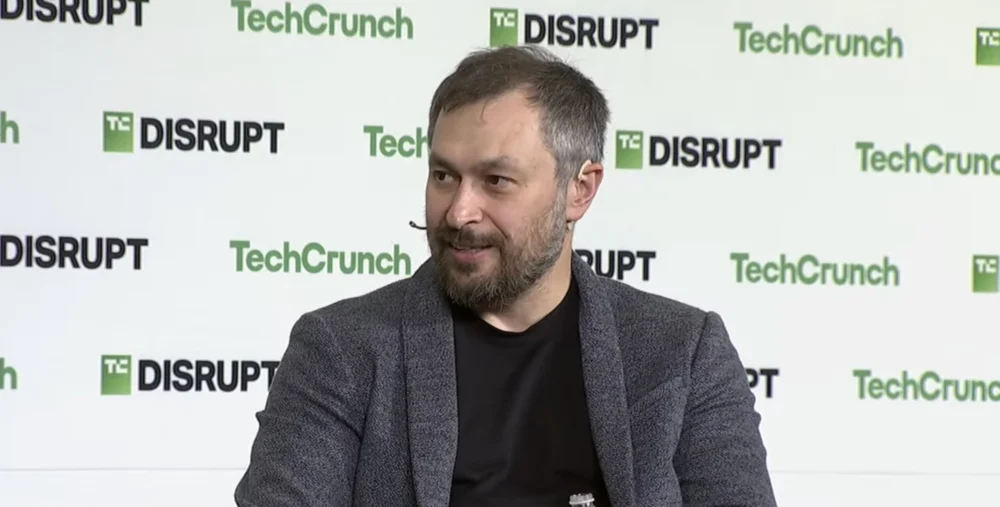
Anatoly Yakovenko, the co-founder and CEO of Solana Labs, took the stage at TechCrunch Disrupt 2025 to outline a future where artificial intelligence and decentralized finance are no longer peripheral technologies but central pillars of the global economy. During a wide-ranging discussion, Yakovenko revealed how "agentic" AI tools have fundamentally altered his own approach to software engineering, while simultaneously defending the neutral, open-protocol nature of the Solana blockchain amidst growing political and regulatory scrutiny. The appearance came at a high-water mark for the Solana ecosystem, which has recently seen record-breaking financial performance and a significant breakthrough in institutional adoption via the launch of its first exchange-traded fund (ETF).
The Paradigm Shift in Software Development: From Coder to Overseer
A central theme of Yakovenko’s address was the profound impact of agentic AI on the software engineering profession. For a veteran developer with more than 15 years of experience building complex systems, the transition from manual coding to AI-assisted oversight represents a "sea change" in productivity. Yakovenko noted that he has become increasingly comfortable delegating core development tasks to AI agents, specifically citing Anthropic’s Claude as a primary tool in his current workflow.
The CEO described AI as a "force multiplier" that is most effective when wielded by those with deep domain expertise. This distinction is critical: while AI can generate code at a rapid pace, the ability to audit, refine, and steer that code remains a human-centric requirement. Yakovenko admitted that his focus has shifted so significantly toward monitoring AI-driven development that it often distracts him from traditional executive duties. "If people are in a meeting with me and I’m not paying attention," Yakovenko remarked, "it’s because I’m watching Claude."
This shift toward "agentic coding"—where AI tools do not merely suggest snippets of code but autonomously execute multi-step programming tasks—allows senior engineers to operate at a higher level of abstraction. Yakovenko explained that his years of experience allow him to develop a secondary sense for the AI’s performance. He noted that he can "almost smell" when the AI is beginning to deviate from the intended logic or "go off the rails," allowing him to intervene before minor errors compound into systemic issues. This evolution suggests a future where the role of the CTO or lead architect is less about writing syntax and more about managing a fleet of digital agents.
Financial Milestones: Revenue Growth and the Bitwise ETF
The discussion at TechCrunch Disrupt followed a series of significant financial victories for Solana Labs. Earlier in October 2025, the protocol reported a staggering $2.85 billion in annual revenue. This figure is particularly notable given the volatility and regulatory headwinds that have challenged the broader cryptocurrency market over the last 24 months. The revenue growth has been largely driven by the explosive popularity of decentralized exchange (DEX) platforms and meme coin trading environments hosted on the Solana network, which prize the protocol’s high throughput and low transaction costs.
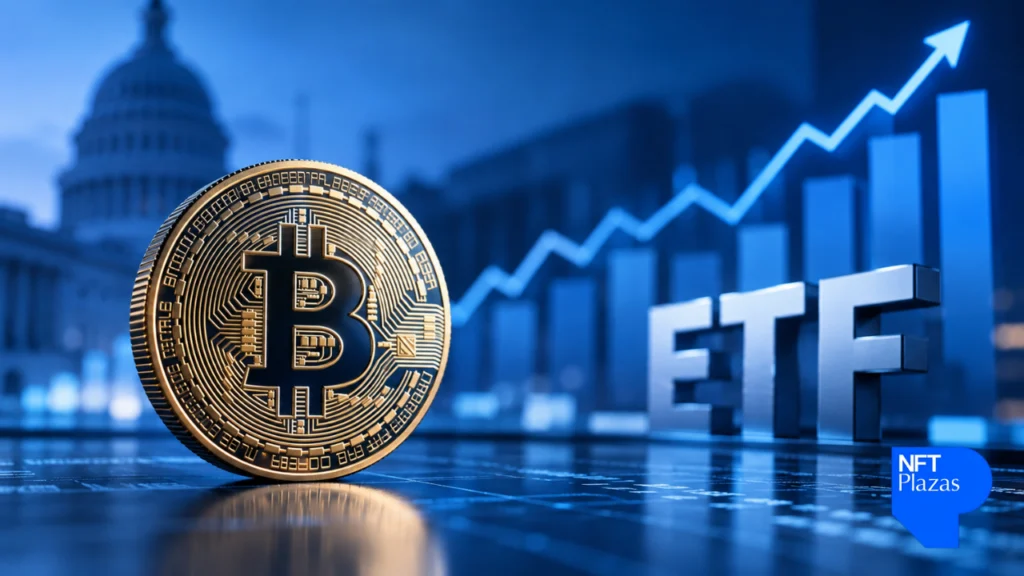
Adding to this momentum was the launch of the first Solana-based exchange-traded fund (ETF) by the crypto asset manager Bitwise. The fund debuted just one day prior to Yakovenko’s appearance on the TechCrunch stage and saw immediate market validation. In its first 24 hours of trading, the Bitwise Solana ETF recorded nearly $70 million in inflows. This successful launch places Solana in an elite category of digital assets—alongside Bitcoin and Ethereum—that have successfully transitioned into the regulated products sought by institutional investors and retail traders through traditional brokerage accounts.
Yakovenko attributed this success to a fundamental shift in how the traditional finance (TradFi) industry perceives blockchain technology. He argued that the skepticism once held by legacy institutions is being replaced by a pragmatic understanding of the efficiencies blockchain offers.
Bridging the Gap: Why Traditional Finance is Embracing Crypto
According to Yakovenko, the adoption of Solana by financial institutions is not a result of "hype," but rather a recognition of the protocol’s utility in solving age-old financial problems. He pointed out that back-office finance professionals often grasp the value proposition of cryptocurrency much faster than the general public because they are intimately familiar with the frictions of the current system.
"Finance people deal with settlement risk all the time. They deal with banking risk all the time," Yakovenko explained. In traditional finance, the "T+2" settlement cycle (the two days it takes for a trade to be finalized) creates a window of counterparty risk. Solana’s ability to provide near-instantaneous finality and a transparent, immutable ledger directly addresses these concerns. By reducing the time and capital required to settle trades, blockchain protocols like Solana offer a clear return on investment for large-scale financial operations. This "settlement-as-a-service" model is increasingly viewed as the "killer app" for institutional blockchain integration.
Navigating Controversy: Open Protocols and the "Trumpcoin" Dilemma
Despite the financial and technical successes, the conversation also touched upon the more controversial aspects of the Solana ecosystem. The network has recently come under fire for hosting "Trumpcoin," a digital asset that has reportedly directed an estimated $350 million to the current U.S. President. Critics have characterized the coin as a vehicle for public bribery, raising ethical questions about the responsibility of protocol developers for the assets created on their networks.
These concerns have been magnified by recent political developments, including high-profile presidential pardons for controversial figures in the crypto space, such as Tron founder Justin Sun and Binance founder Changpeng Zhao (CZ). Critics argue that the intersection of political fundraising and crypto-assets creates a "pay-to-play" environment that bypasses traditional campaign finance regulations.
Yakovenko, however, maintained a firm stance on the neutrality of the Solana protocol. He compared the blockchain to other foundational internet technologies like email (SMTP) or the web (HTTP). "I could send you an email with a link to Trumpcoin or Fartcoin," Yakovenko stated, "and both of those are protocols—both the email and the underlying protocol that creates that market."
His argument rests on the principle of permissionless innovation. As an open-source, decentralized protocol, Solana is designed to be accessible to anyone, regardless of their political affiliation or the nature of their project. Yakovenko argued that for a blockchain to be truly decentralized, the core developers cannot have the power to "switch off" specific coins or censor certain transactions without compromising the integrity of the entire system. This defense highlights the ongoing tension between the libertarian ideals of blockchain technology and the regulatory demands of modern nation-states.
Chronology of Key Events Leading to Disrupt 2025
To understand the significance of Yakovenko’s remarks, it is essential to look at the timeline of events that shaped the Solana ecosystem leading up to late 2025:
- Late 2023 – Early 2024: Solana recovers from the "crypto winter" and the fallout of the FTX collapse, re-establishing itself as a leader in transaction volume.
- January 2025: Solana Labs announces a major focus on integrating AI-driven development tools for its ecosystem developers.
- June 2025: Institutional interest peaks as several major asset managers file for Solana Spot ETFs following the success of Bitcoin and Ethereum counterparts.
- October 15, 2025: Solana reports $2.85 billion in annual revenue, fueled by DEX volume and institutional partnerships.
- October 28, 2025: The Bitwise Solana ETF officially launches, recording $69.5 million in day-one inflows.
- October 29, 2025: Anatoly Yakovenko speaks at TechCrunch Disrupt, addressing AI, revenue, and the ethics of open protocols.
Broader Impact and Future Implications
The insights shared by Yakovenko at TechCrunch Disrupt 2025 suggest a dual-track future for the technology sector. On one hand, the "agentic" revolution in AI is poised to redefine the productivity of the workforce, allowing leaders to manage complex systems with unprecedented speed. On the other hand, the maturation of blockchain into a standard financial infrastructure tool is well underway, despite the persistent "noise" of political controversy.
For software engineers, Yakovenko’s experience serves as a preview of a new professional reality. The value of a developer is increasingly tied to their ability to provide "expert oversight" rather than just writing code. This shift may lead to a smaller, more specialized workforce of senior "AI-orchestrators."
For the financial sector, the success of the Bitwise ETF and Solana’s revenue figures signal that cryptocurrency is moving past the "experimental" phase. However, the controversy surrounding Trumpcoin suggests that the "neutral protocol" defense will be tested as regulators and lawmakers look for ways to bring decentralized assets under the umbrella of existing legal frameworks.
As Solana continues to scale, the balance between maintaining a decentralized, permissionless network and navigating the complexities of global politics will remain Yakovenko’s greatest challenge. For now, however, the CEO appears content to let the AI handle the code while he focuses on the broader strategic horizon of the decentralized web.