admin
admin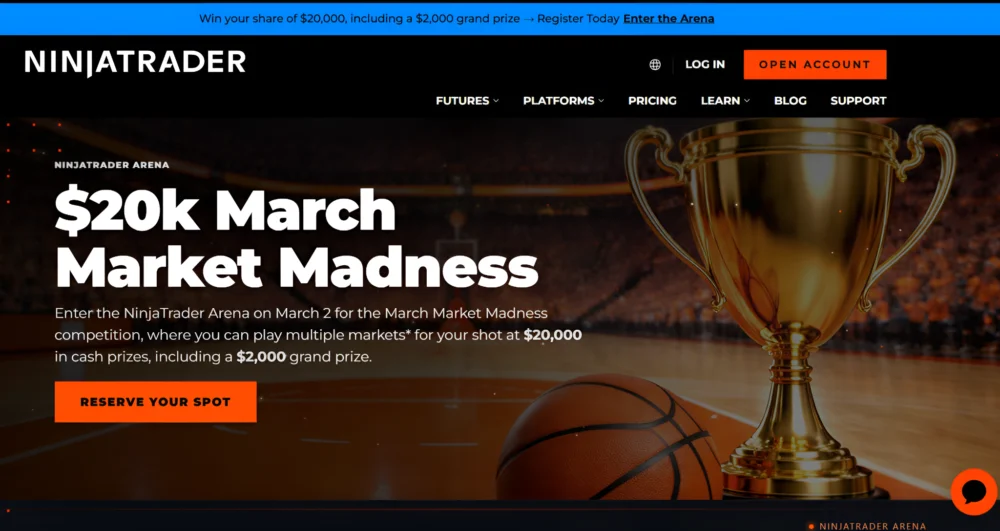
The allure of gold as a timeless asset continues to captivate investors globally, driving significant interest in gold-based financial instruments. As of 2026, the digital landscape for trading this precious metal is more diverse and accessible than ever, with numerous brokers vying for market share. This article provides an in-depth analysis of the leading gold trading brokers, offering insights into their platforms, fee structures, regulatory compliance, and unique offerings to assist both novice and seasoned traders in making informed decisions.
Gold’s Enduring Appeal and the Modern Trading Landscape
Gold has historically served as a safe-haven asset, a reliable store of value during economic uncertainties, geopolitical turmoil, and periods of high inflation. Its intrinsic value, coupled with limited supply, positions it as a crucial component of diversified investment portfolios. In recent years, the methods of engaging with the gold market have evolved significantly. While physical gold ownership remains an option, the digital age has ushered in sophisticated financial instruments that allow traders to speculate on gold price movements without holding the physical commodity. These include Contracts for Difference (CFDs), futures, exchange-traded funds (ETFs), and options, all facilitated by online brokerage platforms.

The global gold market is a complex ecosystem influenced by a myriad of factors, including central bank policies, interest rate fluctuations, the strength of the US dollar, and industrial demand. For instance, in 2025, central banks worldwide continued their robust gold purchasing spree, reflecting a strategic diversification away from traditional reserve assets amidst persistent inflationary pressures and geopolitical fragmentation. This trend underscored gold’s role as a sovereign wealth stabilizer and contributed to its price resilience. Market data from the World Gold Council indicated a steady increase in gold trading volumes through derivatives markets, reaching unprecedented levels as retail and institutional investors sought exposure to its perceived stability.
The Evolution of Gold Trading: From Bars to Bytes
For centuries, gold trading primarily involved the physical exchange of bullion and coins. The establishment of formal gold markets in London and New York in the 20th century standardized pricing and facilitated larger transactions. However, the advent of electronic trading platforms in the late 20th and early 21st centuries revolutionized access to financial markets, including gold. Brokers began offering derivative products that mirrored gold’s price, allowing for leveraged trading and short-selling, which were previously inaccessible to most retail investors. This technological shift democratized gold trading, making it possible for individuals to participate with relatively small capital outlays. The year 2026 sees further advancements in platform technology, with AI-driven insights, advanced charting tools, and seamless mobile trading becoming standard offerings.
Selecting Your Golden Gateway: Key Criteria for Broker Evaluation

Choosing the right gold trading broker is paramount to a successful and secure trading experience. A meticulous evaluation process is essential, considering factors beyond just advertised low spreads.
-
Regulatory Compliance and Security: This is non-negotiable. Reputable brokers are licensed and regulated by top-tier financial authorities such as the Financial Conduct Authority (FCA) in the UK, the Cyprus Securities and Exchange Commission (CySEC), the Australian Securities and Investments Commission (ASIC), the Commodity Futures Trading Commission (CFTC) in the US, and the Securities and Exchange Commission (SEC). These regulatory bodies impose strict operational standards, client fund segregation, and dispute resolution mechanisms, offering a layer of protection against fraud and malpractice. Traders should verify the broker’s license in their specific jurisdiction.
-
Trading Platforms and Technology: The quality and functionality of a trading platform significantly impact user experience. Leading brokers often offer popular third-party platforms like MetaTrader 4 (MT4), MetaTrader 5 (MT5), or cTrader, known for their robust charting tools, technical indicators, and algorithmic trading capabilities. Many also develop proprietary platforms that offer unique features, enhanced user interfaces, or specialized tools. Key considerations include ease of use, stability, execution speed, mobile accessibility, and the availability of advanced analytical features.
-
Gold Trading Products and Instruments: Brokers vary in the types of gold instruments they offer. While most provide gold CFDs (XAU/USD, XAU/EUR), some extend to gold futures, spot gold, gold ETFs, or even stocks of gold mining companies. A broader range of instruments allows for greater diversification and strategy implementation.
-
Fee Structure: Gold trading costs typically comprise spreads (the difference between buy and sell prices), commissions, overnight funding fees (swaps), and potential inactivity or withdrawal fees. Traders should look for transparent fee structures with competitive spreads, especially on highly traded pairs like XAU/USD. Raw spread accounts, while charging commissions, often offer tighter spreads, which can be beneficial for high-volume traders.
-
Customer Support: Accessible and responsive customer support is crucial. Brokers offering multilingual support via multiple channels (live chat, email, phone) 24/5 or 24/7 demonstrate a commitment to client service. Rapid resolution of queries can prevent significant trading disruptions.
-
Educational Resources and Research Tools: Especially for new traders, comprehensive educational materials, webinars, tutorials, and market analysis tools are invaluable. Access to economic calendars, daily market news, and expert analysis can aid in decision-making.
-
Account Types: Brokers often provide various account types (e.g., Standard, Raw Spread, VIP, Micro) tailored to different trading volumes, experience levels, and capital requirements. Understanding the features and minimum deposits associated with each account type is essential.
Top Gold Trading Brokers for 2026: An In-depth Review
The gold broker market is highly competitive. Based on stringent criteria including regulatory standing, platform capabilities, fee transparency, product range, and customer satisfaction ratings (such as those observed on Trustpilot), the following brokers stand out in 2026.
1. Plus500
Best For: Intuitive CFD Trading App
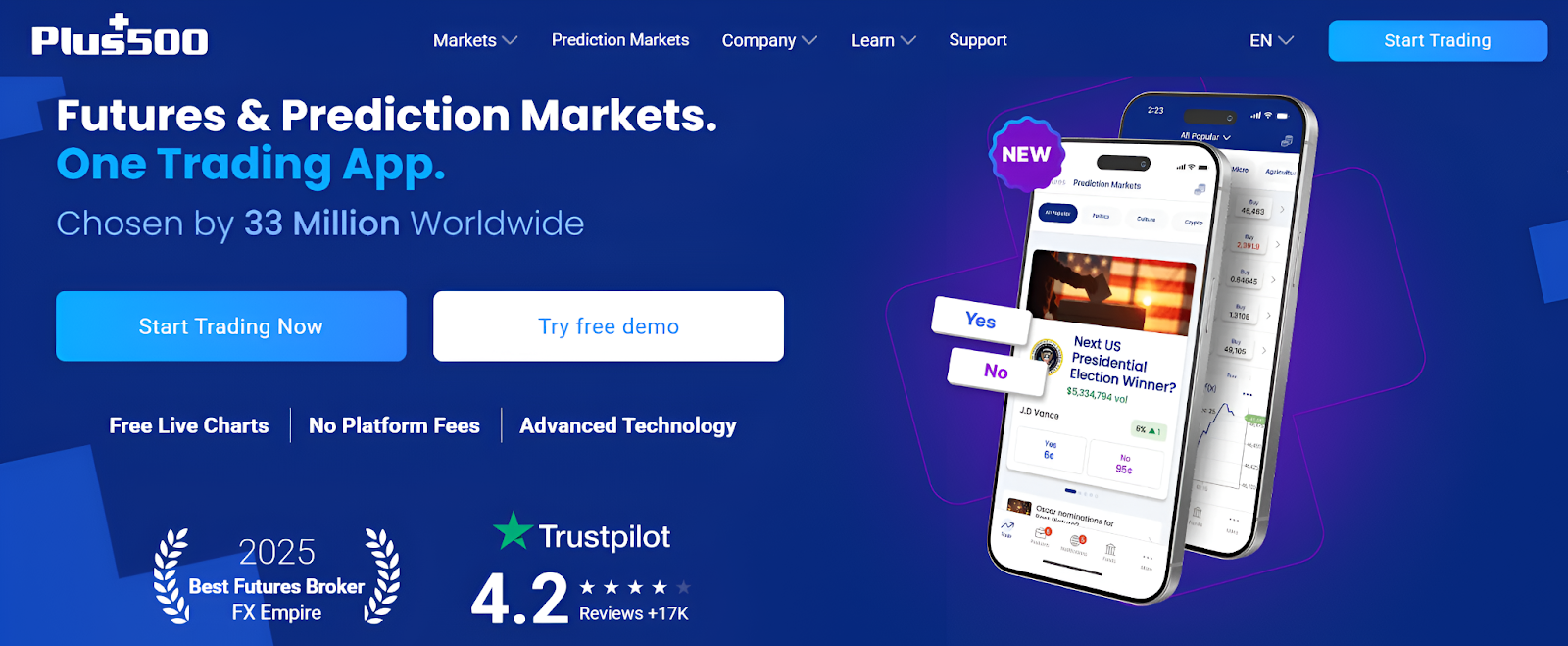
Plus500, a fintech firm established in 2008 and registered in the US, caters to over 33 million users globally. It is renowned for its proprietary, PC-based online trading platform, offering a diverse range of CFDs, share dealings, futures, and options. Plus500US Financial Services LLC is CFTC-registered and an NFA member, ensuring robust regulatory oversight for its futures trading. The company holds a premium listing on the London Stock Exchange’s Main Market and is part of the FTSE 250 index.
Key Features: Intuitive proprietary trading platform, comprehensive CFD offerings, futures trading via Plus500US, strong regulatory framework, user-friendly mobile application, free deposits and withdrawals.
Gold Trading Costs: Liquidation fee per contract: $10. Standard and E-mini contract charges: $0.89. Micro contract commissions: $0.49. Prediction market contract commissions: $0.01. Inactivity fee: $10 monthly. Other charges include overnight funding, guaranteed stop order, and currency conversion fees. Minimum margin for trading is $100 per side, excluding exchange and NFA fees.
Pros: Highly intuitive and accessible platform for beginners, strong regulatory compliance in multiple jurisdictions, competitive spreads on popular instruments, no data or routing fees, excellent mobile trading experience.
Cons: Primarily a CFD broker, which may not suit traders seeking direct ownership; limited advanced analytical tools compared to some institutional platforms; inactivity fees can accumulate.
Trustpilot Rating: 4.2/5
2. FOREX.com
Best For: Dedicated Forex and Gold Spot Trading
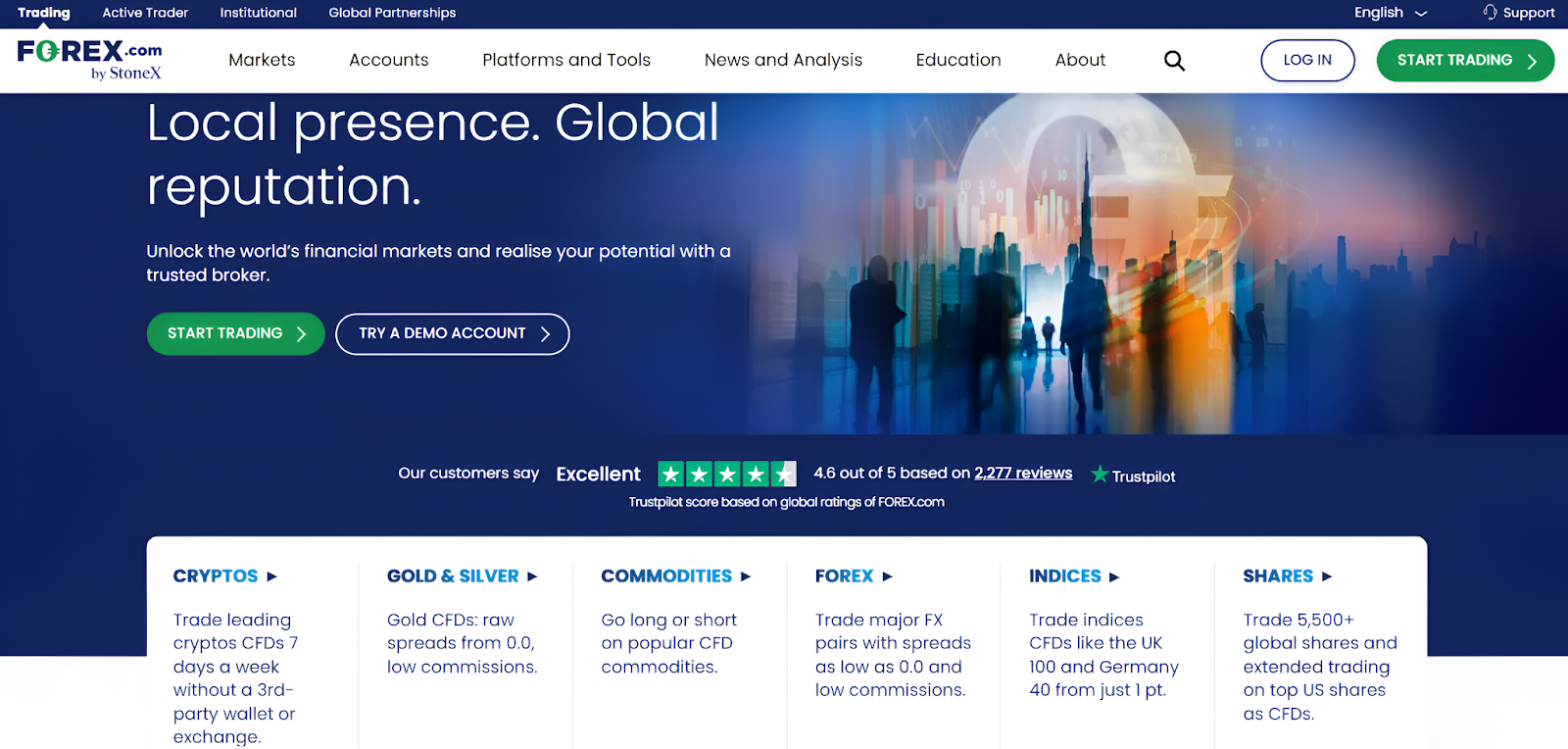
Founded in 2001, Forex.com is an award-winning forex broker and a wholly-owned subsidiary of the NASDAQ-traded Stonex Group. It is recognized for its competitive fees, rapid trade execution, and integrated market research. Forex.com offers various account types, including a MetaTrader 5 (MT5) account for experienced traders, a standard account for TradingView users, and raw spreads accounts for those seeking extremely low spreads.
Key Features: Multiple account types (Standard, Raw Spreads, MT5), robust market research and analysis, fast trade execution, extensive range of forex pairs and gold instruments, strong regulatory backing (e.g., CFTC, FCA, ASIC).
Gold Trading Costs: Gold spreads typically range between 86 to 202 pips. For XAU/USD, the spread is 86 pips; XAU/CHF: 126 pips; XAU/EUR: 140 pips; XAU/AUD: 178 pips; XAU/JPY: 202 pips.
Pros: Highly competitive spreads on raw accounts, strong reputation and regulatory compliance, excellent suite of trading platforms (proprietary, MT4, MT5, TradingView), comprehensive market analysis and educational resources.
Cons: Minimum deposits can be higher for some premium accounts, primarily focused on forex and CFDs, customer service experience can sometimes vary depending on region.
Trustpilot Rating: 4.6/5
3. Pepperstone
Best For: Superior Customer Support and ECN Execution
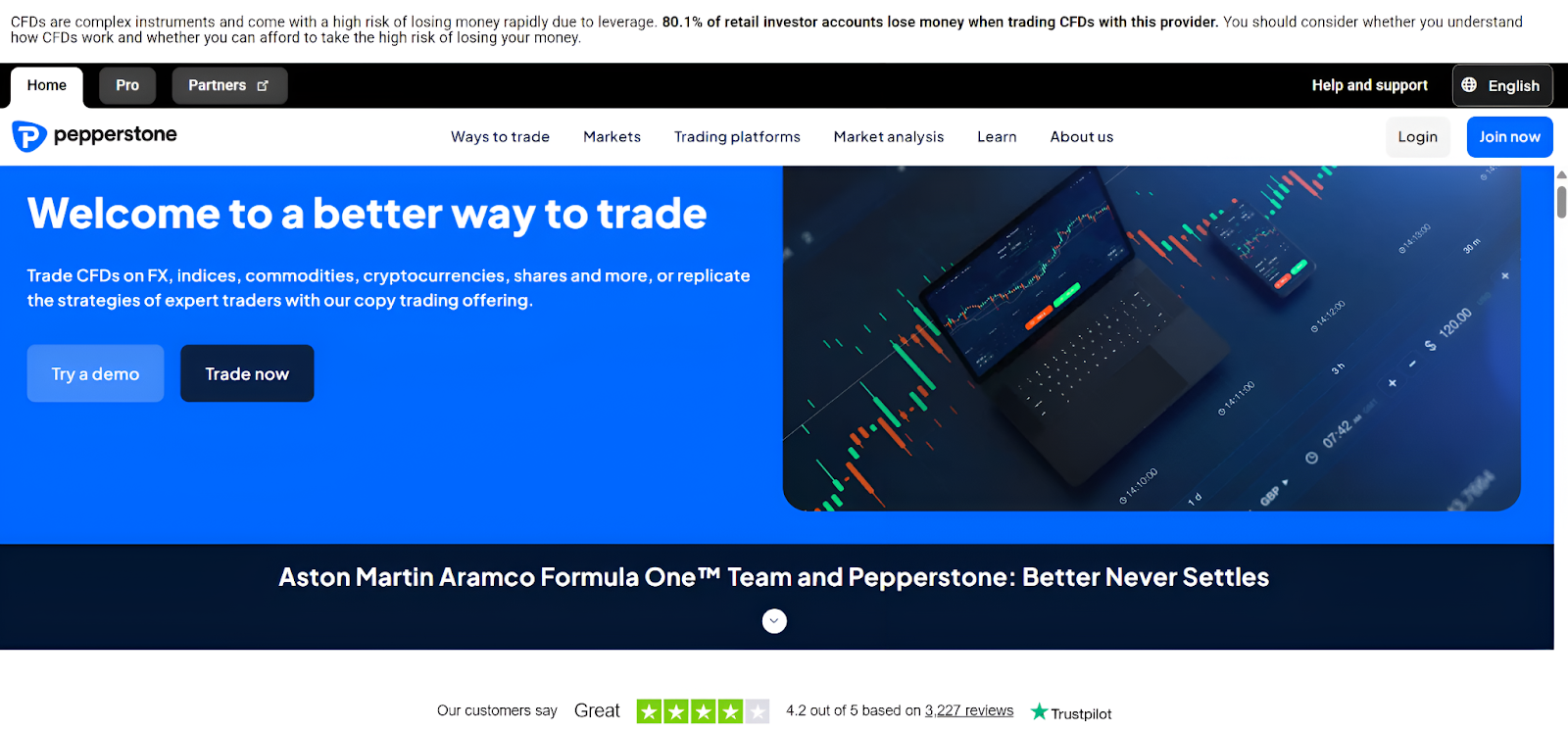
Established in 2010 in Australia, Pepperstone serves over 830,000 users across more than 150 nations, processing over AU$1 trillion in trades monthly. With 10 global offices, Pepperstone adheres to stringent security standards, holding ISO 27001, SOC2 Type 1, and CSA STAR level 1 and 2 certifications. It segregates user funds and is regulated by prominent bodies such as DFSA, CMA, ASIC, CySEC, and FCA. Pepperstone offers a choice of trading platforms including MetaTrader (MT4/MT5) and TradingView.
Key Features: ECN/STP execution model, extremely low raw spreads, multiple advanced trading platforms (MT4, MT5, cTrader, TradingView), excellent customer support, strong global regulatory framework, segregated client funds.
Gold Trading Costs: Raw spreads from 0.0 pips, with fixed commissions from $3.50 per lot, each side. Standard accounts typically have wider spreads with no commissions.
Pros: Among the lowest spreads in the industry, rapid execution speed, outstanding 24/5 customer support, diverse platform options catering to different trading styles, strong commitment to security and regulation.
Cons: Limited product range outside of forex and CFDs, commissions on raw accounts can add up for very high-frequency traders, educational resources are good but not as extensive as some larger brokers.
Trustpilot Rating: 4.3/5
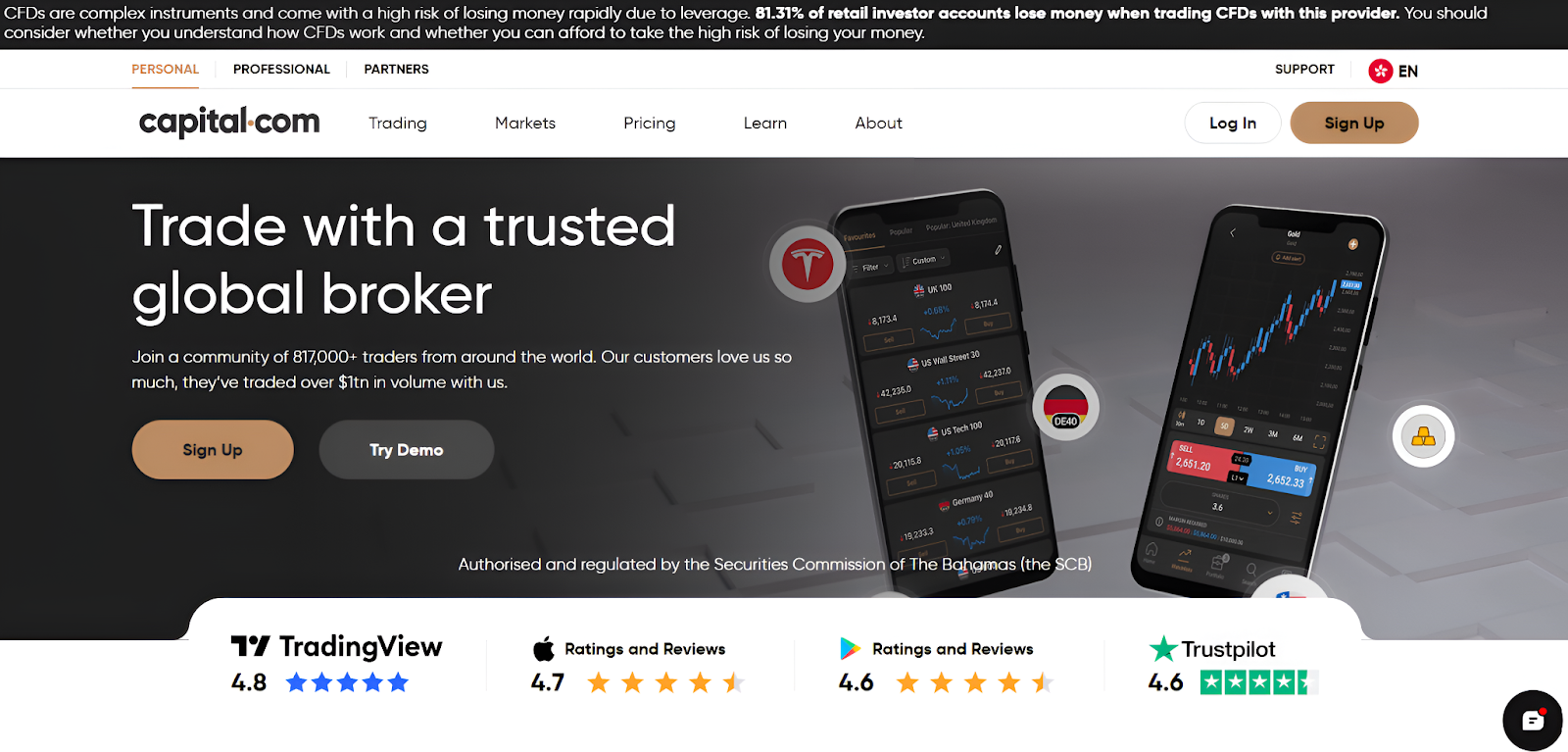
4. Capital.com
Best For: AI-Powered CFD Trading and Educational Resources
Capital.com, launched in Cyprus in 2016, has quickly become a reputable platform, recognized as the "Best CFD broker" by BrokerChooser. It serves over 817,000 traders globally with offices in multiple countries including the UAE, Australia, and Poland. Capital.com prioritizes security with segregated accounts, negative balance protection, and guaranteed stop losses, and is regulated by bodies like the Securities Commission of the Bahamas (SCB), FCA, and CySEC.
Key Features: AI-powered trading insights, extensive educational content, zero commission on trades (spread-based), user-friendly proprietary platform, negative balance protection, guaranteed stop losses.
Gold Trading Costs: Dynamic gold spreads typically range between 0.5 to 0.75 pips. Commissions are generally zero, with costs embedded in the spread. Overnight fees apply for positions held open.
Pros: Innovative AI-driven insights help traders make informed decisions, comprehensive educational materials, competitive spreads with no commissions, strong regulatory oversight, intuitive platform suitable for beginners.
Cons: Primarily a CFD broker, limited availability in certain regions (e.g., US), some users report higher withdrawal fees on specific payment methods.
Trustpilot Rating: 4.6/5
5. CMC Markets
Best For: Advanced Platform and Extensive Market Coverage
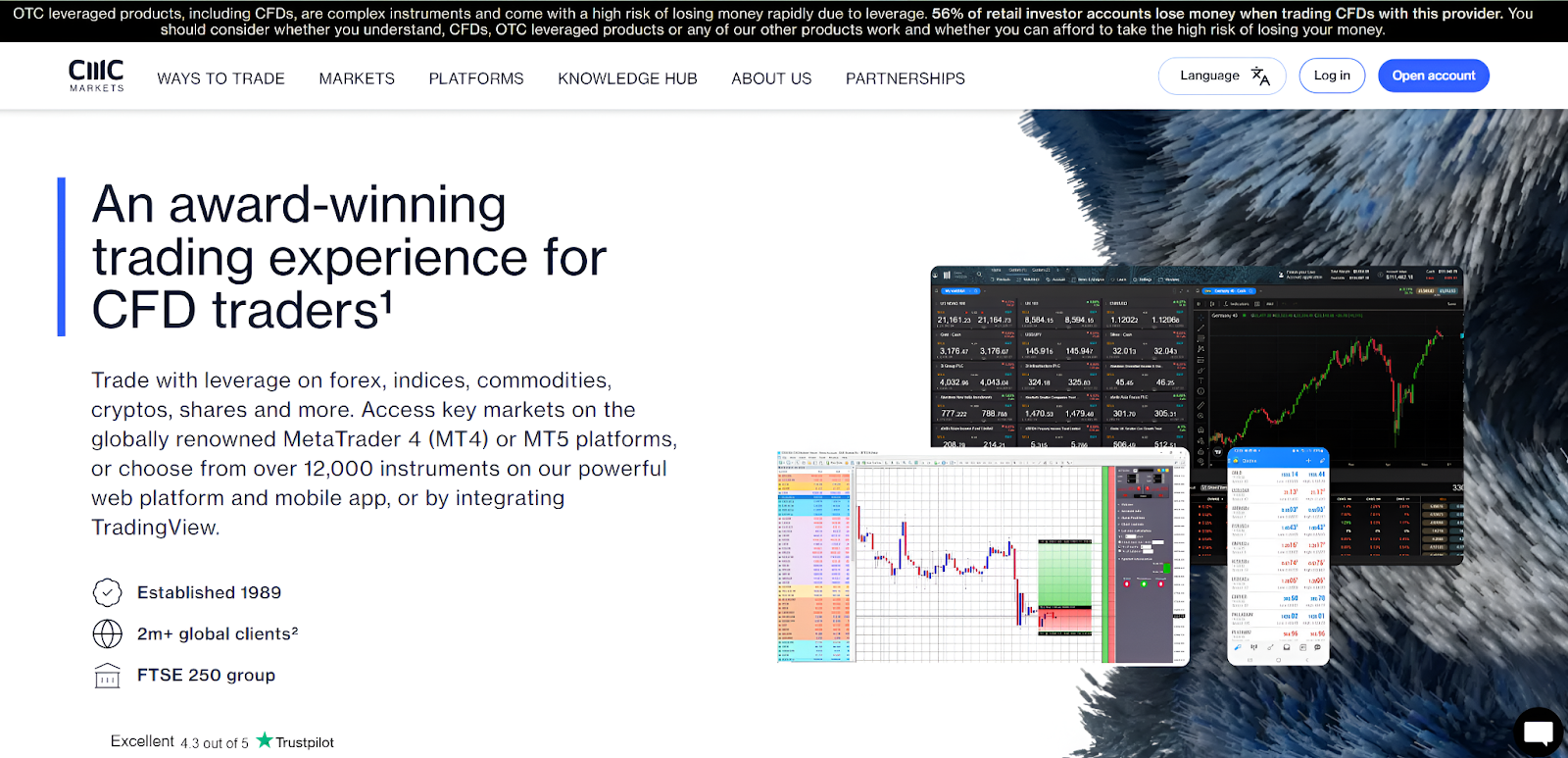
With over 35 years in the industry, CMC Markets, launched in 1989, is one of the oldest and most established gold brokers. It operates 12 global offices and boasts a registered user base exceeding 2 million traders. A member of the FTSE 250 group, CMC Markets is highly regarded for its customer-centric approach, high-quality services, and competitive spreads. It is regulated by renowned bodies such as MAS, BaFIN, and the FCA.
Key Features: Highly advanced proprietary "Next Generation" trading platform, extensive market offerings (10,000+ instruments), spread betting capabilities, robust research and analysis tools, strong global regulatory compliance.
Gold Trading Costs: A minimum spread of 0.39 pips on gold CFDs. Other fees include overnight holding costs and potential inactivity fees.
Pros: Exceptional proprietary trading platform with advanced charting and analysis, vast selection of tradable instruments, strong regulatory history and client fund protection, competitive spreads for active traders, excellent educational resources.
Cons: The advanced platform can have a steep learning curve for novice traders, minimum deposit requirements can be higher for certain account types, spreads may not always be the absolute lowest compared to pure ECN brokers.
Trustpilot Rating: 4.3/5
6. Exness
Best For: Swap-Free Trades and High Leverage
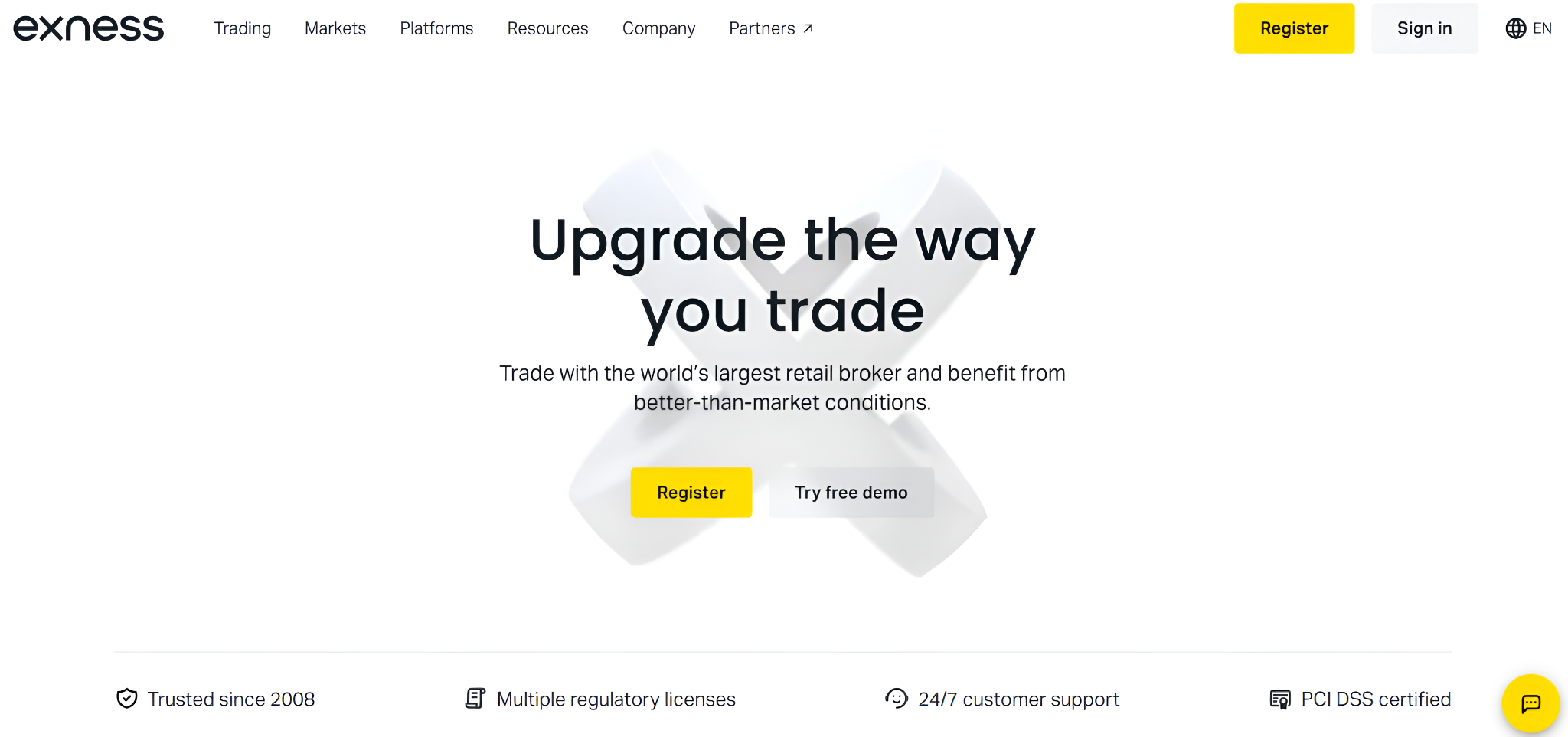
Exness, a leading multi-asset broker in the CFD market since 2008, operates 13 global offices and holds regulatory licenses from various authorities including the FCA, CBCS, FSC, and CySEC. It is PCI: DSS-certified, ensuring world-class security and data protection. Exness is particularly noted for its 24/7 multilingual support in 14 languages.
Key Features: Extremely low spreads (from zero), high leverage options (region-dependent), swap-free accounts for certain instruments, diverse account types, 24/7 multilingual customer support, fast withdrawal processing.
Gold Trading Costs: Spreads vary across account types and can start from zero on certain premium accounts, with commissions applied. Standard accounts feature wider spreads but no commissions.
Pros: Exceptionally low spreads, including zero-spread accounts, highly flexible leverage options (though caution is advised), strong commitment to customer service and support, diverse range of deposit and withdrawal methods, fast execution.
Cons: High leverage can significantly amplify risk, educational resources are not as comprehensive as some competitors, limited availability in some highly regulated markets.
Trustpilot Rating: 4.8/5
7. Interactive Brokers
Best For: Institutional-Grade Trading and Unallocated Gold
Founded in 1978, Interactive Brokers (IBKR) is a regulated securities dealer, renowned for its diverse offerings, financial strength, clearing services, and ultra-fast trade execution. Headquartered in Greenwich, USA, IBKR serves investors across 170+ countries with global offices in multiple locations. The platform is regulated by coveted bodies like FINRA, SEC, NYSE, and FCA. It uniquely offers unallocated gold trading.
Key Features: Extremely broad range of asset classes (spot gold, gold CFDs, futures, ETFs, mining stocks, stocks, options, forex, crypto), institutional-grade trading platform (Trader Workstation), very low commissions, robust regulatory compliance, unallocated gold trading.
Gold Trading Costs: Commissions on gold trading vary by order amount: 0-$500,000: 1.5 basis points; $500,000.01-$1,000,000: 1 bps; >$1,000,000: 0.7 bps of trade value. Borrow fees for short positions are also tiered: $0-$1,000,000: 4.64% (BM + 1%); $1,000,000.01-$10,000,000: 4.14% (BM + 0.5%); >$10,000,000: 3.94% (BM + 0.3%).
Pros: Unparalleled access to global markets and diverse asset classes, exceptionally low commissions for high-volume traders, institutional-grade trading tools and research, strong regulatory standing and financial stability, unique unallocated gold offering.
Cons: Trader Workstation (TWS) platform can be overwhelming for beginners, higher minimum deposit requirements for certain accounts, customer support can be less personalized than retail-focused brokers.
Trustpilot Rating: 3.6/5
8. IG
Best For: Comprehensive CFD Trading and Research
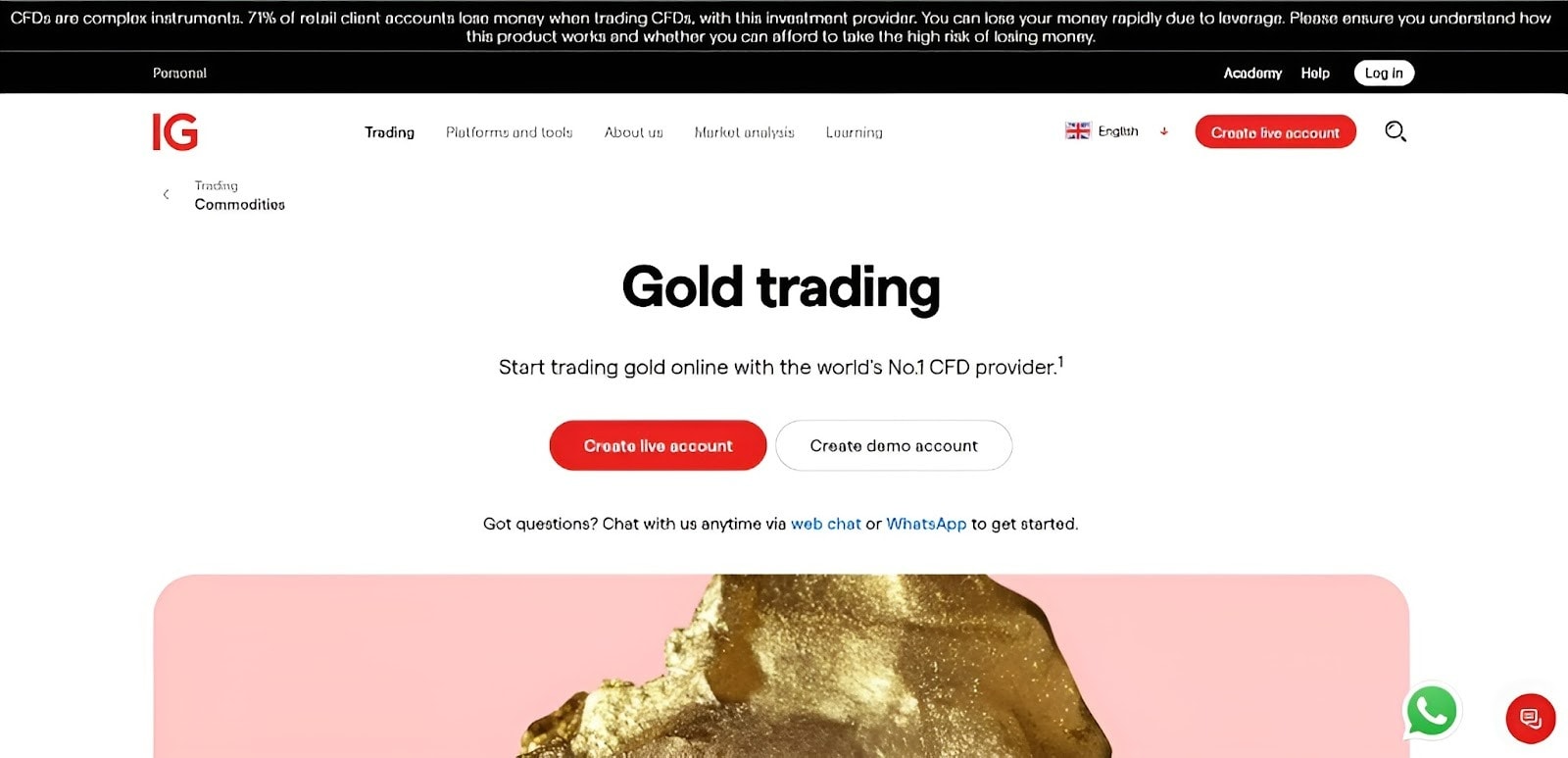
Established in 1974, IG is often touted as the #1 broker for CFD trading, providing access to over 17,000 markets 24/7 from a unified platform. Licensed by the Bermuda Monetary Authority for digital asset and investment businesses, IG safeguards client money in segregated accounts, ringfencing it from creditors.
Key Features: Extensive range of markets (17,000+), excellent proprietary trading platform, comprehensive research and educational tools, strong regulatory compliance across multiple jurisdictions, long-standing industry presence.
Gold Trading Costs: A minimum gold spread of 0.3 pips. Other costs include overnight funding and potential inactivity fees.
Pros: Market leader with a vast array of tradable instruments, highly regarded proprietary platform with advanced features, extensive research and educational content, robust regulatory framework and client fund protection, reliable trade execution.
Cons: Spreads can be slightly wider than some pure ECN brokers, the platform can be complex for absolute beginners, some premium features may require higher account balances.
Trustpilot Rating: 3.9/5
9. NinjaTrader
Best For: Futures Contracts and Advanced Charting
NinjaTrader, a US-based gold broker founded in 2003, specializes in providing cutting-edge trading software and brokerage services, particularly for active futures traders. In January 2026, it expanded into Europe to meet growing retail futures demand. NinjaTrader is registered as a Futures Commission Merchant with the CFTC and is an NFA member.
Key Features: Specialized in gold futures trading, highly customizable charting and analysis tools, advanced trading automation capabilities, active user community, robust platform for technical analysis.
Gold Trading Costs: Nominal commissions starting from $0.09 per micro contract, with standard contracts typically higher. Exchange and NFA fees also apply.
Pros: Excellent platform for dedicated futures traders, powerful charting and technical analysis tools, strong support for algorithmic trading and custom indicators, competitive commissions on futures.
Cons: Primarily futures-focused, limiting options for other gold instruments; the platform has a significant learning curve; not ideal for casual traders or those seeking a broad range of assets beyond futures.
Trustpilot Rating: 3.6/5
10. AvaTrade
Best For: Multi-Asset Trading and Risk Management Tools
AvaTrade, an Ireland-based online trading broker, has regional offices globally, serving over 400,000 customers. It is known for its wide asset selection and robust security features, including segregated client accounts and AvaProtect, a cutting-edge risk management tool. AvaTrade is regulated by numerous authorities, including the Central Bank of Ireland, ASIC, FSCA, and FSA.
Key Features: Wide selection of trading instruments (including gold CFDs), multiple trading platforms (MT4/MT5, AvaTradeGO, DupliTrade), strong global regulatory oversight, AvaProtect risk management tool, extensive educational content.
Gold Trading Costs: Average spread of 0.34 pips on gold CFDs. Other fees include overnight holding costs, inactivity fees (e.g., $50 after 3 months), and administration fees (e.g., $100 after 12 months of inactivity).
Pros: Comprehensive regulatory compliance across many jurisdictions, diverse platform options catering to different trader preferences, innovative AvaProtect tool for risk management, good educational resources for beginners.
Cons: Inactivity and administration fees can be substantial for dormant accounts, spreads on standard accounts can be wider than some competitors, research tools are good but not as deep as market leaders.
Trustpilot Rating: 4.8/5
How Brokers Are Evaluated: A Methodological Approach
To compile this comprehensive list, a multi-faceted evaluation methodology was employed. Initially, extensive market research involved analyzing industry reports, trader forums (e.g., Reddit, X, Telegram), and customer review platforms like Trustpilot to gauge collective sentiment and identify frequently discussed brokers. This qualitative data informed a shortlist of promising candidates.
Subsequently, a hands-on approach was adopted, involving the creation of test accounts on each shortlisted platform. This allowed for direct experience with their trading environments, execution speeds, user interfaces, and customer support responsiveness. Each broker was assessed against a standardized set of criteria: regulatory compliance and security measures, the range and type of gold products offered, overall fee structure (spreads, commissions, hidden fees), platform technology and available trading tools, customer support quality, and the provision of educational and research resources. A weighted scoring system was applied to each criterion, culminating in a total score that determined the final ranking. This continuous evaluation process ensures the rankings remain current and reflect the evolving brokerage landscape.
Strategies for Gold Trading in 2026
For new traders entering the gold market, understanding fundamental and technical strategies is crucial.
- Fundamental Analysis: This involves examining macroeconomic data (inflation rates, interest rate decisions from central banks like the Federal Reserve, European Central Bank), geopolitical events (conflicts, trade wars), and the strength of the US dollar. Gold often has an inverse relationship with the dollar and tends to rise during periods of high inflation or uncertainty.
- Technical Analysis: Utilizes historical price data to predict future movements. Common tools include candlestick charts, moving averages (e.g., 50-day, 200-day), Relative Strength Index (RSI), Moving Average Convergence Divergence (MACD), and Fibonacci retracements. Identifying trends, support and resistance levels, and chart patterns can provide entry and exit signals.
- Risk Management: Essential for all traders. Implementing stop-loss orders to limit potential losses, setting take-profit orders to secure gains, and proper position sizing are vital to protect capital. Leverage, while offering amplified gains, also magnifies losses, demanding a disciplined approach.
Conclusion
The gold market in 2026 presents diverse opportunities for traders, driven by global economic shifts and technological advancements in brokerage services. The selection of a suitable gold trading broker is a critical decision that directly impacts trading success and security. While platforms like Plus500 offer intuitive interfaces for beginners, Interactive Brokers caters to professionals with its vast asset range. Exness and Pepperstone stand out for their competitive spreads, while Capital.com leverages AI for insights. Regardless of the chosen platform, traders must exercise caution, conduct thorough due diligence, understand their risk tolerance, and prioritize regulated brokers with transparent fee structures and robust security measures. The volatility inherent in derivatives trading, particularly CFDs, means a significant percentage of retail traders may incur losses. Therefore, continuous learning, disciplined strategy execution, and stringent risk management are indispensable for navigating the golden market successfully.
FAQs
Which broker is best for gold trading?
Based on comprehensive analysis, leading brokers for gold trading include Capital.com, CMC Markets, AvaTrade, Exness, and Forex.com, each excelling in different aspects like fees, platform, or product range.
Is trading gold profitable?
Gold is traditionally a safe-haven asset, offering a hedge against inflation and economic instability. The profitability of gold trading, however, hinges on individual trading skills, adopted strategies, effective risk management, and prevailing market volatility.
What is the minimum deposit required to trade gold?
Minimum deposit requirements for gold trading vary significantly by broker, account type, and the specific gold instrument. Some brokers may offer accounts with no minimum deposit, while others allow positions to be opened with as little as $1.
Which gold broker offers the lowest spreads on XAU/USD?
Exness and Pepperstone are frequently cited as reputable gold brokers offering some of the lowest spreads on the XAU/USD pair, especially on their raw spread or professional account types.
Can I trade gold with leverage in the US?
Yes, gold can be traded with leverage in the US. However, US regulatory bodies, such as the CFTC, typically cap retail leverage for gold trading at a maximum of 1:10 to protect investors.
Can I trade gold without a broker?
While physical gold can be bought or sold without a broker, accessing financial instruments like CFDs, futures, or ETFs typically requires a brokerage account. Brokers provide the necessary platforms, tools, and liquidity for efficient digital trading.
What fees should I consider when choosing a gold trading broker?
When selecting a gold broker, key fees to consider include spreads (the buy/sell price difference), commissions per trade, overnight holding fees (swaps), inactivity charges, and any deposit or withdrawal fees. Narrower spreads and transparent fee structures are generally preferable.