Dwi Wanna
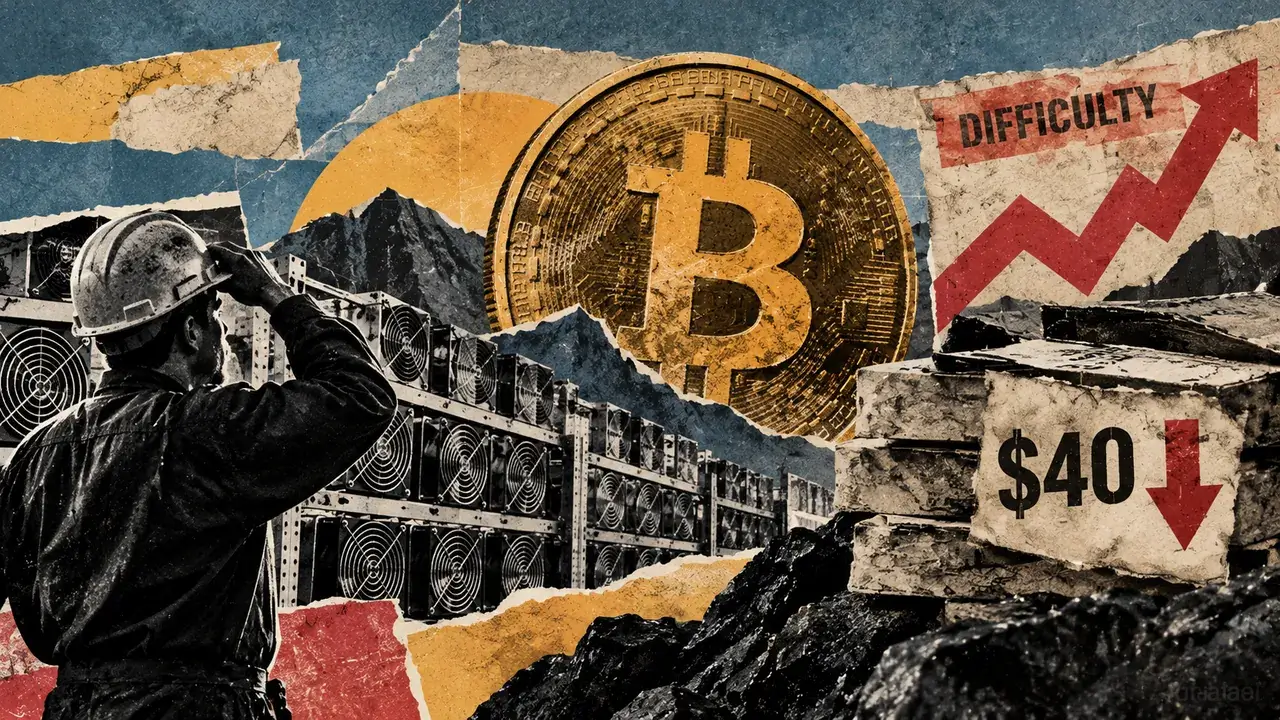
Despite the mounting pressure on profit margins, the mining community appears to be exhibiting a level of resilience that defies traditional market logic. Rather than liquidating their holdings to cover operational costs or mitigate potential losses, data suggests that miners are doubling down on their "HODL" strategies. This behavior signals a deep-seated confidence in the long-term value of Bitcoin, even as the immediate fiscal environment becomes increasingly challenging.
The Economic Squeeze: Revenue and Transaction Fee Volatility
The drop to $34 million in daily revenue is a significant departure from the highs seen earlier in the year. To understand the gravity of this decline, one must look at the two primary sources of miner income: block rewards and transaction fees. Following the fourth Bitcoin halving in April 2024, the block reward was programmatically reduced from 6.25 BTC to 3.125 BTC. While miners initially offset this reduction through a surge in transaction fees—driven largely by the popularity of the Ordinals protocol and the launch of Runes—that secondary revenue stream has since dried up.
Current data indicates that Bitcoin network activity has retreated to levels not seen in over twelve months. The frenetic pace of inscriptions and token minting on the Bitcoin blockchain has slowed, leading to a "fee desert." When transaction fees are high, they can account for a substantial percentage of a miner’s total take; however, as fees return to baseline levels, miners are left almost entirely dependent on the halved block subsidy. This transition has placed miners at their lowest compensation levels since July 2024, creating a precarious environment for those with high electricity costs or inefficient hardware.

A Shift in Utility: From Payment Network to Store of Value
A core driver behind the declining network activity is a perceptible shift in investor psychology. The CryptoQuant report suggests that Bitcoin is increasingly viewed through the lens of a "store of value" (often referred to as digital gold) rather than a "medium of exchange." As the asset matures and gains institutional acceptance through products like spot Bitcoin ETFs in the United States, the tendency for holders to move their coins frequently has diminished.
When investors view an asset as a long-term hedge against inflation or currency debasement, they are less likely to use it for daily transactions. This "buy and hold" mentality reduces the total number of transactions processed on the blockchain, which in turn reduces the aggregate fees paid to miners. While this shift bolsters the narrative of Bitcoin’s scarcity and long-term price appreciation, it creates a structural challenge for the mining industry, which relies on a robust "fee market" to remain profitable in a post-halving world where block rewards will eventually trend toward zero.
Chronology of Miner Behavior: From Selling Pressure to Accumulation
The trajectory of miner behavior throughout 2024 provides a fascinating look into the industry’s internal sentiment. Early in the year, particularly in February, miners were significantly more active in offloading their assets. At its peak, daily outflows from miner-controlled wallets to cryptocurrency exchanges reached approximately 23,000 BTC. This selling pressure was likely a preemptive move to build cash reserves ahead of the halving, ensuring that companies had the liquidity to upgrade to more efficient mining rigs.
However, as the year progressed and the halving became a reality, this trend reversed sharply. By June 26, daily exchange inflows from miners had dropped to just 4,000 BTC. This dramatic 82% reduction in selling activity suggests that the "capitulation phase" often feared by analysts has yet to materialize. Instead of a fire sale, the market is witnessing a strategic withdrawal of supply.

Even more striking is the behavior of "Satoshi-era" miners—those who have held Bitcoin since the earliest years of the network’s existence. In 2024, these legacy holders offloaded roughly 10,000 BTC. In contrast, during the first half of 2025, that figure has plummeted to a mere 150 BTC. This near-total halt in selling from the network’s oldest participants serves as a powerful indicator of institutional and long-term conviction.
Profitability Metrics and Operating Margins
One might wonder how miners can afford to hold their assets when revenues are at multi-month lows. The answer lies in the current Net Unrealized Profit and Loss (NUPL) metrics. Despite the revenue dip, CryptoQuant data reveals that the mining sector as a whole is still operating with a healthy 48% profit margin.
This margin exists because the price of Bitcoin has remained relatively high compared to the cost of production for many top-tier mining firms. While small-scale or inefficient miners may be struggling, the larger, publicly traded entities have spent the last two years optimizing their operations. By securing low-cost energy contracts and deploying the latest generation of ASIC (Application-Specific Integrated Circuit) miners, such as the Bitmain Antminer S21 series, these firms have lowered their "break-even" price point significantly.
Furthermore, the "Hashprice"—a metric that measures the expected value of 1 TH/s of hashing power per day—has stabilized. While it is lower than it was during the 2021 bull run, it remains sufficient for well-capitalized operations to stay afloat without being forced to dump their Bitcoin reserves into a stagnant market.

The Rise of the Mid-Tier Accumulator
Another significant trend highlighted in the data is the accumulation patterns of wallets holding between 100 and 1,000 BTC. This specific cohort, which often represents medium-sized mining pools or private mining enterprises, has seen its collective holdings grow from 61,000 BTC at the end of March to 65,000 BTC by late June.
This is the highest level of accumulation for this group since November 2024. The fact that these entities are choosing to increase their balance sheets during a period of low revenue is a testament to their bullish outlook. It suggests that these players are not only surviving the post-halving environment but are actively preparing for a future supply shock. By absorbing supply now, they are positioning themselves to benefit from any future price appreciation driven by institutional demand.
Broader Market Implications and Future Outlook
The refusal of miners to sell has profound implications for the broader Bitcoin market. Traditionally, miners have been one of the largest sources of consistent selling pressure. When miners hold their coins, it effectively reduces the "liquid supply" available on exchanges. If demand from retail investors and institutional ETF buyers remains steady or increases while the supply from miners remains constrained, the basic laws of supply and demand suggest an eventual upward pressure on price.
However, this "holding firm" strategy is not without risk. If the price of Bitcoin were to experience a significant and sustained correction, the 48% margin currently enjoyed by miners could evaporate. This would lead to a "forced capitulation" event, where miners are compelled to sell their reserves to stay solvent, potentially creating a negative feedback loop for the price.

Industry analysts are also watching how miners adapt to the "low fee" environment. Many firms are beginning to diversify their revenue streams. For instance, some mining companies are pivoting toward providing high-performance computing (HPC) services for Artificial Intelligence (AI) firms, utilizing their existing data center infrastructure and energy access to generate non-crypto revenue. Others are exploring Layer 2 solutions on Bitcoin, such as the Lightning Network or Stacks, in hopes of fostering a new ecosystem that generates higher transaction volume and, consequently, more fees.
Conclusion: A Test of Fortitude
The current state of the Bitcoin mining industry is one of calculated endurance. The drop in daily revenue to $34 million is a sobering reminder of the volatility and cyclical nature of the crypto-economy. Yet, the data provided by CryptoQuant paints a picture of a mature industry that is no longer prone to panic.
With daily exchange flows at yearly lows and reserves in mid-tier wallets at multi-month highs, miners are sending a clear message to the market: they believe the best is yet to come. As the network activity fluctuates and the "store of value" narrative takes deeper root, the mining sector’s ability to hold firm will remain a critical pillar of Bitcoin’s market stability. For now, the "digital gold" miners are content to wait, betting that their current patience will be rewarded in the next leg of the market cycle.