admin
admin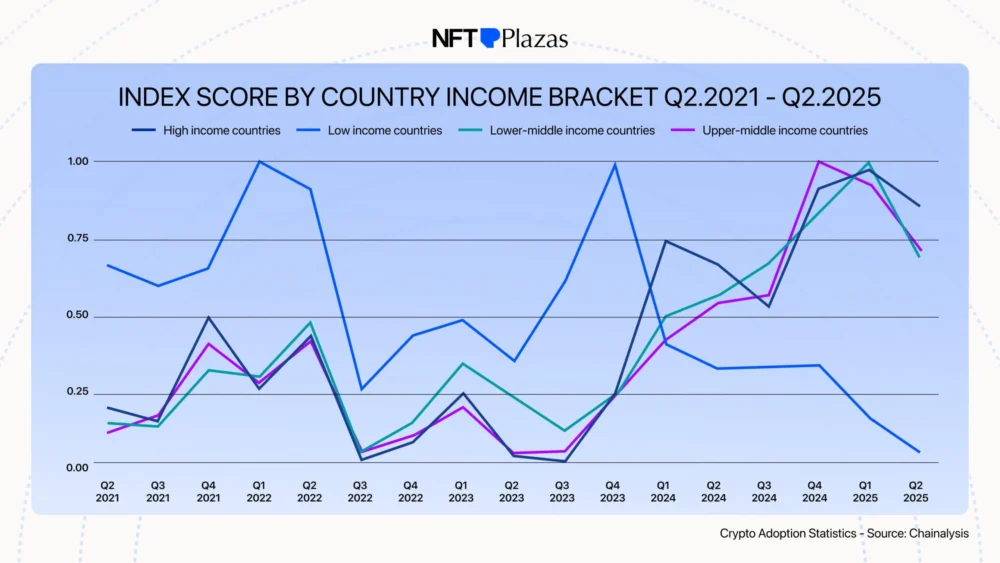
The global landscape of cryptocurrency adoption continues to evolve at an astonishing pace, solidifying digital assets as an undeniable force in the global financial ecosystem. As 2026 unfolds, the pervasive integration of cryptocurrencies across various sectors, from daily mobile transactions to sophisticated institutional investments, underscores a profound paradigm shift in how value is perceived, stored, and exchanged. This comprehensive analysis delves into the pivotal trends and statistics shaping cryptocurrency adoption in 2026, highlighting major growth areas, significant market shifts, and the burgeoning influence of digital currencies in both the retail and institutional sectors. The data, synthesized from projected market trends and industry expert analyses, paints a picture of sustained, robust growth, indicating a future where digital assets are increasingly interwoven with conventional finance and everyday life.
A Global Surge: The State of Crypto Ownership in 2026

By early 2026, an estimated 1.8 billion individuals worldwide, representing approximately 22% of the global population, are projected to own some form of cryptocurrency. This figure marks a significant leap from previous years, reflecting a maturation of the market and increased accessibility. Emerging economies continue to lead in per capita adoption, driven by factors such as high inflation rates, unreliable traditional banking systems, and a high penetration of mobile technology. Nations in Southeast Asia, Latin America, and Africa, including countries like Nigeria, Vietnam, the Philippines, and Brazil, consistently show the highest rates of crypto ownership, with over 40% of their internet-using populations reportedly holding digital assets. These regions often leverage cryptocurrencies for remittances, micro-transactions, and as a hedge against local currency volatility. In developed nations, while adoption percentages may be lower on a per capita basis, the sheer volume of users and the depth of institutional engagement contribute significantly to the global market capitalization. The United States, the European Union, and East Asian economic powerhouses like South Korea and Japan are witnessing substantial growth, particularly in regulated investment products and enterprise blockchain solutions.
Unprecedented Year-over-Year Growth
The year 2025 closed with an impressive average global year-over-year (YoY) growth rate in crypto adoption of approximately 28%, a trend that is projected to continue into 2026. This sustained momentum is a testament to several converging factors. Firstly, the increasing clarity in regulatory frameworks in key jurisdictions, though still fragmented globally, has instilled greater confidence among both retail and institutional investors. Secondly, technological advancements in user experience, such as more intuitive wallet interfaces, enhanced security features, and simplified onboarding processes, have significantly lowered the barrier to entry for new users. The proliferation of Web3 applications, including decentralized finance (DeFi) protocols, play-to-earn gaming, and metaverse platforms, has also introduced novel use cases that attract diverse demographics. Moreover, the integration of crypto payment options by major e-commerce platforms and payment processors has made digital assets more practical for everyday transactions, moving them beyond speculative investments. Dr. Anya Sharma, a lead economist at Global Blockchain Insights, commented in a recent industry report, "The consistent double-digit growth we’re observing isn’t just about market speculation anymore; it’s a fundamental shift in financial behavior, driven by necessity in some regions and innovation in others."

Demographic Evolution: Age, Gender, and Income Distribution
The demographic profile of cryptocurrency owners in 2026 reveals a broadening and diversifying user base, though certain trends persist. Millennials (born 1981-1996) and Generation Z (born 1997-2012) remain the dominant cohorts, accounting for roughly 65% of all crypto owners. Their digital native sensibilities, openness to new technologies, and often greater distrust in traditional financial institutions make them natural early adopters. However, there’s a noticeable uptick in adoption among older demographics. Generation X (born 1965-1980) now represents approximately 25% of crypto holders, a figure that has grown by 8% over the past two years, largely due to increased financial advisory services offering crypto exposure and the maturation of accessible investment products like spot ETFs.
The historical gender gap in crypto ownership, while still present, is gradually narrowing. In 2026, women constitute an estimated 38% of global crypto owners, up from 30% just two years prior. This progress is attributed to targeted educational initiatives, the rise of female-led crypto communities, and the increasing recognition of crypto as a tool for financial independence and wealth creation.

Regarding income distribution, cryptocurrency adoption is no longer solely concentrated among high-net-worth individuals or tech-savvy early adopters. While higher income brackets still show a greater propensity for larger investments, the base of crypto users spans all income levels. Approximately 30% of crypto owners fall into the lower-to-middle income brackets, particularly in regions where traditional banking services are limited or costly. For these individuals, crypto often serves as a lifeline for remittances, savings, and access to credit, fostering greater financial inclusion. Middle-to-high income earners, comprising around 55% of the user base, leverage crypto for diversification, investment, and often engage with DeFi protocols for yield generation. The remaining 15% represents ultra-high-net-worth individuals and institutional investors.
Merchant Acceptance and Payment Integration: Towards Ubiquity
One of the most significant indicators of mainstream adoption in 2026 is the substantial increase in merchant acceptance of cryptocurrencies for goods and services. An estimated 15% of small and medium-sized enterprises (SMEs) globally, and over 5% of large corporations, now accept at least one form of cryptocurrency payment, a twofold increase from 2024. This growth is largely driven by advancements in payment processing solutions that convert crypto to fiat instantaneously at the point of sale, mitigating volatility risks for merchants. Stablecoins, in particular, have emerged as a preferred medium for payments due to their price stability, making them attractive for both consumers and businesses.

Major e-commerce platforms, travel agencies, and even some national retail chains have integrated crypto payment gateways, often through partnerships with fintech companies specializing in digital asset transactions. The Lightning Network, for Bitcoin, and various Layer-2 solutions for Ethereum and other smart contract platforms, have drastically reduced transaction fees and confirmation times, making crypto payments competitive with, and in some cases superior to, traditional card payments. "The friction points that once hindered crypto as a viable payment method are rapidly disappearing," noted Mr. David Chen, CEO of Horizon Digital Assets. "We’re seeing a clear trend towards crypto becoming just another payment option, seamlessly integrated into existing infrastructure, which is crucial for mass adoption."
Institutional and Corporate Adoption: The Mainstream Embrace
The institutional and corporate embrace of cryptocurrencies has transitioned from cautious exploration to strategic integration by 2026. The approval of spot Bitcoin ETFs in major markets, followed by similar products for Ethereum and other prominent digital assets, has opened floodgates for traditional investment capital. Institutional assets under management (AUM) allocated to cryptocurrencies are projected to exceed $1.5 trillion globally, representing a significant portion of the total crypto market capitalization.

Major financial institutions, including leading banks, asset management firms, and hedge funds, now routinely offer crypto custody services, investment products, and even proprietary trading desks for digital assets. Corporate treasuries are increasingly considering Bitcoin and other stable, large-cap cryptocurrencies as a hedge against inflation and a diversified asset class, with a growing number of public companies holding crypto on their balance sheets. Beyond direct investment, corporate adoption extends to the broader application of blockchain technology. Enterprises are leveraging distributed ledger technology (DLT) for supply chain management, data provenance, intellectual property rights, and the tokenization of real-world assets (RWAs). The tokenization market, allowing fractional ownership of everything from real estate to fine art and commodities, is experiencing exponential growth, attracting significant institutional capital and facilitating liquidity for previously illiquid assets.
Regulatory Frameworks: A Patchwork of Progress
While crypto adoption surges, the regulatory landscape in 2026 remains a complex, albeit progressively clearer, patchwork. Several nations have enacted comprehensive regulatory frameworks addressing aspects like consumer protection, anti-money laundering (AML), and taxation of digital assets. Jurisdictions like the European Union with its MiCA (Markets in Crypto-Assets) regulation, and countries like Singapore and the UAE, have established themselves as leaders in fostering innovation while ensuring market integrity. This clarity has significantly boosted institutional confidence and attracted investment.

Conversely, some major economies still grapple with fragmented or ambiguous regulations, creating uncertainty and occasionally hindering innovation. However, there is a clear trend towards greater international cooperation among regulatory bodies to establish global standards and prevent regulatory arbitrage. The G20 and various financial stability boards are actively engaged in discussions to harmonize approaches to stablecoins, DeFi, and cross-border crypto transactions, recognizing the interconnected nature of the global digital asset market. The evolution of these frameworks is critical; clear, balanced regulations are widely seen as the next major catalyst for even broader mainstream adoption.
Technological Advancements: Powering the Future
The rapid pace of technological innovation continues to be a core driver of crypto adoption. In 2026, Layer-2 scaling solutions, such as rollups and sidechains, have matured significantly, making blockchain networks faster, more scalable, and cheaper to use. This has enhanced user experience for everything from NFT transactions to DeFi swaps, making complex blockchain interactions almost instantaneous and affordable. Security advancements, including multi-party computation (MPC) wallets and hardware security modules (HSMs), have also bolstered user confidence in safeguarding their digital assets. Furthermore, the development of more user-friendly decentralized applications (dApps) and the growing interoperability between different blockchain networks are creating a more seamless and integrated digital asset experience. These technological leaps are fundamental to supporting the increasing transaction volume and user base that define the 2026 crypto landscape.

Expert Perspectives and Future Outlook
The consensus among industry experts in 2026 is that cryptocurrency adoption is on an irreversible trajectory toward global integration. While challenges such as market volatility, the need for continued regulatory clarity, and cybersecurity threats persist, the underlying utility and innovative potential of digital assets are too significant to ignore. "We’re witnessing the early stages of a complete overhaul of financial infrastructure," stated Dr. Lena Petrova, a futurist specializing in digital economies. "Crypto isn’t just an alternative; it’s becoming a foundational layer for new forms of commerce, identity, and governance." The implications extend beyond finance, touching upon areas like data ownership, digital identity, and the future of work in a decentralized environment. As the world navigates geopolitical shifts and economic uncertainties, digital assets are increasingly seen not just as speculative tools, but as vital components of a resilient, inclusive, and globally connected digital economy. The statistics of 2026 clearly demonstrate that the digital asset revolution is not merely underway; it is accelerating, reshaping industries and empowering individuals on a global scale.