admin
admin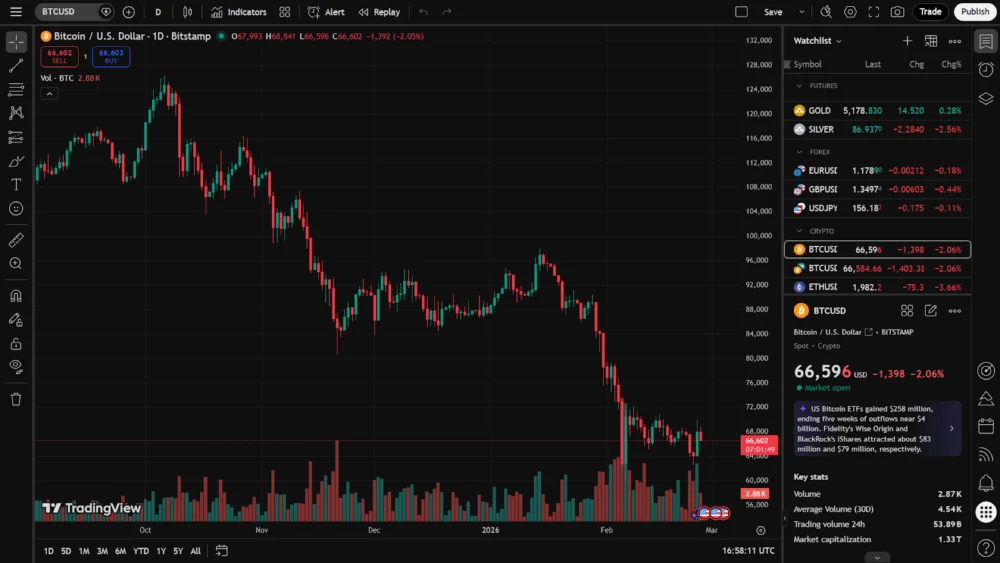
As the global financial landscape evolves and digital assets increasingly assert their presence, the trajectory of Bitcoin (BTC) price prediction stands at the forefront of every serious crypto investor’s strategy heading into 2026 and beyond. This period is characterized by tightening market cycles, expanding institutional adoption, and a global movement towards clearer regulatory frameworks, all of which are poised to redefine long-term investment portfolios. While current Bitcoin valuations reflect immediate market sentiment, they often do not fully encapsulate the profound technological advancements, significant macroeconomic shifts, and intricate supply dynamics brewing behind the scenes. This comprehensive analysis delves into whether Bitcoin is poised to breach new all-time highs, solidify its status as "digital gold," or navigate further corrections before resuming an upward climb. Through an examination of market data-driven trends, expert projections, key indicators, and the broader ecosystem, this article aims to provide clarity amidst the prevailing market narratives, moving beyond mere speculation to offer a fact-based perspective on BTC’s potential path through 2026 and into the subsequent years.
Bitcoin: Genesis, Evolution, and Current Market Standing
Bitcoin (BTC), conceived by the pseudonymous Satoshi Nakamoto in 2008 and launched in January 2009, pioneered the entire digital asset movement. It remains the most traded and widely recognized cryptocurrency globally, operating on a decentralized blockchain network. This network relies on a global consortium of computers to verify transactions, eliminating the need for a central authority. A foundational element of Bitcoin’s design is its strictly limited total supply of 21 million coins. This inherent scarcity is a critical factor driving its perception among many investors as "digital gold" – a potential hedge against inflation and a store of value in an increasingly volatile fiat currency world. The future price projections for Bitcoin are thus not merely speculative but are grounded in a complex interplay of market sentiment, extensive historical data, and diverse user-generated forecasts, encompassing both bullish optimism and bearish caution for the years ahead.
Historically, Bitcoin’s journey has been marked by distinct phases of rapid expansion and significant contraction, each cycle influencing broader cryptocurrency market sentiment and setting precedents for the entire industry. From its initial valuation of fractions of a cent, Bitcoin first gained notable traction in 2010 with the infamous "Bitcoin Pizza Day" transaction. Early milestones included the establishment of rudimentary exchanges, leading to its first major bull run in 2013, surpassing $1,000. The subsequent years saw periods of consolidation and recovery following events like the Mt. Gox hack, before another explosive rally in 2017 brought it close to $20,000. The 2020-2021 bull market, fueled by institutional interest and macroeconomic tailwinds, saw Bitcoin achieve multiple new all-time highs, eventually surpassing $69,000. These cycles underscore Bitcoin’s inherent volatility but also its remarkable resilience and long-term growth trajectory.
Currently, Bitcoin is trading within a range of approximately $60,000 to $65,000 across major global exchanges. Its market capitalization consistently hovers around the trillion-dollar mark, firmly cementing its position as the largest cryptocurrency by valuation. Daily trading volumes typically fluctuate between $20 billion and $35 billion, indicative of deep liquidity and robust participation from both retail and institutional investors. Short-term price action remains highly sensitive to a confluence of factors, including global macroeconomic data releases, net flows into newly approved spot Exchange-Traded Funds (ETFs), and pivotal regulatory headlines. Market sentiment surrounding BTC is dynamic and reactive, often swinging between periods of bullish optimism during rallies and increased caution during corrections. Recent sophisticated price forecast models generally suggest a gradual long-term upside, predominantly driven by its finite supply and expanding adoption, although volatility continues to be a defining characteristic of the asset. Compared to its previous all-time high, Bitcoin currently trades below peak levels, presenting narratives for both potential recovery and lingering downside risks, depending on broader market conditions and evolving investor psychology.
Technical Analysis: Decoding Bitcoin’s Market Signals
Bitcoin’s technical outlook largely reflects an asset with a structurally bullish bias, consistently trading within established long-term support and resistance zones while exhibiting sharp reactions to short-term catalysts. For investors, particularly those involved in activities like Bitcoin mining, understanding these technical signals is crucial for optimizing accumulation strategies and effectively hedging risk. Key indicators such as moving averages, the Relative Strength Index (RSI), and trading volume offer valuable insights into momentum shifts and prevailing global market sentiment.
Moving Averages: Bitcoin’s short-term moving averages (e.g., 50-day) are presently tracking in close proximity to the spot price, indicating a period of consolidation. The 200-day moving average, however, remains a critical gauge for assessing the long-term trend direction. Historically, when BTC sustains trading above its 200-day average, the broader market structure typically favors bullish continuation, reflecting stronger underlying market sentiment. A confirmed "golden cross," where the 50-day moving average ascends above the 200-day moving average, has historically preceded extended upside phases and significant rallies. Conversely, a "death cross," where the 50-day drops below the 200-day, often signals periods of consolidation or increased downside pressure. The current positioning of these averages suggests a cautious bullish outlook, with the 200-day acting as a robust foundational support.
Relative Strength Index (RSI): The Relative Strength Index (RSI), a momentum oscillator, for Bitcoin generally oscillates between 40 and 60 during consolidation phases, indicating balanced momentum rather than extreme overbought or oversold conditions. Readings climbing above 70 typically signal overheated conditions, suggesting that the asset may be due for a pullback. Conversely, dips below 30 suggest oversold territory, which historically tends to attract buyers looking for potential bounce opportunities. Recent RSI positioning for Bitcoin reflects neutral momentum, aligning with its current range-bound price action rather than indicating an aggressive breakout or breakdown is immediately imminent.
Key Price Levels: Understanding established support and resistance levels is fundamental for traders and investors. These levels often act as psychological barriers and magnets for price action.
-
Support Levels: These are price points where buying interest is anticipated to be strong enough to prevent the price from falling further. For Bitcoin, critical support levels have been identified at:
- S1: $60,000
- S2: $55,000
- S3: $50,000
- S4: $45,000
- S5: $40,000
Maintaining above these levels, particularly S1, is crucial for sustaining positive sentiment in the short term.
-
Resistance Levels: These are price points where selling interest is expected to be strong enough to prevent the price from rising further. For Bitcoin, key resistance levels include:
- R1: $72,000
- R2: $75,000
- R3: $80,000
- R4: $85,000
- R5: $90,000
A decisive break above R1 or R2 would signal strong bullish momentum and could pave the way for challenging higher resistance levels, potentially leading to new all-time highs.
Future Price Projections: 2026-2030 Outlook
Analysts and sophisticated market models offer varying, yet generally optimistic, price predictions for Bitcoin over the coming years, reflecting a consensus on its long-term growth potential tempered by short-term volatility.
BTC Price Prediction 2026
While detailed monthly breakdowns for 2026 were not provided in the original data, the long-term outlook table gives a clear annual projection.
For 2026, Bitcoin is projected to trade within a minimum price of $60,000, an average price of $105,000, and a maximum price of $150,000. This suggests a year of significant potential growth, possibly seeing Bitcoin consolidate above its previous all-time highs and establish a new baseline well into six figures.
BTC Price Prediction 2027
The projections for 2027 indicate a sustained upward trend, building on the foundation laid in 2026.
- January 2027: Min $106,588, Avg $126,144, Max $145,700 (Expected ROI +113%)
- December 2027: Min $124,828, Avg $144,384, Max $163,940 (Expected ROI +140%)
Throughout 2027, the average price is expected to consistently exceed $125,000, with potential highs nearing $164,000 by year-end, reflecting strong market confidence and continued adoption.
BTC Price Prediction 2028
The bullish momentum is anticipated to continue into 2028, with further appreciation.
- January 2028: Min $126,140, Avg $145,731, Max $165,322 (Expected ROI +154%)
- December 2028: Min $144,293, Avg $163,884, Max $183,475 (Expected ROI +182%)
By the end of 2028, the average price could approach $164,000, with peak predictions reaching over $183,000, indicating an almost doubling of current price levels from a 2026 baseline.
Long-term Outlook: BTC Price Prediction (2026–2030)
The long-term outlook reinforces the expectation of substantial growth for Bitcoin, with projections reaching unprecedented levels.
- 2026: Min $60,000, Avg $105,000, Max $150,000
- 2027: Min $70,000, Avg $115,000, Max $200,000
- 2028: Min $85,000, Avg $120,000, Max $200,000
- 2029: Min $110,000, Avg $150,000, Max $300,000
- 2030: Min $140,000, Avg $185,000, Max $400,000
These projections suggest that by 2030, Bitcoin could see an average price of $185,000, with optimistic scenarios pushing its value to $400,000. This multi-year forecast reflects a belief in Bitcoin’s increasing maturity, wider acceptance, and its role as a deflationary asset.
Key Factors Influencing Bitcoin’s Price Dynamics
Bitcoin’s valuation is rarely driven by a singular catalyst; instead, it is shaped by a multitude of interacting forces that influence both short-term fluctuations and long-term price forecasts. Understanding these factors is paramount for informed investment decisions.
Supply and Scarcity: The fundamental principle underpinning Bitcoin’s value proposition is its fixed supply cap of 21 million coins. This hard limit creates inherent scarcity, making it distinct from traditional fiat currencies that can be printed infinitely. A critical event reinforcing this scarcity is the "halving" (or halvening), which occurs approximately every four years (or every 210,000 blocks). Halving events reduce the reward miners receive for validating transactions, thereby cutting the rate of new Bitcoin entering circulation by half. Historically, these supply shocks have preceded significant upward price cycles, as reduced new supply meets sustained or increasing demand. The most recent halving occurred in April 2024, and its full impact on supply dynamics and price appreciation is still unfolding, expected to contribute to the bullish outlook for 2026 and beyond.
Market Demand and Adoption: The expansion of Bitcoin’s addressable market is a primary driver of demand. This includes increasing institutional investment from hedge funds, asset managers, and sovereign wealth funds. The approval and success of spot Bitcoin ETFs in major markets, particularly the U.S., have provided a regulated, accessible gateway for traditional investors, significantly channeling capital into the asset. Corporate treasury allocations, exemplified by companies like MicroStrategy, further underscore Bitcoin’s growing acceptance as a legitimate treasury reserve asset. Beyond institutions, expanding retail participation globally, facilitated by user-friendly exchanges and payment platforms, continues to fuel demand. When adoption accelerates across these diverse segments, the resultant increased buying pressure invariably pushes Bitcoin into new trading ranges.
Market Sentiment and Media Influence: Investor psychology plays a profoundly powerful role in Bitcoin’s short-term price movements. Positive headlines regarding regulatory clarity, technological breakthroughs, or macroeconomic optimism can rapidly fuel rallies, often leading to a "fear of missing out" (FOMO) phenomenon. Conversely, negative news, regulatory crackdowns, or broader market uncertainty can amplify sell-offs, driven by fear and panic. Social media trends, influencer opinions, and traditional financial media coverage often act as accelerants to these sentiment-driven shifts, creating feedback loops that can lead to rapid price swings.

Macroeconomic Conditions: The broader macroeconomic environment significantly impacts risk assets like Bitcoin. Factors such as interest rates, inflation trends, and global liquidity conditions dictate investor appetite for speculative assets. During periods of monetary easing (lower interest rates, quantitative easing), capital often flows into alternative assets, including Bitcoin, as investors seek higher returns and hedges against currency debasement. Conversely, during periods of monetary tightening (higher interest rates, quantitative tightening), risk assets may face headwinds as investors prioritize safer, yield-bearing investments. Bitcoin’s narrative as a hedge against inflation also gains traction during periods of rising consumer prices, attracting investors seeking to preserve purchasing power.
Regulation and Policy Developments: Government decisions and evolving regulatory frameworks worldwide exert a substantial influence on Bitcoin’s market perception and price. Policies concerning crypto taxation, the oversight of cryptocurrency exchanges, and the approval or rejection of Bitcoin-related financial products (like ETFs) can rapidly shift market expectations. Clear, supportive, and harmonized regulation tends to strengthen investor confidence, legitimizing the asset class and encouraging broader participation. In contrast, restrictive policies, outright bans, or prolonged regulatory uncertainty can temporarily suppress momentum and deter institutional engagement. The ongoing efforts by various jurisdictions, such as the European Union’s Markets in Crypto-Assets (MiCA) regulation, aim to create a clearer operating environment, which is generally viewed as beneficial for Bitcoin’s long-term stability and growth.
Key Risks That Could Impact BTC’s Forecast
Despite the strong long-term projections and growing optimism, several inherent risk factors could significantly alter Bitcoin’s expected trajectory and reshape any price forecast. Acknowledging these risks is crucial for a balanced investment perspective.
Regulatory Headwinds: The evolving and often fragmented global regulatory landscape remains a significant risk. Sudden, restrictive legislation, outright bans in major economies, or punitive taxation policies could severely impact Bitcoin’s accessibility and appeal. Lack of clear, consistent international regulatory frameworks also creates uncertainty for businesses and institutions operating in the crypto space.
Technological Vulnerabilities: While Bitcoin’s blockchain has proven remarkably robust, potential technological risks, though diminishing, still exist. These include the theoretical possibility of a "51% attack" (where a single entity gains control of over half the network’s mining power), or undiscovered software bugs. In the distant future, advancements in quantum computing could potentially threaten the cryptographic foundations of Bitcoin, though significant research is underway to mitigate such long-term threats.
Market Volatility and Systemic Shocks: Bitcoin is renowned for its extreme price volatility, which can lead to rapid and substantial losses for investors. This volatility can be exacerbated by "black swan" events, such as major exchange hacks, significant geopolitical conflicts, or a sudden, severe global economic downturn. Such systemic shocks could trigger widespread deleveraging and a flight to traditional safe-haven assets, impacting Bitcoin’s valuation.
Competition from Other Digital Assets: The cryptocurrency ecosystem is dynamic and competitive. While Bitcoin holds a dominant position, the emergence of more scalable, privacy-focused, or energy-efficient cryptocurrencies, as well as the potential rise of central bank digital currencies (CBDCs), could present competitive pressures. While unlikely to displace Bitcoin’s store-of-value narrative, these alternatives could fragment market attention and capital.
Environmental Concerns: The energy consumption associated with Bitcoin’s Proof-of-Work mining mechanism remains a contentious issue. Increasing scrutiny and public pressure regarding its environmental footprint could lead to regulatory actions or a shift in investor sentiment, particularly among environmentally conscious institutional investors. Efforts to transition to renewable energy sources for mining are ongoing but face challenges.
Global Economic Downturns: Despite its narrative as "digital gold," Bitcoin has historically shown correlation with traditional risk assets during severe market downturns. A deep and prolonged global recession could lead to widespread asset liquidation across all markets, including cryptocurrencies, as investors prioritize liquidity and capital preservation.
Broader Implications and Investor Outlook
Bitcoin’s journey into the mid-2020s signifies its continued maturation from a niche technological experiment to a globally recognized financial asset. The convergence of increasing institutional adoption, clearer regulatory pathways, and its inherent supply scarcity suggests a robust long-term potential for growth. However, this potential is inextricably linked with its characteristic market volatility and exposure to a range of macro and regulatory risks.
For long-term investors, the projected price appreciation, particularly with average prices potentially reaching $185,000 by 2030, reinforces the thesis of Bitcoin as a compelling store of value and a strategic component of a diversified portfolio. The recurring halving cycles, which historically precede significant price rallies, further strengthen this long-term accumulation strategy. Institutions, increasingly comfortable with the asset class following the advent of spot ETFs, are likely to continue allocating capital, providing a consistent demand floor.
For short-term traders, Bitcoin’s volatility presents opportunities, but also considerable risks. The technical analysis indicators, such as moving averages and RSI, become crucial tools for timing entry and exit points, though the unpredictable nature of market sentiment and sudden news events necessitates agile risk management.
The ongoing debate around Bitcoin’s role in the global financial system—whether it will primarily serve as a medium of exchange, a digital store of value, or simply a speculative asset—will continue to shape its adoption and price trajectory. Its growing acceptance by major financial institutions and sovereign entities suggests a future where Bitcoin plays an increasingly integrated role within the broader economy.
Conclusion
Bitcoin remains a high-potential yet inherently high-risk asset, with its future trajectory shaped by a complex interplay of adoption trends, powerful macroeconomic forces, and an evolving global regulatory landscape. While long-term projections, bolstered by its scarcity and increasing institutional acceptance, suggest continued growth and potentially unprecedented valuations, short-term price volatility can significantly impact entry and exit timing for investors. A prudent approach mandates that investors rigorously evaluate current market conditions, carefully assess their individual risk tolerance, and integrate Bitcoin within a broader, diversified portfolio strategy. A balanced methodology that combines thorough research, astute technical awareness, and disciplined risk management is not merely advisable but essential when navigating the dynamic and often unpredictable future trajectory of Bitcoin.
Frequently Asked Questions (FAQs)
Will Bitcoin reach $100,000 by 2030?
Based on numerous long-term forecasts and market models, Bitcoin is widely expected to potentially surpass $100,000 well before or by 2030. This projection is underpinned by anticipated growth in institutional demand, broader global adoption, and sustained macroeconomic stability, alongside the effects of its programmatic supply reduction events.
Is Bitcoin a good long-term investment?
Many proponents consider Bitcoin a strong long-term investment due to its fixed supply cap of 21 million coins and its historical track record of significant growth. However, it is crucial to acknowledge that it carries substantial price volatility and inherent market risks, requiring investors to have a high-risk tolerance.
What will Bitcoin be worth in 2026?
According to 2026 forecasts, Bitcoin is projected to trade within a broad range, with bullish models pointing to six-figure potential, reaching average prices of $105,000 and maximums of $150,000. More conservative estimates suggest moderate but steady growth above current levels.
Is now a good time to buy Bitcoin or should I wait for a dip?
Bitcoin may present attractive entry points during consolidation phases, such as its current trading range. However, timing the market perfectly is notoriously difficult, even for experienced investors. Many financial advisors suggest a strategy of gradual accumulation through dollar-cost averaging rather than attempting to predict and wait for "perfect" dips.
How does the Bitcoin halving affect BTC’s price?
The Bitcoin halving event, occurring roughly every four years, reduces the rate at which new Bitcoin enters circulation by half. Historically, this supply shock has consistently preceded upward price cycles and significant rallies in the months and years following the event, as demand often outstrips the reduced new supply.
Does Bitcoin follow a 4-year market cycle?
Bitcoin has historically exhibited distinct market cycles that align closely with its four-year halving schedule, often seeing significant price rallies followed by corrections and consolidation. While past performance is not indicative of future results, this cyclical pattern has been a notable characteristic of its market behavior as the asset matures.