Dwi Wanna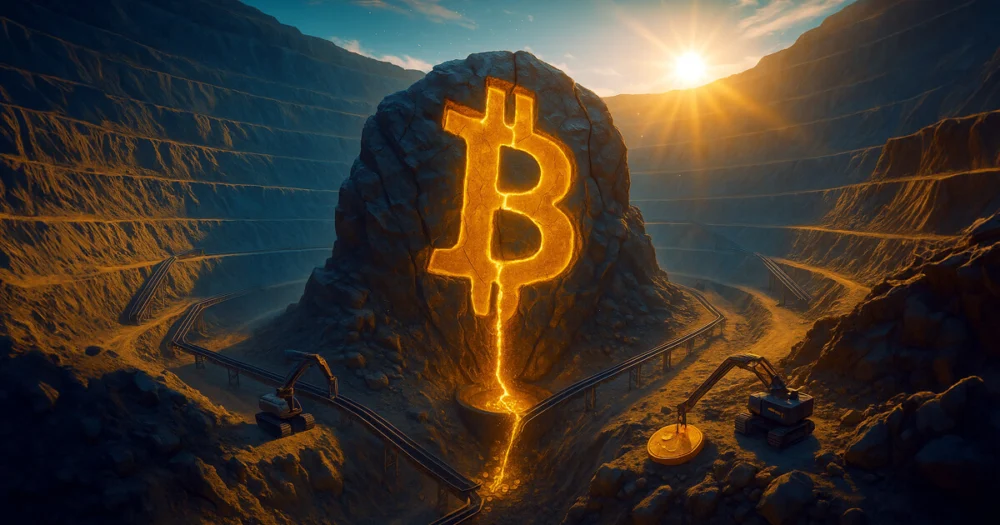
This statistical watershed has been met with a dual response. For institutional investors and sovereign wealth funds, the milestone serves as a definitive validation of Bitcoin’s scarcity narrative, reinforcing the "digital gold" thesis that has driven billions of dollars into spot Bitcoin ETFs and corporate balance sheets. However, for the industrial mining sector responsible for securing the network, the achievement marks the onset of the "5% Era," a period characterized by extreme capital intensity, diminishing subsidies, and an unforgiving operational environment that threatens the survival of all but the most efficient operators.
The Mathematics of Geometric Decay
Bitcoin’s issuance is governed by a programmatic schedule known as the "halving," an event that occurs every 210,000 blocks, or roughly every four years. This mechanism ensures that the rate of new supply enters the market in a geometric decay rather than a linear progression. When the Genesis Block was mined in 2009, the block subsidy stood at 50 BTC. Subsequent halvings in 2012, 2016, and 2020 reduced this reward to 25, 12.5, and 6.25 BTC, respectively.
The most recent halving in April 2024 further slashed the reward to 3.125 BTC. Because of this exponential decline, the network is nearing its supply ceiling in terms of volume while remaining at a chronological midpoint. The final satoshi—the smallest unit of a Bitcoin—is not expected to be mined until approximately the year 2140. This "long tail" of issuance is designed to provide a century-long transition period for the network to move from a subsidy-based security model to one funded entirely by transaction fees.

For macro-investors, this trajectory represents the core appeal of the asset. As the inflation rate of Bitcoin drops below that of gold and eventually approaches zero, the asset’s programmatic scarcity becomes its primary value driver. This predictability is what facilitated the entry of Wall Street giants like BlackRock and Fidelity, who view the 21 million cap as an immutable contract in an era of global fiat currency debasement.
The Miner’s Paradox and Economic Strain
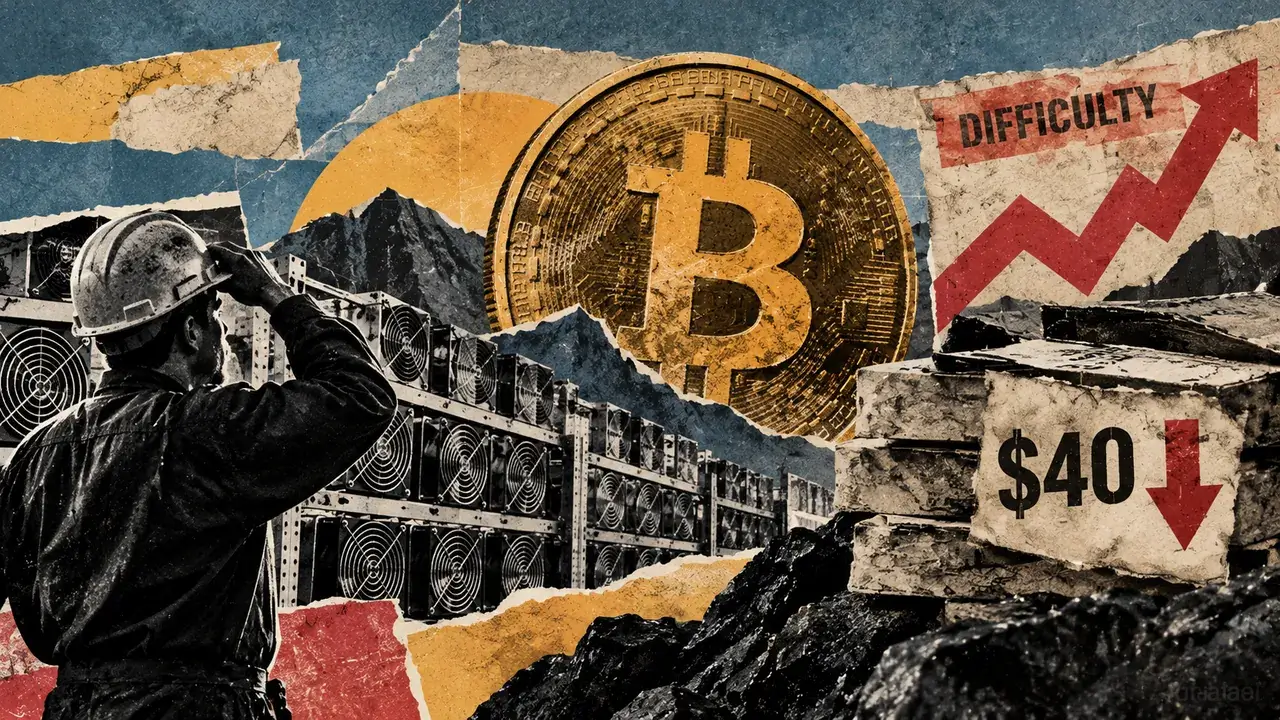
While the scarcity narrative benefits holders, it creates a "revenue cliff" for the mining industry. The "5% Era" is commencing under some of the most challenging economic conditions in the history of the network. Data from the industry-standard Hashrate Index reveals that "hashprice"—a metric representing the daily revenue a miner can expect from a specific unit of computing power—fell to $38.82 per petahash per second (PH/s) last week. This figure represents a 12-month low and a drastic contraction from the $80 to $100 range observed during previous market cycles.
The current environment is defined by what analysts call the "Miner’s Paradox." In a traditional commodity market, when the price of extraction exceeds the market price of the commodity, inefficient producers shutter their operations. This reduction in supply eventually leads to a price recovery or a decrease in extraction difficulty. However, in the Bitcoin ecosystem, the difficulty adjustment mechanism—which recalibrates every 2,016 blocks—has continued to climb as miners deploy more powerful hardware to maintain their share of the shrinking reward pool.
On-chain data from Blockchain.com indicates that industry-wide daily revenue recently averaged just over $37 million, down from the $40 million-plus averages seen earlier in the year. Despite falling revenues, the total network hashrate remains near all-time highs. This suggests that large-scale miners, many of whom raised significant capital during the 2021 bull market or are bound by long-term power purchase agreements, are continuing to operate at breakeven or even at a loss. This dynamic is forcing a massive consolidation within the sector, as smaller, less-capitalized firms are squeezed out by publicly traded giants with access to cheaper electricity and more efficient ASIC (Application-Specific Integrated Circuit) hardware.

The Strategic Pivot to Artificial Intelligence
In response to the structural compression of mining margins, the industry is witnessing a historic fracture. Mining companies are increasingly dividing into two camps: "Pure Play" operators who focus exclusively on Bitcoin efficiency, and "Hybrid Operators" who are diversifying their energy infrastructure to serve the burgeoning Artificial Intelligence (AI) and High-Performance Computing (HPC) markets.
The logic behind this pivot is rooted in unit economics. The physical infrastructure required for Bitcoin mining—high-voltage power access, industrial cooling systems, and large-scale data center shells—is remarkably similar to the infrastructure needed for AI model training and cloud computing. However, the revenue potential for AI compute is currently significantly higher per megawatt-hour than Bitcoin mining.
A 2024 analysis by VanEck projected that if Bitcoin miners diverted just 20% of their existing power capacity toward AI and HPC workloads, they could unlock up to $38 billion in incremental annual revenue by 2027. This arbitrage opportunity has already triggered significant capital flight. Bitfarms, a prominent player in the space, recently announced a strategic shift to wind down certain underperforming crypto operations in favor of AI compute facilities.
Similarly, firms like Coreweave and Hive Digital are retrofitting their data centers in Texas and the Nordic regions to capitalize on the AI boom. This transformation suggests that the Bitcoin miners of the future may evolve into diversified energy-compute conglomerates. In this model, Bitcoin mining serves as a "secondary" revenue stream or a flexible load-balancing tool, allowing companies to monetize excess power during periods when AI demand is low or when the electrical grid requires stabilization.

The Long-Term Security Challenge
The transition into the "5% Era" brings a fundamental question to the forefront: what will secure the Bitcoin network when the block subsidy eventually disappears? Satoshi Nakamoto’s original whitepaper posited that as the subsidy wanes, it would be replaced by transaction fees. For this to work, the demand for blockspace must be high enough—and the fees valuable enough—to incentivize miners to continue securing the ledger with massive amounts of computational power.
Currently, the fee market is characterized by extreme volatility. The 2023 and 2024 emergence of protocols like "Inscriptions" and "Runes," which allow users to embed data and create tokens directly on the Bitcoin blockchain, provided brief periods where transaction fees accounted for a significant portion of miner revenue. However, these spikes have proven inconsistent. Without a sustained increase in the baseline demand for high-value settlements, the "security budget"—the total compensation paid to miners—could theoretically shrink.
This possibility has drawn concern from researchers across the broader cryptocurrency ecosystem. Justin Drake, a prominent researcher at the Ethereum Foundation, has argued that a diminishing security budget could have a systemic effect on the entire industry. If the cost to attack the network (a 51% attack) becomes lower than the potential gain from disrupting it, the fundamental trust in Bitcoin’s immutability could be compromised. While many Bitcoin proponents argue that the rising price of BTC will offset the declining subsidy, others suggest that the protocol may eventually need to foster a more robust internal economy to generate the necessary fee volume.
Broader Impact and Geopolitical Implications
The "5% Era" is not merely a technical or financial milestone; it is a geopolitical one. As the difficulty of extracting the remaining 1.05 million coins increases, Bitcoin mining is becoming inextricably linked to national energy policies. Countries with abundant stranded energy, such as hydro-power in Ethiopia or geothermal energy in El Salvador, are viewing Bitcoin mining as a tool for economic development and grid monetization.

Conversely, in developed markets, miners are increasingly acting as "virtual power plants," participating in demand-response programs that help balance the grid during extreme weather events. This integration into the global energy infrastructure ensures that while the "easy money" phase of mining is over, the industry’s role in the broader economy is becoming more entrenched.
As the network moves toward the year 2140, the struggle to extract the final 5% of the supply will likely define the next century of digital finance. The miners who survive this period will be those who can navigate the dual pressures of diminishing rewards and rising energy costs. The milestone reached on November 17 serves as a reminder that Bitcoin’s scarcity is not just a theoretical concept, but a mathematical reality that is actively reshaping the global financial and technological landscape. The "victory lap" for the 95% milestone is brief; for the participants in the Bitcoin network, the most rigorous and competitive phase of the experiment has only just begun.