admin
admin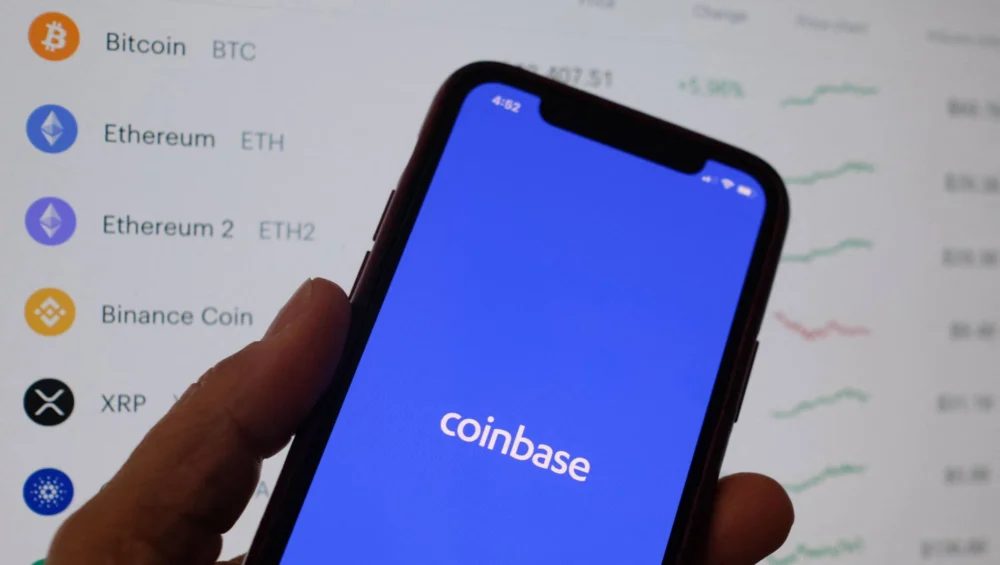
The prominent American cryptocurrency exchange Coinbase has officially reopened its mobile application for user registrations in India, marking a significant return to one of the world’s most populous digital asset markets following a two-year operational hiatus. This strategic re-entry, announced by John O’Loghlen, Coinbase’s regional director for Asia-Pacific (APAC), during India Blockchain Week (IBW), signals a shift in the company’s approach toward the Indian regulatory environment. While the platform currently facilitates crypto-to-crypto trading for Indian residents, the company has outlined a multi-year roadmap that includes the introduction of a fiat on-ramp—allowing users to purchase digital assets directly with Indian Rupees—slated for 2026.
The return of Coinbase to the Indian landscape is not merely a technical relaunch but a comprehensive restructuring of its local business model. After a tumultuous attempt to enter the market in early 2022, which resulted in a swift suspension of services and a total off-boarding of existing customers, the exchange is now prioritizing regulatory alignment and institutional trust over rapid, unvetted growth. This new phase of operations comes at a time when the Indian government has tightened its oversight of the virtual digital asset (VDA) sector, requiring all service providers to register with the Financial Intelligence Unit (FIU-IND).
A History of Regulatory Friction and the Strategic Reset
Coinbase’s history in India is characterized by a series of high-profile setbacks and subsequent retreats. In April 2022, the company launched its services with much fanfare, integrating the Unified Payments Interface (UPI)—India’s ubiquitous real-time payment system—to facilitate easy onboarding. However, within days of the launch, the National Payments Corporation of India (NPCI), which governs the UPI network, issued a public statement clarifying that it was not aware of any crypto exchange using UPI. This lack of institutional recognition forced Coinbase to disable UPI support almost immediately, rendering the platform’s fiat on-ramp non-functional.
By late 2023, the company made the difficult decision to cease all operations for Indian users. In what O’Loghlen described as a "burn the boats" strategy, Coinbase required its existing millions of users to offload their accounts and move their assets to other platforms or self-custody wallets. This move was intended to clear the slate and ensure that any future entry into the market would be built on a foundation of local compliance rather than through overseas entities. O’Loghlen acknowledged the commercial difficulty of this decision, noting that off-boarding millions of active users is typically the last thing a profit-oriented business wants to do, yet it was deemed necessary to establish long-term credibility with Indian regulators.
The Path to Compliance via the Financial Intelligence Unit
The cornerstone of Coinbase’s re-entry is its formal registration with the Financial Intelligence Unit (FIU-IND), an agency under the Ministry of Finance. The FIU oversees the monitoring of suspicious financial transactions and ensures compliance with the Prevention of Money Laundering Act (PMLA). Following months of engagement with the agency, Coinbase successfully registered earlier this year, joining a growing list of both domestic and international exchanges that have sought to formalize their presence in the country.
The registration process reflects a broader trend in the Indian crypto ecosystem. Following the implementation of strict tax laws in 2022, the government has moved toward a "comply or exit" mandate for offshore exchanges. In late 2023 and early 2024, several major international exchanges were served show-cause notices for operating without FIU registration, leading to temporary blocks on their websites and apps. By securing this registration before its full public relaunch, Coinbase has positioned itself as a compliant participant, aiming to avoid the legal ambiguities that plagued its initial 2022 debut.
Navigating the Challenges of India’s Tax Regime
While Coinbase’s return is a milestone for the exchange, it faces a challenging economic landscape shaped by India’s rigorous taxation of digital assets. Since April 2022, the Indian government has levied a 30% flat tax on all income derived from the transfer of virtual digital assets. Crucially, the law does not allow for the offsetting of losses in one asset against gains in another, a policy that has been widely criticized by industry advocates for being more punitive than the taxation applied to traditional equities or gambling.
Furthermore, a 1% Tax Deducted at Source (TDS) is applied to every crypto transaction above a certain threshold. This 1% TDS has had a profound impact on market liquidity, as it discourages high-frequency trading and day trading—activities that typically provide the volume necessary for a healthy exchange ecosystem. According to data from various industry reports, trading volumes on Indian exchanges plummeted by over 80% following the introduction of these taxes.
O’Loghlen expressed hope that the Indian government might eventually reconsider these fiscal measures. The company’s stance is that a more balanced taxation framework would encourage legitimate participation and prevent users from migrating to unregulated, "gray market" platforms where consumer protections are non-existent. However, until such legislative changes occur, Coinbase must operate within a market where the cost of trading remains significantly higher than in other global jurisdictions.
Investment in the Local Ecosystem and Human Capital
Despite the regulatory and fiscal headwinds, Coinbase’s commitment to India extends beyond its own trading platform. The company has maintained a strong presence through its venture capital arm, Coinbase Ventures, which has been an active investor in the Indian Web3 and blockchain startup ecosystem. Most notably, Coinbase recently increased its stake in CoinDCX, one of India’s largest homegrown cryptocurrency exchanges, in a funding round that valued the local firm at approximately $2.45 billion.
This investment strategy serves a dual purpose: it allows Coinbase to benefit from the growth of local players while simultaneously building a network of institutional allies in the region. In addition to financial investments, Coinbase is expanding its physical and human presence in India. The company currently employs over 500 staff members in the country, working on a variety of functions ranging from engineering and product development to customer support and compliance. Plans are currently underway to bolster this team further, with a focus on hiring for roles that serve both the local Indian market and the exchange’s global operations.
The 2026 Vision: Building a "Trusted Super App" Experience
The current iteration of the Coinbase app in India is limited to crypto-to-crypto trading, which caters primarily to sophisticated users who already own digital assets. To reach the "masses," as O’Loghlen noted, the exchange must bridge the gap between traditional banking and the crypto economy. The proposed 2026 rollout of a fiat on-ramp is the key to this expansion.
Coinbase’s goal is to create a user experience that rivals India’s leading consumer tech "super apps" like Flipkart (e-commerce) or Zepto (quick commerce). The objective is to provide a seamless, intuitive interface that allows a user to complete the Know Your Customer (KYC) process and purchase their first fraction of Bitcoin or Ethereum in a matter of minutes. This focus on User Interface (UI) and User Experience (UX) is central to Coinbase’s global brand identity as a "trusted" and "easy-to-use" gateway to the crypto world.
Market Implications and Global Context
India remains a critical market for global crypto firms due to its sheer scale. According to the 2023 Global Crypto Adoption Index by Chainalysis, India ranked first in terms of grassroots adoption, despite the heavy taxes and lack of a comprehensive regulatory bill. The country’s large population of young, tech-savvy individuals and its robust developer talent pool make it an indispensable hub for the future of decentralized technologies.
Coinbase’s re-entry is likely to trigger a competitive response from other international players. Binance, which recently returned to India after its own compliance-related hurdles, and KuCoin are also vying for market share. For domestic exchanges like CoinDCX and WazirX, the return of a global giant like Coinbase represents both a threat and an opportunity. While it increases competition for users, it also validates the Indian market and may provide the necessary pressure on policymakers to establish a clearer, more supportive regulatory framework.
Conclusion: A Long-Term Bet on Digital India
The return of Coinbase to India is a calculated, long-term bet on the country’s digital future. By choosing to "burn the boats" and restart with a clean slate, the company has signaled that it is no longer interested in short-term workarounds to bypass regulatory hurdles. Instead, it is following a path of gradual integration, starting with compliance-heavy crypto-to-crypto trading and aiming for a full fiat-integrated service by 2026.
The success of this endeavor will depend on several factors: the stability of the Indian regulatory environment, potential shifts in tax policy, and the company’s ability to navigate the complex nuances of the Indian consumer market. For now, Coinbase is positioning itself as the "trusted exchange" for a market that is increasingly wary of unregulated platforms, betting that a combination of high-tier security, superior UI, and strict regulatory adherence will eventually win over the Indian crypto enthusiast. As the 2026 deadline for fiat integration approaches, the industry will be watching closely to see if Coinbase can finally unlock the vast potential of the Indian market that proved so elusive just two years ago.