Dwi Wanna
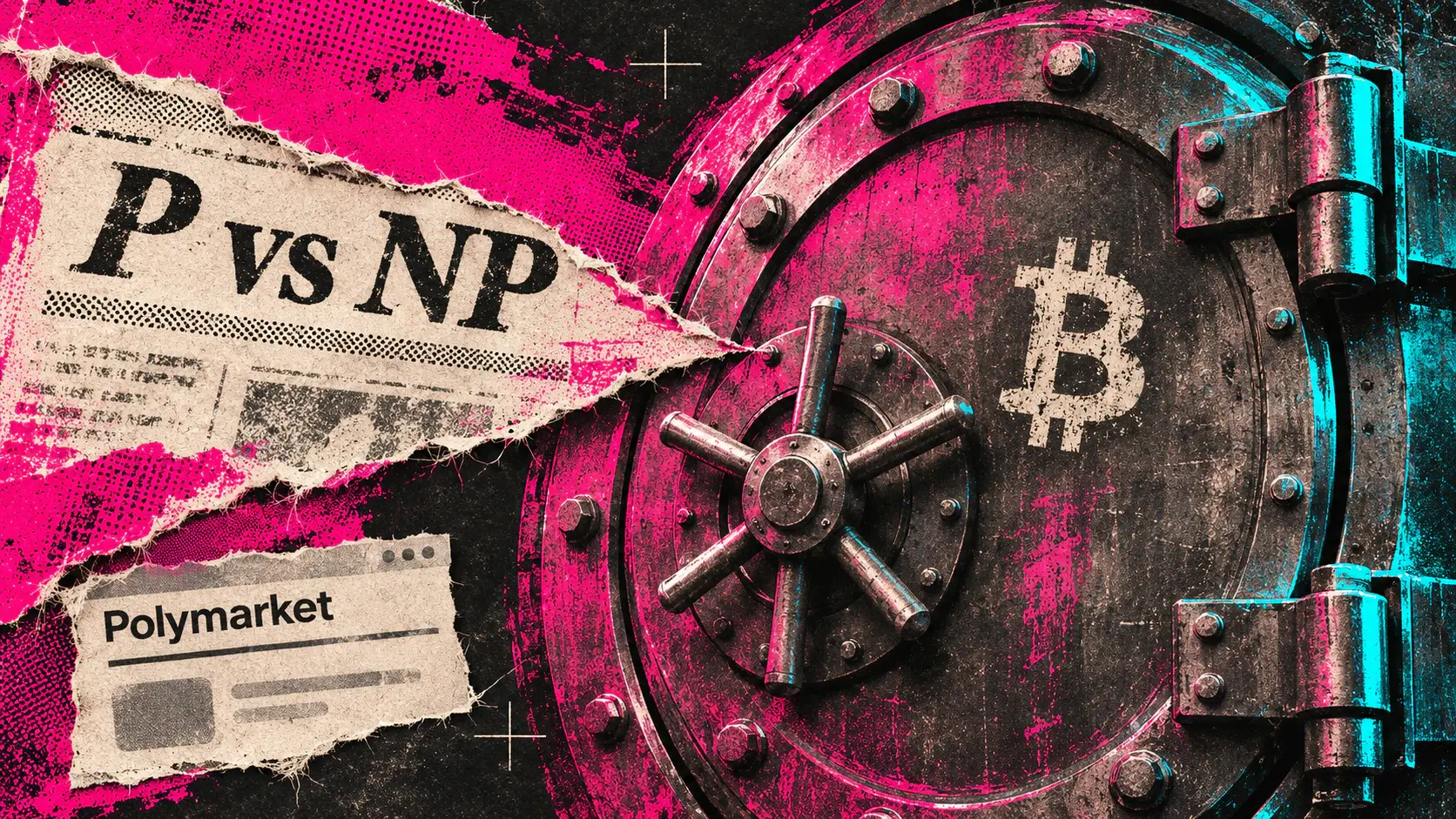
The global cryptographic community and financial markets have recently been flooded with speculative claims regarding the potential for artificial intelligence to solve one of the most profound mysteries in mathematics: the P versus NP problem. Social media platforms have seen a surge in assertions that major AI laboratories have secretly achieved a breakthrough that would effectively "break" modern cryptography, leading to widespread concerns that the underlying security of the Bitcoin network is on the verge of collapse. While these narratives have gained significant traction among retail investors and digital asset enthusiasts, a rigorous examination of the mathematical principles and the practicalities of hardware implementation suggests that the gap between a theoretical proof and a functional cryptographic exploit remains immense.
The Mathematical Foundation of P versus NP
To understand the stakes, one must first define the parameters of the P versus NP problem, which is one of the seven Millennium Prize Problems identified by the Clay Mathematics Institute. At its core, the question asks whether every problem whose solution can be quickly verified by a computer can also be quickly solved by a computer. In this context, "quickly" is defined as polynomial time (P). Problems in the "P" class are considered tractable, such as multiplication or sorting a list. Problems in the "NP" (nondeterministic polynomial time) class are those where a solution can be verified in polynomial time, even if finding that solution is currently thought to require exponential time.
The assumption that P does not equal NP is the cornerstone of modern cryptography. It is the belief that certain "one-way functions" exist—mathematical operations that are easy to perform in one direction but prohibitively difficult to reverse without a specific piece of information, such as a private key. If a researcher were to prove that P = NP, it would theoretically imply that algorithms exist which could solve these hard problems as efficiently as they can be verified. However, as mathematicians frequently point out, the existence of a polynomial-time algorithm does not automatically translate to a practical or fast solution.
The confusion often stems from the colloquial phrasing that a proof would make problems "as easy to solve as to check." In computational complexity theory, the term "polynomial" covers a vast range of efficiency. For instance, an algorithm that takes $n^2$ steps to check an answer is highly efficient. If the corresponding algorithm to find the answer takes $n^10$ steps, it is still technically a polynomial-time algorithm. Yet, at a standard key size of 256 bits, a computer performing one billion operations per second would take roughly 66 microseconds to verify the solution but would require approximately 38 million years to find it. Thus, a theoretical proof of P = NP might offer no usable path to breaking Bitcoin’s encryption within a human timeframe.
A Chronology of Recent AI Breakthroughs in Mathematics
The current wave of speculation is not entirely baseless, as it follows a string of legitimate successes in the application of AI to formal mathematics. On November 20, 2024, Anthropic researcher Levent Alpöge released a proof of the Riemann Hypothesis, a long-standing problem in number theory, crediting the AI model Claude with assisting in the discovery. By November 21, the Lean FRO and Mathlib Initiative confirmed that independent checks had verified both the theorem statement and the proof within the Lean formal verification environment.
This event served as a catalyst for predictive markets. On Polymarket, a decentralized betting platform, interest surged in a contract titled "Will AI solve P versus NP by 2026?" The rules for this contract are specific: an eligible AI lab or its official representative must announce a complete solution by December 31, 2026. The lab must present the work as a product of its researchers or its models.
Market data recorded on November 27, 2024, showed a 13% probability of a "Yes" outcome, with bids hovering around 12.5 cents. However, by the following day, the odds shifted downward to approximately 7%, reflecting the high degree of skepticism among sophisticated market participants. These fluctuations highlight the tension between the rapid pace of AI development and the historical difficulty of the P versus NP problem, which has remained unsolved since it was formally introduced by Stephen Cook in 1971.
Bitcoin Cryptography and the Threat of Classical vs. Quantum Attacks
The Bitcoin network relies on two primary cryptographic pillars: the Elliptic Curve Digital Signature Algorithm (ECDSA) for securing private keys and the SHA-256 hashing algorithm for the mining process. It is essential to distinguish between a breakthrough in classical computational complexity (P vs NP) and the threat posed by quantum computing.
A proof of P = NP would primarily affect classical computation. It would suggest that the discrete logarithm problem, which secures Bitcoin’s secp256k1 curve, could be solved in polynomial time on a standard computer. However, the hardness of these keys is also challenged by quantum algorithms. Peter Shor’s quantum algorithm for discrete logarithms already exists and is known to be able to break ECDSA. The limitation for Shor’s algorithm is hardware; current quantum computers lack the scale and error correction necessary to execute the algorithm on 256-bit keys.
A recent study by Ryan Babbush and colleagues modeled a 256-bit elliptic-curve discrete-logarithm computation and estimated it could be completed in minutes using fewer than 500,000 physical qubits, assuming a 0.1% physical error rate. While this machine does not yet exist, it represents a more direct threat to Bitcoin than a theoretical proof of P = NP. Conversely, if a proof were to emerge that P is definitively not equal to NP, it would provide a mathematical guarantee that certain problems are inherently hard for classical computers, though it would leave the question of quantum vulnerability unanswered.
Transaction Structures and Public Key Exposure Windows
The practical risk to Bitcoin holders depends heavily on how they manage their funds and which transaction types they use. Bitcoin utilizes different address formats that provide varying levels of "exposure" for a user’s public key.
-
Pay-to-Witness-Public-Key-Hash (P2WPKH): In this SegWit-style transaction, the public key is not initially visible on the blockchain. Instead, only a hash of the public key is stored. The actual public key is only revealed when the owner broadcasts a transaction to spend the funds. This creates a very narrow window of vulnerability—often less than ten minutes—during which an attacker would need to see the public key, compute the private key, and broadcast a competing transaction with a higher fee to "steal" the funds.
-
Taproot (P2TR): Introduced in the 2021 upgrade, Taproot transactions place the public output key directly in the transaction that creates the UTXO (Unspent Transaction Output). This means the public key is visible for the entire duration that the funds remain unspent. If a breakthrough in AI allowed for the rapid recovery of a private key from a public key, Taproot outputs would be significantly more vulnerable than P2WPKH outputs.

Analysis of Bitcoin network data from late November 2024 illustrates the timing constraints involved. In a sample of 135 consecutive blocks, the median time between block timestamps was 7 minutes and 56 seconds. While some gaps exceeded 20 minutes, the average window remains tight. For an AI-driven attack to be successful against a fresh P2WPKH address, the computation would need to be near-instantaneous.
Implications for Bitcoin Mining and Network Integrity
Beyond the security of individual wallets, the P versus NP debate touches on the integrity of the mining process. Bitcoin miners compete to find a block header hash that is below a specific target set by the network’s difficulty adjustment algorithm. This process involves applying the SHA-256 hash function twice.
If P were found to equal NP in a way that yielded a practical algorithm, it could theoretically allow a miner to find valid blocks without the massive energy expenditure currently required by Application-Specific Integrated Circuits (ASICs). However, mining is a search problem, and even with an efficient algorithm, the miner who produces the most "work" or finds the solution fastest still dominates.
A credible breakthrough in this area would require a miner to demonstrate repeated success against the current network difficulty using significantly less hardware or energy than traditional ASICs. Research by Robert R. Nerem and Daya R. Gaur has explored how quantum miners might compete with classical miners, suggesting that a cost advantage could exist long before a total network takeover is possible. Nevertheless, the Bitcoin protocol’s decentralized nature and independent node verification serve as a secondary defense; even if a miner finds blocks faster, they must still follow the network’s consensus rules regarding transaction validity.
Expert Analysis and the Path Forward
The consensus among leading cryptographers, including Scott Aaronson, is that while AI is becoming an invaluable tool for mathematicians, the sudden "collapse" of cryptographic security via a P vs NP proof is highly improbable. Aaronson’s surveys on the topic suggest that most experts believe P does not equal NP, and even if the opposite were true, the "constants" involved in the resulting algorithms would likely preserve the security of current key sizes for decades.
For a claimed breakthrough to be taken seriously by the scientific community, it must meet several criteria:
- Independent Reproduction: The algorithm must be able to recover a private key from a full-size (256-bit) test key where the secret was never disclosed.
- Peer Review: The proof must withstand the scrutiny of formal verification tools like Lean or Coq, as well as the review of human mathematicians.
- Hardware Specification: Reports must detail the elapsed time, memory usage, and the specific hardware (CPU, GPU, or TPU) used to achieve the result.
As AI labs continue to push the boundaries of automated reasoning, the financial industry must remain vigilant but grounded in mathematical reality. The security of the Bitcoin network is not a static target; it has the capacity to evolve through soft forks and the adoption of post-quantum cryptographic standards if a genuine threat is identified. For now, the "avalanche" of claims regarding the end of cryptography appears to be a byproduct of the current AI hype cycle rather than a reflection of an imminent technological shift. The focus remains on the empirical performance of hardware and the rigorous verification of mathematical proofs, rather than the speculative trends of social media feeds.