admin
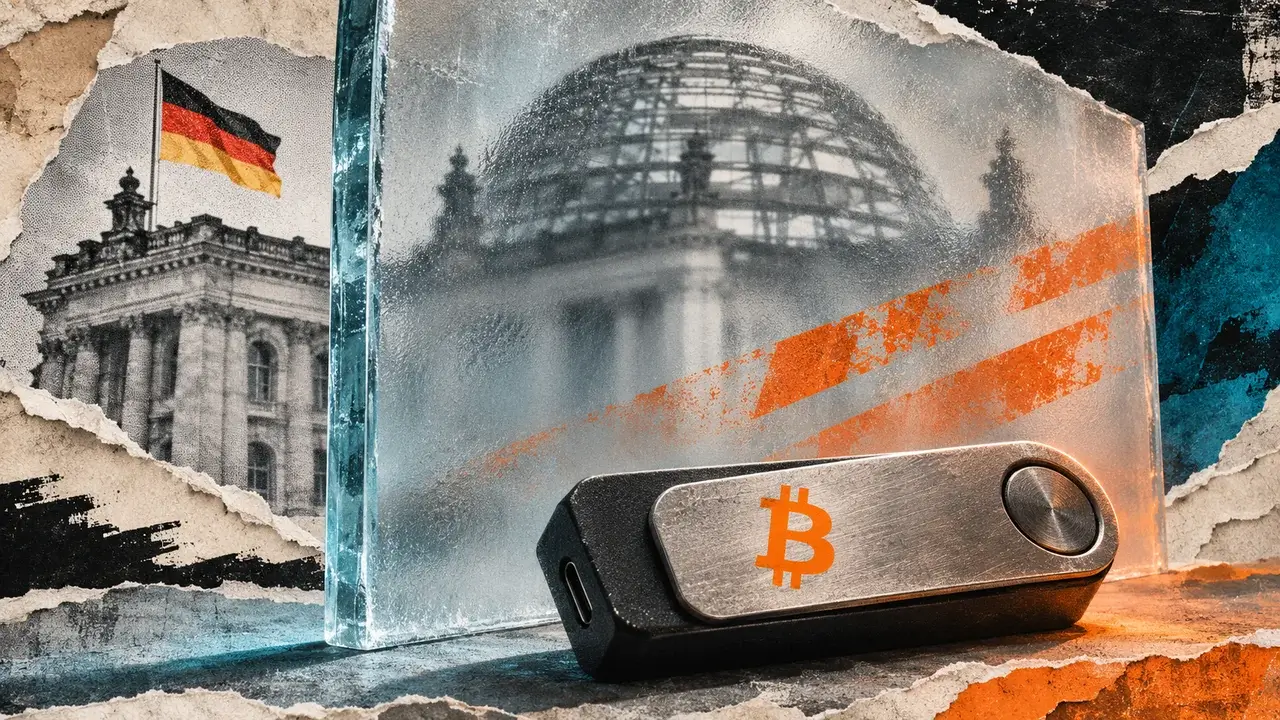
Germany’s parliament, the Bundestag, has taken a significant step in its ongoing battle against financial crime by approving legislation that empowers customs authorities to freeze suspicious cryptocurrency holdings. This landmark bill, passed on November 12th, extends the reach of law enforcement to encompass assets stored not only on exchanges but also within self-custody wallets, a move that industry observers suggest will present unique enforcement challenges. The legislation represents a crucial expansion of governmental powers aimed at investigating assets of questionable origin and combating money laundering, terrorism financing, and other illicit financial activities.
The newly approved legislation allows German customs officials to implement temporary freezes on significant cryptocurrency assets when there is a factual basis to doubt their lawful origin. A general benchmark has been set, identifying holdings valued at over €100,000 as significant. Importantly, authorities will have the discretion to aggregate closely connected assets when determining if they meet this threshold, preventing circumvention through the fragmentation of illicit funds. This proactive measure is designed to prevent the dissipation of potentially criminal assets before a thorough investigation can be completed.
Upon identifying suspicious holdings, customs authorities will have an initial period of 30 days to conduct their investigation. Should investigators uncover credible doubts regarding the origin of the assets and present grounds for continued scrutiny, a finance court can authorize an extension of the freeze by an additional 150 days. This phased approach allows for initial rapid action while ensuring due process and judicial oversight for prolonged asset restrictions.
However, the legislative journey of this bill is not yet complete. As of November 18th, the legislation awaits final consideration by the Bundesrat, Germany’s chamber representing the federal states, and subsequent publication in the Federal Law Gazette before it officially becomes law. This final approval stage is crucial, as it signifies the endorsement of the federal states, which play a vital role in the implementation of federal legislation.
The Self-Custody Conundrum: Navigating the Technicalities of Bitcoin Freezes
The practical implications of these new powers are expected to vary significantly depending on how individuals and entities hold their cryptocurrency. For assets managed through centralized exchanges, the enforcement mechanism is relatively straightforward. German authorities can issue an enforceable attachment order directly to the custodian exchange, compelling it to restrict or block withdrawals from the affected account. This approach leverages Germany’s existing tax enforcement provisions, specifically those outlined in Section 309 of the German Fiscal Code (Abgabenordnung – AO), which permit authorities to prevent third parties from releasing assets subject to a legally enforceable attachment.
The introduction of powers to freeze assets in self-custody wallets, however, introduces a layer of complexity. Unlike centralized exchanges, self-custody wallets grant users direct control over the private keys necessary to authorize cryptocurrency transactions. This decentralization means there is no single financial intermediary that authorities can directly compel to act.
To address this, the proposed German framework classifies cryptocurrencies as attachable property rights. Under Section 321 of the German Fiscal Code, authorities can, in certain circumstances, attach property rights without the direct involvement of a third party. This is achieved by serving the holder of the property right with a legal prohibition on disposing of it. In the context of self-custodied Bitcoin, this provision could translate into an order prohibiting the owner from transferring the affected assets. Crucially, this legal prohibition would not automatically remove the owner’s technical ability to authorize transactions using their private keys.
This distinction is vital: an individual could technically still possess the means to move their Bitcoin, but would be legally bound not to do so. This creates a scenario where the asset is legally frozen, but its physical control remains with the individual. This could present significant challenges for enforcement, as it relies on the owner’s compliance with the legal order rather than a technical block imposed by a third party.
Industry Voices and Enforcement Hurdles
The complexities of enforcing restrictions on self-custody wallets have not gone unnoticed by the cryptocurrency industry. The Blockchain Bundesverband (Bundesblock), a prominent German blockchain industry association, highlighted these challenges in a submission regarding an earlier iteration of the legislation. The association emphasized the critical need for authorities to clearly distinguish between cryptocurrencies held by custodians and those directly controlled by individuals.
Bundesblock also raised concerns about the difficulty of definitively identifying the controller of a blockchain wallet. In cases where multiple parties might share transaction-signing authority, or where wallet ownership is obscured, pinpointing the responsible individual for enforcement purposes becomes a substantial hurdle. This could make the practical application of the new freeze powers on self-custodied assets considerably more challenging than securing cooperation from regulated exchanges.
The legislation explicitly differentiates between temporary asset freezes and permanent confiscation. A freeze is an interim measure to preserve assets during an investigation. Permanent confiscation, which would involve the state taking ownership of the assets, would necessitate a separate, more rigorous finance court decision proving that the property was indeed of unlawful origin. This separation ensures that assets are not permanently seized without a definitive legal determination of their illicit nature.
A Broader Context: Germany’s Stance on Digital Assets and Financial Crime
This legislative move is part of a broader global trend towards increased regulation of digital assets as governments grapple with their growing integration into the financial system. For years, Germany, like many other nations, has been strengthening its anti-money laundering (AML) and counter-terrorism financing (CTF) frameworks. The rise of cryptocurrencies has presented new avenues for illicit actors to move and launder funds, prompting regulators to adapt existing laws or enact new ones.
The impetus for this specific legislation can be traced back to the German government’s broader strategy to combat financial crime. Expanding the powers of customs authorities to include digital assets reflects an acknowledgment that traditional enforcement methods need to evolve. The inclusion of self-custody wallets signals a determination to close potential loopholes that might be exploited by criminals seeking to evade detection.
The timeline of this legislative effort underscores the deliberative nature of policy-making in Germany. The bill has likely undergone extensive committee review and debate within the Bundestag, with input sought from various stakeholders, including industry representatives and legal experts. The process of moving from a proposed bill to enacted law involves multiple stages, each designed to ensure thoroughness and adherence to democratic principles. The current stage, awaiting Bundesrat approval, indicates that the legislation is nearing its finalization.
Implications for the Digital Asset Landscape
The enactment of this law will have significant implications for individuals and businesses operating within Germany’s digital asset ecosystem. For legitimate users of cryptocurrencies, the primary impact may be increased scrutiny and a greater need for transparency regarding the origin of their funds. While the law targets suspicious holdings, the process of investigation and potential freezing could still cause inconvenience or concern for those who are fully compliant.
From an enforcement perspective, the success of these new powers will hinge on the capabilities of German customs authorities to adapt to the technical nuances of blockchain technology. This includes developing sophisticated tools and expertise for tracing cryptocurrency transactions, identifying wallet controllers, and executing legal orders effectively in the decentralized realm. The challenge of enforcing restrictions on self-custody wallets without direct control of private keys suggests that ongoing technological innovation and legal interpretation will be crucial.
The distinction between temporary freezes and permanent confiscation is a critical safeguard. It acknowledges that not all suspicious assets are definitively illicit and that due process must be maintained. However, the potential for extended freezes, even if temporary, could impact market liquidity and investor confidence, particularly if the process is perceived as overly burdensome or prone to error.
Ultimately, Germany’s move to grant customs authorities enhanced powers to freeze crypto holdings, including those in self-custody, marks a significant development in the global regulatory landscape for digital assets. It underscores a commitment to combating financial crime in the digital age, while simultaneously presenting complex challenges for enforcement in the unique environment of decentralized finance. The effectiveness of these measures will be closely watched by other nations as they, too, navigate the evolving challenges of regulating cryptocurrencies.