admin
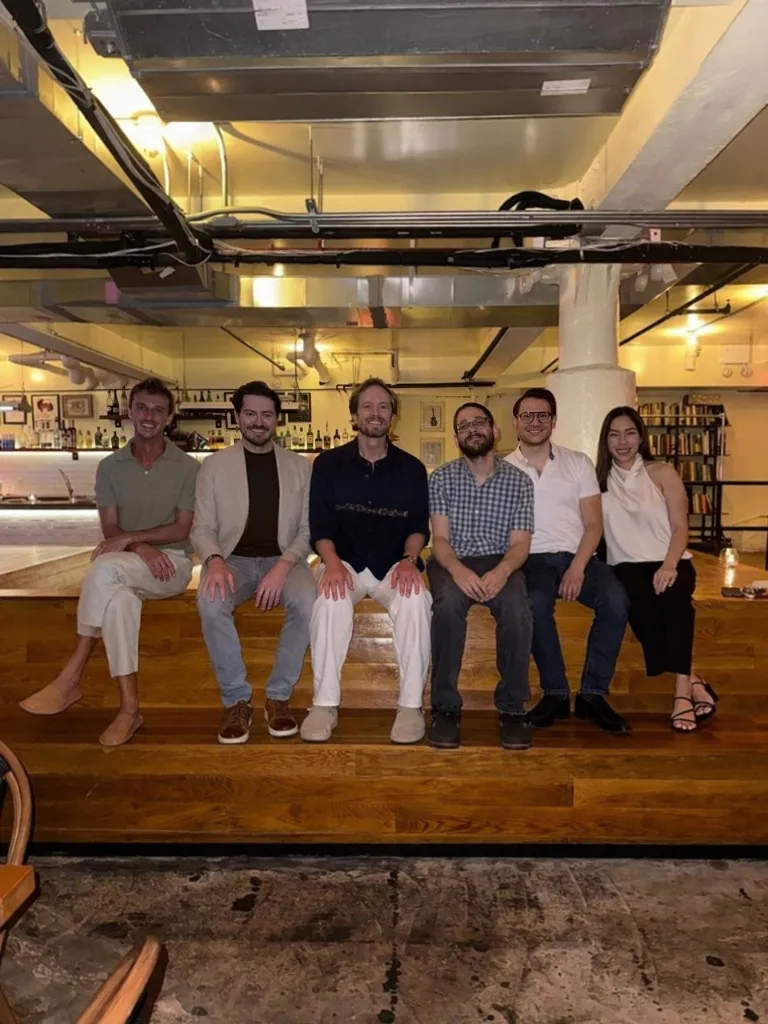
The landscape of artificial intelligence is currently defined by a widening chasm between the safety-centric architectures of Silicon Valley giants and a growing demand for "sovereign" AI that prioritizes user privacy and unrestricted access. Venice AI, a startup positioning itself as the privacy-focused alternative to mainstream chatbots like ChatGPT and Claude, has successfully navigated this divide, announcing on Wednesday that it has secured $65 million in Series A funding. This investment round, the company’s first external fundraise, establishes Venice AI as a "unicorn" with a valuation of $1 billion. The funding was led by the crypto-focused venture capital firm Dragonfly, with significant participation from Coinbase Ventures, North Island Ventures, and several other institutional investors.
The capital infusion comes at a pivotal moment for the generative AI sector. As developers like OpenAI, Google, and Anthropic face mounting pressure from regulators and the public to mitigate risks associated with "AI psychosis," harassment, and disinformation, they have implemented increasingly stringent safeguards. These safeguards often manifest as refusal to answer certain prompts or the implementation of "guardrails" that critics argue can stifle creativity or introduce ideological bias. Venice AI seeks to capture the segment of the market that views these restrictions as a form of corporate censorship, offering a platform where the AI acts as a "neutral tool" rather than a moderated service.
A Philosophical Foundation in Digital Sovereignty
The emergence of Venice AI is inextricably linked to the ideological background of its founder and CEO, Erik Voorhees. A prominent figure in the cryptocurrency space for over a decade, Voorhees has built a career around the principles of decentralization and individual privacy. Having previously founded the Bitcoin gambling platform Satoshi Dice and the non-custodial exchange ShapeShift, Voorhees has long been an advocate for financial and digital autonomy.
His transition into the AI space reflects a belief that the concentration of AI power in a few centralized corporations poses a systemic risk to human liberty. During an exclusive interview, Voorhees articulated a vision of AI that mirrors the neutrality of the Bitcoin protocol. He argued that the current trajectory of the industry—where user queries are monitored, stored, and used for training—creates a surveillance apparatus that is fundamentally more dangerous than the potential misuse of the tools themselves.
"I think it’s actually quite dangerous from a safety perspective for the world to enter this next phase and have everyone be constantly watched," Voorhees stated. "To me, that is actually much more dangerous than any particular person asking a controversial question or something that might be considered bad." This philosophy of "respecting users as adults" is the cornerstone of Venice’s market appeal, attracting a user base that prioritizes the ability to explore controversial or sensitive topics without fear of de-platforming or data exposure.
Technical Architecture and Privacy Protocols
Venice AI differentiates itself through a technical stack designed to ensure that the company itself cannot access user data. While mainstream AI providers typically store conversation histories on their servers to improve models or monitor for policy violations, Venice utilizes a decentralized approach to data handling.
The platform hosts "uncensored" open-source models—such as versions of Meta’s Llama or Mistral—on its own data centers. For more complex queries, it routes requests to powerful closed-source models via external proxies. The critical distinction lies in the encryption process: all user input is encrypted and decrypted client-side. This means that the data is unreadable by the time it passes through Venice’s systems or the external proxies. Furthermore, the company maintains a strict "no-storage" policy, ensuring that once a session is concluded, no residual data remains on the company’s servers.
For users seeking the highest tier of security, Venice offers end-to-end encryption on specific models through a paid subscription service. This architecture is designed to appeal to professional users, such as researchers, lawyers, and journalists, who may need to process sensitive information that they cannot legally or ethically upload to a traditional AI provider’s cloud.
Explosive Growth and Financial Performance
Despite being only two years old, Venice AI has demonstrated significant commercial traction. The company reported more than 850,000 unique visitors to its website and currently serves a base of 3 million active users. On the technical side, the platform processes an average of 1.7 million API calls per day, highlighting its growing utility for developers who wish to integrate private AI into their own applications.
Most notably, Venice AI has achieved profitability—a rare feat in a sector characterized by high computational costs and "burn rates." Voorhees confirmed that the company has reached an annualized run-rate revenue of over $70 million. This financial stability likely contributed to the high valuation, as it demonstrates that there is a sustainable, paying market for privacy-centric AI services.
The company’s growth has been fueled by its pursuit of feature parity with industry leaders. "When we launched, we were very far away from what ChatGPT could do, but people would use us because it was private," Voorhees explained. "Today, we’re very close to what ChatGPT can do. As we’ve closed that gap, it’s become an increasingly compelling alternative."
The Intersection of AI and Cryptocurrency
The involvement of firms like Dragonfly and Coinbase Ventures underscores the deepening synergy between the AI and blockchain industries. Venice AI has integrated crypto-economic incentives into its platform through two native tokens: VVV and DIEM.
- VVV Token: Launched in early January, this token serves as a mechanism to attract and retain users through ecosystem participation.
- DIEM Token: Introduced in August of the previous year, DIEM functions as a stable credit system. Users can stake VVV tokens to "mint" DIEM, with each DIEM representing $1 worth of AI credits. These credits can then be spent on the platform’s computational services.
While only approximately 8% of Venice’s current user base pays for services using cryptocurrency, the integration of these tokens provides a blueprint for how AI services could operate outside of traditional fiat banking systems. This is particularly relevant in the context of "decentralized physical infrastructure networks" (DePIN), where crypto incentives are used to crowdsource the massive amounts of GPU power required for AI inference.
The Debate Over Uncensored AI and Public Safety
The rise of "uncensored" platforms like Venice AI is not without controversy. The tech industry is currently grappling with high-profile lawsuits and public outcries regarding the potential for AI to facilitate harm. Recent cases have highlighted instances of "AI psychosis," where users have been driven to self-harm or delusions by chatbots. Other concerns include the generation of non-consensual deepfake imagery and the acceleration of disinformation campaigns.
Proponents of safety guardrails argue that AI developers have a "duty of care" to prevent their models from being used to create biological weapons, plan cyberattacks, or harass individuals. They contend that without centralized moderation, AI could become a force multiplier for malicious actors.
In contrast, the "sovereign AI" movement, led by figures like Voorhees, argues that the risks of centralized control are greater. They posit that if AI becomes the primary interface for human knowledge, having that interface controlled by a handful of corporations with specific political or social agendas is a recipe for digital totalitarianism. By providing a "neutral" platform, Venice AI shifts the responsibility of ethical use from the developer to the individual user—a stance that aligns with traditional American legal principles regarding "common carriers" and neutral service providers.
Future Outlook and Infrastructure Expansion
With $65 million in new capital, Venice AI is preparing for a significant infrastructure overhaul. To date, the company has largely relied on leasing GPU (Graphics Processing Unit) capacity from third-party providers. However, the next phase of growth involves the acquisition of its own hardware and the construction of proprietary data centers.
By owning its infrastructure, Venice aims to increase its gross margins and gain greater control over the physical security of its servers. This move is also a hedge against potential future "de-platforming" by cloud giants like Amazon Web Services (AWS) or Microsoft Azure, should they decide to crack down on uncensored AI hosting.
The broader implications of Venice AI’s success suggest that the AI market is bifurcating. While the general public may continue to use moderated tools for mundane tasks, a significant and profitable niche is forming around the need for privacy, freedom of expression, and digital autonomy. As regulatory battles over the EU AI Act and similar legislation in the United States intensify, Venice AI stands as a high-stakes experiment in whether a "neutral" AI protocol can coexist with modern standards of online safety.
The success of this Series A funding indicates that, at least in the eyes of venture capitalists, the demand for "uncensored" intelligence is not just a fringe interest, but a billion-dollar industry in the making. As Venice AI scales, it will likely serve as the primary testing ground for the limits of digital freedom in the age of artificial intelligence.