admin
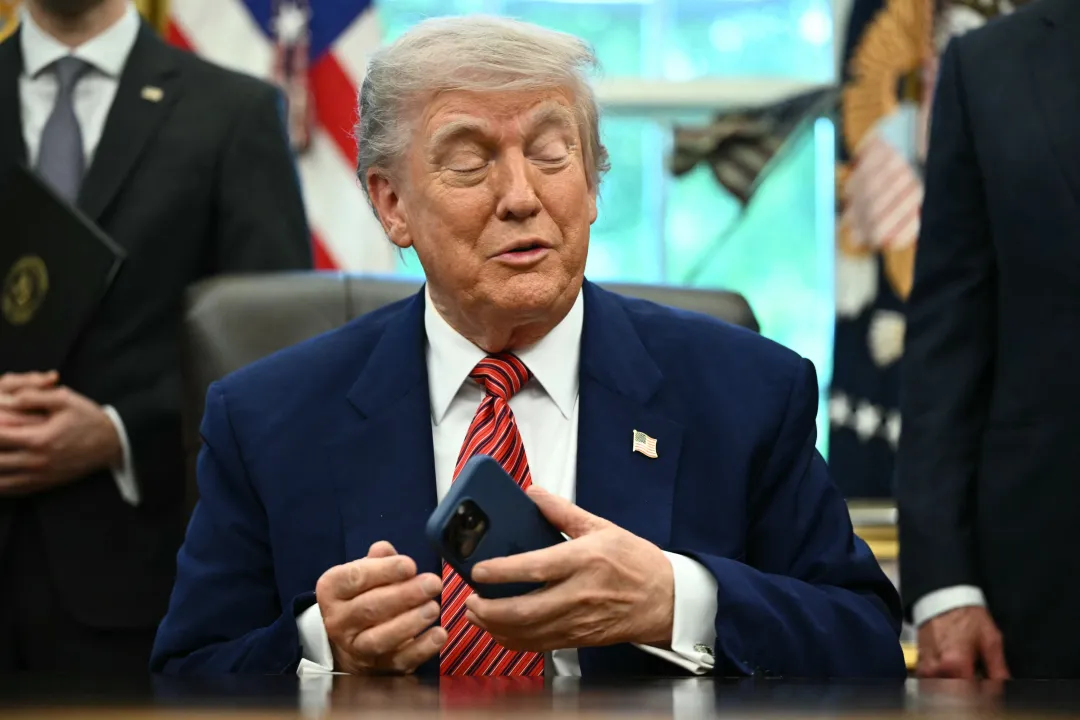
The rapid ascent and subsequent decline of the $TRUMP memecoin have resulted in a financial catastrophe for nearly one million retail investors, according to a comprehensive analysis released by the cryptocurrency analytics firm Nansen. The data reveals that 988,905 individual digital wallets have recorded net losses totaling $3.8 billion as of the end of June 2026. This figure represents approximately two-thirds of all market participants who purchased the token since its inception. The collapse marks one of the most significant wealth destruction events in the history of the "memecoin" sector, a subset of the cryptocurrency market characterized by high volatility and assets often backed by social media sentiment rather than underlying utility or cash flow.
As of early July 2026, the $TRUMP token was trading at approximately $1.69, a staggering 98% decrease from its all-time high of $75.35 reached during the peak of the post-inauguration speculative fervor. The Nansen report, which utilizes publicly available blockchain transaction data to track capital flows, highlights a stark disparity between the financial outcomes of retail investors and those of the project’s founders and early insiders. While the vast majority of holders are currently "underwater"—meaning the current value of their holdings is less than their initial investment—the financial disclosures of President Donald Trump indicate that the venture was immensely profitable for his personal estate and associated business entities.
The Genesis of the $TRUMP Memecoin and the 2025 Launch
The $TRUMP memecoin was not the President’s first foray into the digital asset space, but it was arguably his most direct. The token was officially announced in mid-January 2025, just three days before his second inauguration. This timing leveraged the maximum possible media attention and political momentum, positioning the coin as a digital "membership badge" for his supporters. The launch followed the establishment of World Liberty Financial, a decentralized finance (DeFi) startup co-founded by the President and his sons, Donald Trump Jr. and Eric Trump.
Unlike World Liberty Financial’s primary token, $WLFI, which was marketed as a governance tool for a lending and borrowing platform, the $TRUMP memecoin was presented with less technical pretense. It capitalized on the "PolitiFi" (Political Finance) trend, where tokens are named after political figures to capture the zeitgeist of election cycles and administration milestones. During the first hundred days of the administration, the token’s value surged, driven by frequent mentions in social media posts and the perception that the coin was an unofficial barometer of the administration’s success. However, as the initial hype transitioned into the realities of governance and market saturation, the liquidity supporting the high price began to evaporate.
Financial Disclosures and Executive Profits
In a series of mandatory financial disclosures filed recently, President Trump revealed the extent of his personal gains from the cryptocurrency sector over the past year. The filings indicate that the President earned a total of $1.4 billion from crypto-related activities in 2025. Notably, $636 million of that total—nearly 45%—was derived directly from the $TRUMP memecoin project. These earnings were generated through a combination of initial token allocations, licensing fees for the use of his likeness, and strategic sales during periods of high market liquidity.
The contrast between the President’s $636 million gain and the $3.8 billion loss suffered by the broader public has ignited a debate regarding the ethics of high-ranking public officials endorsing highly speculative financial products. Market analysts point out that while the President’s divestments were legal under current frameworks, they occurred while retail investors were being encouraged by social media influencers and political surrogates to "HODL"—a crypto-slang term meaning to hold an asset indefinitely regardless of price fluctuations.
The $WLFI token, the cornerstone of World Liberty Financial, has faced a similar downward trajectory. Though not a memecoin by definition, it has seen its valuation slashed by over 80% since its launch, as the promised DeFi ecosystem struggled to gain traction against established competitors like Aave and Uniswap.
A New Regulatory Era: The SEC’s Hands-Off Approach
The massive losses incurred by $TRUMP investors have occurred within a drastically altered regulatory environment. Under the current administration, the Securities and Exchange Commission (SEC) has undergone a fundamental shift in its oversight of digital assets. In February 2025, the SEC issued a landmark policy statement declaring that it would not classify memecoins as securities. This move effectively exempted tokens like $TRUMP from the rigorous disclosure and registration requirements that govern traditional stocks and bonds.
Furthermore, the SEC has systematically dismantled many of the enforcement actions initiated during the previous administration. This includes dropping high-profile lawsuits against major industry players, such as the Winklevoss twins’ Gemini exchange. The administration’s stated goal is to remove "red tape" that it claims has stifled American innovation in the blockchain space.

A White House spokesperson, responding to the New York Times report on investor losses, defended the President’s crypto initiatives and the current regulatory stance. "President Trump has followed through on his promise to make the United States the crypto capital of the world," the spokesperson stated. "Market volatility is a natural component of any emerging technology. The administration remains committed to a decentralized future where individuals have the freedom to invest without the heavy hand of government interference."
Analyzing the Impact: Retail Vulnerability and Market Mechanics
The Nansen data provides a granular look at who exactly lost money in the $TRUMP collapse. The analysis suggests that the majority of the losses were concentrated among "retail" wallets—those holding relatively small amounts of the token. Many of these investors appear to have entered the market at the "top," buying in when the price was between $50 and $75.
Blockchain experts point to the "liquidity trap" as a primary cause for the scale of the losses. In the memecoin market, liquidity is often thin, meaning that even a relatively small sell order from a "whale" (a large holder) can cause the price to plummet. When the President and other early insiders began realizing their gains, the downward pressure on the price triggered a cascade of automated sell orders and panic selling among retail holders. However, because the buy-side demand had vanished, many investors found themselves unable to exit their positions at any price, resulting in the "total loss" scenario described in the Nansen report.
The $3.8 billion loss is not just a statistic; it represents a significant drain on household savings for nearly a million Americans. Economists suggest that such concentrated losses in a speculative asset class can have secondary effects on consumer spending and trust in financial markets.
Chronology of the $TRUMP Market Cycle
To understand the scale of the $3.8 billion loss, it is necessary to examine the timeline of the token’s lifecycle:
- January 17, 2025: Official announcement of the $TRUMP memecoin. The price starts at a fraction of a cent.
- January 20, 2025 (Inauguration Day): The token reaches $10.00 amid massive social media trending.
- February – March 2025: The SEC announces its non-regulation policy for memecoins. $TRUMP surges to $45.00.
- May 2025: President Trump signs executive orders favorable to the crypto industry. The token hits its all-time high of $75.35.
- August 2025: Early investors and insiders begin significant liquidations. The price drops to $30.00.
- Late 2025 – Early 2026: A steady decline continues as interest shifts to newer political tokens. The "exit liquidity" for retail investors dries up.
- June 30, 2026: Nansen confirms nearly 1 million accounts are in the red, with the price stagnant at $1.69.
Broader Implications for the Crypto Industry and Public Policy
The $TRUMP memecoin saga serves as a pivotal case study in the intersection of celebrity, politics, and decentralized finance. It highlights the inherent risks of "celebrity coins," where the value of an asset is tied entirely to the reputation and public standing of a single individual rather than any economic productivity.
For the broader cryptocurrency industry, the event is a double-edged sword. On one hand, the administration’s pro-crypto policies have led to increased institutional adoption of Bitcoin and Ethereum. On the other hand, the $3.8 billion loss in a token so closely associated with the executive branch provides significant ammunition for critics who argue that the market remains a "Wild West" where retail investors are routinely exploited.
Consumer advocacy groups have expressed alarm at the SEC’s refusal to regulate memecoins. They argue that by labeling these assets as something other than securities, the government is depriving investors of basic protections against fraud and market manipulation. Legal scholars are also questioning the precedent of a sitting president profiting from a market that his own administration has chosen to deregulate.
As the 2026 midterm elections approach, the fallout from the $TRUMP memecoin collapse may become a political liability. Opponents are likely to use the Nansen data to frame the administration’s crypto policies as a "transfer of wealth" from the working class to the political elite. Meanwhile, the nearly one million investors left with devalued tokens serve as a somber reminder of the volatility that remains the hallmark of the digital asset frontier. For now, the "crypto capital of the world" remains a place of immense profit for a few, and unprecedented loss for many.