
 admin
admin
Selling pressure on US-listed spot Bitcoin Exchange-Traded Funds (ETFs) intensified throughout the week, culminating in significant outflows on Thursday that have analysts re-evaluating Bitcoin’s performance trajectory for the current year. The cryptocurrency, often lauded for its volatility and potential for rapid gains, is now on track for what some experts are calling one of its most challenging starts in history, marking a stark contrast to the optimistic market sentiment that accompanied the launch of these investment vehicles just months ago.
According to data compiled by SoSoValue, spot Bitcoin (BTC) ETFs recorded $165.8 million in outflows on Thursday alone, pushing the cumulative weekly losses to a substantial $403.9 million. This sustained redemption trend is nearing a potential five-week outflow streak, a troubling indicator for the nascent market segment. The year-to-date (YTD) losses have now ballooned to an estimated $2.7 billion, raising questions about investor conviction and the immediate future of institutional interest in the digital asset.
Beyond the raw outflow figures, the broader market activity surrounding these ETFs has also seen a noticeable decline. Trading activity across all spot Bitcoin ETFs shrank by 21% over the past week, reaching its lowest levels since late December. This reduction in volume is a clear signal of weakening investor engagement and a potential cooling of the fervor that characterized the initial months following the ETFs’ approval. While cumulative net inflows since the launch of these products still stand at an impressive $53.9 billion, the recent trend of significant redemptions cannot be overlooked, especially when juxtaposed with Bitcoin’s price action. Analysts, including those at DropsTab, have noted that the current year is shaping up to be "one of the worst yearly starts in Bitcoin’s history," with BTC prices down approximately 22% year-to-date, according to data from TradingView.
The Genesis of Spot Bitcoin ETFs and Initial Enthusiasm
To fully appreciate the significance of the current outflow trend, it is crucial to recall the context of the spot Bitcoin ETF launch. After years of anticipation and numerous rejections, the U.S. Securities and Exchange Commission (SEC) finally approved nearly a dozen spot Bitcoin ETFs in January 2024. This decision was widely hailed as a watershed moment for the cryptocurrency industry, promising to bridge the gap between traditional finance and digital assets by providing a regulated, accessible, and familiar investment vehicle for mainstream investors and institutions.

The initial weeks post-launch were marked by unprecedented inflows and robust trading volumes. Funds like BlackRock’s iShares Bitcoin Trust (IBIT) and Fidelity’s Wise Origin Bitcoin Fund (FBTC) quickly accumulated billions in assets under management (AUM), signaling strong institutional demand. This influx of capital was a primary driver behind Bitcoin’s rally to new all-time highs above $73,000 in March. The narrative at the time was one of increasing legitimization, simplified access for investors without direct cryptocurrency holdings, and a clear path for broader adoption. However, the initial euphoria appears to have waned, giving way to a more cautious and, for some, pessimistic outlook as market dynamics shift.
BlackRock’s IBIT Leads the Redemptions
A closer examination of the individual ETF performances reveals that BlackRock’s iShares Bitcoin Trust ETF (IBIT), once a symbol of institutional appetite, has accounted for the largest share of the recent outflows. According to Farside data, IBIT saw $368 million in outflows this week, making it the primary contributor to the overall negative trend. This is particularly noteworthy given BlackRock’s stature in the traditional finance world and the rapid growth IBIT experienced in its early days.
Other major US-listed spot Bitcoin ETFs largely experienced minimal activity or modest outflows. The Fidelity Wise Origin Bitcoin Fund (FBTC) recorded approximately $50 million in outflows on Wednesday, but this was significantly less impactful than the redemptions seen in IBIT. The Grayscale Bitcoin Trust (GBTC), which converted from a trust to an ETF and initially saw massive outflows due to its higher fees and unlocking mechanisms, has stabilized somewhat in recent weeks, though its initial outflows were a major factor in shaping the early market. The current pattern, however, indicates a broader re-evaluation across the institutional landscape, extending beyond the initial GBTC-specific dynamics.
Further underscoring this shift in institutional sentiment, several major financial institutions have reportedly reduced their exposure to IBIT. Brevan Howard, a prominent hedge fund, was noted to have cut its holding in the fund by as much as 85% in the fourth quarter of 2023 (interpreted from the original article’s "2025" which is likely a typo for "2023" given the timing of ETF launches and reporting cycles). Such significant reductions by sophisticated investors can often trigger broader market concerns and influence the decisions of other institutional players, contributing to a domino effect of selling pressure.
Bitcoin’s Unprecedented Post-Halving Performance

The ongoing outflows from Bitcoin ETFs coincide with a broader weakening of investor sentiment towards the underlying asset itself. Multiple sources are highlighting unusually low BTC price levels compared to previous market cycles, particularly in the context of Bitcoin’s halving event. The halving, a pre-programmed event that occurs approximately every four years, reduces the reward for mining new Bitcoin blocks, effectively cutting the supply of new BTC entering the market. Historically, halvings have been followed by significant price surges in the subsequent 12-18 months, driven by the supply shock.
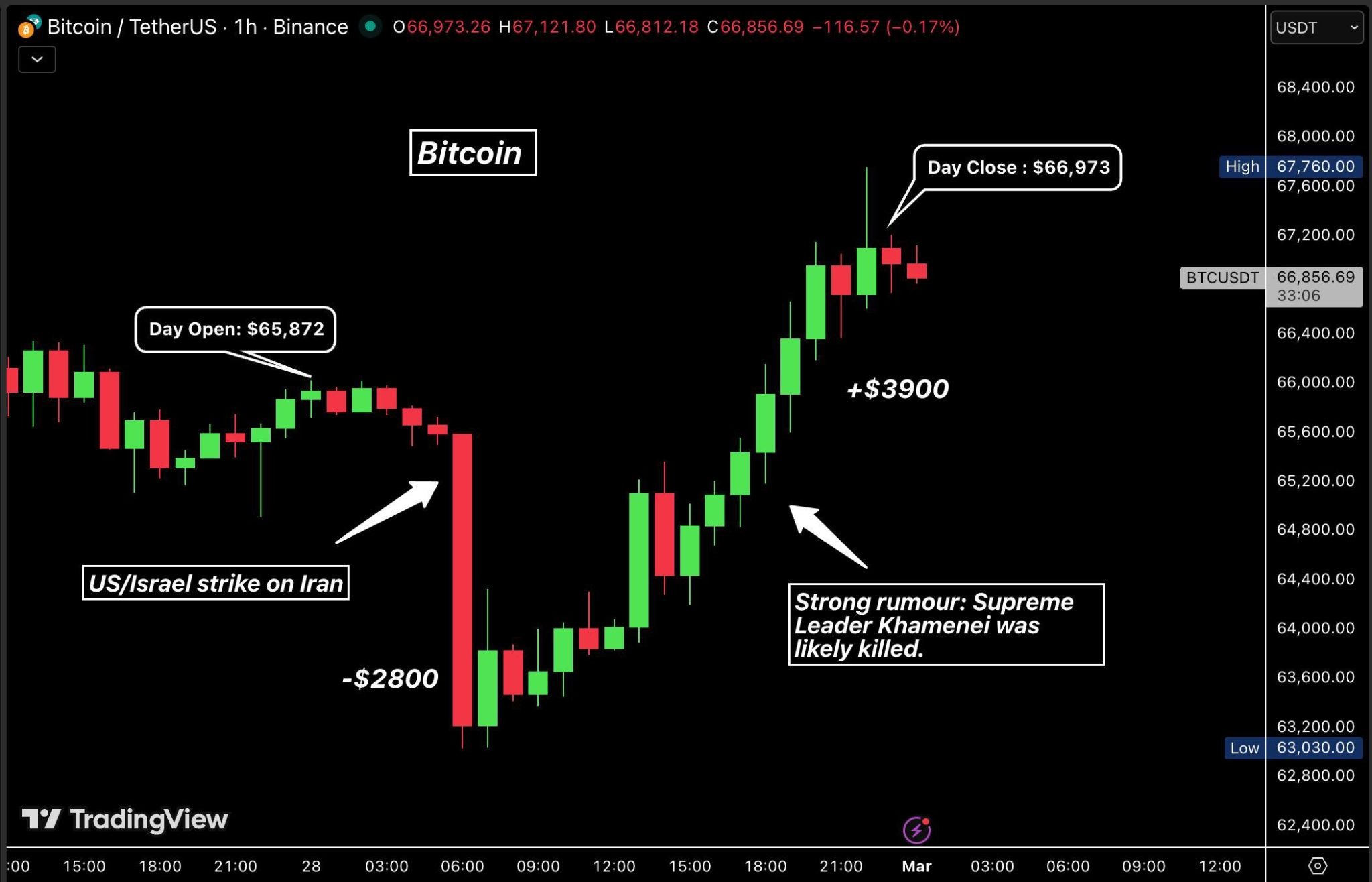
Drops Analytics, a market research firm, specifically highlighted Bitcoin’s price performance relative to the most recent halving in April 2024. In a Telegram post, Drops Analytics stated, "Almost two years later, BTC trades around $66,000 — nearly the same level as during the April 2024 halving." (Here, "two years later" might be a slight overstatement or referring to a historical pattern; the key point is the current price stagnation relative to the halving). They further emphasized the unprecedented nature of this situation: "This has never happened before. In previous cycles, BTC was already three to 10 times above halving levels by now." This observation suggests a significant deviation from historical post-halving patterns, prompting investors to question the efficacy of the halving as a bullish catalyst in the current cycle.
Adding to this concern, data from Checkonchain indicates that Bitcoin is indeed experiencing its worst yearly start on record, 50 days into the year (assuming the article means 2024, given its publication date). This performance surpasses previous down years, including the bear market of 2018, which saw Bitcoin plunge significantly after its 2017 bull run. The combination of sustained ETF outflows and a historically weak post-halving price performance paints a challenging picture for Bitcoin’s immediate future.
Broader Implications and Market Dynamics
The current trend of outflows and subdued price action in Bitcoin has several significant implications for both the cryptocurrency market and the broader financial landscape.
Firstly, it challenges the narrative that spot Bitcoin ETFs would unequivocally lead to sustained price appreciation. While they did initially provide a significant boost, the recent data suggests that institutional adoption is not a one-way street and that factors such as macroeconomic conditions, profit-taking, and shifting risk appetites can heavily influence flows. For instance, global economic uncertainties, persistent inflation concerns, or shifts in central bank monetary policies could be prompting institutional investors to de-risk their portfolios, including exposure to more volatile assets like Bitcoin.

Secondly, the performance of these ETFs and Bitcoin itself could influence the regulatory perception of digital assets. While the approval of spot ETFs was a step towards mainstream acceptance, a prolonged period of underperformance and outflows might lead to increased scrutiny from regulators or temper enthusiasm for further product innovation in the crypto space, such as spot Ethereum ETFs.
Thirdly, the behavior of large institutional holders, as exemplified by Brevan Howard’s reduction in IBIT exposure, sends a powerful signal to the market. When sophisticated investors, who have dedicated significant resources to due diligence, decide to scale back their positions, it can erode confidence among retail investors and smaller institutions, potentially exacerbating selling pressure.
Fourthly, the divergence from historical post-halving patterns necessitates a re-evaluation of long-held assumptions within the crypto community. While past performance is not indicative of future results, the halving has been a cornerstone of Bitcoin’s supply-side economics and a reliable predictor of subsequent bull runs. If this pattern is indeed broken, it suggests that the market has matured, and other factors—such as institutional demand (or lack thereof), global liquidity, and broader macroeconomic forces—are exerting a more dominant influence than the pre-programmed supply shocks.
Lastly, the dwindling trading activity indicates a lack of fresh capital entering the market. For Bitcoin to regain its upward momentum, renewed investor interest and substantial inflows are typically required. The current environment suggests a wait-and-see approach from many potential investors, preferring to stay on the sidelines until clearer positive catalysts emerge or the selling pressure subsides.
In conclusion, the recent data on US spot Bitcoin ETF outflows and Bitcoin’s price performance paints a picture of a market grappling with significant challenges. While the long-term prospects of Bitcoin and its role in the global financial system remain a subject of ongoing debate, the short-to-medium term outlook is marked by caution. The confluence of institutional selling, waning investor enthusiasm, and a historically atypical post-halving period suggests that Bitcoin and its associated investment products are navigating a complex and uncertain terrain, demanding careful observation from all market participants.