
 admin
admin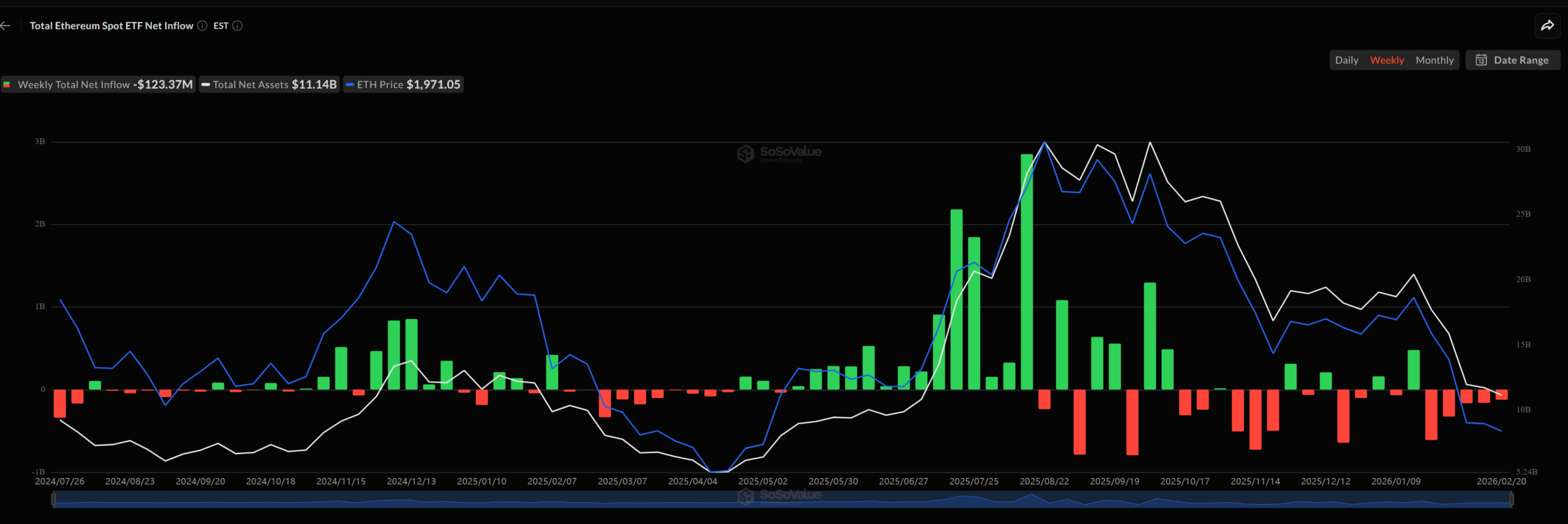
US spot Bitcoin exchange-traded funds (ETFs) have recently concluded an unprecedented streak of five consecutive weeks of net outflows, marking a significant shift in investor sentiment since their highly anticipated launch. Over this five-week period, investors withdrew approximately $3.8 billion from these investment vehicles, signaling a period of cautious adjustment in the nascent market for spot cryptocurrency ETFs. This sustained period of redemptions contrasts sharply with the initial enthusiasm that characterized the early weeks following their introduction, prompting a deeper examination of the underlying factors influencing institutional and retail investment behavior.
Detailed Analysis of Bitcoin ETF Outflows
The most recent week, ending on Friday, saw spot Bitcoin ETFs record about $315.9 million in net outflows, according to comprehensive data compiled by SoSoValue. This figure contributed to the cumulative $3.8 billion withdrawal across the five-week period. While the weekly total was firmly negative, it is important to note that not all trading days within the week experienced outflows; Friday, for instance, saw modest inflows of approximately $88 million. However, these positive sessions were overshadowed by larger redemption days earlier in the week, including a substantial withdrawal of over $410 million on February 12, followed by additional negative sessions from February 17 through February 19.
Delving further into the chronology of these outflows, the largest weekly withdrawal during this five-week streak occurred in the week ending January 30, when spot Bitcoin (BTC) ETFs recorded a staggering $1.49 billion in net outflows. This particular period represented a stark reversal from the preceding weeks, which had seen robust inflows immediately post-launch. The consistency of these outflows across five weeks indicates a more systemic pattern rather than isolated incidents, moving beyond the initial "sell-the-news" event often observed after major market catalysts.
Despite these recent challenges, the overall picture for spot Bitcoin ETFs remains robust when viewed from a long-term perspective. As of the close of trading on Friday, these funds have collectively accumulated roughly $54.01 billion in net inflows since their inception. Their total net assets under management (AUM) stood near $85.31 billion, representing approximately 6.3% of Bitcoin’s overall market capitalization. This substantial AUM underscores the significant institutional and retail capital that has flowed into these products, affirming their role as a legitimate gateway for broader market participation in Bitcoin. The current outflows, while notable, represent a fraction of the total capital committed since launch, suggesting a recalibration rather than a wholesale abandonment of the asset class.
The Genesis and Significance of Spot Bitcoin ETFs
The launch of spot Bitcoin ETFs in the US in January marked a watershed moment for the cryptocurrency industry. For years, the U.S. Securities and Exchange Commission (SEC) had resisted approving such products, citing concerns over market manipulation, investor protection, and the nascent nature of the underlying asset. However, a landmark court ruling in favor of Grayscale Investments against the SEC in August of the previous year paved the way for a reconsideration of these applications. This legal precedent, coupled with persistent pressure from major financial institutions, ultimately led to the approval of several spot Bitcoin ETFs, including offerings from BlackRock, Fidelity, Ark Invest, and Grayscale itself (through the conversion of its Bitcoin Trust).
The approval was widely hailed as a major step towards mainstream adoption, providing regulated, easily accessible investment vehicles for traditional investors who were previously deterred by the complexities of direct cryptocurrency ownership, custody, and regulatory uncertainties. The initial weeks post-launch witnessed a flurry of activity, with billions of dollars flowing into these new products, driving Bitcoin’s price to multi-year highs and signaling a new era of institutional engagement. The subsequent outflows, therefore, represent an important phase of market discovery and equilibrium, as investors digest the implications of these new financial instruments within a broader economic landscape.

Institutional De-risking: A Primary Driver of Outflows
According to Vincent Liu, chief investment officer at Kronos Research, the recent withdrawals from spot Bitcoin ETFs are primarily tied to institutional positioning and de-risking strategies rather than a fundamental loss of long-term interest in Bitcoin as an asset class. This perspective is widely shared among market analysts who observe the intricate dance between macroeconomic indicators, geopolitical events, and investment flows in volatile markets. Liu explicitly stated that these outflows reflect a broader portfolio de-risking trend, prompted by escalating geopolitical tensions and a general rise in macroeconomic uncertainty across global markets.
Geopolitical instability, such as heightened trade disputes, tariff developments, and regional conflicts, often leads institutional investors to adopt a more conservative stance. In such environments, assets perceived as higher risk, including cryptocurrencies, tend to experience capital rotation into more traditional safe havens or simply out of speculative positions. This "risk-off" sentiment impacts digital assets profoundly, making their price movements and fund flows particularly sensitive to macro headlines. The interconnectedness of global financial markets means that even events seemingly distant from the crypto sphere can have a tangible impact on investor appetite for digital assets.
Liu further elaborated that the stability of future market inflows will likely depend on forthcoming macroeconomic data and events. He specifically highlighted the significance of incoming data such as initial jobless claims. Weaker economic data, particularly in key economies like the United States, could potentially revive expectations for future interest rate cuts by central banks. Such a scenario would typically be bullish for risk assets, as lower interest rates reduce the cost of borrowing and make speculative investments more attractive by decreasing the appeal of fixed-income alternatives. Currently, market sentiment, as reflected by the Crypto Fear and Greed Index, hovers at a level of "extreme fear" (specifically, 14), indicating a prevailing cautiousness among investors. A shift in interest rate expectations could provide the necessary catalyst to alleviate this fear and encourage renewed capital allocation towards riskier assets like Bitcoin.
Spot Ether ETFs Also Face Selling Pressure
The trend of sustained selling pressure is not limited to Bitcoin ETFs; spot Ether (ETH) ETFs have also experienced a similar fate, recording negative flows over the past five consecutive weeks. Investors have trimmed their exposure to the second-largest cryptocurrency, reflecting a broader cautiousness that extends beyond Bitcoin. This parallel movement suggests that the factors driving outflows are systemic, affecting the wider digital asset market rather than being specific to Bitcoin.
During the most recent week, spot Ether ETFs recorded approximately $123.4 million in net outflows, according to SoSoValue data. Similar to Bitcoin ETFs, this weekly loss occurred despite occasional positive trading sessions. Ether ETFs posted inflows on several days within the week, including about $48.6 million on February 17 and $10.3 million on February 13. However, these positive movements were ultimately outweighed by heavier selling pressure that characterized earlier days in the week, resulting in a net negative weekly total. The performance of Ether ETFs often mirrors that of Bitcoin ETFs, as Ether is typically seen as the next most liquid and widely adopted cryptocurrency, making it susceptible to similar market forces and investor sentiment shifts.
Market Reactions and Price Implications
The prolonged outflows from both Bitcoin and Ether ETFs have naturally had an impact on the spot prices of these cryptocurrencies. While ETF flows are not the sole determinant of price action, significant capital movements in and out of these products can exert considerable pressure on market dynamics. The consistent selling pressure from institutional investors, even if framed as de-risking, inevitably adds to the supply in the market, potentially contributing to downward price movements or hindering upward momentum.

Bitcoin, which had seen remarkable gains leading up to and immediately following the ETF launches, has experienced increased volatility and periods of price consolidation during these weeks of outflows. Similarly, Ether’s price trajectory has been affected, experiencing dips and struggling to maintain upward momentum in the face of sustained redemptions from its ETF products. This correlation highlights the increasing integration of crypto markets with traditional finance; institutional flows via ETFs now play a more direct role in influencing the broader cryptocurrency ecosystem.
The current market sentiment, characterized by "extreme fear," as indicated by the Crypto Fear and Greed Index, underscores the psychological impact of these outflows. Such a high level of fear can lead to increased selling pressure as investors panic, or it can present opportunities for contrarian investors looking to buy assets at a discount. However, until the macroeconomic landscape offers clearer signals or the geopolitical tensions ease, a pervasive sense of caution is likely to dominate investor behavior.
Looking Ahead: Factors Influencing Future Flows
The immediate future of spot Bitcoin and Ether ETF flows will largely hinge on a confluence of macroeconomic developments, geopolitical stability, and shifts in central bank policy. As Vincent Liu noted, critical economic data releases, particularly those that might influence the Federal Reserve’s stance on interest rates, will be closely watched. A stronger indication of future rate cuts could significantly improve market sentiment for risk assets, potentially reversing the current outflow trend. Conversely, persistent inflation or a resilient economy might delay rate cuts, prolonging the "risk-off" environment.
Furthermore, any de-escalation of geopolitical tensions globally could provide a much-needed boost to investor confidence, encouraging a return to riskier assets. Regulatory clarity, especially concerning other potential crypto ETF products (such as those for Solana or other altcoins), could also reignite interest and capital inflows into the broader digital asset space.
Beyond macro factors, the performance of the underlying assets themselves will remain crucial. Continued development in the Bitcoin and Ethereum ecosystems, such as significant technological upgrades or increased real-world utility, could bolster investor conviction regardless of short-term market fluctuations. The halving event for Bitcoin, expected to occur in the coming months, historically has been a bullish catalyst, though its impact in an ETF-dominated market remains to be seen.
In conclusion, the five consecutive weeks of net outflows from US spot Bitcoin and Ether ETFs represent a significant period of adjustment for the burgeoning institutional cryptocurrency market. While these redemptions reflect a broader institutional de-risking strategy in response to macroeconomic uncertainties and geopolitical concerns, the underlying demand for regulated crypto investment products remains substantial, as evidenced by the impressive cumulative inflows since launch. The market is now keenly observing global economic indicators and geopolitical shifts, awaiting catalysts that could restore investor confidence and potentially usher in a new wave of capital into these landmark financial instruments. The interplay between traditional finance and the digital asset economy is becoming ever more intricate, with ETF flows serving as a critical barometer of this evolving relationship.