
 admin
admin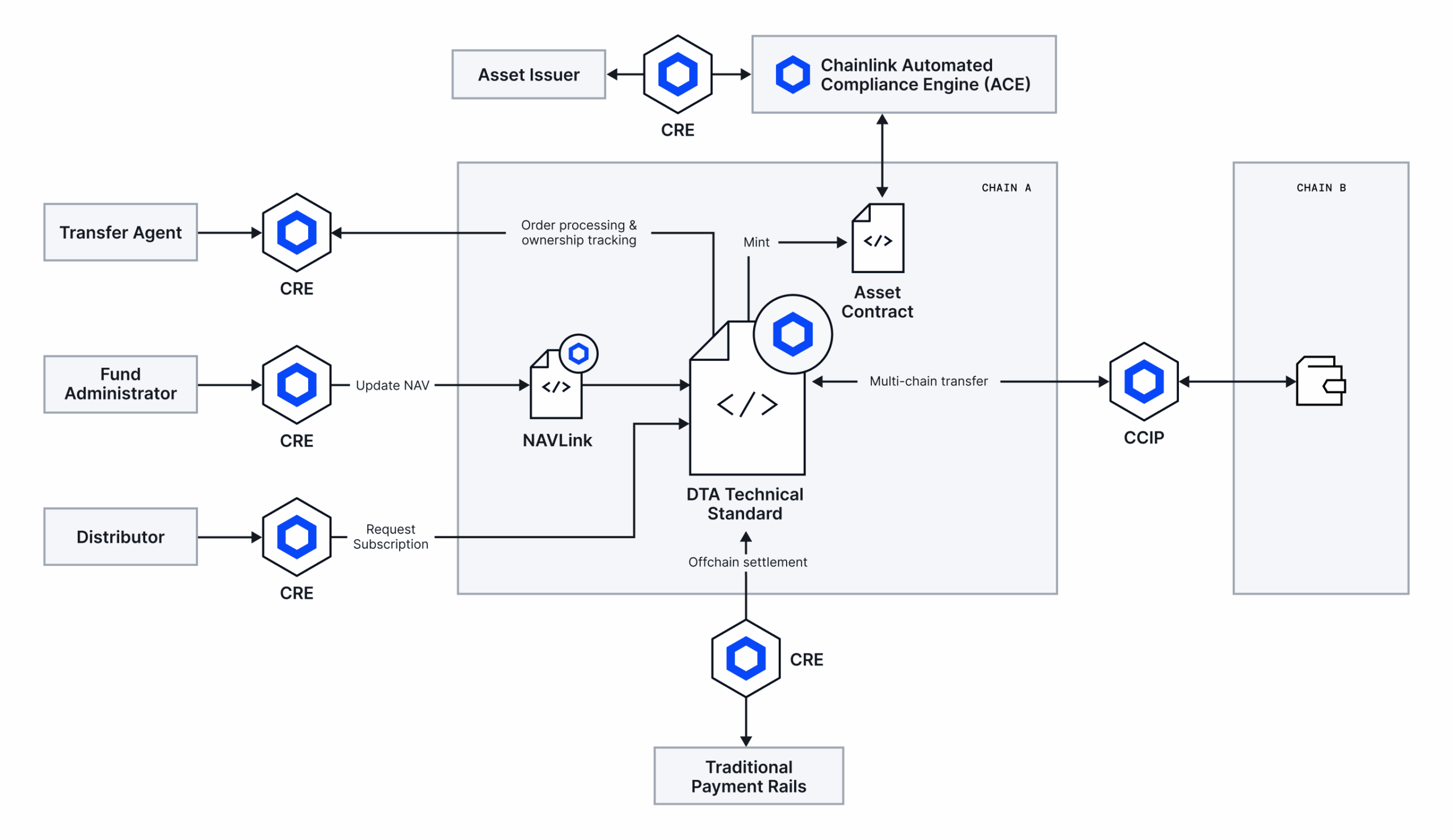
The United Kingdom is transitioning from theoretical exploration to practical implementation in the realm of tokenized financial assets, leveraging its deep capital markets, influential asset management industry, and established role as a global financial infrastructure hub. This strategic shift, driven by proactive regulatory engagement and market participant initiatives, positions tokenization as a fundamental evolution of existing financial systems rather than a speculative experiment, according to insights shared by Jorge Lesmes, Global Head of Partnerships at Chainlink Labs, and observed across the UK’s financial landscape.
A Deliberate Regulatory Blueprint Paves the Way
The journey towards integrating tokenized assets into mainstream finance in the UK has been meticulously orchestrated by key regulatory bodies, including the Financial Conduct Authority (FCA), HM Treasury, and the Bank of England. This collaborative approach has fostered an environment conducive to innovation while upholding stringent standards of market conduct and operational resilience. Rather than hastily embracing nascent technologies, the UK has adopted a deliberately sequenced methodology, characterized by comprehensive guidance, extensive public consultations, and the establishment of regulatory sandboxes. These controlled environments allow for the testing and refinement of blockchain-based solutions in a live setting, minimizing systemic risks and building confidence among market participants.
This regulatory foresight is crucial, especially for a market of the UK’s stature. With London acting as a nexus for global capital flows, managing an estimated $13 trillion in assets under management (AUM) and hosting one of the world’s largest stock exchanges by market capitalization, any technological shift requires robust oversight. The FCA’s ongoing work on fund tokenization, alongside proposals for a new financial market infrastructure (FMI) sandbox, exemplifies this commitment. These initiatives signal an openness to integrating digital assets within clear, well-defined boundaries, encouraging institutions to invest in tokenization solutions that are fully compatible with existing governance frameworks. This measured approach stands in contrast to more permissive, or conversely, more restrictive, stances adopted by some other global jurisdictions, allowing the UK to learn from early movers while mitigating potential pitfalls.
From Conceptual Pilots to Tangible Efficiencies
A significant shift is now evident as market participants translate regulatory guidance into actionable, production-grade implementations. Index providers, asset managers, fintech firms, and core infrastructure providers are moving beyond exploratory pilots to address concrete operational needs. The focus is not on inventing entirely new financial instruments but on re-engineering the mechanics of existing ones. Representing funds, securities, and critical reference data on a blockchain offers unprecedented opportunities to automate processes that remain notoriously costly, manual, and fragmented in traditional finance, particularly in post-trade operations, data dissemination, and cross-platform coordination.
For a market like the UK, which serves as a global intermediary for capital, enhancing the speed and consistency with which assets, data, and instructions traverse institutions can yield substantial benefits. This efficiency dividend is not limited to domestic operations but extends across the intricate international value chains linked to London’s financial ecosystem. Analysts from firms like Boston Consulting Group and McKinsey have consistently projected that tokenization could unlock trillions of dollars in value globally by streamlining operations, reducing settlement times from days to minutes, and cutting associated costs, which in traditional markets can represent a significant percentage of transaction value or billions annually in post-trade processing. Crucially, this evolution is not seen as a replacement of legacy infrastructure but rather a sophisticated layering of tokenization onto current systems, demanding robust integration between blockchain networks, traditional custodians, data providers, and established compliance frameworks.
The Foundational Pillars: Data, Compliance, and Interoperability
The maturity of UK tokenization initiatives underscores a consistent theme: the ultimate success of tokenized assets hinges less on the token itself and more on the robustness of its underlying infrastructure.
High-Quality Market Data: The integrity of tokenized financial products relies fundamentally on access to trusted, high-quality market data. Pricing, indices, and reference benchmarks are the bedrock of virtually every institutional financial activity, from sophisticated portfolio construction to diligent risk management. A pivotal development reflecting this reality is the move by FTSE Russell, a prominent part of the London Stock Exchange Group Business, to publish its global indices on-chain via Chainlink’s DataLink. This initiative makes trusted benchmark data, which underpins the tracking and management of trillions of pounds in assets worldwide, directly available on blockchain networks. By providing tokenized products with access to the same authoritative inputs as their traditional counterparts, this collaboration ensures consistency and reliability, a critical factor for institutional adoption.
Programmable Compliance and Policy Enforcement: Operating within the UK’s robust governance and supervisory frameworks means tokenized assets must adhere to the same exacting standards. This necessity has spurred significant interest in programmable compliance and policy enforcement mechanisms capable of operating across diverse blockchain environments while remaining aligned with regulatory mandates. Infrastructure such as Chainlink’s Automated Compliance Engine (ACE) addresses this directly. ACE enables compliance rules, eligibility checks, and policy controls to be embedded directly into on-chain workflows and enforced consistently across different networks. This is complemented by market participants in the UK, who are actively working with Chainlink to align ACE with established regulatory frameworks for digital securities, building case management and regulatory reporting workflows on top of this programmable compliance infrastructure. These collaborative efforts illustrate how compliance, reporting, and governance can evolve in tandem with tokenization without compromising regulatory standards.
Seamless Interoperability: The practical reality of tokenized assets in the UK dictates interaction with multiple blockchains, legacy systems, and a myriad of international counterparties. This necessitates standardized interoperability frameworks. Chainlink’s Cross-Chain Interoperability Protocol (CCIP) and orchestration tools like the Chainlink Runtime Environment (CRE) are increasingly recognized as enabling technologies that allow assets, data, and complex workflows to move securely and reliably across these disparate environments. Such interoperability is not merely a convenience but a strategic imperative for the UK to maintain its position as a global financial hub, facilitating seamless cross-border transactions and liquidity.
Institutional Momentum and Production-Oriented Use Cases
Evidence of institutional commitment is rapidly accumulating across the UK financial ecosystem, demonstrating a clear shift towards production-oriented applications that tackle specific market inefficiencies.
In the asset management and operations domain, global investment manager Schroders has been a key participant in the Corporate Actions Lifecycle Management (CALM) project. Led by Chainlink in collaboration with over twenty financial market participants, CALM focuses on modernizing corporate actions processing—an area notoriously complex and costly due to fragmented data flows and manual reconciliation. By leveraging blockchain-based workflows and verifiable data infrastructure, CALM aims to automate key lifecycle events, enhance data accuracy and timeliness, and significantly reduce operational risk. This initiative directly aligns with the UK market’s overarching emphasis on efficiency, transparency, and resilience, addressing pain points that have long plagued traditional securities servicing.
Furthermore, the intersection of traditional finance (TradFi) and decentralized finance (DeFi) is witnessing burgeoning collaborations. Chainlink’s work with entities like Aave Labs and Euler Labs explores how institutional-grade data, robust risk controls, and stringent compliance considerations can be seamlessly integrated into on-chain lending and liquidity markets. For UK-based institutions operating in a globally interconnected financial landscape, such integrations offer a viable pathway to access the programmable primitives of DeFi while maintaining the necessary safeguards and regulatory alignment required for institutional participation. These examples collectively underscore a decisive pivot towards pragmatic, solution-driven applications that solve identifiable market challenges, moving beyond the exploratory phase into tangible value creation.
A Regulatory Environment Designed for Gradual Scale
The UK’s considered regulatory approach has been instrumental in enabling this measured progress. Instead of dictating specific technological solutions, regulators have focused on defining desired outcomes—such as market integrity, consumer protection, and operational resilience—providing firms with the flexibility to innovate within these established parameters. This outcome-based regulatory philosophy fosters an environment where innovation is encouraged but always anchored in stability and security.
The FCA’s ongoing initiatives on fund tokenization, coupled with proposals for a robust financial market infrastructure sandbox, clearly signal an embrace of innovation within carefully delineated boundaries. This framework actively encourages institutions to invest in tokenization initiatives that are inherently compatible with existing governance models, thereby avoiding disruptive, revolutionary changes. Within this adaptable framework, emerging infrastructure such as Chainlink’s Digital Transfer Agent (DTA) technical standard illustrates how core fund administration functions—including ownership records, transfer restrictions, and lifecycle events—can be automated and synchronized across both on-chain and traditional systems, all while adhering strictly to regulatory and operational requirements. This forward-looking regulatory stance also inherently supports interoperability with other jurisdictions, a critical aspect for UK-based firms seeking to participate and lead in evolving global tokenized markets as international standards converge.
Implications for UK Decision-Makers and Global Standing
For banks, asset managers, infrastructure providers, and policymakers across the UK, tokenization has evolved from a theoretical concept to a strategic imperative centered on execution. The focus is now firmly on selecting scalable infrastructure, seamlessly integrating digital assets into existing workflows, and ensuring that governance and risk management frameworks evolve in lockstep with technological advancements.
Successful initiatives consistently prioritize trusted data, standardized connectivity, and the proactive integration of compliance considerations from the outset. Neutral infrastructure providers, such as Chainlink, which facilitate these essential capabilities without locking institutions into proprietary, closed ecosystems, are playing an increasingly pivotal role in the market’s development. By enabling open, secure, and verifiable connections between traditional finance and blockchain networks, these providers are democratizing access to the benefits of tokenization and fostering a more interconnected and efficient global financial system.
The UK’s pragmatic and infrastructure-centric approach to tokenization is not merely a domestic financial undertaking; it is a strategic move to reinforce its position as a leading global financial centre. By focusing on practical applications, robust regulatory frameworks, and foundational infrastructure, the UK is demonstrating a viable pathway for established financial markets to embrace the transformative potential of blockchain technology. This careful navigation of innovation and stability could serve as a blueprint for other nations, solidifying the UK’s influence in shaping the future of global finance. The ongoing initiatives signal a clear commitment to fostering a competitive, resilient, and technologically advanced financial ecosystem, ready to capitalize on the next wave of financial innovation.