admin
admin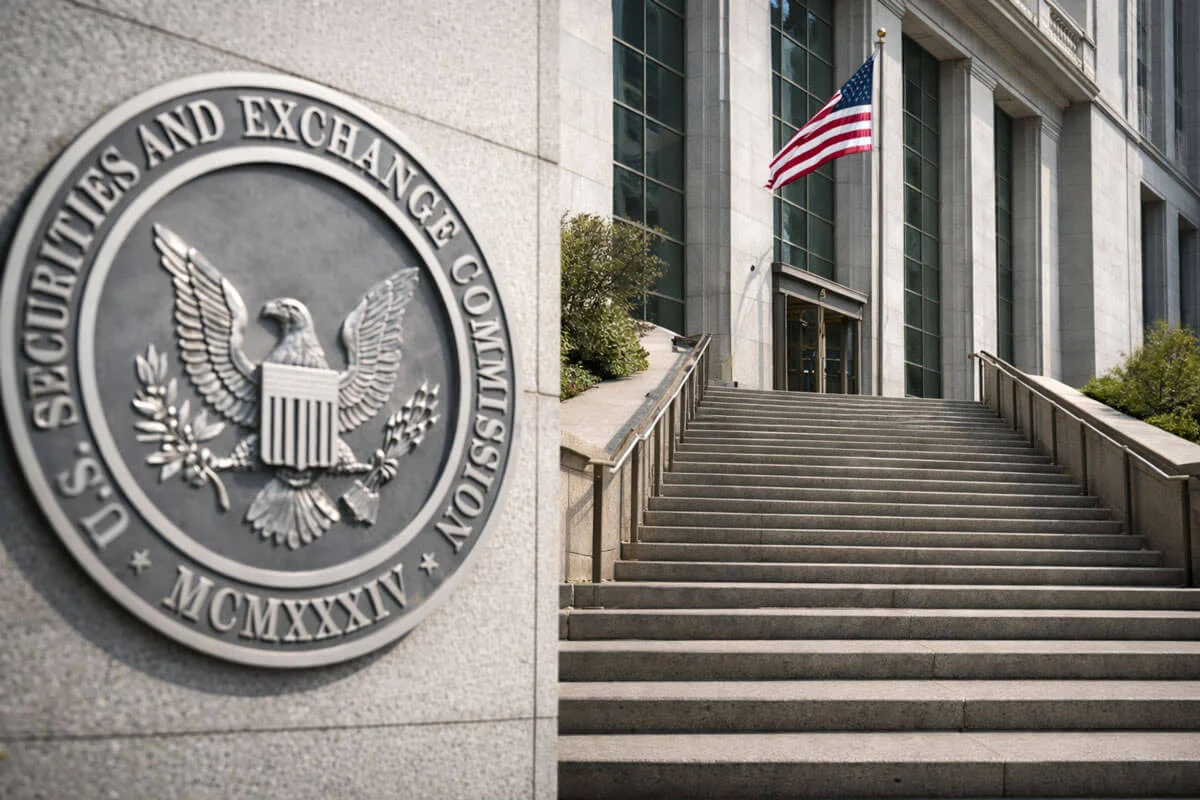
In a remarkable display of institutional self-reflection, the U.S. Securities and Exchange Commission (SEC) has publicly acknowledged a significant shift in its enforcement strategy, particularly concerning the burgeoning cryptocurrency sector. A year after proudly announcing record-breaking enforcement actions and billions in remedies – touting its prowess in tackling emerging threats like digital assets – the agency has released a new review that effectively disavows its previous approach. This pivot, detailed in the SEC’s 2025 fiscal year review, signals a move away from aggressive, volume-driven litigation towards a more measured and perhaps more strategically focused regulatory posture, with profound implications for the future of digital asset regulation and enforcement philosophy.
The contrast between the SEC’s pronouncements in November 2024 and the revelations in its latest 2025 review is stark. In its fiscal year 2024 report, the SEC trumpeted a record $8.2 billion in remedies and 583 enforcement actions. The agency explicitly highlighted its engagement with the cryptocurrency market as proof of its agility and effectiveness in confronting novel risks. The landmark case against Terraform Labs and its co-founder Do Kwon, which alone contributed a substantial portion of the year’s financial penalties, was presented as a testament to the SEC’s capacity to navigate complex, high-stakes digital asset litigation and achieve decisive victories. This narrative emphasized sheer volume and substantial monetary recoveries as key indicators of the agency’s strength and relevance, positioning cryptocurrency enforcement as a flagship initiative.
However, the SEC’s 2025 fiscal year review, published recently, presents a starkly different picture. The agency reported 456 enforcement actions, a decrease of over 20% from the previous year. While the headline monetary relief figure stood at $17.9 billion, the report itself acknowledged that this number was significantly inflated by legacy litigation, such as the protracted Stanford case, and by funds credited against other existing judgments rather than newly collected. When these anomalous factors are stripped away, the genuine fiscal year 2025 total for monetary relief, encompassing disgorgement, prejudgment interest, and civil penalties, amounts to approximately $2.7 billion – a substantial reduction from the previous year’s celebrated figures.
More critically, the narrative accompanying these reduced numbers represents a fundamental critique of the SEC’s prior modus operandi. The 2025 report frames the decline in enforcement actions not as a sign of reduced effectiveness, but as a deliberate and necessary "course correction." The agency explicitly criticized past leadership for misapplying resources, pursuing cases that generated "media headlines" and prioritized sheer volume over demonstrable investor harm. This constitutes a foundational indictment of the enforcement philosophy that had been lauded just a year prior, suggesting that the previous metrics of success – high case counts and large monetary awards – were misleading indicators of true regulatory impact.
The shift in the SEC’s stance on cryptocurrency enforcement is perhaps the most emblematic illustration of this broader strategic reorientation. The 2025 review specifically noted the dismissal of seven crypto registration-related cases, grouping them with enforcement actions concerning off-channel communications and certain "dealer" activities. These dismissals were not portrayed as mere winding down of less critical matters, but as direct consequences of a previous regime that prioritized case volume over genuine investor protection. This deliberate framing suggests a systemic misallocation of resources that the current SEC leadership is actively rectifying.
This institutional admission is underscored by a series of high-profile retreats from aggressive crypto enforcement actions over the past year. In early 2025, the SEC voluntarily dismissed its civil enforcement action against Coinbase, a significant development that was met with widespread approval from the crypto community. This was followed by the agency’s decision to voluntarily drop its lawsuit against Binance a few months later. Furthermore, the SEC concluded its investigation into Robinhood’s crypto arm with no action taken. These individual events, when viewed in isolation, might be perceived as routine adjustments in regulatory appetite. However, when aggregated and now formally acknowledged in the SEC’s own annual report, they signify a profound strategic recalibration. The agency that once used assertive cryptocurrency enforcement to project an image of toughness is now employing a more restrained approach, signaling a desire for clarity and potentially a more collaborative path forward with the industry.
The creation of a new SEC crypto task force, focused on clarifying registration requirements rather than solely pursuing firms for non-compliance, further illustrates this paradigm shift. This initiative represents a proactive effort to guide the industry towards compliance, a departure from the reactive, punitive measures that characterized the previous era. The agency’s explicit goal is to shift its stance from punishing firms for failing to register to clearly defining what registration actually entails, a move that could provide much-needed regulatory certainty for the digital asset market.
The consequences of this enforcement shift extend beyond the cryptocurrency sector and are intertwined with broader dynamics within the SEC and the broader regulatory landscape. The agency’s enforcement division has experienced significant leadership turnover and staffing reductions during fiscal year 2025, with the resignation of its enforcement director and an 18% drop in division staff. While some level of transition is expected, industry experts cited by Reuters interpreted this decline as indicative of a deeper strategic reassessment, potentially reflecting the current administration’s broader skepticism towards a "regulation-by-enforcement" model across various federal agencies.
The release of the 2025 report coincided with the appointment of David Woodcock, a former SEC regional office director and partner at Gibson Dunn, as the new head of enforcement. Woodcock succeeds Margaret Ryan, who reportedly resigned after a brief six-month tenure due to disagreements with agency leadership regarding the program’s strategic direction. This internal friction, as reported by Reuters, highlights that the course correction has not been without its internal challenges, underscoring the magnitude of the strategic pivot.
This internal self-criticism by the SEC resonates with a larger debate unfolding in Washington D.C.: the fundamental appropriateness of using enforcement actions as a primary regulatory tool. The debate centers on whether the SEC’s past practice of filing cases to establish legal precedent, rather than waiting for legislative action or formal rulemaking processes, was an effective or even a legitimate approach. The current SEC leadership appears to be betting that it was not, and their willingness to articulate this critique in their official reporting marks a significant moment in regulatory history.
There is a discernible irony in the SEC’s evolving narrative. In November 2024, the agency marshaled high case counts and substantial monetary remedies as irrefutable evidence of its efficacy and diligent execution of its mandate. By April 2026, however, lower case counts and diminished, albeit more accurately reported, dollar figures are being presented as the benchmarks of success. The agency has effectively redefined its own metrics for success and retroactively applied this new definition to reframe and, in essence, discredit the very work it was celebrating less than two years prior.
The long-term implications of this shift in enforcement philosophy remain to be seen. The effects of a potentially lighter enforcement touch on the cryptocurrency market and other regulated industries will unfold over the coming years and will be subject to ongoing scrutiny and analysis. However, the SEC’s 2025 annual report stands as a remarkable document. It represents a federal regulator using its own official reporting mechanism to mount a compelling argument against the underlying logic and effectiveness of its own recent past actions. This willingness to openly critique its prior strategies, particularly in a high-profile and often contentious area like cryptocurrency, signals a potentially transformative moment for regulatory enforcement in the United States. The agency’s self-acknowledged "necessary course correction" suggests a deeper institutional understanding that true regulatory effectiveness may lie not in the sheer volume of actions, but in the strategic clarity, targeted impact, and principled application of established legal frameworks. The journey from "crypto crusader" to a more measured regulator marks a significant chapter in the SEC’s ongoing evolution.