admin
admin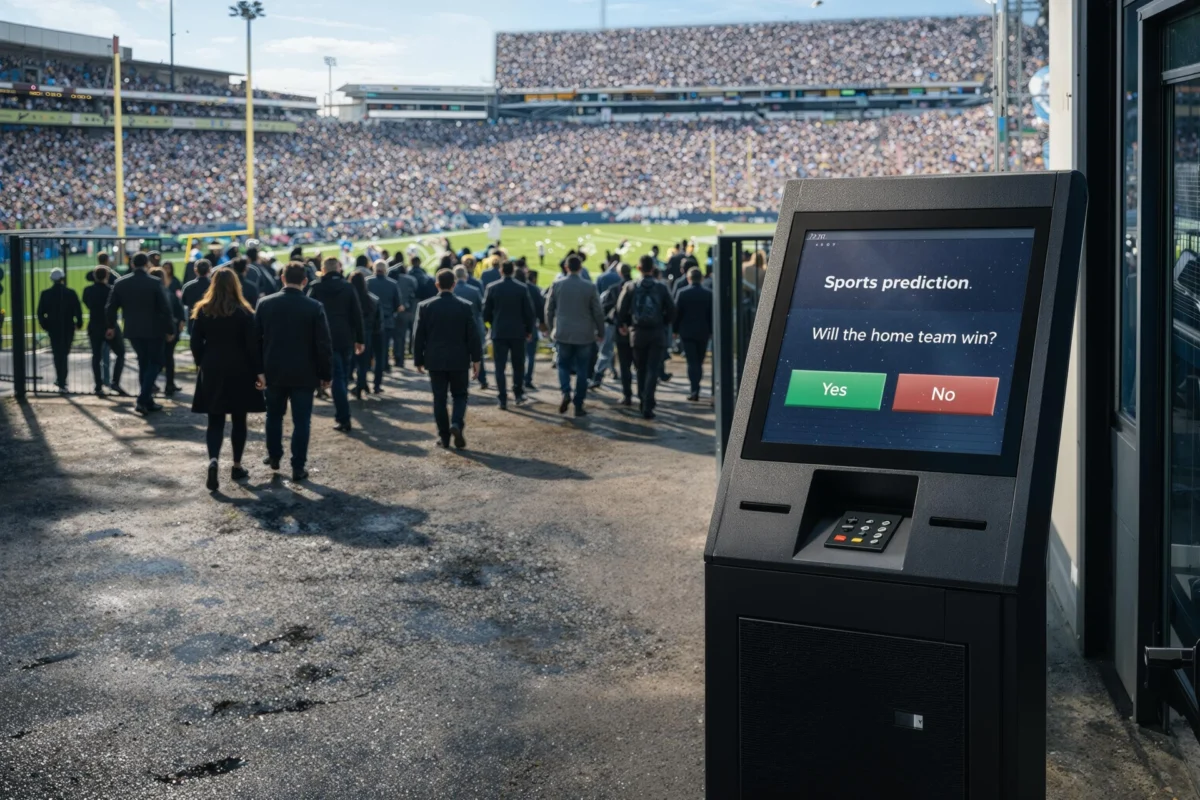
Prediction markets, initially conceived as sophisticated tools for assessing probabilities and hedging against future events, are now grappling with an identity crisis fueled by their unexpected surge in popularity, largely driven by sports betting. What began as a niche financial instrument has exploded into a mainstream phenomenon, drawing the attention of regulators and lawmakers alike, who are questioning its fundamental nature and potential for regulatory arbitrage. This dramatic shift has placed the future of these markets, particularly those focused on sporting events, under intense scrutiny, potentially leading to significant restrictions or outright bans.
The core of the ongoing dispute hinges on a fundamental legal question: are these prediction market contracts "bets" or "swaps"? The answer to this inquiry dictates regulatory authority. If classified as bets, they fall under the purview of state-level gambling laws, requiring licenses and adherence to a complex patchwork of regulations. Conversely, if deemed swaps or derivatives, they are subject to federal oversight by the Commodity Futures Trading Commission (CFTC). This jurisdictional tug-of-war has intensified as prediction market operators, seeking broader reach and regulatory clarity, have increasingly focused on sports-related contracts, inadvertently blurring the lines between financial instruments and wagers.
The journey of prediction markets from a fringe concept to a significant market force is a story of strategic evolution and unforeseen consequences. For years, platforms like Kalshi and Polymarket strived to position themselves as more than just gambling venues, emphasizing their utility in price discovery and risk management for a diverse array of events, from elections and economic indicators to geopolitical developments. However, these more abstract markets, while intellectually intriguing, failed to capture widespread public imagination or achieve significant trading volumes. The breakthrough came with the integration of sports betting, a universally understood and deeply popular form of wagering.
The allure of sports prediction markets proved irresistible. They offered a familiar framework—predicting the outcome of games, player performances, or even specific game events—while leveraging the perceived sophistication of blockchain technology and decentralized exchanges. This fusion democratized access to a form of betting that felt more akin to financial trading, attracting a new demographic of users and significantly scaling the market. Data suggests that sports-related contracts now constitute a substantial majority, potentially up to 90%, of transactions on leading prediction platforms. This massive influx of volume and user activity, however, has come at a cost, placing these markets squarely in the crosshairs of regulators and lawmakers concerned about their resemblance to traditional sportsbooks.
The current regulatory onslaught is multifaceted and rapidly escalating. On March 12, the CFTC initiated a formal rulemaking process, signaling its intent to thoroughly examine the manipulation, oversight, and contractual structures of prediction markets. This federal action followed a series of aggressive moves by individual states. Arizona, for instance, filed criminal charges against Kalshi, while a Nevada judge issued a temporary injunction preventing the company from operating within the state without a proper license. Massachusetts had already taken action against Kalshi’s sports-related contracts, underscoring a growing state-led effort to assert authority over these platforms.
The legislative response has been swift and bipartisan. A group of U.S. senators is reportedly preparing to introduce legislation specifically targeting sports bets and casino-style contracts on CFTC-regulated prediction markets. Their argument centers on the notion that these platforms are exploiting a legal loophole to circumvent state gambling regulations and infringe upon tribal sovereignty. This legislative push signifies a critical turning point, transforming a dispute previously confined to a few test cases into a national debate over the very existence and nature of sports prediction markets.
The fundamental challenge for prediction market operators is the inherent contradiction between their growth strategy and their legal defense. Their rapid expansion was propelled by contracts that closely mirror sports bets in appearance, marketing, and user engagement. Yet, to maintain their current operational framework, they must persuade courts and regulators that these same contracts are legitimate financial derivatives, subject to federal oversight. The more these markets resemble sportsbooks, the more untenable this argument becomes. This has evolved from a localized jurisdictional skirmish into a national conversation about whether businesses that function like sports betting operations can claim the legal privileges of financial markets and bypass the state-by-state licensing system that traditional sportsbooks have painstakingly built. The debate has broadened from who regulates these contracts to whether sports prediction markets, in their current form, should be permitted to exist at all.
The Bet vs. Swap Dichotomy: A Regulatory Battleground
At the heart of the regulatory conflict lies the fundamental question of classification: are prediction market transactions bets or swaps? Linda Goldstein, a partner at CM Law, emphasizes that this distinction is pivotal, determining which regulatory body holds sway. If deemed bets, states take the lead; if classified as swaps or derivatives, the CFTC assumes primary regulatory responsibility.
States contend that while some prediction market contracts may possess the outward appearance of derivatives, their underlying function is that of wagers. This argument is particularly potent when there is no discernible commercial hedging utility, and users are primarily staking money on event outcomes for the sole purpose of profit. Operators, conversely, assert that event contracts have historically been recognized within commodities law and that a national market cannot function effectively if each state is empowered to arbitrarily classify the same federal product as illegal gambling.
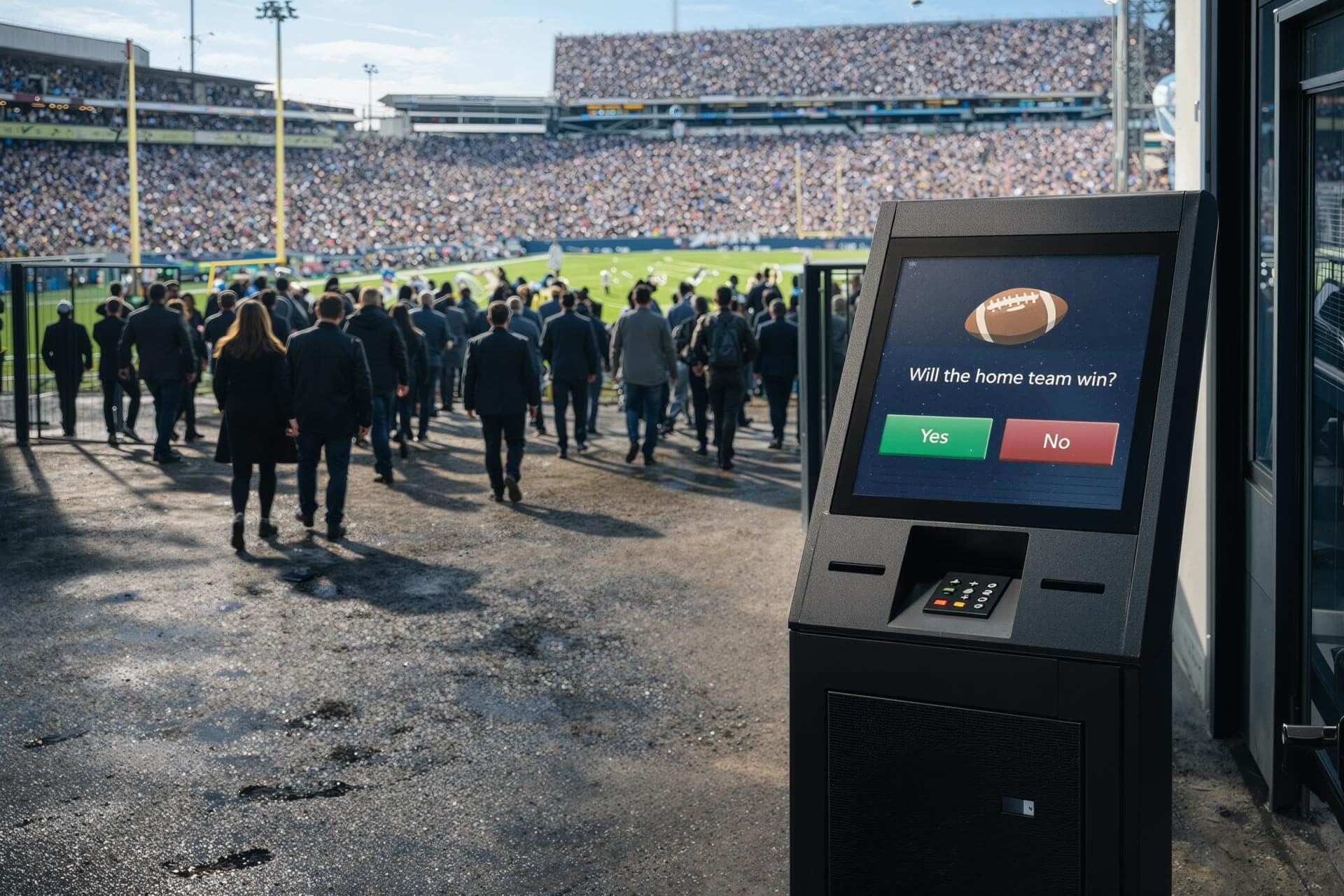
The instability of this situation is amplified by the straightforward, familiar nature of consumer activity on these platforms. Individuals place funds on uncertain events and receive payouts if their predictions are accurate. The core of the dispute, however, is more abstract, residing at the legal classification of the contract itself. The paradox lies in the fact that the identical product can be framed as a derivative by federal regulators and as gambling by state authorities.
This has ignited a contest for authority: will states retain control over activities that strongly resemble gambling, or will this oversight be absorbed into the federal financial regulatory framework? The legal battle has transcended individual platforms like Kalshi or specific contract types, becoming a broader struggle over who governs event-based wagering when it is packaged as a federally supervised market product. This reframes the debate from a branding exercise to a profound legal conflict over regulatory dominion. Once sports emerged as the dominant use case for prediction platforms, the issue became whether a national sports-betting business could operate under commodities law, thereby bypassing the intricate state licensing systems designed for traditional sportsbooks. States such as Utah, Arizona, and Nevada are aggressively pushing back, seeking to prevent gambling-like activities from migrating into a federal regime over which they have no control.
Product Design: The Unseen Arbiter of Legitimacy
While legal battles will undoubtedly shape the future of prediction markets, the impact of product design is often underestimated. A significant factor contributing to regulatory friction is the tendency for prediction markets to relax criteria for what constitutes a "good" event contract. The prevailing hype can incentivize the listing of rapidly unfolding and popular events, as these are potent drivers of trading volume. However, without precise definitions and irrefutable settlement mechanisms, these products can easily devolve into mere entertainment wagering.
This drift towards resembling sportsbooks occurs even before regulators intervene. It commences when spectacle and volume overshadow precision, and when contracts are conceived with an emphasis on attention-grabbing potential, leaving settlement heavily reliant on interpretation. Binary contracts, such as a simple "yes" or "no" outcome, appear straightforward until users begin to contest their settlement. The efficacy of such a contract is intrinsically linked to the clarity of its definition. When the terms dictating its outcome become elastic, the market’s reliance shifts to subjective judgment calls, protracted arguments, and ultimately, litigation.
Ross Weingarten, a partner and co-chair of the Sports Integrity Group at Steptoe, highlights a key functional difference from the consumer perspective: users on prediction markets trade "yes" or "no" positions against each other, rather than against a central house. However, when the defining question becomes ambiguous, or its answer unclear, a binary question rapidly loses its simplicity.
Consider the example of a bet on whether Cardi B would perform at the Super Bowl. If she appeared on stage but without a microphone, did she perform? The answer likely depends on which side of the bet an individual took. Such ambiguously settled bets on prediction markets frequently lead to legal disputes. This underscores why the defensibility of sports contracts varies so widely.
Contracts with simple, difficult-to-manipulate outcomes are more robust. This is why contracts predicting game winners are so prevalent. Conversely, in-game prop bets, claims about specific player performances, outcomes contingent on officiating decisions, or anything susceptible to insider knowledge or integrity distortions, tread on precarious ground. It is in these areas that the industry’s credibility will either be forged or fractured. A platform that presents itself as a neutral exchange, complete with visible order books, transparent pricing, independent settlement sources, and robust abuse detection systems, possesses a stronger claim to federal market status. In contrast, a platform that closely resembles a bookmaker faces a significantly weaker argument. The legal question will find resolution in the courts, but the question of legitimacy will be determined by the inherent architecture of the product itself.
The States’ Gambit and Congress’s Verdict
States have framed this conflict as a matter of consumer protection and public policy, and there is indeed substance to this assertion. Licensed sportsbooks operate within a framework meticulously designed around age verification, responsible gambling funding, integrity monitoring, tax collection, and jurisdiction-specific rules. Prediction markets, by offering an alternative route through a federal channel, threaten to bypass substantial portions of this established system.
Goldstein is unequivocal about the states’ motivations, identifying money and competition as primary drivers. "Event contracts on sporting events account for the vast majority of transactions on prediction platforms like Kalshi and Polymarket, with some data estimating that it could be as much as 90% of the event contracts," she explained. "These contracts are directly competing with licensed sportsbooks. Traditional sports betting generates significant tax revenue for the states because the states receive taxes on the gross gaming revenue. The American Association of Gaming has estimated that, since the beginning of 2025, sports betting platforms have lost over $600 million to prediction markets."

Beyond financial considerations, states are also adamant about maintaining stringent safeguards for all gambling-related platforms. Goldstein points out that prediction markets circumvent many of these consumer protection measures, including age verification protocols, oversight into game integrity, and mandatory contributions to gambling addiction funds. The American Gaming Association has vociferously echoed these concerns, accusing sports-related prediction markets of circumventing the state-based system upon which legal sports betting was meticulously constructed. Even professional sports leagues are adapting; MLB’s partnership with Polymarket and its memorandum of understanding with the CFTC on integrity cooperation signify an acknowledgment that these markets have become too significant to ignore.
The recent escalations in Arizona and Nevada underscore the gravity of the situation. Arizona’s criminal charges have moved the dispute beyond the typical cease-and-desist letters into the realm of prosecution. Nevada’s restraining order demonstrates that at least one court, at present, is willing to classify these products as unlicensed sports pools under state law. Both actions represent concerted efforts to force the industry back under state control before federal market law becomes an entrenched workaround.
However, Weingarten notes that judicial opinions on whether sports event contracts constitute unlicensed sports betting subject to state law are not uniform. "Some courts have agreed; others have not," he told CryptoSlate. "Courts in New Jersey, California, and Tennessee have found that the contracts qualify as ‘swaps’ under the Commodity Exchange Act. But courts in Maryland, Nevada, Massachusetts, and Ohio have emphasized the historic role of states in regulating gambling. As a result, how and by whom prediction markets are regulated is very much in flux."
This divergence of legal interpretation suggests that the ultimate resolution is unlikely to be a simple blessing or an outright ban. The CFTC has consistently asserted its exclusive jurisdiction over prediction markets like Kalshi and Polymarket, while states continue to claim their oversight authority.
The most significant development, however, is the emerging legislative consensus that transcends state-level disputes. The bipartisan bill announced in late March proposes carving out sports and casino-style contracts from federally regulated prediction markets altogether. This represents a far more perilous proposition for the industry, as it directly challenges one of its core assumptions: that if prediction markets prevail in the federal versus state jurisdictional fight, sports contracts will inevitably survive.
This legislative initiative fundamentally alters the landscape. The industry will no longer grapple solely with whether courts will classify sports contracts as gambling under state laws, but rather with whether Congress will decide they should be permitted on regulated prediction markets at all. The endgame has shifted from a jurisdictional contest to a battle over fundamental categories. States are initiating lawsuits, the CFTC is drafting its own regulations, and lawmakers are now contemplating the outright prohibition of certain event contracts.
Consequently, the most plausible outcome appears to be a hybrid regulatory regime. This would likely involve more stringent federal rules, greater restrictions on contract categories, enhanced surveillance demands, increased pressure for contract clarity, and more rigorous expectations regarding product marketing. Platforms may retain their self-designation as exchanges, but they will be compelled to demonstrate this through their design, settlement processes, surveillance capabilities, and the transparency with which they present their contracts.
This is not a fleeting issue within a niche market that will dissipate with the next economic cycle. Prediction markets, for better or worse, have established a significant presence. The industry is at the precipice of a foundational debate concerning the boundary between finance and gambling, a process that is likely to unfold over an extended period. Prediction markets found their mass audience by aligning more closely with sports betting. Now, they must confront the consequence of that success: can they retain that audience while simultaneously convincing courts, regulators, and the public that they remain something meaningfully distinct from traditional forms of wagering? The answer to this question will define their future.