admin
admin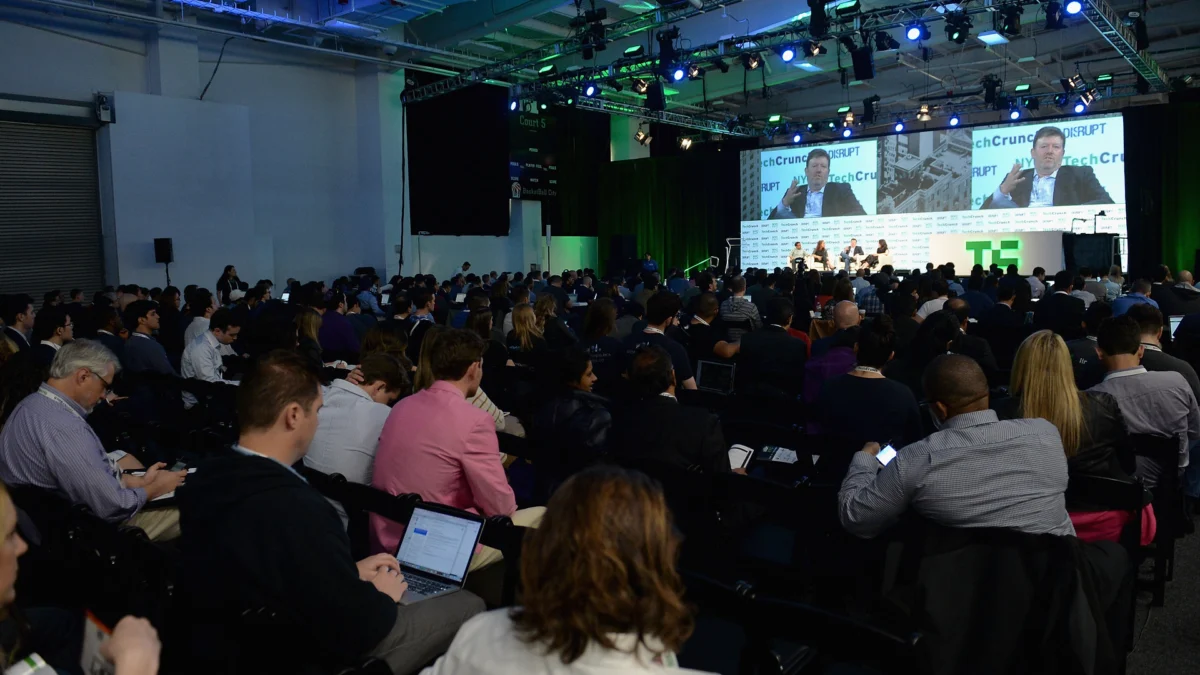
The annual TechCrunch Disrupt conference commenced its 2025 edition at the Moscone West convention center in San Francisco, drawing an estimated 10,000 founders, investors, and technologists for a three-day summit dedicated to the future of the global startup ecosystem. As the premier event for early-stage companies, Disrupt 2025 arrives at a pivotal moment for the technology sector, characterized by a massive shift toward generative artificial intelligence, a resurgence in aerospace investment, and a complex landscape for initial public offerings. The opening day set a high-octane tone, transforming the heart of the South of Market (SoMa) district into a concentrated hub of deal-making and technological demonstration.
The Evolution of the Startup Battlefield and the Quest for the Disrupt Cup
At the core of the conference is the Startup Battlefield 200, often referred to as the "World Series of pitch competitions." This year, the competition remains the focal point of the Disrupt Stage, where a curated group of the world’s most promising early-stage startups compete for the $100,000 equity-free grand prize and the prestigious Disrupt Cup. The competition has historically served as a launchpad for companies that have gone on to redefine their industries, including household names such as Dropbox, Mint, and Fitbit.
Day 1 featured two intensive sessions of the Startup Battlefield. The judging panels comprised a "who’s who" of the venture capital world, including Allison Baum Gates of SemperVirens VC, Cathy Friedman of GV, and Charles Hudson of Precursor Ventures. The startups pitching in the initial rounds represented a diverse array of sectors, with a notable emphasis on sustainability, deep tech, and specialized AI applications. The rigor of the vetting process—which involves TechCrunch’s editorial team reviewing thousands of applications—underscores the event’s reputation for surfacing high-quality investment opportunities before they reach the mainstream.
Strategic Keynotes: Waymo, Sequoia, and the Moonshot Philosophy
Beyond the pitch competitions, the Disrupt Stage hosted several high-profile speakers who provided a macro-level view of the industry. Tekedra Mawakana, co-CEO of Waymo, delivered a "Self-Driving Reality Check," addressing the challenges and milestones of autonomous vehicle deployment in urban environments. As Waymo continues to expand its commercial footprint in cities like San Francisco and Los Angeles, Mawakana’s insights provided a benchmark for the progress of Level 4 autonomy.
Roelof Botha, Managing Partner at Sequoia Capital, offered a perspective on the venture capital landscape titled "What Sequoia Sees Coming Next." Botha’s presence is particularly significant given Sequoia’s role in shaping the tech industry over the last five decades. His discussion touched upon the necessary pivot for startups in an era of higher interest rates, emphasizing the transition from "growth at all costs" to "capital-efficient innovation."
Astro Teller, the "Captain of Moonshots" at Alphabet’s X (formerly Google X), discussed the intersection of AI and the future of Alphabet. Teller’s session, "Moonshots, AI, and the Future of Alphabet," explored how the company’s most ambitious projects are being accelerated by advancements in machine learning, while also maintaining the disciplined focus required to bring experimental technology to the commercial market.
The Commercialization of Space: A New Frontier for Private Investment
One of the most significant expansions at Disrupt 2025 is the dedicated Space Stage. This track reflects the growing maturity of the private space sector, which has moved beyond satellite launches into complex manufacturing and logistics. A centerpiece of this track was the discussion featuring Baiju Bhatt, the co-founder of Robinhood, who has pivoted toward the aerospace industry with his new venture, Aetherflux.
The "Made in Space" session featuring William Bruey of Varda Space Industries highlighted the emerging field of orbital manufacturing. Varda’s focus on using the microgravity environment of space to produce high-value materials, such as pharmaceuticals and semiconductors, represents a shift in how entrepreneurs view the utility of Low Earth Orbit (LEO). Panels featuring representatives from the Jet Propulsion Laboratory (JPL) and The Aerospace Corporation further bridged the gap between government-led exploration and private-sector commercialization.
The financial underpinnings of this sector were also scrutinized in the "Investing at the Edge of Space" panel. Investors from NFX, Stellar Ventures, and Point72 Ventures discussed the unique risk profiles of aerospace startups, noting that while the capital requirements remain high, the potential for long-term strategic dominance in the space economy is attracting a more diverse group of institutional backers.

Navigating the Exit: The Going Public Stage
As the backlog of "unicorns"—private companies valued at over $1 billion—continues to grow, the "Going Public" stage addressed the critical question of liquidity. David George of Andreessen Horowitz led a session on the optimal timing for a startup to stay private, a topic of intense debate as founders weigh the benefits of private capital against the transparency and liquidity of public markets.
The track also featured practical case studies, such as Don Burnette of Kodiak AI discussing the realities of the exit process, and a joint session with Eric Yuan, CEO of Zoom, and Santi Subotovsky of Emergence Capital. Yuan’s insights into post-IPO life and the necessity of maintaining a "day one" culture even after breakout success provided a roadmap for the many late-stage founders in attendance.
The AI Disruptors 60 and Tactical Growth at the Builders Stage
The technical and operational "how-to" of startup life was concentrated at the Builders Stage. A major highlight was the unveiling of the "AI Disruptors 60," a list of the companies most likely to influence the trajectory of artificial intelligence in the coming year. This list serves as a barometer for where the industry is moving, looking past the hype of general-purpose models to the specific infrastructure and vertical tools that will drive enterprise adoption.
Sessions at this stage also tackled the "unfiltered reality" of human capital and go-to-market (GTM) strategies. For instance, the panel "How Much Salary and Equity Should You Really Offer Early Employees?" featured legal and venture experts discussing the competitive talent market of 2025. Another session, featuring representatives from OpenAI and Google Cloud, focused on building GTM engines that can scale in an environment where AI is fundamentally changing how software is sold and implemented.
Networking and Ecosystem Integration in San Francisco
TechCrunch Disrupt 2025 is not confined to the stages. The Expo Hall features over 300 exhibiting startups, providing a hands-on look at the technologies being discussed in the sessions. From robotics to fintech, the floor serves as a physical marketplace for ideas. Networking is facilitated by the "Braindate" lounge and the "Deal Flow Cafe," the latter being an exclusive space for founders and investors to conduct private negotiations.
The impact of the conference extends throughout San Francisco via dozens of side events. These parties, meetups, and satellite panels—hosted by firms such as Silicon Valley Bank, JetBrains, and SOSV—create a "Disrupt Week" atmosphere that permeates the city. These events often serve as the informal setting where the most significant partnerships are forged, reflecting the enduring importance of physical proximity in the technology industry.
Fact-Based Analysis: The Implications of Disrupt 2025
The sheer scale and thematic breadth of Disrupt 2025 signal a broader recovery in the technology sector. After several years of market correction and "belt-tightening," the focus on Day 1 was clearly on the next cycle of growth. The heavy emphasis on AI and Space indicates where the most aggressive capital is being deployed.
However, the "Going Public" and "Builders" tracks suggest a more mature approach to company building than seen in previous boom cycles. There is a palpable focus on "sovereign" technologies—space infrastructure, national security AI, and resilient supply chains—reflecting the geopolitical realities of 2025. The inclusion of international pavilions from Japan, Korea, and Oman also highlights the increasingly global nature of the startup economy, as San Francisco remains the primary gateway for international founders seeking to enter the U.S. market.
As Day 1 concludes, the momentum from Moscone West suggests that the "tech winter" of recent years is being replaced by a period of disciplined but ambitious expansion. The next two days will determine which of the Startup Battlefield 200 will emerge as the next major player in the industry, but for now, the energy in San Francisco confirms that the city remains the undisputed capital of global innovation.