admin
admin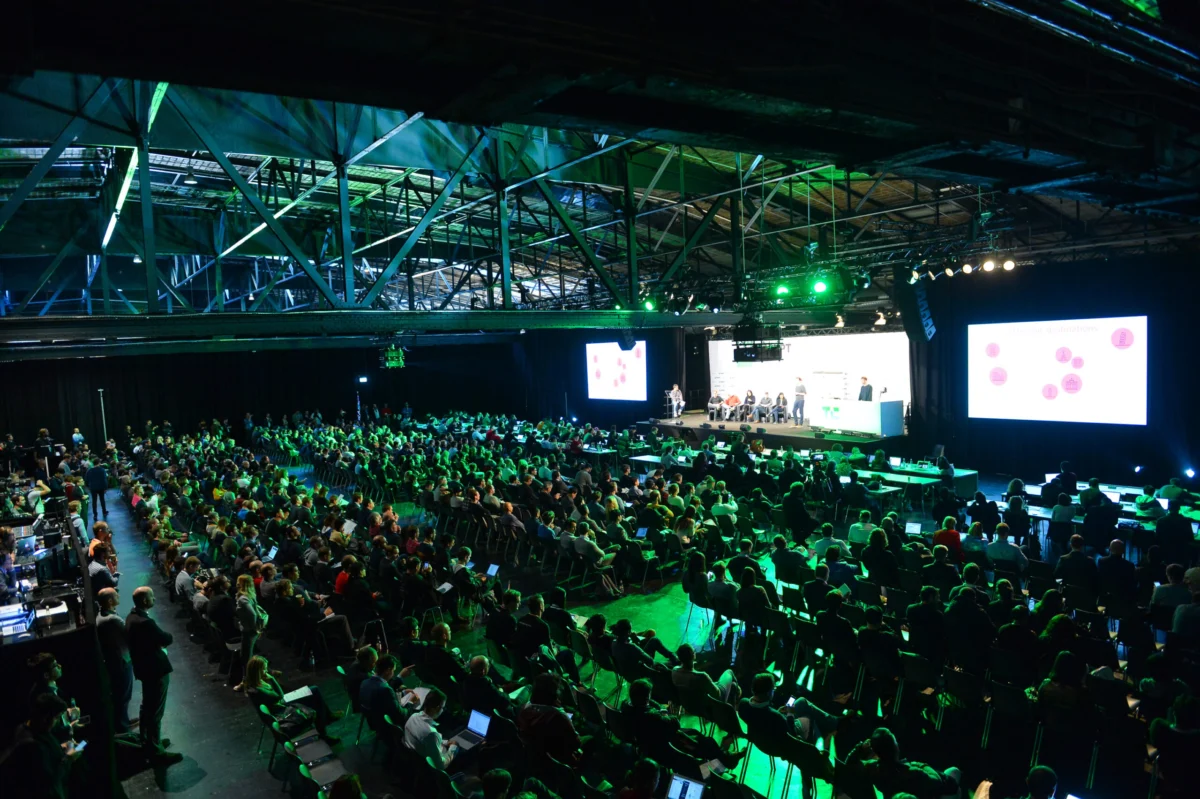
The second day of TechCrunch Disrupt 2025 commenced at San Francisco’s Moscone West, signaling a pivotal midpoint for one of the global technology industry’s most influential gatherings. As thousands of founders, investors, and engineers converged on the venue, the atmosphere underscored a sector in transition, moving beyond the initial hype of generative artificial intelligence toward a more disciplined focus on "Physical AI," agentic workflows, and sustainable venture capital models. For those seeking to join the remaining sessions, event organizers have announced a strategic price adjustment, offering walk-up tickets at a 50% discount to maintain the event’s momentum through its final stages.
The Evolution of TechCrunch Disrupt: A Historical Context
To understand the weight of the discussions occurring in 2025, one must look at the legacy of TechCrunch Disrupt. Since its inception, the conference has served as the premiere "launchpad" for the modern tech era. Historically, companies such as Dropbox, Uber, and Trello utilized the Disrupt stage to introduce their platforms to the world. In 2025, the stakes have shifted from mere "app economy" innovations to deep-tech solutions that address infrastructure, healthcare, and the fundamental mechanics of labor.
The 2025 iteration arrives during a complex economic period. Following the "funding winter" of 2023 and the cautious recovery of 2024, the tech sector is now navigating a high-interest-rate environment that demands clear paths to profitability. This shift is reflected in the programming, which has moved from broad visionary statements to granular "Builder" workshops and "StrictlyVC" sessions aimed at Limited Partners (LPs) and General Partners (GPs).
Morning Keynotes and the Vision of Vinod Khosla
The Disrupt Stage opened with a high-stakes conversation featuring Vinod Khosla, the founder of Khosla Ventures. Known for his early and aggressive bets on OpenAI and fusion energy, Khosla’s session, titled "No Filters," provided a candid look at the future of the technology stack. Khosla argued that the current trajectory of AI will lead to a "near-zero cost" for cognitive labor, a transformation he believes will disrupt every traditional industry from legal services to primary care.
Following Khosla, the focus shifted to the media landscape with Elizabeth Stone, the Chief Technology Officer of Netflix. As the streaming giant navigates a saturated market, Stone detailed the technical hurdles of integrating advertising tiers and the role of machine learning in content discovery. Her presence highlighted a broader theme of the day: the intersection of massive consumer platforms and advanced backend automation.
The Startup Battlefield: The Search for the Next Unicorn
A cornerstone of the event remains the Startup Battlefield. On Day Two, the competition entered Sessions 3 and 4, featuring a rigorous judging panel that included partners from NEA, Accel, and ICONIQ. Unlike the "growth at all costs" era, the 2025 judges focused heavily on unit economics and "moats"—the unique competitive advantages that prevent a startup from being easily replicated by Big Tech incumbents.
The Pitch Showcase Stage complemented these sessions by hosting international pavilions. Groups from Catalonia, Poland, and the SilkRoad regions presented their local champions, illustrating the decentralization of innovation. Data suggests that while Silicon Valley remains the primary hub for venture capital, more than 40% of high-growth startups are now originating outside of traditional US tech corridors, a trend clearly visible in the diversity of the 300+ startups occupying the Expo Hall.
The AI Stage: From Digital Intelligence to Physical Reality
Perhaps the most crowded area of Moscone West was the AI Stage, which hosted a series of panels on the "Post-Training Revolution." Industry experts, including Raquel Urtasun of Waabi and Jeff Cardenas of Apptronik, discussed the emergence of "Physical AI." This discipline involves applying large language model (LLM) logic to robotics, allowing machines to navigate and interact with the physical world with human-like intuition.
Technical sessions also delved into the "Agentic AI" trend. Speakers from Microsoft and Amazon Business discussed how startups are moving away from simple chatbots toward "agents" capable of executing multi-step business processes autonomously. This shift is expected to impact the enterprise software market significantly, with some analysts predicting that agentic workflows could automate up to 30% of administrative tasks in the legal and financial sectors by 2027.
Builders Stage: Navigating the 2026 Venture Landscape
On the Builders Stage, the conversation was pragmatic. Panels featuring General Partners from Sequoia Capital and Greylock addressed the "Inception Stage" of pitching. The consensus among the panelists was that the "Series A Crunch" remains a reality; while seed funding is plentiful for AI-adjacent companies, the bar for follow-on funding has reached a ten-year high.
A notable session titled "Do Startups Still Need Silicon Valley?" sparked debate among Anh-Tho Chuong (CEO of Lago) and David Hall (Managing Partner at Revolution’s Rise of the Rest). While the "Rise of the Rest" movement has successfully diverted capital to midwestern and international hubs, the panelists acknowledged that the "density of talent" in the Bay Area remains an unmatched catalyst for rapid scaling, especially in the capital-intensive field of AI hardware.
Networking and the "Women of Disrupt" Initiative
Beyond the stages, the event facilitated high-value networking through the "Braindate" platform and the "Deal Flow Cafe." The latter serves as a dedicated space for founders and investors to discuss term sheets away from the noise of the Expo Hall.
The morning began with the "Women of Disrupt" Breakfast Reception. This initiative is particularly relevant given recent industry data showing that while venture funding for women-led teams has seen incremental growth, it still represents a fraction of the total capital deployed globally. The reception provided a forum for female founders to share strategies for navigating a venture landscape that remains statistically skewed.
Chronology of Day Two Key Events
- 08:00 AM: Expo Hall Opens and Women of Disrupt Breakfast begins.
- 09:30 AM: Startup Battlefield 200 Consumer Pitches commence on the Pitch Showcase Stage.
- 10:00 AM: Vinod Khosla delivers the "No Filters" keynote on the Disrupt Stage.
- 11:30 AM: International Pavilion Pitch (Catalonia) highlights European innovation.
- 01:00 PM: AI Stage hosts discussions on "Synthetic Voices and Real Impact" with ElevenLabs.
- 02:30 PM: "Where VCs Are Placing Their Bets in 2026" panel on the Builders Stage.
- 04:00 PM: Final Startup Battlefield session of the day concludes.
- 05:00 PM: Expo Hall closes; transition to city-wide side events and after-parties.
Broader Impact and Industry Implications
The discussions at TechCrunch Disrupt 2025 suggest that the technology sector is entering a "Deployment Age." The foundational models of AI are largely set, and the current industry mission is to integrate these models into the "boring" but essential parts of the economy: healthcare workflows, energy independence, and supply chain logistics.
Furthermore, the "StrictlyVC" sessions highlighted a growing concern among Limited Partners regarding liquidity. With the IPO market remaining relatively quiet compared to the 2021 peak, venture firms are under pressure to show returns. This has led to an increase in secondary market activity and a more cautious approach to "moonshot" investments that lack a five-year path to revenue.
Conclusion: The Final Stretch
As Day Two concludes, the focus shifts to the final day of the conference, which will culminate in the crowning of the Startup Battlefield winner. The energy at Moscone West indicates that despite economic headwinds, the appetite for disruptive innovation remains robust. The 50% discount for remaining tickets serves as an invitation for the local San Francisco tech community to engage with these critical dialogues before the event closes.
For those unable to attend in person, the conversation continues across social media under the #TechCrunchDisrupt2025 hashtag, with real-time coverage provided by TechCrunch across LinkedIn, X, and YouTube. The insights gathered this week in San Francisco are expected to set the tone for the 2026 investment cycle, defining which technologies will transition from the laboratory to the global marketplace.