
 admin
admin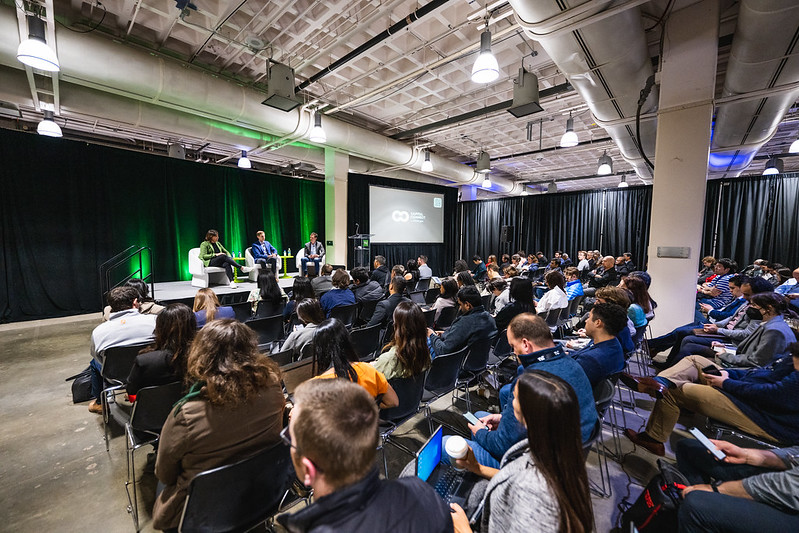
The flagship event, scheduled for June 23, 2026, represents a strategic pivot in the technology conference landscape, moving away from broad industry overviews toward a specialized, execution-oriented curriculum designed for 1,100 selected founders and investors. By centering the summit in Boston, a global hub for biotechnology, robotics, and artificial intelligence, TechCrunch aims to facilitate high-stakes networking and practical knowledge transfer for companies transitioning from early-stage development to institutional scaling. The summit arrives at a critical juncture for the venture capital ecosystem, where the focus has shifted from "growth at all costs" to sustainable unit economics and disciplined operational execution.
Strategic Focus on Operational Scaling and Execution
The TechCrunch Founder Summit 2026 is built upon the premise that the most difficult phase of a startup’s lifecycle is not the initial ideation, but the transition to a scalable enterprise. Unlike traditional tech festivals, this summit prioritizes "founder-only" environments where honest discourse regarding failure, pivot strategies, and internal management can occur without the pressures of public relations. The programming is divided into actionable tracks that address the specific mechanics of growth, including organizational design, late-stage fundraising, and product-market fit refinement.
Industry data suggests that approximately 70% of startups struggle specifically during the scaling phase, often due to premature expansion or a lack of seasoned leadership. By bringing together 1,100 participants who are actively navigating these hurdles, the summit functions as a high-density laboratory for peer-to-peer learning. The objective is to move beyond theoretical advice and provide founders with a "blueprint for growth" derived from those who have successfully navigated Series B through IPO.

The Boston Tech Ecosystem as a Strategic Backdrop
The selection of Boston as the host city for the 2026 summit is a deliberate nod to the region’s enduring influence on "Deep Tech" and institutional innovation. While Silicon Valley remains the epicenter of consumer software, Boston has solidified its position as the primary corridor for life sciences, hardware engineering, and academic-led spinouts. The proximity to institutions such as MIT and Harvard provides a unique demographic of attendees—founders who are often dealing with longer R&D cycles and more complex regulatory environments.
Market analysis indicates that Boston-based startups raised over $20 billion in venture capital annually in recent cycles, with a significant portion allocated to growth-stage companies. The Founder Summit intends to tap into this local expertise, integrating the region’s penchant for rigorous engineering with TechCrunch’s global reach. This synergy is expected to attract a diverse cohort of investors from firms such as Sequoia Capital, Greylock, and Underscore VC, all of whom have maintained a consistent presence in the New England tech sector.
Chronology of the 2026 Event Cycle
The rollout for the Founder Summit 2026 follows a structured timeline designed to maximize engagement and ensure a high caliber of attendance. The announcement on January 28, 2026, marked the opening of the "Super Early Bird" registration phase, offering the most significant discounts to the earliest applicants. This phase is intended to reward founders who are proactive in their strategic planning for the fiscal year.
Following the initial ticket release, the second quarter of 2026 will see the unveiling of the full speaker roster and the specific agenda for the breakout sessions. By May 2026, the summit’s "Investor Matching" platform is expected to go live, allowing founders to pre-schedule meetings with venture capitalists whose portfolios and investment mandates align with their specific industries. The cycle culminates on June 23 with the day-long intensive summit, followed by a series of satellite networking events hosted by partner venture firms across the city.

Curriculum and Expert-Led Insight Sessions
The 2026 agenda is heavily informed by the successes of previous iterations, focusing on topics that have historically provided the highest ROI for attendees. Past sessions have featured luminaries such as Jon McNeill, the former President of Tesla and current investor, who has famously advocated for the "real product" over "mock-ups" as the primary driver of innovation. McNeill’s philosophy—that scaling requires a visceral understanding of the physical or digital product’s performance in the wild—remains a cornerstone of the summit’s educational pillars.
Additional sessions are expected to cover the intricacies of mid-to-late stage fundraising. Cathy Gao, a partner at Sapphire Ventures, has previously provided critical frameworks for founders preparing for a Series C round. Her insights focus on the "professionalization" of the startup, including the implementation of robust financial controls and the recruitment of an executive suite capable of managing a thousand-person organization. Similarly, Jahanvi Sardana of Index Ventures has challenged conventional wisdom regarding Total Addressable Market (TAM), urging founders to focus instead on market penetration and the "truth" of customer retention metrics.
The 2026 curriculum will expand on these themes, introducing new modules on:
- AI Integration in Scaling: How growth-stage companies are utilizing generative and predictive AI to automate operational bottlenecks.
- The Geography of Growth: Strategies for international expansion and managing distributed workforces in a post-geographic economy.
- Founder Mental Health and Resilience: Addressing the psychological toll of scaling and building sustainable leadership habits.
Data-Driven Networking and Investor Alignment
One of the primary value propositions of the Founder Summit is the curated nature of its networking opportunities. In an era where "pitch fatigue" is common among investors, the summit utilizes a data-driven approach to ensure that connections are meaningful. Investors from high-profile firms—including NFX, Glasswing Ventures, and Precursor Ventures—attend with the specific intent of identifying companies that have already demonstrated initial traction and are ready for capital injection to accelerate their market share.

For founders, this alignment is crucial. The summit provides a rare opportunity to engage with partners who understand the specific nuances of different sectors, from SaaS and FinTech to CleanTech and Robotics. The inclusion of roundtables allows for a "reverse-pitch" environment, where investors explain their value-add beyond the check, and founders can vet potential board members in a collaborative setting.
Broader Impact on the 2026 Startup Economy
The TechCrunch Founder Summit arrives at a time when the global startup economy is undergoing a significant "flight to quality." After the volatility of the early 2020s, the 2026 market is characterized by a high bar for institutional funding. Events that facilitate the transfer of "scaling intelligence" are therefore vital for maintaining the health of the innovation pipeline. By providing founders with the tools to avoid common pitfalls—such as over-hiring or mismanaging burn rates—the summit contributes to the overall stability of the venture ecosystem.
Analysis of past participants suggests that companies attending such focused summits are 25% more likely to secure their next round of funding within twelve months compared to those that do not engage in high-level peer networking. This "summit effect" is attributed to the combination of refined pitching skills, improved operational strategies, and the direct line of sight to active investors.
Official Responses and Participation Incentives
Organizers have emphasized that the Founder Summit is designed to be accessible to a wide range of growth-stage leaders. To encourage team-based learning, TechCrunch has introduced group discounts of up to 30% for teams of four or more. This reflects the reality that scaling is a collective effort involving COOs, CTOs, and Heads of Growth, not just the CEO.

Sponsorship interest has also seen a marked increase, with corporate partners looking to provide the infrastructure and services—such as cloud computing, legal counsel, and HR tech—that scaling companies require. These sponsors are integrated into the summit not as mere advertisers, but as resource providers who can offer immediate solutions to the logistical challenges discussed in the breakout sessions.
As the tech industry continues to evolve, the TechCrunch Founder Summit 2026 stands as a testament to the enduring importance of human connection and expert mentorship. In the high-velocity world of startups, the ability to learn from the successes and failures of one’s peers remains the most potent competitive advantage. The June 23 gathering in Boston is poised to be the definitive event for the next generation of market leaders who are ready to move beyond the garage and onto the global stage.