
 admin
admin
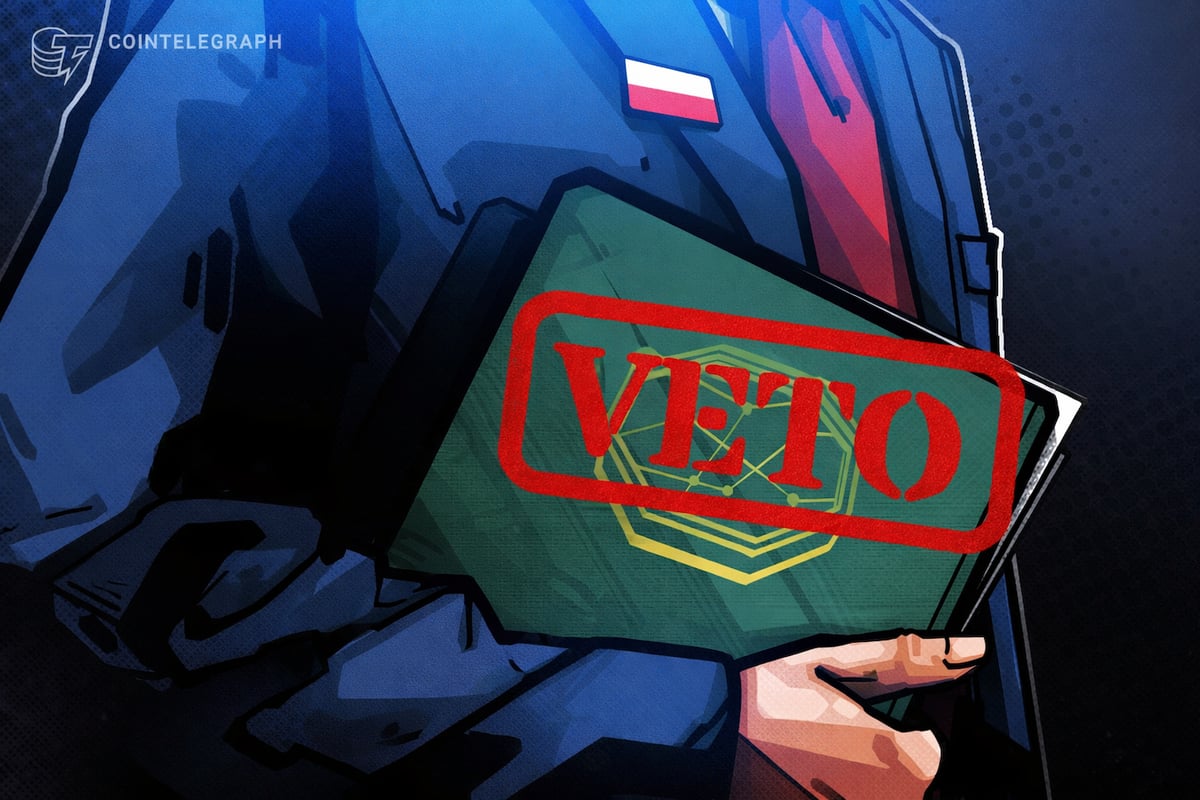
President Karol Nawrocki of Poland has once again exercised his veto power, rejecting a second legislative attempt to integrate the European Union’s landmark Markets in Crypto-Assets Regulation (MiCA) framework into national law. This latest rejection, concerning Bill 2064 last week, follows a similar veto in December against Bill 1424, which the president deemed "practically identical." The repeated refusal to sign crucial crypto legislation has plunged Poland’s digital asset sector into a deepening state of uncertainty, creating a precarious environment for local platforms as the pivotal MiCA transition deadline of July 1, 2026, rapidly approaches. The President’s office confirmed the veto on Thursday, underscoring a significant political and regulatory impasse within the country.
The President’s Stance and Rationale
President Nawrocki’s consistent stance against the proposed MiCA implementation bills signals a distinct divergence from the parliamentary majority and highlights a broader debate within Polish governance regarding the regulation of digital assets. In explaining his decision, President Nawrocki articulated a firm belief that the rejected legislation amounted to excessive "overregulation" that could stifle innovation and hinder the growth of Poland’s burgeoning technology sector. "I will not sign a wrong law just because it was passed again by the parliamentary majority. A wrong law that passed a hundred times still remains a wrong law," Nawrocki stated, emphasizing his commitment to what he perceives as a more industry-friendly regulatory environment. He further underscored his vision for Poland, adding, "Poland should attract innovation, not push it away." This rhetoric suggests a desire to foster a competitive landscape for digital asset businesses, rather than impose what he views as overly burdensome restrictions. His actions have been interpreted by many industry advocates as a protective measure against legislation they believe could impede technological progress and financial innovation within the country.
Understanding the European Union’s MiCA Framework
The Markets in Crypto-Assets Regulation (MiCA) represents a groundbreaking legislative effort by the European Union to establish a comprehensive and harmonized regulatory framework for crypto-assets across all 27 member states. Adopted by the European Parliament in April 2023 and officially entering into force in June 2023, MiCA aims to provide legal certainty, support innovation, protect consumers, and ensure market integrity within the rapidly evolving digital asset space.
The regulation sets out rules for the issuance and trading of crypto-assets, including requirements for authorization, operational standards, governance, and consumer protection for crypto-asset service providers (CASPs). It differentiates between various types of crypto-assets, such as asset-referenced tokens (ARTs) and e-money tokens (EMTs), applying specific rules to each. A key component of MiCA is the requirement for CASPs to obtain authorization from a designated national competent authority within their home member state, allowing them to then "passport" their services across the entire EU.
The implementation of MiCA is structured in phases: rules concerning asset-referenced tokens and e-money tokens began applying from June 30, 2024, while the broader framework for all other crypto-assets and CASPs will apply from December 30, 2024. However, a crucial transition period allows existing crypto-asset service providers to continue operating under national law until July 1, 2026, or until they obtain a MiCA authorization, whichever comes first. This transitional window is designed to give member states and industry players sufficient time to adapt to the new regulatory landscape. Poland’s failure to enact domestic legislation designating a competent authority means it cannot even begin the process of authorizing its local crypto firms under MiCA, putting them at a severe disadvantage.
A Chronology of Legislative Setbacks in Poland
Poland’s journey towards MiCA implementation has been fraught with delays and political contention. The initial effort, Bill 1424, was put forth by the parliamentary majority as the primary vehicle to transpose MiCA into Polish law. This bill underwent legislative scrutiny and was eventually passed by the Sejm (the lower house of the Polish parliament) before being sent to the President for signature. However, in December of the preceding year, President Nawrocki unexpectedly vetoed Bill 1424, citing concerns about its scope and potential impact on the crypto industry.
Following this initial rejection, the parliamentary majority, keen to meet the looming EU deadlines, swiftly resubmitted a new version of the legislation, Bill 2064. Despite calls from industry stakeholders and even some political factions for a more consultative approach and potential amendments to address the President’s stated concerns, Bill 2064 was largely presented as "practically identical" to its predecessor. This move suggests a political stalemate, where the executive and legislative branches hold differing philosophies on the optimal regulatory approach for digital assets. The re-passage of a similar bill without significant changes ultimately led to the President’s second veto last week, effectively bringing the country back to square one in its legislative efforts to align with EU crypto regulations. This repeated legislative deadlock not only consumes valuable parliamentary time but also intensifies the uncertainty for businesses operating within Poland’s digital asset ecosystem.
The Polish Financial Supervision Authority’s Warning
Amidst this legislative gridlock, the Polish Financial Supervision Authority (KNF), the primary financial regulator in Poland, issued a stark warning. The KNF highlighted a critical oversight: Poland has not yet designated a competent authority responsible for supervising the crypto market under MiCA. This designation is not a mere formality; it is a fundamental prerequisite for any member state to begin the process of authorizing crypto-asset service providers (CASPs) according to the MiCA framework. Without a designated authority, Polish companies cannot apply for the necessary licenses, effectively blocking their path to compliance and future operation within the unified EU market. The KNF’s announcement served as a sobering reminder of the rapidly approaching MiCA transition deadline of July 1, 2026, emphasizing the urgency of the situation and the growing regulatory void.
Industry Reactions and Strategic Adjustments
The repeated vetoes have elicited strong reactions from the Polish crypto industry, which finds itself in an increasingly precarious position. While some industry proponents might initially welcome the President’s pushback against "overregulation," the practical reality of operating without a clear legal framework is creating significant challenges.
Sławek Zawadzki, co-CEO of Kanga Exchange, a prominent Polish crypto platform, expressed a pragmatic, albeit resigned, view. "This does not change our strategy," Zawadzki told Cointelegraph, indicating that the possibility of delayed or absent MiCA implementation in Poland had been factored into their long-term planning. "From the beginning, we considered the possibility that the MiCA-implementing law in Poland might not enter into force in time, and we prepared alternative jurisdictional solutions accordingly," he added. This statement underscores a growing trend among Polish crypto firms to explore options beyond national borders to secure their operational future. Many are now actively investigating or pursuing licenses in other EU member states where MiCA implementation is progressing more smoothly.
Przemysław Kral, CEO of Zonda Crypto, an exchange with deep Polish roots but now registered in Estonia, elaborated on the broader implications. "Although we are a company with Polish roots and the largest player in the crypto industry on the Polish market, we have been operating outside Poland for years," Kral explained. Zonda Crypto, anticipating regulatory complexities, had already adopted a strategy to obtain a MiCA license outside Poland, with plans to passport that license back into the country. Kral voiced significant concern for smaller, less resourced Polish companies, stating, "We are confident that we will remain a key player on the market. However, many small Polish crypto companies will lose the opportunity to operate on the market." This highlights a potential consolidation or even an exodus of smaller, domestically focused entities unable to navigate the regulatory uncertainty or afford the costs of international relocation and licensing.
The Regulatory Vacuum and Its Consequences
The absence of MiCA-implementing legislation in Poland creates a profound regulatory vacuum, leaving local crypto platforms in a highly precarious and uncertain position. This situation not only complicates their ability to operate legally but also fosters a significant regulatory imbalance between Polish companies and their foreign counterparts operating within the EU.
Consider the example of US crypto exchange Coinbase, which recently expanded its operations in Poland, notably after securing a MiCA license in Luxembourg in 2025. This allows Coinbase to leverage the "passporting" mechanism inherent in MiCA, enabling it to offer services across the EU, including Poland, from its authorized base in Luxembourg. In contrast, as Kanga’s Zawadzki pointed out, "Foreign entities that obtain a MiCA license in their home countries will be able to provide services in Poland, while Polish companies currently have no formal path to begin the licensing process domestically." He succinctly summarized the dilemma: "This results in regulatory asymmetry."
This asymmetry creates a clear competitive disadvantage for Polish-based crypto businesses. They are effectively barred from a clear path to compliance under MiCA within their home country, while foreign entities enjoy unfettered access to the Polish market by virtue of their licenses obtained elsewhere in the EU. This not only threatens the survival of local firms but also risks channeling market activity towards foreign platforms, potentially leading to a loss of tax revenue and skilled jobs within Poland. The situation underscores a critical flaw in the current regulatory landscape: a national policy designed to protect local innovation inadvertently creates an environment where only non-Polish entities can thrive legally under the new EU rules.
Broader Economic and Innovation Implications

The ongoing regulatory uncertainty poses significant challenges to Poland’s aspirations as a hub for financial technology and digital innovation. A stable and predictable regulatory environment is crucial for attracting investment, fostering entrepreneurship, and retaining talent in the fast-paced crypto sector. The current stalemate sends mixed signals to both domestic innovators and international investors.
On one hand, the President’s vocal stance against "overregulation" could be seen as an attempt to signal openness to innovation. On the other hand, the practical effect of two vetoes is a complete lack of a regulatory framework, which is far more detrimental than a framework perceived as overly strict. Investors and entrepreneurs typically shy away from markets characterized by high regulatory ambiguity, as it introduces unquantifiable risks and makes long-term business planning exceedingly difficult.
This situation could lead to a "brain drain" of crypto talent and capital from Poland. Companies and individuals seeking to operate within a compliant and predictable environment may opt to relocate to other EU member states that have successfully implemented MiCA. Such an exodus would not only diminish Poland’s position in the global crypto economy but also undermine its broader digital transformation agenda. Furthermore, the lack of a designated competent authority means Poland cannot effectively monitor or intervene in its domestic crypto market, potentially increasing risks for consumers and compromising national financial stability from an oversight perspective.
The Path Forward: New Legislative Endeavors
In response to the latest veto and the escalating regulatory crisis, there is a glimmer of hope from within the Polish economic and academic community. Krzysztof Piech, a respected Polish economist, has publicly announced that he is actively working on a new, more crypto-friendly proposal to implement MiCA in Poland. Over the weekend, Piech indicated on social media that a draft bill is already in existence and is currently undergoing finalization. This initiative represents a bottom-up attempt to bridge the divide between the executive and legislative branches, potentially offering a compromise that addresses both the President’s concerns about overregulation and the industry’s need for clarity and compliance.
The success of Piech’s initiative will depend heavily on its ability to garner cross-party support and secure the President’s approval. It would need to strike a delicate balance: satisfying the requirements of MiCA for harmonization with EU law, while also incorporating elements that the President and industry advocates deem conducive to innovation, rather than stifling. This would likely involve a thorough consultation process with various stakeholders, including the KNF, industry representatives, and legal experts, to ensure a robust and pragmatic framework. The challenge lies in crafting a bill that is both compliant with EU directives and tailored to foster a competitive domestic crypto market without excessive bureaucratic hurdles.
European Context and Precedent
Poland’s current predicament is notable when viewed against the backdrop of MiCA implementation across the wider European Union. Many other member states have made significant progress in transposing MiCA into their national laws and designating competent authorities. Countries like France, Germany, and Luxembourg have been proactive in preparing their regulatory landscapes, aiming to attract crypto businesses and establish themselves as leading jurisdictions for digital assets. For instance, Germany’s BaFin (Federal Financial Supervisory Authority) has already been active in issuing crypto custody licenses under existing national frameworks that will transition into MiCA. Luxembourg, as seen with Coinbase, has also positioned itself as an attractive hub for MiCA licensing.
This disparity in readiness creates a patchwork regulatory environment within the EU during the transition period. While MiCA is designed to harmonize regulations, the differing paces of national implementation mean that companies will initially gravitate towards jurisdictions that offer clear pathways to compliance. Poland’s repeated vetoes place it firmly at the lagging end of this spectrum, potentially leading to a disadvantage in attracting and retaining digital asset innovation compared to its more prepared EU neighbors. The European Commission, while generally respecting national legislative processes, will likely observe Poland’s delays with concern, as sustained non-compliance could undermine the broader objectives of MiCA for a unified European digital market.
Conclusion
The double veto by President Karol Nawrocki has left Poland’s crypto industry in a state of deep regulatory limbo, raising critical questions about the country’s commitment to aligning with EU digital asset standards and its future as an innovation hub. With the MiCA transition deadline fast approaching, the absence of a designated competent authority and a clear legal framework puts Polish companies at a severe competitive disadvantage against their foreign counterparts. While the President’s actions are framed as a stand against overregulation, the practical outcome is regulatory paralysis, pushing local firms to seek licenses abroad or face potential market exit. The emergence of a new, industry-friendly draft bill by economist Krzysztof Piech offers a potential way forward, but its success hinges on political consensus and a swift legislative process. Until then, the shadow of uncertainty looms large over Poland’s crypto landscape, challenging its ambition to be a leader in the digital economy.