admin
adminThe digital realm is awash with applications promising users the ability to mine Bitcoin directly from their mobile devices, a proposition that often blurs the lines between genuine cryptocurrency engagement and misleading schemes. In reality, effective Bitcoin mining necessitates industrial-grade hardware, immense computational power, and large-scale mining farms, rendering simple mobile mining apps on a smartphone largely incapable of performing actual, profitable proof-of-work mining. Many of these applications instead operate as front-ends for cloud mining contracts, gamified reward systems, or simulated dashboards, which can profoundly confuse novice users seeking legitimate entry into the crypto mining space. This comprehensive guide aims to dissect the operational models of various Bitcoin mining applications, illuminate their core features, and provide critical insights into how to discern authentic crypto mining platforms from scams or low-value propositions, ensuring users make informed decisions in a rapidly evolving market.
The Evolution of Bitcoin Mining and the Mobile Mirage
The journey of Bitcoin mining has been one of relentless technological advancement and increasing centralization. In Bitcoin’s nascent years, individuals could mine profitably using standard Central Processing Units (CPUs) on personal computers. As the network grew and difficulty increased, mining transitioned to more powerful Graphics Processing Units (GPUs). However, the true inflection point arrived with the advent of Application-Specific Integrated Circuits (ASICs) – hardware custom-built solely for the purpose of Bitcoin mining. These highly specialized machines offered orders of magnitude greater efficiency and hash power than GPUs, effectively rendering all general-purpose hardware, including personal computers and certainly mobile phones, obsolete for competitive Bitcoin mining.

This technological arms race transformed Bitcoin mining from a hobbyist pursuit into an industrial-scale operation. Modern mining farms are vast facilities housing thousands of ASICs, consuming staggering amounts of electricity, and requiring sophisticated cooling systems. The sheer computational power and energy demands associated with solving complex cryptographic puzzles to validate Bitcoin transactions are simply beyond the capabilities of any mobile device. A smartphone’s processor and battery are not designed for the continuous, intensive computations required for proof-of-work, nor could it generate meaningful hash rates in comparison to an ASIC miner.
The "mobile mining" phenomenon, therefore, largely represents a marketing strategy capitalizing on the widespread interest in cryptocurrency. These apps primarily serve a few functions: some act as remote monitoring tools for actual mining operations or cloud mining contracts purchased elsewhere; others provide token rewards for engagement, often funded by advertising revenue; and unfortunately, a significant portion are outright scams designed to collect user data, push ads, or entice investments into non-existent mining operations. This distinction is crucial for any prospective user.
Distinguishing Reality from Illusion: The Core Challenge
The primary challenge for individuals exploring Bitcoin mining apps lies in differentiating between platforms that offer a tangential connection to the mining ecosystem and those that are fundamentally deceptive. Legitimacy in this context is often a spectrum, rather than a binary state.
On one end are applications that genuinely connect users to actual mining infrastructure, albeit indirectly. These typically fall into categories like:
- Cloud Mining Platforms: Users purchase "hash power" contracts, effectively renting a portion of a larger mining farm’s computational power. The actual mining occurs in professional data centers, and the mobile app serves as an interface for managing contracts, monitoring earnings, and withdrawing payouts. Examples include ECOS, Hashing24, and Bitdeer Mobile. While legitimate, profitability is highly dependent on contract terms, maintenance fees, and Bitcoin’s price volatility.
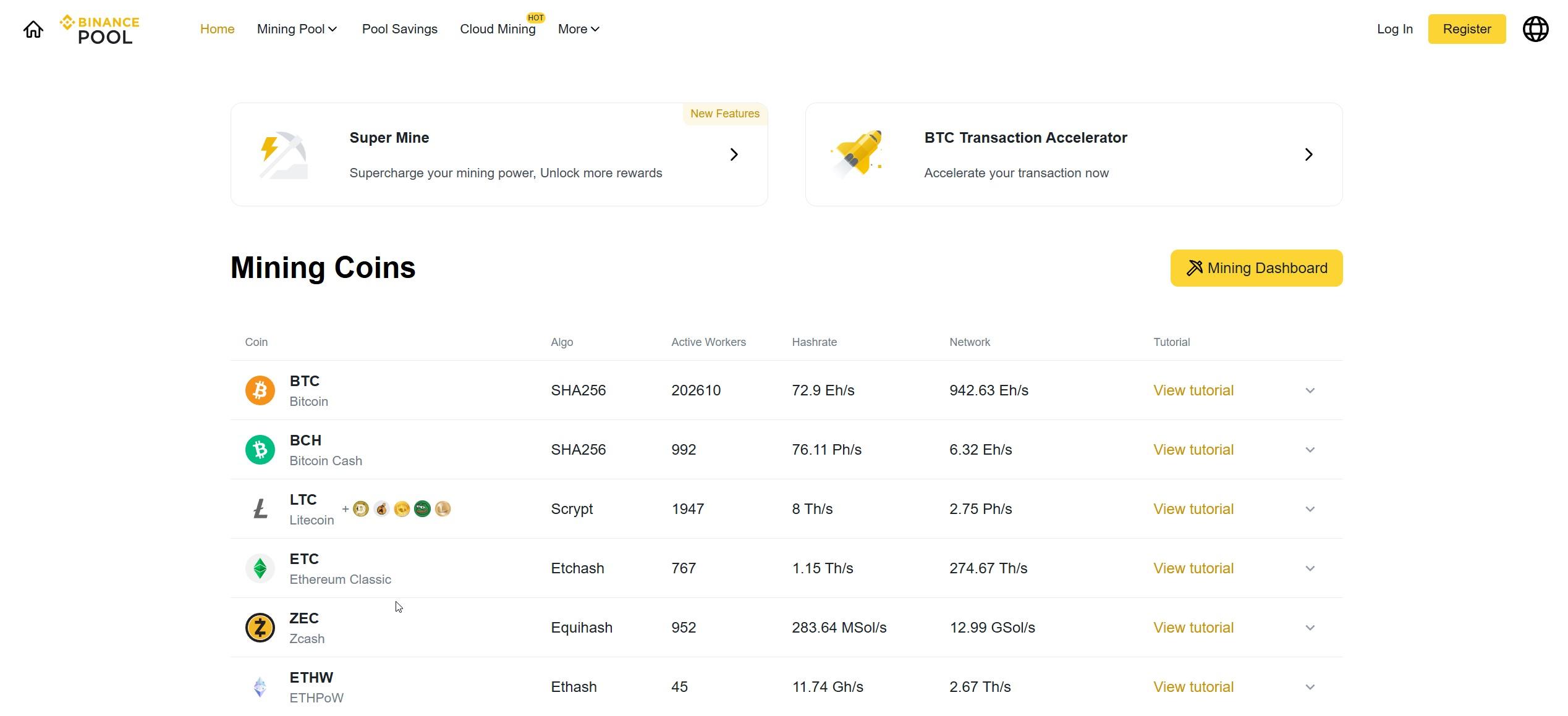
- Mining Pool Management Apps: These allow users who already own and operate their own mining hardware (e.g., ASICs) to connect to a mining pool (like Binance Pool) and monitor their contributions, earnings, and payouts remotely via a mobile app. The app itself does not perform mining but facilitates participation in a collective effort.
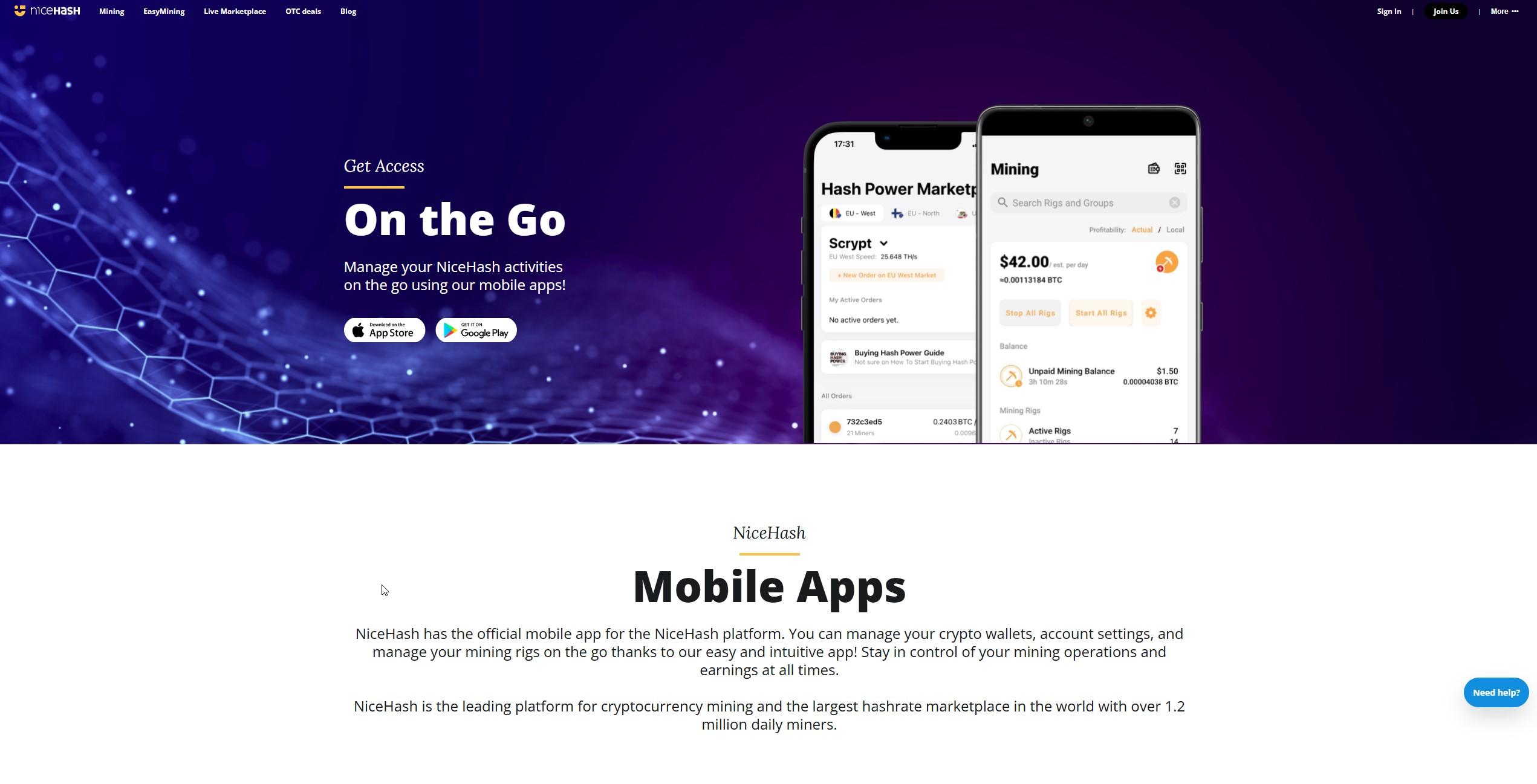
- Hash Power Marketplaces: Platforms like NiceHash allow users to buy or sell computational power. While the app doesn’t mine, it acts as a control panel for transactions involving real hash power.
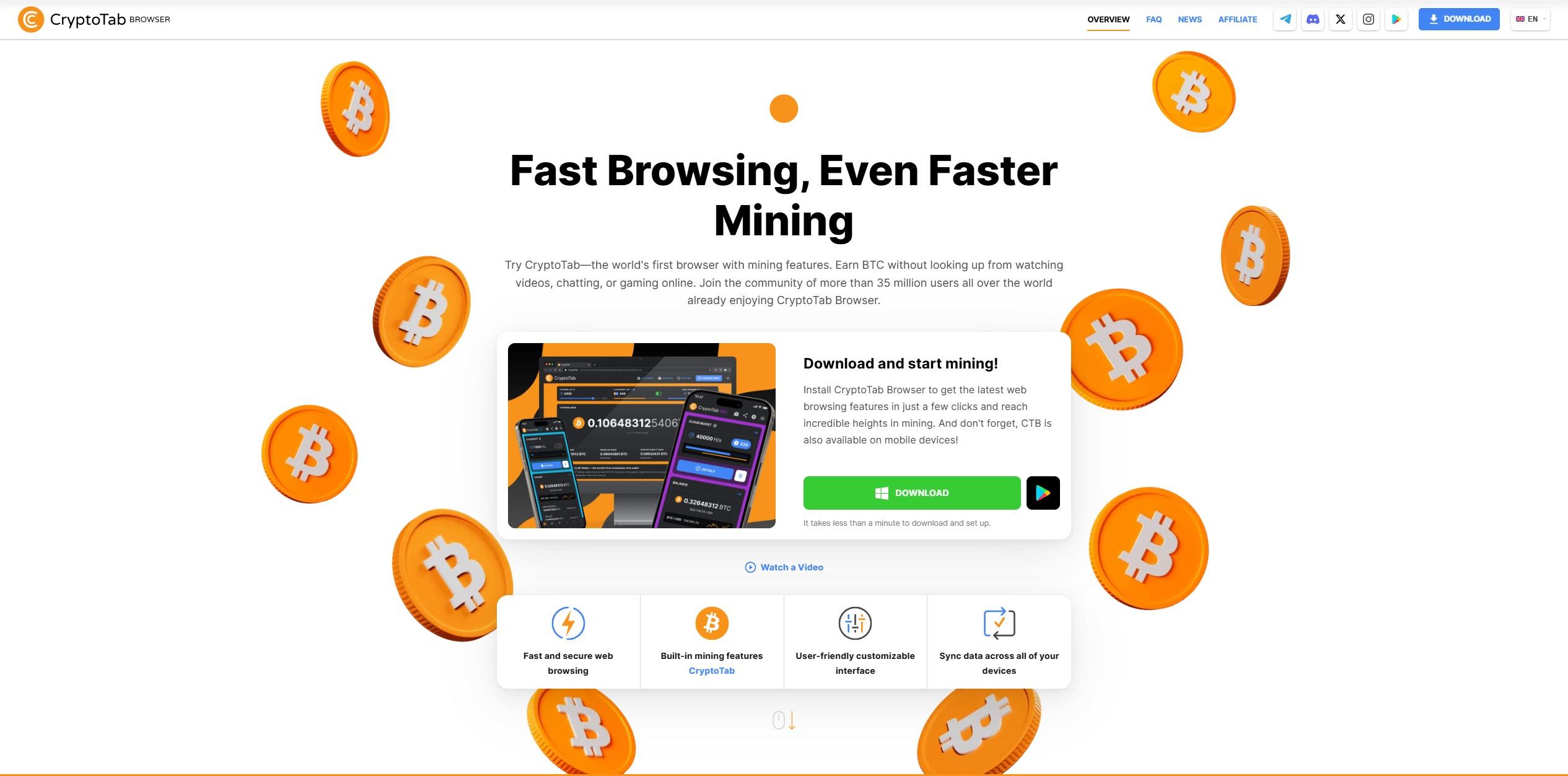
- Browser-Based "Miners" and Reward Systems: Apps like CryptoTab Browser offer a "lite" mining experience, often leveraging a small amount of the device’s processing power (which yields negligible results) or, more commonly, routing a portion of the workload to external cloud services. Others, like StormGain, offer rewards based on app engagement rather than actual blockchain mining, functioning more as gamified earning features within a trading ecosystem. These are legitimate in their stated function but should not be confused with true, profitable Bitcoin mining.
On the other end of the spectrum are the outright scams. These applications promise exorbitant, guaranteed returns with minimal effort or investment. They often display simulated mining dashboards showing impressive (but fake) earnings, pressure users to upgrade or invest more, and frequently make it impossible to withdraw funds once a certain threshold is reached. These platforms exploit the complexity of cryptocurrency and the desire for passive income.
Key Indicators of a Scam:
- Unrealistic Promises: Guaranteed high daily returns, "free Bitcoin" with no effort, or claims of mining profitably on a mobile phone are major red flags. Real mining has fluctuating returns and significant costs.
- Lack of Transparency: Absence of verifiable information about their mining farms, hardware, energy sources, or company registration. Legitimate cloud mining providers often share photos, videos, or even live streams of their facilities.
- Pressure to Invest: Aggressive tactics to get users to deposit more money, upgrade contracts, or pay "withdrawal fees" before funds can be accessed.
- No Proof of Work: Inability to provide evidence of hash rate contribution to a known mining pool or verifiable blockchain transactions tied to their mining activity.
- Poor Reviews (especially regarding withdrawals): Check app store reviews and independent crypto forums for complaints about inability to withdraw funds, sudden account closures, or unresponsive customer support.
- Vague or Non-Existent Terms of Service: A legitimate platform will have clear, comprehensive legal documentation.
- "Mining" that drains your phone battery but yields nothing: If an app claims to mine directly on your phone and significantly impacts performance or battery life without any verifiable payouts, it’s likely a simulation or malware.
Expert Insights and Regulatory Warnings
Financial watchdogs and cybersecurity experts consistently advise extreme caution when engaging with cryptocurrency mining applications, particularly those promoted on mobile platforms. Regulatory bodies worldwide have issued warnings about the proliferation of crypto-related scams, which often leverage the allure of high returns and the perceived complexity of the technology to defraud unsuspecting individuals. For instance, the Financial Conduct Authority (FCA) in the UK and the Securities and Exchange Commission (SEC) in the US have repeatedly cautioned investors about unregulated crypto products, highlighting the risks of volatility, fraud, and lack of consumer protection.
Cybersecurity firms also point to the potential for these apps to be vectors for malware, phishing attacks, or data harvesting. Users might inadvertently grant excessive permissions to these apps, compromising their personal information or device security. The general consensus from experts is clear: thorough due diligence is non-negotiable. Users should prioritize platforms with demonstrable track records, transparent operations, clear fee structures, and strong security protocols. Any platform promising guaranteed, outsized returns with little to no risk should be treated with extreme skepticism, as such claims are fundamentally inconsistent with the volatile and competitive nature of cryptocurrency markets.
A Curated Look at Notable Bitcoin Mining Applications (2026 Perspective)
Even as the mining landscape evolves towards greater industrialization, several applications continue to offer varying degrees of connection to the Bitcoin mining ecosystem. It’s crucial to understand their underlying models to set realistic expectations.
1. NiceHash Mobile – Best for Remote Management of Hash Power
NiceHash Mobile operates not as a direct miner but as a robust hash power marketplace. Users can buy and sell computational power, connecting to real mining infrastructure via remote servers. This app is primarily a control hub, allowing for the management of mining operations and monitoring of performance and Bitcoin rewards from a mobile interface. It’s suitable for experienced miners who possess or rent their own hardware and require a portable solution for oversight.
- Core Features: Remote management of mining rigs, hash rate marketplace, multi-algorithm support, profit switching, detailed statistics.
- Best For: Experienced users managing existing mining farms or external hardware.
- Pros: Full control over remote operations, supports multiple coins (indirectly via hash power), flexible contracts, steady payouts.
- Cons: Requires initial investment in hardware/hash power, potential app stability issues under heavy use, not a standalone mobile miner.
2. CryptoTab Browser – Best for Mobile Mining Lite
CryptoTab Browser integrates a mining algorithm directly into a web browser, allowing users to earn small amounts of Bitcoin while browsing on Android and iOS devices. It functions as a lightweight mobile miner, with most of the actual processing power routed through external cloud mining services to generate any discernible rewards. It provides a passive entry point for those curious about crypto earning without significant commitment.
- Core Features: Browser-based mining, built-in mining algorithm, referral system, speed boost options.
- Best For: Casual users seeking a no-cost, low-effort introduction to crypto earning.
- Pros: Passive earning while browsing, no hardware required, small but consistent rewards, easy to install.
- Cons: Very low mining speed and rewards without paid boosts or cloud services, minimal profitability, relies on external cloud for significant gains.
3. MinerGate Mobile Miner – Best for Multi-Coin Monitoring
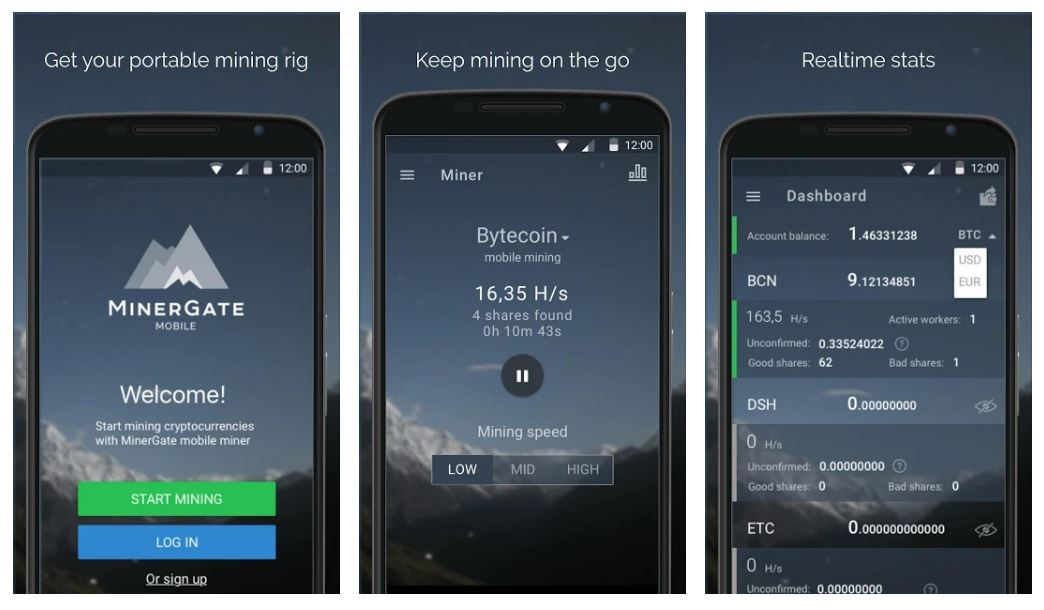
MinerGate Mobile Miner positions itself as a mobile application for those interested in mining various cryptocurrencies, including variants like Bitcoin Cash, directly from an Android device. While it uses a "lightweight mobile miner" setup, its primary utility on a mobile phone is more about monitoring mining operations on other, more powerful devices or participating in mining pools.
- Core Features: Multi-coin support, easy setup, mining pool access, basic monitoring dashboard.
- Best For: New users looking for a simplified interface to monitor multi-coin mining activities, often connected to a larger pool.
- Pros: Simple entry into crypto monitoring, supports automatic switching, provides access to real data centers.
- Cons: Extremely limited effective mining speed on mobile, lower rewards compared to dedicated software/hardware, not suitable for serious mining.
4. ECOS – Best for Cloud Mining Contracts
ECOS is a more structured mobile mining app that links users to regulated cloud mining platforms. It allows for the purchase of mining contracts directly tied to actual mining operations, providing a hands-off approach to gaining exposure to Bitcoin mining without owning physical rigs. ECOS stands out for its integrated wallet, exchange, and detailed analytics.
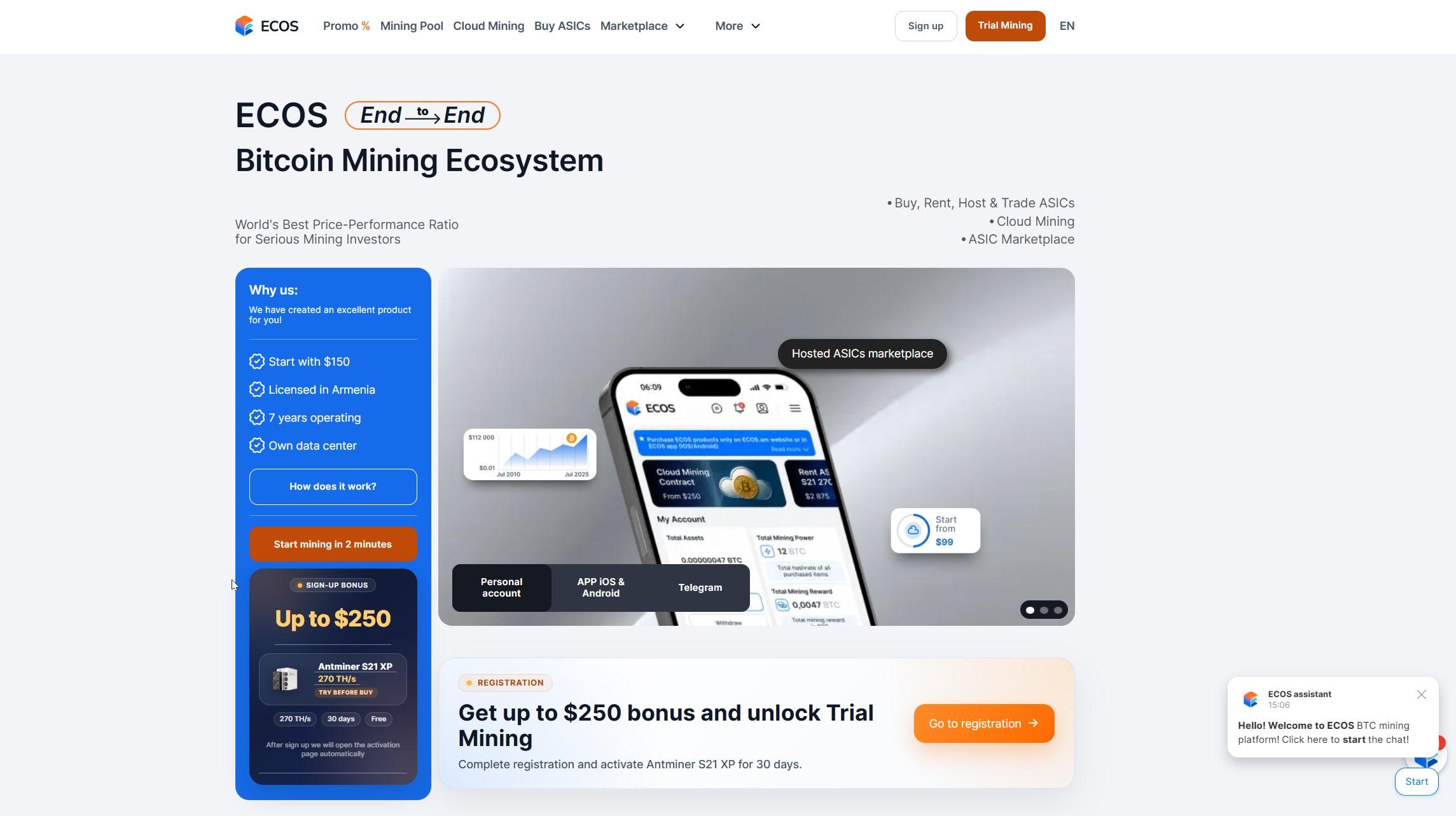
- Core Features: Cloud mining contracts, integrated crypto wallet, investment portfolios, transparent analytics, regulated environment.
- Best For: Users seeking structured, transparent exposure to Bitcoin mining without hardware management.
- Pros: Real Bitcoin mining exposure via contracts, user-friendly interface, stable reward model, backed by real mining farms.
- Cons: Requires upfront capital, less flexibility than direct hardware ownership, profitability depends on contract terms and market.
5. Binance Pool – Best for Mining Pool Scale and Bitcoin Payouts
Binance Pool, operated by the world’s largest cryptocurrency exchange, integrates the hash rate of thousands of miners into a single network, significantly increasing the probability of solving Bitcoin blocks. It’s designed for miners with their own hardware to connect and receive stable, consistent Bitcoin payouts directly into their Binance exchange wallet. The mobile app facilitates seamless monitoring and management of pool contributions.
- Core Features: Large global mining pool, stable BTC payouts, integrated with Binance ecosystem, competitive fee structure, real-time monitoring.
- Best For: Users with dedicated mining hardware seeking high stability, consistent payouts, and easy integration with trading.
- Pros: High stability from a massive pool, reliable BTC payouts, strong infrastructure, easy integration with Binance services.
- Cons: Centralized under an exchange, requires Binance account and KYC, not for users seeking full decentralization.
6. StormGain – Best for Mobile Cloud Mining Rewards System
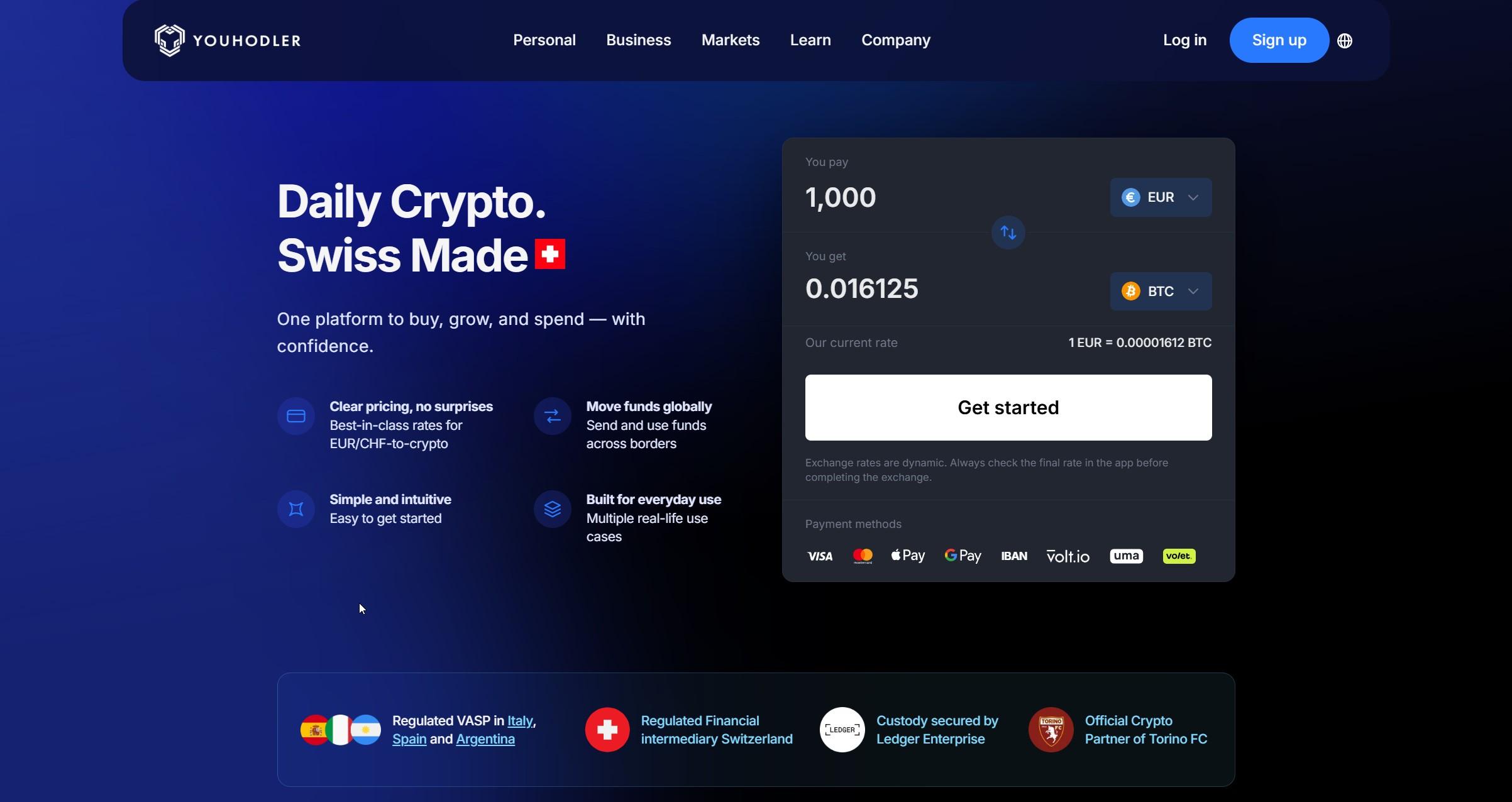
StormGain, a crypto trading app, previously featured a Bitcoin cloud mining rewards system (now migrated to YouHolder). Crucially, this system did not utilize the phone’s CPU, GPU, or blockchain hashing power for actual mining. Instead, it operated as a centralized reward mechanism, providing BTC based on app activity and engagement, serving as a gamified feature within its trading ecosystem.
- Core Features: Free "mining" feature (rewards system), built-in trading platform, leveraged trading, integrated crypto wallet.
- Best For: Users seeking a beginner-friendly crypto app with gamified rewards and exposure to trading tools.
- Pros: Easy to use, no hardware/electricity needed for rewards, integrates trading and wallet services.
- Cons: Mining is not real blockchain mining, funds are custodial, not suitable for genuine mining income.
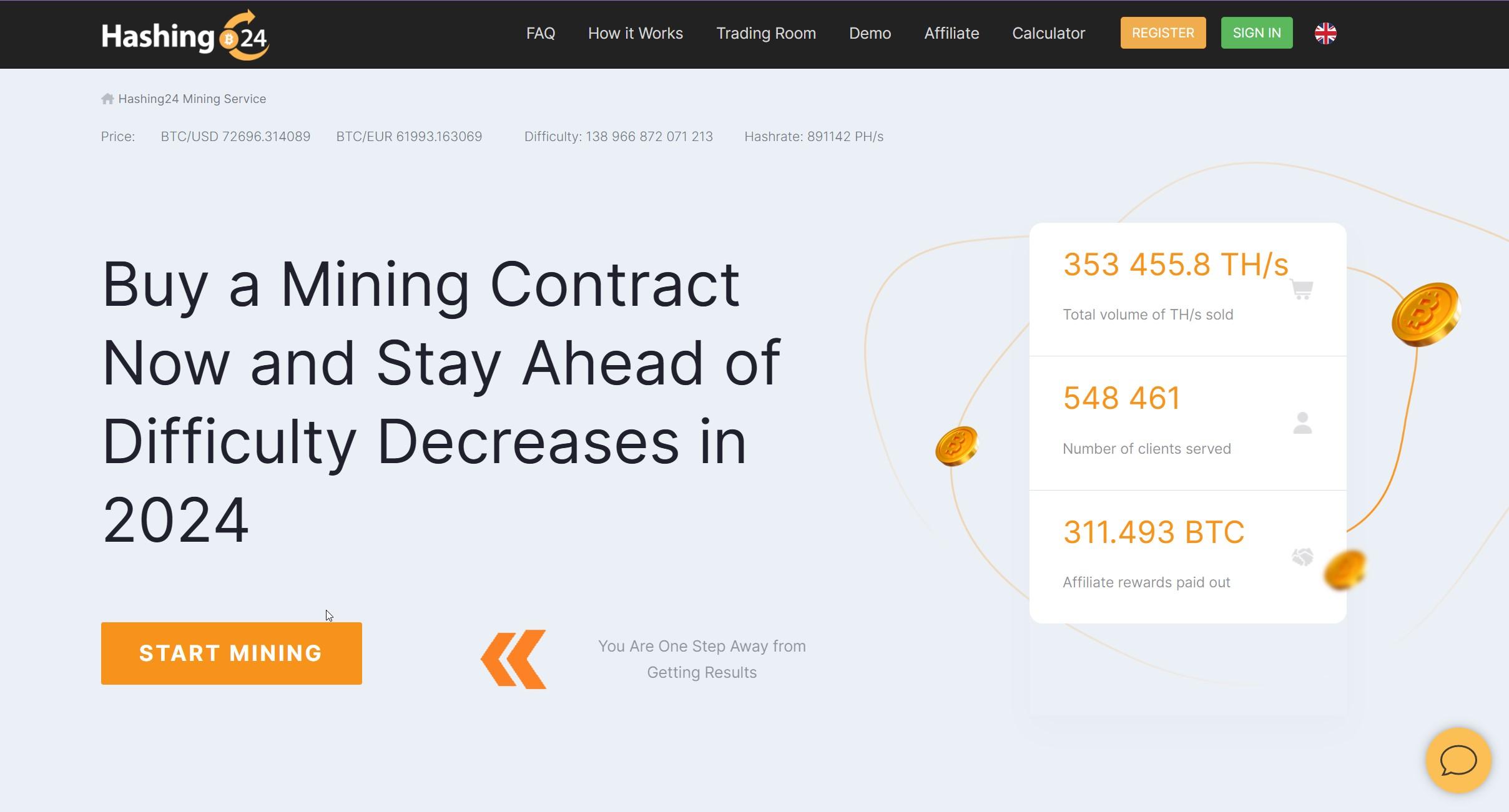
7. Hashing24 – Best for Hands-off Bitcoin Mining
Hashing24 offers a Bitcoin mining app centered around structured cloud mining access. It connects users to cloud mining services powered by real data centers and large-scale mining farms. The mobile app and web dashboard provide remote monitoring and account tracking, while the actual mining takes place using industrial infrastructure, allowing for a truly hands-off experience.
- Core Features: Cloud mining contracts, access to real mining farms, daily Bitcoin payouts, demo mode, transparent reporting.
- Best For: Users desiring a hands-off Bitcoin mining experience through established cloud mining contracts.
- Pros: Hands-off mining, access to professional infrastructure, predictable contract structure, demo mode for testing.
- Cons: Requires initial investment, less control than direct operations, profitability subject to market and contract terms.
8. DeepHash – Best for High-yield Cloud Mining (with caution)
DeepHash markets itself as an AI-driven cloud mining platform, offering short-term contracts and daily Bitcoin payouts through a simple mobile app. It promotes automated allocation of computational power to the most profitable coins. While it promises high yields, users should exercise caution and conduct extensive due diligence, as such claims are often associated with higher risks and less transparency.
- Core Features: AI optimization claims, daily payouts, simple interface, short-term contracts.
- Best For: Users looking to test cloud mining systems with small capital, understanding that "high-yield" often implies higher risk.
- Pros: Easy entry to cloud mining, no hardware required, fast onboarding.
- Cons: Limited regulatory oversight, lack of transparency regarding infrastructure, high return claims require significant scrutiny.
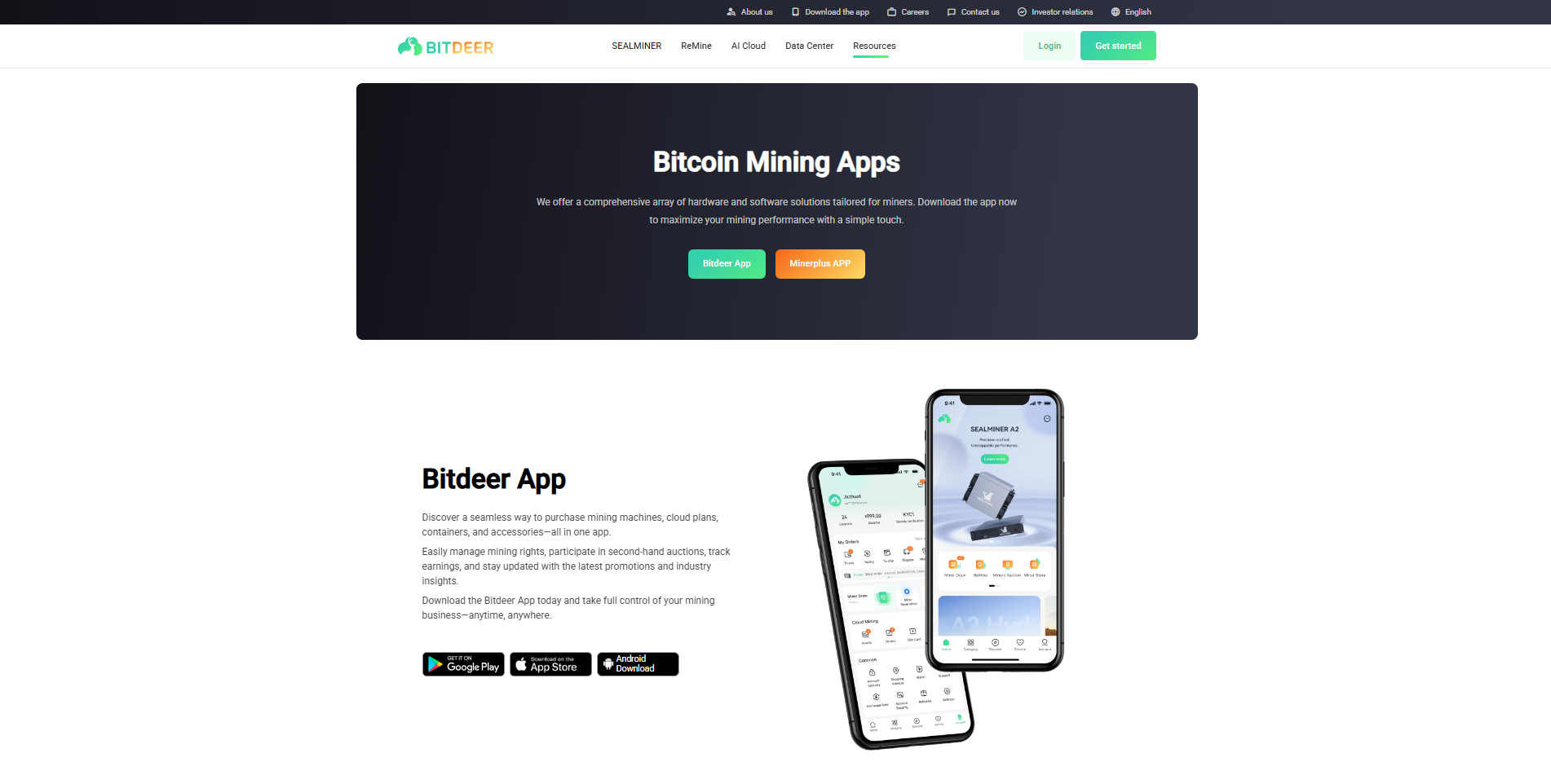
9. Bitdeer Mobile – Best for Enterprise-Grade Cloud Mining Access
Bitdeer is a prominent player in the enterprise-grade cloud mining sector, offering direct access to industrial mining infrastructure across multiple regions. The mobile app allows users to manage cloud mining contracts, providing robust remote monitoring and analytics tools for operations powered by high-capacity facilities and specialized cryptocurrency mining hardware.
- Core Features: Access to industrial mining farms, global presence, detailed remote monitoring, multiple mining pool support, transparent plans.
- Best For: Serious crypto mining enthusiasts or investors interested in scaling operations through transparent, enterprise-grade cloud mining contracts.
- Pros: Access to real industrial infrastructure, strong cloud mining platforms, comprehensive monitoring tools, flexible setups.
- Cons: Requires significant capital commitment, more complex than basic apps, not for casual users.
10. Kryptex Miner – Best for Desktop-Level Mining with Mobile Monitoring
Kryptex Miner is desktop mining software designed to utilize a PC’s GPU or ASIC-level computational power, with the mobile app serving as a companion for remote monitoring and control. It automatically selects the most profitable coin to mine, converting earnings into Bitcoin for payouts. It’s a legitimate tool for leveraging existing PC hardware, managed and tracked via mobile.
- Core Features: Desktop mining software, automatic profit switching, BTC payouts, strong remote monitoring via mobile app.
- Best For: Users who want to mine on their desktop PC and use their phone for convenient monitoring and control, not for on-device mobile mining.
- Pros: Real Bitcoin mining via desktop hardware, efficient profit switching, stable rewards through integrated pool, robust mobile monitoring.
- Cons: Not an actual mobile mining app (requires a PC), demands strong computational power on the desktop, mobile version yields minimal direct mining speed.
Navigating the Landscape: Choosing a Reputable Platform
Selecting a Bitcoin mining application requires a discerning eye and a clear understanding of what constitutes genuine mining activity. Given the prevalence of misleading apps, several factors must be rigorously evaluated.
1. Mining Method Verification: The foundational check involves understanding the app’s mining method. If an app claims to perform "real Bitcoin mining" directly on your mobile device, it is almost certainly deceptive. Legitimate platforms either serve as remote managers for your own powerful hardware, or they offer cloud mining contracts where the actual mining occurs on industrial-scale remote servers. Always confirm the underlying infrastructure.
2. Transparency and Legitimacy: A truly legitimate mining app or platform will exhibit unwavering transparency. This includes clear disclosure of their mining operations, the specific mining infrastructure they utilize (e.g., ASIC models, data center locations), and verifiable proof of their mining farms. This might involve public addresses, audit reports from reputable firms, or even live feeds of their facilities. If a platform is vague about how it generates Bitcoin mining rewards or how its mining contracts function, it lacks the essential credibility for a legitimate investment.
3. Fee Structures and Hidden Costs: Profitability in mining is often eroded by various fees. Most cloud mining services impose costs through initial contract purchases, ongoing maintenance fees, and sometimes even withdrawal charges. These expenses directly reduce final Bitcoin payouts. A reputable Bitcoin mining app will meticulously detail all associated costs, providing a clear breakdown of how they impact your expected profitability and avoiding any opaque or hidden charges.
4. Platform Compatibility and User Experience: A robust Bitcoin mining application should offer seamless functionality across various platforms, especially on Android and iOS devices through official app stores. It should support intuitive mobile access, efficient remote management capabilities, and reliable synchronization with underlying mining software or cloud platforms. The user interface itself should be clear, stable, and free from performance glitches that could hinder monitoring or management.
5. User Interface and Data Visibility: A strong crypto mining app prioritizes user experience by providing clear, real-time data on mining performance, current hash rates, and active mining runs. A well-designed, user-friendly interface is crucial for tracking Bitcoin rewards, understanding profitability metrics, and making informed operational decisions. If vital data is obscured or difficult to access, the mining app’s reliability for genuine Bitcoin mining decision-making is compromised.
6. Security and Data Protection: Given the financial implications, the security of your account, digital assets, and Bitcoin payouts is paramount. Reputable cloud mining services and associated apps should implement robust security measures, including two-factor authentication, encryption protocols, and clear data privacy policies. Lack of transparency in mining operations or infrastructure can expose users to significant security risks, making such platforms highly susceptible to scams or data breaches. Always prioritize platforms with a proven security track record and strong protective measures.
The Economic Realities: Earnings vs. Costs
The allure of earning Bitcoin through a mobile app often clashes starkly with the economic realities of cryptocurrency mining. As highlighted by various industry analyses, most mobile and cloud-based mining tools yield minimal, unstable, or even negative income, with earnings heavily contingent on the specific mining model.

Mining Earnings Breakdown:
- Mobile Device Mining: For apps that claim to mine directly on a mobile device, earnings are virtually non-existent. The limited processing power of a smartphone cannot generate a competitive hash rate sufficient for real Bitcoin mining. Any "rewards" seen are typically simulated, paid out from advertising revenue, or part of a gamified system that doesn’t involve actual blockchain mining.
- Free Crypto Mining Apps: While some free apps offer a basic entry, the Bitcoin rewards are generally minuscule. These platforms often provide a highly diluted share of mining profits or operate on a freemium model where significant earnings only come with paid upgrades or cloud mining contracts.
- Cloud Mining Platforms: Even with legitimate cloud mining, profitability is far from guaranteed. Earnings depend on the amount of hash power purchased, the terms of the mining contract, the prevailing Bitcoin price, and the network’s mining difficulty. After accounting for contract costs and maintenance fees, many users find their net profits to be low and inconsistent, sometimes even leading to losses during market downturns.
Mining Costs Breakdown:
The primary cost associated with Bitcoin mining isn’t the app itself, but the underlying infrastructure.
- Cloud Mining Services: Users pay for mining contracts, which cover the rental of hash power, along with ongoing maintenance fees and electricity costs associated with the remote mining farms. Higher hash rate contracts naturally incur higher costs. These costs can significantly reduce the overall profit margin, making careful calculation of return on investment (ROI) essential.
- Real Mining Hardware: For those engaging in actual mining with ASICs, the costs are substantial. This includes the initial capital investment in expensive mining hardware, significant ongoing electricity expenses, cooling infrastructure, and potential facility costs. While potentially more profitable than cloud mining, it requires substantial upfront investment and expertise.
Conclusion
Bitcoin mining applications present a convenient, albeit often misleading, entry point into cryptocurrency operations. While the promise of earning Bitcoin from a mobile device is enticing, it is crucial to recognize that genuine, profitable Bitcoin mining remains an industrial-scale endeavor, demanding specialized hardware and vast mining farms, capabilities far beyond those of a smartphone.
A select few cloud mining platforms and remote management tools offer legitimate pathways to participate in the mining ecosystem, but even these come with inherent risks, require initial investment, and often yield modest, uncertain profits after accounting for fees and market volatility. The market is also unfortunately saturated with deceptive apps that merely simulate mining or act as thinly veiled scams.
Therefore, users must approach any Bitcoin mining app with a high degree of skepticism and conduct rigorous due diligence. Prioritizing transparency, verifiable infrastructure, clear fee structures, and robust security features over promises of effortless, high returns is paramount. By understanding the fundamental realities of Bitcoin mining and critically evaluating the offerings of these applications, users can better protect themselves from financial losses and make more informed decisions in the dynamic world of cryptocurrency.