
 admin
admin
The Canadian cryptocurrency market, known for its stringent regulatory framework, continues to evolve as investors seek secure and compliant platforms for buying and selling digital assets. As of 2026, a select group of exchanges has distinguished itself through robust features, competitive fee structures, unwavering security protocols, and full legal adherence to Canadian financial regulations. This analysis delves into the top platforms catering to Canadian crypto enthusiasts, offering insights into their operational specifics, the broader regulatory environment, and crucial considerations for prospective users.
Canada’s Evolving Regulatory Framework for Digital Assets

Canada has progressively cemented its position as a jurisdiction with clear and comprehensive cryptocurrency regulations, aiming to foster innovation while prioritizing investor protection and market integrity. The nation’s approach, primarily guided by the Canadian Securities Administrators (CSA) and the Investment Industry Regulatory Organization of Canada (IIROC), now succeeded by the Canadian Investment Regulatory Organization (CIRO), treats most digital assets as securities or derivatives. This classification mandates that crypto asset trading platforms (CTPs) offering these assets register with provincial securities commissions and comply with rigorous reporting, custody, and capital requirements.
A cornerstone of Canadian crypto regulation is the oversight by the Financial Transactions and Reports Analysis Centre of Canada (FINTRAC). Since June 2020, all CTPs operating in Canada must register as Money Services Businesses (MSBs) and adhere to Anti-Money Laundering (AML) and Counter-Terrorist Financing (CTF) laws. This includes stringent Know-Your-Customer (KYC) procedures, transaction monitoring, and suspicious transaction reporting, significantly enhancing the transparency and accountability of the sector.
The regulatory landscape has matured considerably since the early days of crypto. Initially, many platforms operated in a grey area, leading to calls for greater clarity. The CSA and CIRO have since issued guidance and enacted rules that require platforms to undertake public consultations, engage in robust risk assessments, and secure provincial registrations as restricted dealers. These measures aim to prevent market manipulation, protect client assets, and ensure fair trading practices, reflecting a broader governmental commitment to stabilizing the digital asset economy.
Chronology of Key Regulatory Enforcement Actions
The journey towards Canada’s current regulatory clarity has been marked by significant enforcement actions against non-compliant platforms. These actions serve as stark reminders of the country’s commitment to its stringent rules:
- 2022: The Ontario Securities Commission (OSC), a key provincial regulator, took decisive action against several foreign-based platforms for operating unregistered in the province. Notably, KuCoin and Bybit faced penalties for failing to comply with Canadian securities laws. The OSC emphasized that platforms serving Canadian investors, regardless of their global headquarters, must register and abide by local regulations.
- Late 2022 – Early 2023: Following regulatory pressure, KuCoin was permanently banned from offering services in Ontario. Bybit, another prominent global exchange, also ceased its operations in Canada, citing the evolving regulatory environment. These exits underscored the seriousness with which Canadian authorities treat non-compliance.
- Mid-2023: Binance, one of the world’s largest cryptocurrency exchanges, announced its complete withdrawal from the Canadian market. This decision followed extensive dialogue with Canadian regulators and highlighted the challenges even global giants face in adapting to Canada’s specific requirements. Binance’s exit significantly reshaped the competitive landscape, paving the way for fully compliant platforms to gain market share.
- May 2024: FINTRAC imposed a substantial penalty exceeding $6 million on Binance for failing to register as a foreign money services business and for not reporting suspicious transactions, among other violations of AML/CTF regulations. This penalty, one of the largest ever issued by FINTRAC against a crypto entity, reinforced the regulatory body’s resolve in enforcing financial integrity and combating illicit activities within the digital asset space.
These enforcement actions have had a profound impact, leading to a consolidation of the market around regulated entities and instilling greater confidence among Canadian investors in platforms that demonstrate full legal compliance.

Key Takeaways for Canadian Crypto Investors in 2026
- Regulation is Paramount: Only use FINTRAC-registered and provincial securities commission-licensed exchanges.
- Diverse Options: A range of platforms caters to different needs, from beginners to advanced traders, with varying coin selections and fee structures.
- Security First: Prioritize exchanges with robust security measures like cold storage, multi-factor authentication, and insurance.
- Tax Compliance: Understand that crypto is taxable in Canada as capital gains or business income.
- Due Diligence: Always conduct personal research on platforms, fees, and regulatory updates.
The 2026 Canadian Crypto Exchange Landscape: A Snapshot
For Canadian investors looking to enter or expand their presence in the digital asset market, choosing the right platform is critical. The following table provides a concise overview of leading exchanges in Canada for 2026, highlighting their core offerings and regulatory status:
| Exchange | Available Coins | Trading Fees (Maker/Taker) | CAD Funding Options | FINTRAC Licensed |
|---|---|---|---|---|
| Crypto.com | 400+ | 0.25% / 0.50% | Interac e-Transfer, debit/credit cards, Apple/Google Pay | Yes |
| BitBuy | 100+ | 0.50% / 0.50% | Interac e-Transfer, wire transfer | Yes |
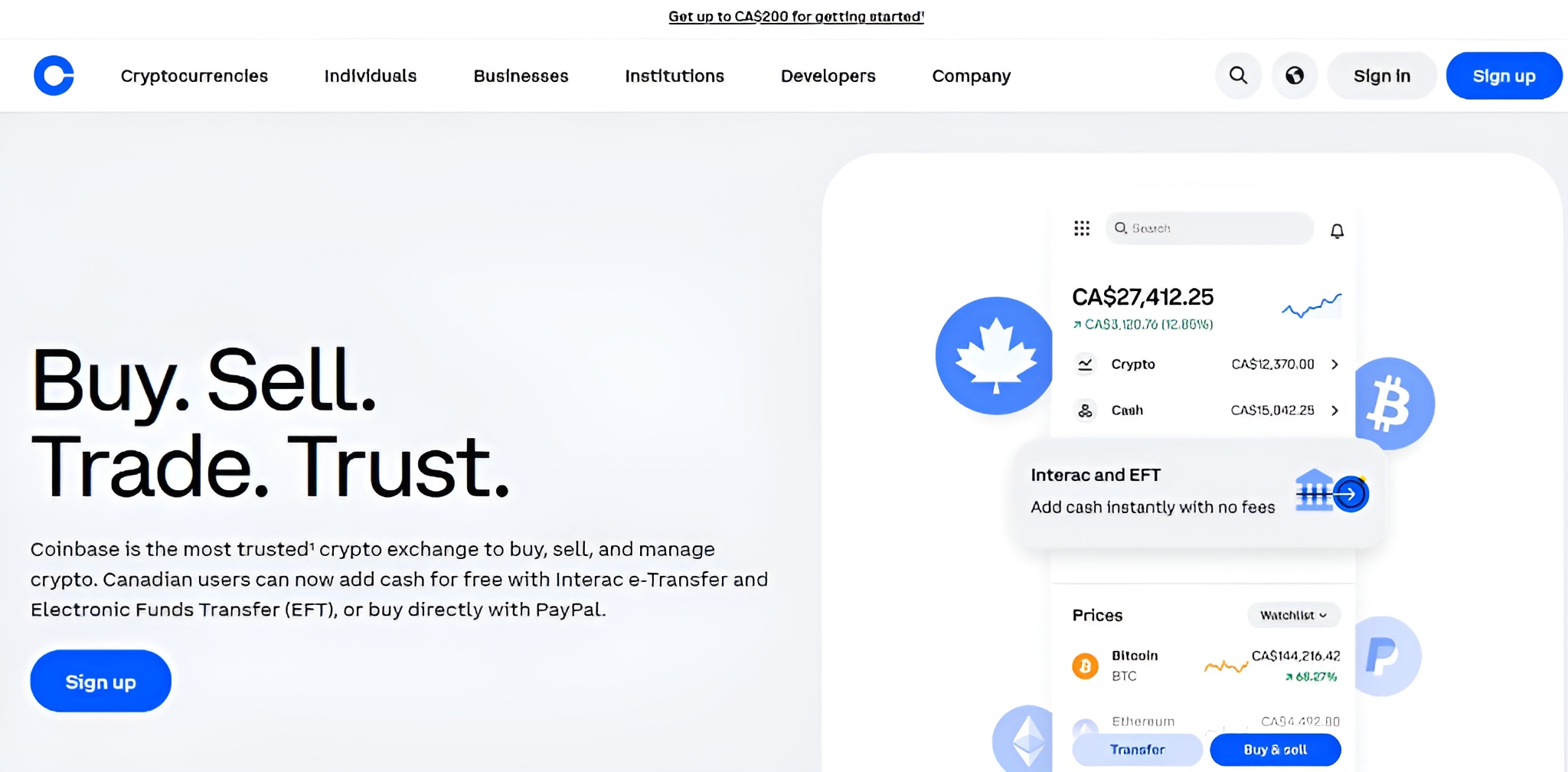
| Coinbase | 200+ | 0.40% / 0.60% | Interac e-Transfer, Electronic Funds Transfer (EFT), direct bank deposits, debit/credit cards, PayPal | Yes |
| WealthSimple | 140+ | 0.05% | Interac e-Transfer, bank account transfers | Yes |
| Kraken Pro | 687+ | 0.25% / 0.40% | Interac e-Transfer, EFT, Canada Post, Credit Union Atlantic, Bank Frick, Apaylo Bill Pay, debit cards | Yes |
| NDAX | 65+ | 0.20% (flat) | Interac e-Transfer, wire transfer | Yes |
| Newton | 60+ | 0.5% – 1.60% (spread) | Interac e-Transfer, wire transfer | Yes |
| VirgoCX | 90+ | 0.95% – 1.60% (spread) | Interac e-Transfer, wire transfer | Yes |
| Shakepay | 3 | 0.5% – 2% (spread) | Interac e-Transfer | Yes |
| Coinsquare | 60+ | 0.50% / 0.50% | Interac e-Transfer, wire transfer | Yes |
Leading Platforms for Diverse Investor Needs
The Canadian market offers a robust selection of regulated platforms, each with unique strengths tailored to different types of investors.
Global Players Adapting to Canadian Rules:
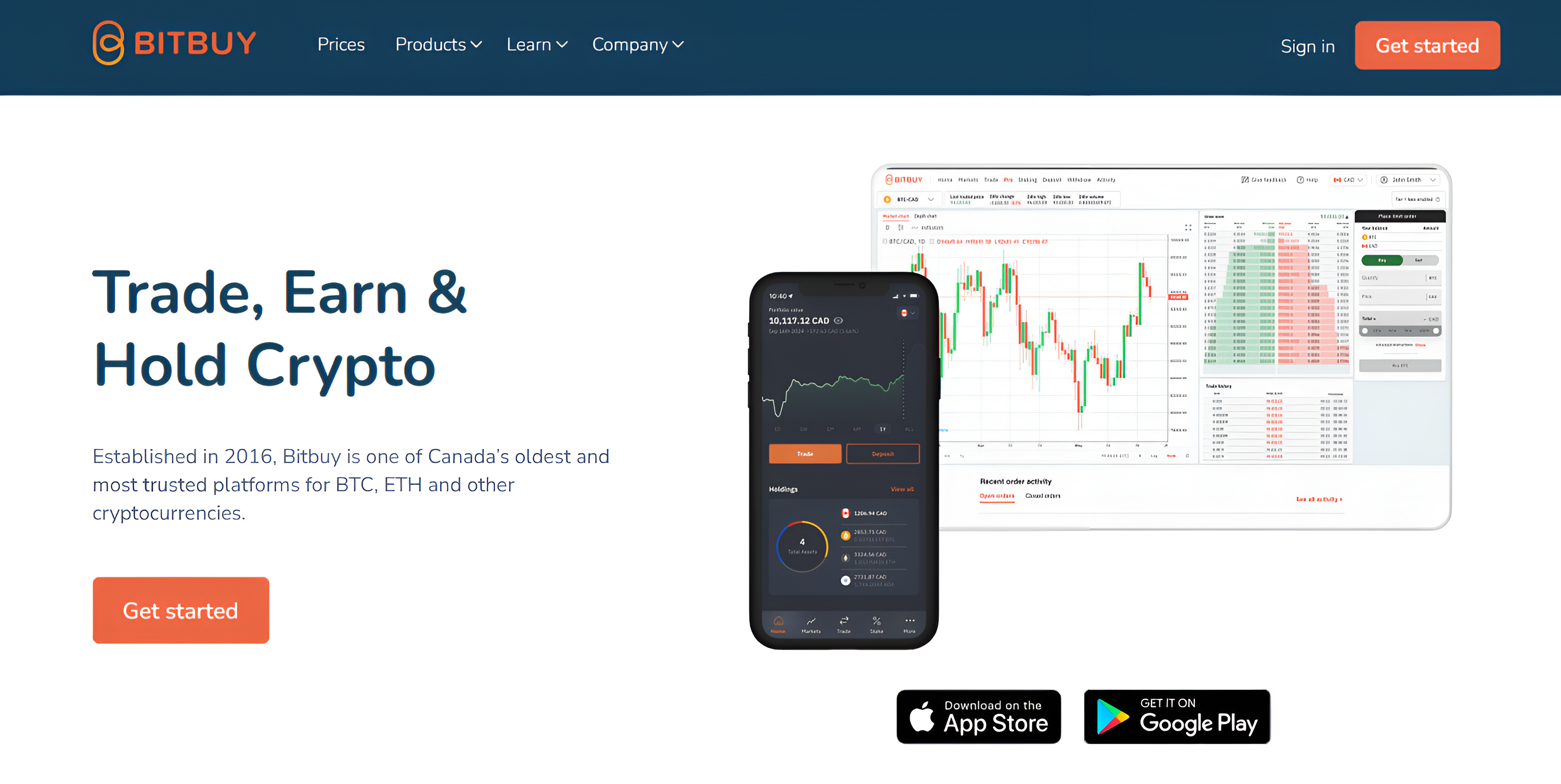
- Crypto.com: A global powerhouse established in 2016, Crypto.com serves over 150 million users worldwide. In Canada, it operates as a restricted dealer, regulated by the OSC and other provincial bodies. It stands out for its extensive selection of over 400 cryptocurrencies, competitive trading fees (0.25% maker / 0.50% taker), and unique CRO-based benefits, including fee discounts for holders of its native token. Its robust ecosystem offers diverse products beyond spot trading, catering to a wide user base.
- Coinbase: As the largest publicly traded crypto exchange globally, Coinbase brings unparalleled institutional-grade security and a user-friendly interface. Licensed across over 100 countries, it boasts annual trading volumes exceeding $1.2 trillion. In Canada, it is registered as a restricted dealer and an MSB with FINTRAC. Coinbase is particularly appealing for its USDC rewards programs and comprehensive suite of services, making it a strong choice for both retail and institutional investors. Its fee structure (0.40% maker / 0.60% taker) is competitive, and it offers multiple CAD funding options, including PayPal.
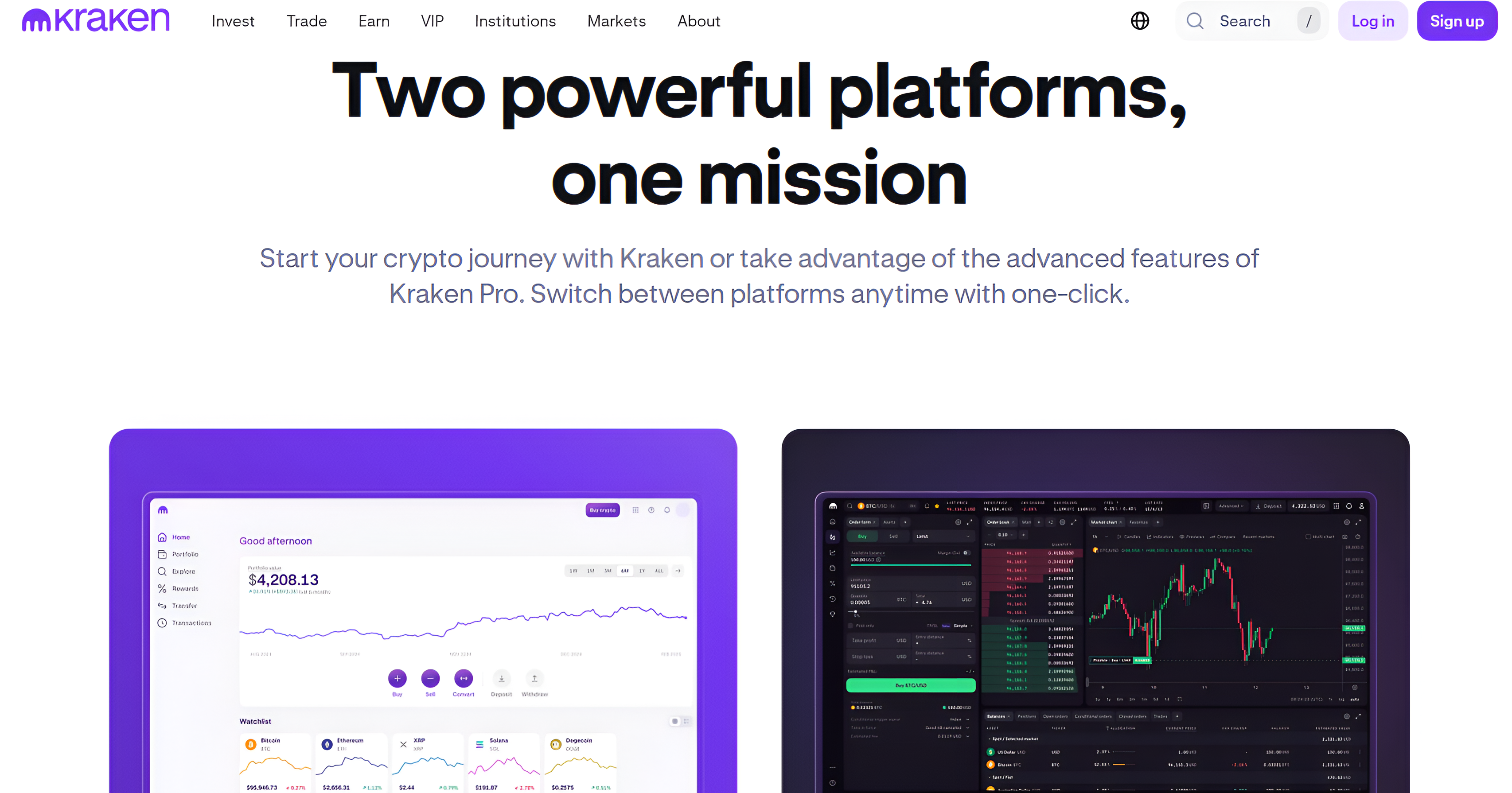
- Kraken Pro: Catering primarily to advanced traders, Kraken Pro offers a comprehensive suite of trading options, including spot, derivatives, margin, and OTC trading across 687+ assets. Despite being US-based, Kraken is a top choice in Canada, registered under Payward Canada Inc. with FINTRAC and various provincial securities regulators. Its advanced order types, technical indicators, and highly competitive fee structure (0.25% maker / 0.40% taker) make it ideal for experienced participants seeking sophisticated trading tools.
Canadian-Centric Excellence and Specialized Services:
- Bitbuy: As Canada’s oldest and first fully regulated crypto asset trading platform, Bitbuy holds a significant position. Licensed by the CSA and OSC and registered with FINTRAC, it offers multi-layer security features, including 95% cold storage for assets, mandatory 2FA, and regular third-party security audits. With over 100 available coins and a flat 0.50% maker/taker fee, Bitbuy appeals to users prioritizing security and a Canadian-native experience. It offers free CAD deposits via Interac e-Transfer and wire transfer.
- Wealthsimple Crypto: This platform is unique for integrating crypto trading within a broader financial ecosystem that includes robo-advisory services, commission-free stock/ETF investing, and tax management tools. Registered as an MSB with FINTRAC and regulated by CIRO, Wealthsimple Crypto is ideal for investors looking to build a diversified portfolio with ease. Its highly competitive 0.05% trading fee and simplified interface make it attractive for beginners and those seeking an all-in-one financial solution.
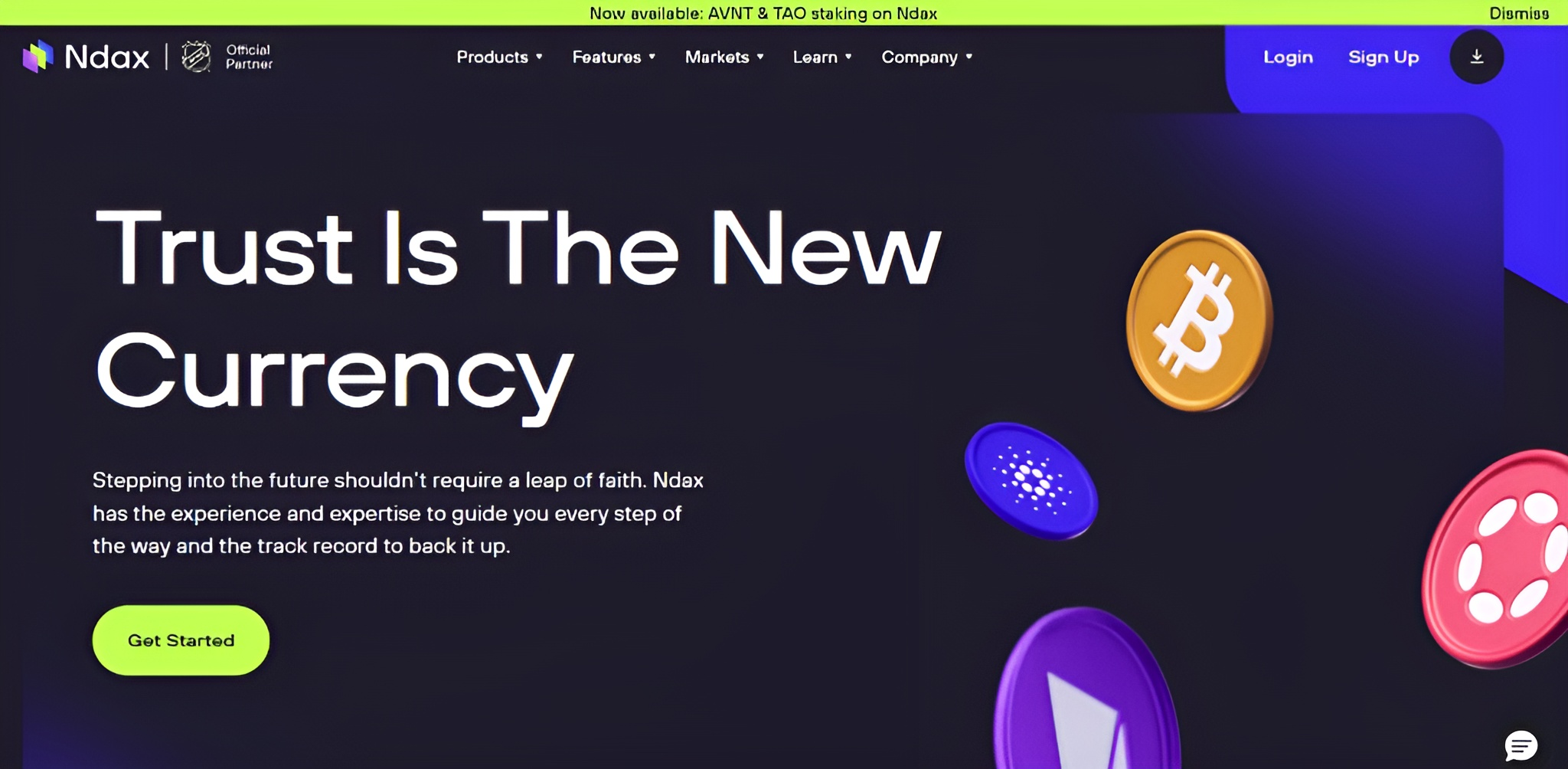
- NDAX: A Canada-only exchange founded in 2018, NDAX caters to both beginners and advanced traders with over 65 cryptocurrencies. Registered with FINTRAC, Revenue Quebec, and CIRO, NDAX offers advanced order types and robust security. It features a flat trading fee of 0.20% and supports Interac e-Transfer and wire transfers for CAD.
- Newton: Positioned as a low-fee, Canada-focused platform, Newton directly buys and sells cryptocurrencies to its users. Registered with FINTRAC, CIRO, and the CSA, it boasts a transparent fee structure with nominal trading spreads (0.5% – 1.60%) and no deposit/withdrawal charges, even covering up to $5 in network fees for daily withdrawals. This makes Newton highly attractive for cost-conscious traders.
- VirgoCX: This Canadian exchange distinguishes itself with a large number of hot coins and support for API trading, granting users complete control over their digital assets through a non-custodial model. Registered as an MSB with FINTRAC and compliant with PIPEDA, VirgoCX offers free deposits and competitive trading spreads, making it suitable for active traders and developers.
- Shakepay: Launched in 2015, Shakepay is a crypto app exclusively designed for Canadians to easily buy, sell, send, and earn Bitcoin. With over 1 million users, it is registered as an MSB with FINTRAC and regulated by CIRO. While offering only 3 cryptocurrencies (primarily Bitcoin and Ethereum), its appeal lies in its simplicity, free commission fees, and the popular "shaking sats" reward program.
- Coinsquare: A pioneer CIRO-regulated crypto marketplace launched in 2014, Coinsquare is a reputable Canadian-based exchange. Registered as an MSB with FINTRAC, it supports over 50 coins and 1,300 trading pairs, making it a strong contender for institutional traders with its Coinsquare Pro platform and OTC services. It offers a 0.50% maker/taker fee for Pro trading and competitive spreads for OTC transactions.
How to Choose the Best Crypto Exchange in Canada
Selecting the optimal crypto exchange requires careful consideration of several factors tailored to individual trading styles and financial goals:

- Trading Fees: Understand the fee structure, whether it’s maker/taker, flat, or spread-based. High-volume traders often benefit from tiered fee structures or discounts for holding native tokens. Beginners should look for platforms with transparent, low fees to minimize costs.
- User Interface (UI/UX): A platform’s ease of use is crucial. An intuitive UI/UX design enhances the trading experience, regardless of whether you’re on a desktop or mobile device. Look for responsive interfaces, clear navigation, and accessible features.
- Supported Cryptocurrencies: Assess the range of digital assets offered. While some investors may only seek major cryptocurrencies like Bitcoin and Ethereum, others might prefer platforms that support a wider array of altcoins, stablecoins, and emerging tokens for portfolio diversification.
- Security Standards: Given the vulnerability of digital assets to cyberattacks, robust security is non-negotiable. Essential features include multi-factor authentication (MFA), cold storage for the vast majority of user assets, insurance funds, withdrawal whitelisting, and regular security audits. Exchanges that maintain 1:1 proof-of-reserves offer additional assurance.
- Regulatory Compliance: Always prioritize exchanges authorized and registered to operate in Canada. Unregulated platforms pose significant risks, as legal recourse may be unavailable in cases of fraud or platform failure. Look for FINTRAC MSB registration and provincial securities commission licensure (e.g., OSC, CSA, CIRO).
- Customer Support: Reliable and accessible customer support is vital. Opt for platforms offering 24/7 assistance through multiple channels such as live chat, email, and phone. Comprehensive helpdesks, self-help guides, and FAQs are also valuable resources.
- CAD Funding Options: Evaluate the convenience and cost of depositing and withdrawing Canadian Dollars. Interac e-Transfer is a popular, fast, and often free method in Canada. Wire transfers and debit/credit card options are also common, though the latter may incur higher fees from banks.
Understanding Cryptocurrency Taxation in Canada
The Canada Revenue Agency (CRA) treats cryptocurrencies as commodities, and tax implications vary based on how they are used. Your tax liability primarily depends on whether your crypto activities are considered business income or capital gains.
- Capital Gains: If you buy and sell crypto as an investment, any profit (or loss) from selling, gifting, or exchanging one crypto for another is generally considered a capital gain (or loss). Only 50% of a capital gain is taxable at your marginal federal and provincial income tax rate. For instance, if you make a $1,000 profit, $500 would be added to your taxable income.
- Business Income: If you engage in frequent, systematic, and commercially organized crypto trading activities with the intent to profit, the CRA may classify your earnings as business income. In this scenario, 100% of your net income is taxable at your marginal federal and provincial income tax rate. This typically applies to professional traders, miners, or those running crypto-related businesses.
- Mining Income: Income derived from cryptocurrency mining is also generally considered business income and is fully taxable.
- Staking Rewards/Airdrops: Income from staking, airdrops, or other similar rewards is usually taxable as regular income at the time it is received, based on its fair market value in CAD at that moment.
Accurate record-keeping of all crypto transactions, including dates, values (in CAD), and purposes, is crucial for compliance. The CRA has increased its scrutiny of crypto transactions, making it imperative for investors to understand and fulfill their tax obligations. Consulting a tax professional specializing in cryptocurrency is highly recommended.

How to Buy Crypto in Canada
Purchasing cryptocurrency in Canada is a straightforward process once you’ve chosen a regulated exchange:
- Select a Regulated Exchange: Choose a platform from the list above that aligns with your needs for fees, coin selection, and features, ensuring it is FINTRAC-registered and provincially licensed.
- Register and Verify Your Account: Sign up by providing personal information (name, address, date of birth) and complete the KYC process. This typically involves submitting government-issued ID and sometimes a proof of address. This step is mandatory due to AML/CTF regulations.
- Fund Your Account: Deposit Canadian Dollars into your exchange account. Common methods include Interac e-Transfer (popular in Canada for its speed and low cost), wire transfers, or debit/credit card payments. Check the specific fees and processing times for each method.
- Place Your Order: Navigate to the trading section of the exchange. Select the cryptocurrency you wish to buy and enter the amount in CAD. You can typically choose between a market order (buying at the current market price) or a limit order (setting a specific price at which you want to buy).
- Store Your Crypto: Once purchased, your cryptocurrency will be held in your exchange wallet. For enhanced security, especially for larger holdings, consider transferring your assets to a personal hardware wallet (cold storage) where you control your private keys.
Broader Market Implications for Canada
Canada’s proactive regulatory stance, while leading to the departure of some global players, has ultimately strengthened its domestic crypto market. The current environment fosters investor confidence by ensuring a higher degree of transparency, security, and accountability among operating platforms. This approach positions Canada as a leader in responsible crypto integration, potentially attracting long-term, compliant investment and innovation. However, the stringent rules also mean fewer choices compared to less regulated markets, and the cost of compliance for exchanges can sometimes translate to higher operational costs, which may indirectly affect fees. Despite this, the emphasis on a secure and regulated ecosystem is expected to drive sustainable growth and broader mainstream adoption of digital assets across the nation.
Conclusion
The Canadian cryptocurrency landscape in 2026 is defined by a commitment to robust regulation, offering investors a selection of secure and compliant platforms. While the strict environment has led to market consolidation, it has also cultivated an ecosystem where investor protection and financial integrity are paramount. Whether you are a novice or an experienced trader, thorough due diligence is essential. Stay informed about regulatory changes, carefully evaluate an exchange’s features, fees, and security protocols, and consider your personal investment goals and risk tolerance before making any decisions. The journey into digital assets in Canada is increasingly secure, but personal responsibility remains the cornerstone of successful participation.

FAQs
What is the most reputable crypto exchange in Canada?
Bitbuy is widely considered one of the most reputable Canadian-native crypto exchanges due to its long history of full regulation and multi-layer security. Globally renowned platforms like Coinbase and Kraken also hold strong reputations for their compliance and robust offerings in the Canadian market.
What is the best way to buy crypto in Canada?
The best way to buy crypto in Canada is through a FINTRAC-registered and provincially licensed centralized exchange like Coinbase or Bitbuy. These platforms offer easy fiat-to-crypto conversions using methods like Interac e-Transfer. Decentralized exchanges (DEXs) like Uniswap are an option for experienced investors seeking autonomy, but they typically only support crypto-to-crypto conversions and involve higher technical expertise.
Which Canadian crypto exchange has the lowest fees?
Among the listed exchanges, Newton generally offers one of the most competitive fee structures, with trading spreads as low as 0.50% for high-volume traders. It also stands out by providing free deposits and withdrawals and covering up to $5 in network fees for the first daily withdrawal, making it highly cost-effective.
Can I fund my crypto account with a credit card in Canada?
While some exchanges in Canada do allow funding via credit cards, it is often advisable to use Interac e-Transfer or wire transfer. Banks frequently charge higher fees for credit card crypto purchases, and some credit card companies may even block such transactions or treat them as cash advances, incurring additional costs.
How does the CRA tax cryptocurrency?
The Canada Revenue Agency (CRA) considers cryptocurrencies as commodities. Your tax liability depends on whether your crypto activities are classified as capital gains or business income. If treated as capital gains, 50% of your profits are taxable at your marginal income tax rate. If deemed business income, 100% of your net proceeds are taxable at your marginal rate. Accurate record-keeping and potentially consulting a tax professional are crucial for compliance.