admin
admin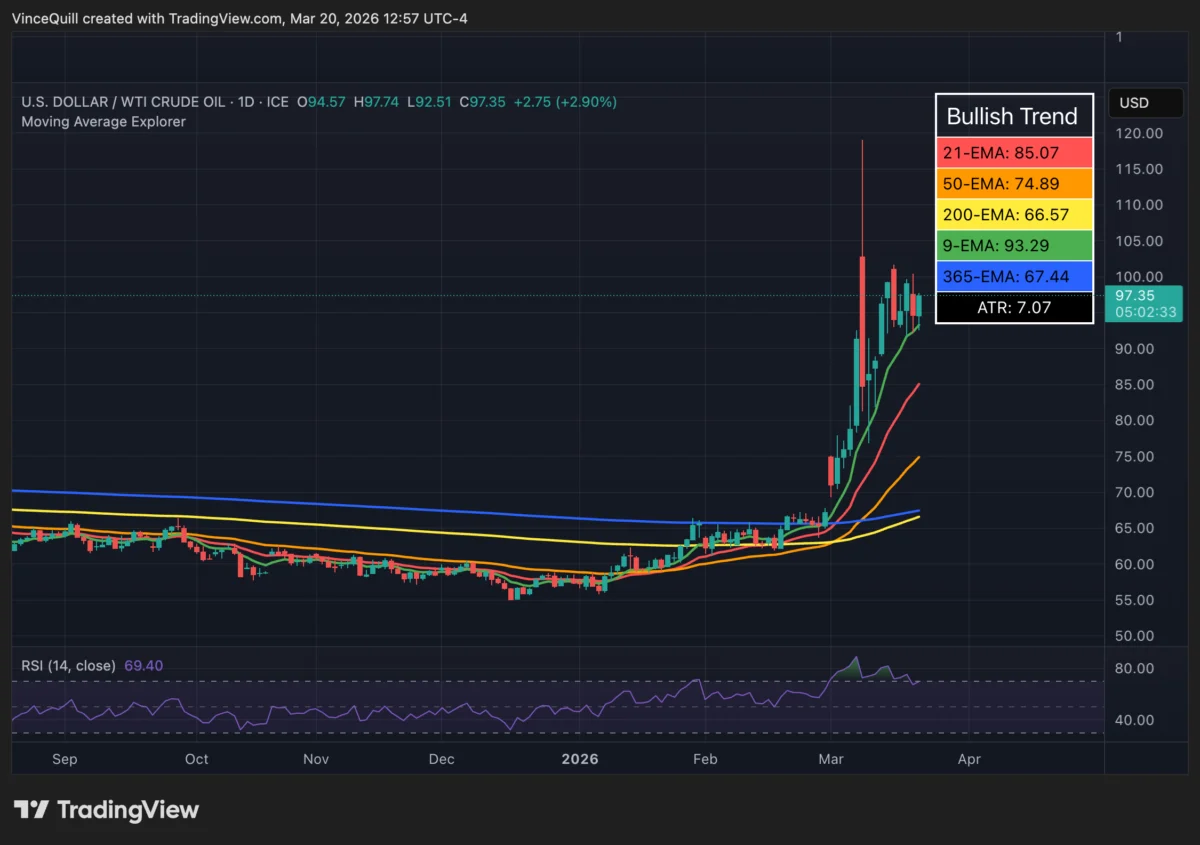
Global financial markets appear to be operating under a dangerous assumption, underestimating the profound and protracted economic repercussions stemming from the ongoing Middle East conflict. This misjudgment is encapsulated in what Wall Street analysts have termed the "TACO" trade, a cynical acronym for "Trump always chickens out." This market sentiment reflects a belief that former President Donald Trump, known for his transactional approach to foreign policy, would ultimately de-escalate geopolitical tensions, thereby mitigating severe economic shocks. However, Nic Puckrin, a respected market analyst and founder of the Coin Bureau, issues a stark warning, asserting that this sanguine outlook is fundamentally flawed and risks a significant market correction.
Puckrin underscores that the geopolitical landscape is far more complex than a single individual’s will. "Trump is not in sole control of the situation," Puckrin cautioned, highlighting the multifaceted nature of regional conflicts involving numerous state and non-state actors, historical grievances, and deeply entrenched strategic interests. The analyst stresses that there are "no easy or quick exits from the war," suggesting that the conflict’s trajectory is likely to be prolonged and fraught with unpredictable escalations, contrary to the market’s current pricing model. This nuanced perspective challenges the prevailing "TACO" narrative, arguing that it overlooks the inherent volatility and the potential for a self-sustaining cycle of conflict that can defy political will, even from the highest office.
The Looming Threat of Stagflation: A Deep Dive into Economic Risks
The most immediate and concerning economic ramification, according to Puckrin, revolves around energy prices. Should crude oil, particularly benchmarks like West Texas Intermediate (WTI), "continue to trade above $100 per barrel," the global economy faces a critical juncture. Such a scenario would inevitably trigger a dual shock: a significant slowdown in economic growth coupled with a pronounced acceleration in inflation. Puckrin specifically projects that Personal Consumption Expenditures (PCE) inflation, a key metric closely watched by the Federal Reserve, could surge by "up to 1 percentage point." This rise in PCE would not merely be an inconvenience; it represents a substantial erosion of purchasing power and a direct threat to economic stability.
This perilous combination of decelerating growth and accelerating inflation is the quintessential definition of stagflation, an economic scenario Puckrin describes as "dreaded." Stagflation presents a unique and formidable challenge for policymakers, as traditional monetary tools designed to combat either inflation or recession often exacerbate the other. For instance, raising interest rates to curb inflation can further stifle growth and employment, while stimulating growth through lower rates risks fueling inflation. The analyst draws a chilling parallel to the 1970s, a decade infamous for its bout with stagflation. During that period, propelled by oil shocks and a wage-price spiral, "the S&P 500 went essentially nowhere in real terms for an entire decade once stagflation took hold." This historical precedent serves as a powerful reminder of the destructive potential of prolonged stagflation on asset values and investor returns.
Puckrin’s analysis suggests a critical timeline: "If oil stays above $100 throughout Q2 and into Q3, stagflation becomes a real problem for the Fed." This implies that the current market pricing, which largely discounts such a sustained rise, is dangerously optimistic. The ripple effects of elevated energy costs are pervasive, impacting everything from transportation and manufacturing to food production and consumer goods, ultimately translating into higher prices across the board and squeezing household budgets.

The Strait of Hormuz: A Global Economic Chokepoint
A significant factor exacerbating the economic risks is the vulnerability of critical maritime chokepoints, none more vital than the Strait of Hormuz. Puckrin warned that "markets might have a ‘rude awakening’ to the war in the Middle East," particularly emphasizing the strategic importance of this narrow waterway. The Strait of Hormuz is a geopolitical flashpoint through which approximately 20% of the world’s total petroleum liquids supply, including a substantial portion of global liquefied natural gas (LNG) shipments, passes daily. Its closure, or even significant disruption, would send shockwaves through global energy markets, far beyond the initial price spikes already observed.
The graphic depicting the annual volume of petroleum transported through the Strait of Hormuz highlights its irreplaceable role in global energy security. Any sustained disruption to this passage would not only halt immediate shipments but also trigger a scramble for alternative, often more expensive, supply routes and sources. Puckrin further elaborates on the compounding nature of such a crisis: "Even if the Strait of Hormuz were to open today, the disruption to the Gulf’s oil-producing infrastructure will take months to rebuild." This emphasizes that the damage is not merely transactional or temporary; physical infrastructure, from oil wells to pipelines and export terminals, could be compromised, leading to a protracted supply deficit even after the immediate conflict subsides. Such a scenario would lock in elevated oil prices for an extended period, solidifying the conditions for stagflation.
Historically, geopolitical tensions in the Middle East have frequently led to oil price spikes. The 1973 oil crisis, the 1979 Iranian Revolution, and the 1990 Gulf War all serve as powerful precedents where regional instability directly translated into global economic turmoil through the energy sector. The current conflict, with its potential to impact such a critical chokepoint, carries similar, if not greater, risks given the interconnectedness of today’s global economy.
The Federal Reserve’s Monetary Policy Quandary
The intertwining of geopolitical conflict, oil prices, and inflation presents a formidable challenge for central banks worldwide, especially the U.S. Federal Reserve. Energy is a foundational input for virtually all economic activity. A persistent rise in energy prices inevitably cascades through the economy, pushing up the cost of production, transportation, and ultimately, the final prices of goods and services. This widespread inflationary pressure directly undermines the Federal Reserve’s primary mandate of maintaining price stability.
In an environment of elevated inflation, the market’s hopeful anticipation of interest rate cuts – typically stimulative for risk assets like cryptocurrencies and stocks – would likely evaporate. Instead, the Federal Reserve might find itself compelled to maintain higher interest rates for longer, or even consider raising rates further, to combat persistent inflationary pressures. Such a move would effectively "quash any hopes of easing liquidity conditions to spur a crypto market rally," as well as dampening broader equity market enthusiasm. Lower interest rates generally encourage borrowing, investment, and consumer spending, providing liquidity that often flows into riskier assets. Conversely, higher rates tighten financial conditions, making borrowing more expensive and often leading investors to seek safer, less volatile assets.

The Federal Open Market Committee (FOMC), the body responsible for setting interest rate policy in the United States, underscored this uncertainty by holding interest rates steady in March, maintaining the Federal Funds rate within a range of 3.5% to 3.75%. While this decision reflected a cautious approach, the underlying sentiment regarding future rate movements has shifted dramatically. Rate cut odds for the upcoming April FOMC meeting have "all but vanished." Furthermore, the Chicago Mercantile Exchange’s (CME) FedWatch tool, which gauges market expectations for future Fed policy, indicates a small but growing probability – around 12% – that the FOMC might even raise rates next month. This nascent probability, though still low, signifies a significant shift from earlier expectations of multiple rate cuts throughout the year, illustrating the market’s evolving perception of inflationary risks.
Federal Reserve Chairman Jerome Powell explicitly acknowledged the darkening economic horizon during a press conference. "The implications of events in the Middle East for the U.S. economy are uncertain in the near term. Higher energy prices will push up overall inflation," Powell stated. His remarks confirm the central bank’s vigilance regarding external shocks. However, Powell also clarified that it is "too soon" to accurately gauge the full scope and severity of the potential economic effects stemming from the war and the disruption to global energy infrastructure. This cautious stance reflects the inherent difficulty in forecasting the trajectory of geopolitical events and their complex economic ripple effects, particularly when dealing with critical supply chains and volatile commodities like oil.
Broader Economic Implications and Sectoral Impact
The specter of stagflation, fueled by sustained high oil prices, extends its reach far beyond monetary policy, touching every facet of the global economy. For consumers, a rise in PCE inflation directly translates into reduced purchasing power. Essential goods and services, from groceries and gasoline to utility bills, become more expensive, leaving less disposable income for discretionary spending. This squeeze on consumer budgets can lead to a significant slowdown in retail sales and broader economic activity, creating a feedback loop where businesses face declining demand.
Businesses, in turn, confront a challenging environment of rising input costs (energy, raw materials) and potentially weaker consumer demand. Sectors heavily reliant on energy, such as transportation, manufacturing, and agriculture, would experience direct hits to their profit margins. Supply chains, already strained by recent global events, could face renewed pressure from increased shipping costs and potential disruptions, leading to further inefficiencies and delays. Small and medium-sized enterprises (SMEs), which often operate on tighter margins and have less capacity to absorb cost increases, would be particularly vulnerable.
For the global financial system, prolonged uncertainty and economic weakness could trigger capital flight from emerging markets, increased volatility in currency markets, and a general shift towards safe-haven assets. This could exacerbate existing financial fragilities in countries with high debt burdens or those heavily dependent on oil imports. The interconnectedness of global trade and finance means that a significant economic downturn in major economies, particularly the U.S. and Europe, would inevitably ripple outwards, impacting growth prospects worldwide.
Looking Ahead: Scenarios and Challenges for Policymakers

The current situation presents policymakers with an unenviable dilemma. For the Federal Reserve, the dual mandate of achieving maximum employment and stable prices becomes incredibly difficult to balance under stagflationary conditions. If they prioritize fighting inflation by raising rates, they risk pushing the economy into a deeper recession and increasing unemployment. If they prioritize supporting growth by cutting rates, they risk embedding inflation more deeply into the economy, making it even harder to control in the future. This "catch-22" scenario underscores the gravity of Puckrin’s warning.
Potential scenarios for the Middle East conflict range from de-escalation, which could alleviate some immediate pressures on oil prices, to further escalation, which could plunge the global economy into a full-blown crisis. A swift and decisive resolution, while desirable, appears increasingly unlikely given the complex geopolitical dynamics at play. Conversely, a protracted, low-level conflict with periodic flare-ups could create a continuous drag on economic sentiment and keep energy prices elevated through sustained risk premiums.
Policymakers will need to consider a range of unconventional tools or coordinated international efforts to mitigate the economic fallout. This could include strategic petroleum reserve releases, diplomatic efforts to stabilize the region, or fiscal policies aimed at supporting vulnerable households and businesses. However, the effectiveness of such measures is often limited in the face of truly systemic shocks.
Ultimately, Nic Puckrin’s warning serves as a crucial reminder that markets often operate on assumptions that can be quickly invalidated by geopolitical realities. The "TACO" trade, built on the premise of predictable de-escalation, may prove to be a dangerous gamble. The confluence of a volatile Middle East conflict, the strategic vulnerability of the Strait of Hormuz, and the looming threat of stagflation demands a more cautious and realistic assessment from investors and policymakers alike. The coming quarters will test the resilience of the global economy and the wisdom of its market participants, as the full implications of the conflict continue to unfold.