
 admin
admin
The cryptocurrency market is currently experiencing a significant divergence, with Bitcoin demonstrating remarkable resilience while a broad spectrum of altcoins faces substantial declines. This trend has driven the Altcoin Season Index, a key metric for gauging investor interest in non-Bitcoin cryptocurrencies, to its lowest point in approximately a year. The prevailing risk-off sentiment, exacerbated by escalating geopolitical tensions, is prompting investors to seek the perceived safety of Bitcoin, leading to a marked decrease in enthusiasm for alternative digital assets.
Data compiled by CoinGlass reveals that the Altcoin Season Index has plummeted to a reading of 12. This figure represents the weakest level observed in nearly twelve months, indicating a profound lack of investor engagement with cryptocurrencies beyond Bitcoin. The index functions by measuring the performance of a basket of altcoins relative to Bitcoin. A low score signifies that altcoins are significantly underperforming their flagship counterpart, a pattern commonly observed during periods of market uncertainty when capital tends to flow towards assets perceived as less volatile or more established.
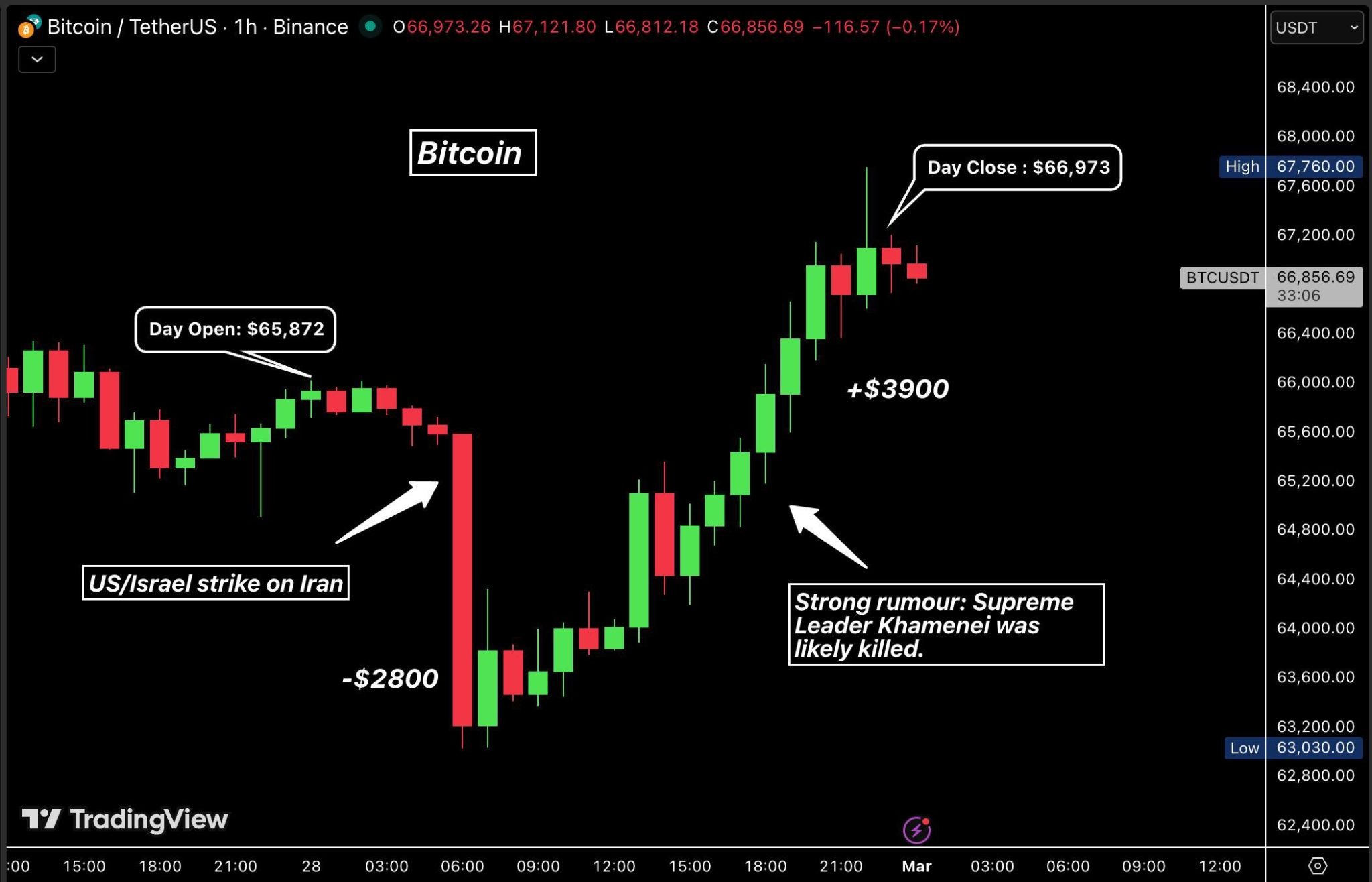
The current market dynamic has intensified over the past month, a period marked by heightened global geopolitical concerns. Specifically, the ongoing tensions between Israel and Iran, coupled with fears of broader escalation involving the United States, have acted as a significant catalyst for investors to reallocate their capital. This strategic shift has seen a noticeable migration towards assets like Bitcoin, which is increasingly viewed as a hedge against macro-economic instability and geopolitical risks.
Bitcoin Dominance Surges Amidst Altcoin Weakness
The increasing dominance of Bitcoin in the overall cryptocurrency market capitalization is a direct consequence of this capital rotation. While Bitcoin itself experienced a brief dip below the psychologically significant $100,000 mark over the weekend, it swiftly recovered and traded around $101,000 as of the latest reports. This resilience has propelled Bitcoin’s dominance to exceed 65% of the total crypto market, a level not seen since early 2021. This surge in Bitcoin’s market share underscores the prevailing narrative of "flight to safety" within the digital asset space.
Shawn Young, Chief Analyst at MEXC Research, provided commentary on the prevailing market conditions, stating that the outlook for a traditional "altcoin season" remains uncertain. He explained that historical market cycles have often witnessed altcoins gaining significant momentum in the latter stages of a bull run. However, the current market environment appears to be charting a different course. Young highlighted the growing influence of institutional investors in setting the market’s tone. These major players, according to his analysis, are demonstrating a clear preference for Bitcoin, which they perceive as both a crucial hedge against inflation and geopolitical risks, and a stable liquidity anchor in volatile times. This institutional preference, he suggests, is a key factor suppressing any significant rebound in altcoin prices.
"As long as volatility remains increased and macro risk lingers, capital rotation into altcoins may remain limited," Young remarked, emphasizing the persistent headwinds facing non-Bitcoin cryptocurrencies. His assertion aligns with the observed market behavior, where heightened uncertainty directly correlates with reduced appetite for riskier assets like many altcoins.

The impact of this trend was starkly visible over the weekend. Major altcoins experienced significant downturns, with Ethereum (ETH) falling to $2,130, its lowest point since May. Other prominent cryptocurrencies, including Solana (SOL) and XRP, witnessed declines exceeding 7%. While Ethereum has shown some recovery, trading around $2,260 at the time of reporting, the broader trend of altcoin weakness persists. These price movements illustrate the sensitivity of altcoins to shifts in investor sentiment, particularly when global risk factors come to the forefront.
Historical Context and Shifting Market Dynamics
The concept of an "altcoin season" refers to a period in the cryptocurrency market where altcoins, as a collective group, outperform Bitcoin. This phenomenon typically occurs after Bitcoin has established a strong upward trend and investors begin to seek higher returns by investing in smaller-cap or emerging cryptocurrencies with greater potential for exponential growth. Historically, these periods have been characterized by a speculative frenzy, with many altcoins experiencing parabolic price increases.
However, the current market landscape suggests a potential departure from these historical patterns. The increasing maturity of the cryptocurrency market, coupled with the growing involvement of institutional investors, has introduced new dynamics. Unlike retail investors who might be more inclined towards speculative bets on smaller altcoins, institutional players often prioritize assets with established track records, regulatory clarity, and perceived stability. Bitcoin, as the original and largest cryptocurrency by market capitalization, fits this profile more closely.
The introduction of Bitcoin-specific exchange-traded funds (ETFs) in major markets, such as the United States, has further solidified Bitcoin’s position as a more accessible and institutional-friendly asset. These financial products have opened the door for traditional investors to gain exposure to Bitcoin through regulated investment vehicles, bypassing the complexities and perceived risks associated with direct ownership of other cryptocurrencies. This institutional adoption, while beneficial for Bitcoin, inadvertently diverts capital that might have otherwise flowed into the altcoin market during previous cycles.
The Role of Geopolitical Instability
The recent surge in geopolitical tensions has undeniably played a pivotal role in shaping current market sentiment. The conflict in the Middle East and the potential for wider international involvement have created a climate of global uncertainty. In such environments, investors naturally gravitate towards assets perceived as safe havens. Historically, this has included traditional assets like gold and, more recently, Bitcoin has been increasingly viewed through a similar lens.
Bitcoin’s narrative as a "digital gold" or a hedge against inflation and geopolitical turmoil has gained traction over the years. Its decentralized nature, limited supply, and global accessibility make it an attractive alternative to traditional fiat currencies and assets that might be subject to national controls or political instability. The current geopolitical climate provides a tangible test of this narrative, and the market’s reaction thus far suggests that investors are indeed incorporating Bitcoin into their risk management strategies.

The impact of this risk aversion is particularly pronounced for altcoins. Many altcoins, especially those with smaller market capitalizations, are inherently more volatile and less liquid than Bitcoin. During periods of heightened fear and uncertainty, these assets are often the first to be liquidated as investors prioritize capital preservation. The sharp declines observed in Ethereum, Solana, and XRP serve as a testament to this phenomenon.
Analysis of Implications and Future Outlook
The current market trajectory has significant implications for the broader cryptocurrency ecosystem. The prolonged period of low altcoin performance could lead to a consolidation phase for many smaller projects, potentially resulting in decreased innovation and development if funding becomes scarce. Investors who have heavily allocated to altcoins may face substantial losses, potentially leading to a temporary exodus from the crypto market altogether.
However, the situation is not entirely bleak for all altcoins. Shawn Young’s commentary suggests a potential for a "different kind of altcoin season," one that is more focused on robust Layer-1 (L1) networks and foundational infrastructure. He identifies Ethereum, Solana, and XRP as potential beneficiaries of this evolving landscape. These platforms are crucial for underpinning critical emerging sectors within the digital asset space, including the tokenization of real-world assets (RWAs), decentralized physical infrastructure networks (DePIN), and stablecoin issuance.
The growing institutional interest in these specific L1 networks stems from their perceived utility and their role in building the future infrastructure of the digital economy. If Bitcoin can establish a stable price floor above $100,000 and if the prevailing macro-economic and geopolitical risks begin to subside, it is plausible that capital could eventually rotate back into these more established and fundamentally sound altcoins.
Furthermore, the potential for the launch of spot ETFs for these L1 cryptocurrencies, similar to the Bitcoin ETFs that have already been approved, could serve as a future catalyst. Such developments would further enhance their accessibility and legitimacy in the eyes of institutional investors, potentially reigniting interest and driving price appreciation. This scenario envisions a more selective altcoin season, driven by utility and institutional adoption rather than broad speculative fervor.
The current market environment, characterized by Bitcoin’s strength and altcoin weakness, serves as a critical juncture for the cryptocurrency industry. It highlights the evolving nature of investor behavior, the increasing influence of institutional capital, and the impact of global macro-economic and geopolitical factors on digital asset markets. While the prospect of a traditional altcoin season may be diminished in the short term, the underlying innovation and development within key L1 ecosystems continue, suggesting that future opportunities for altcoin outperformance may emerge, albeit through a different pathway than historically observed. The coming months will be crucial in determining whether the current trend persists or if a more diversified recovery takes hold across the cryptocurrency spectrum.