
 admin
admin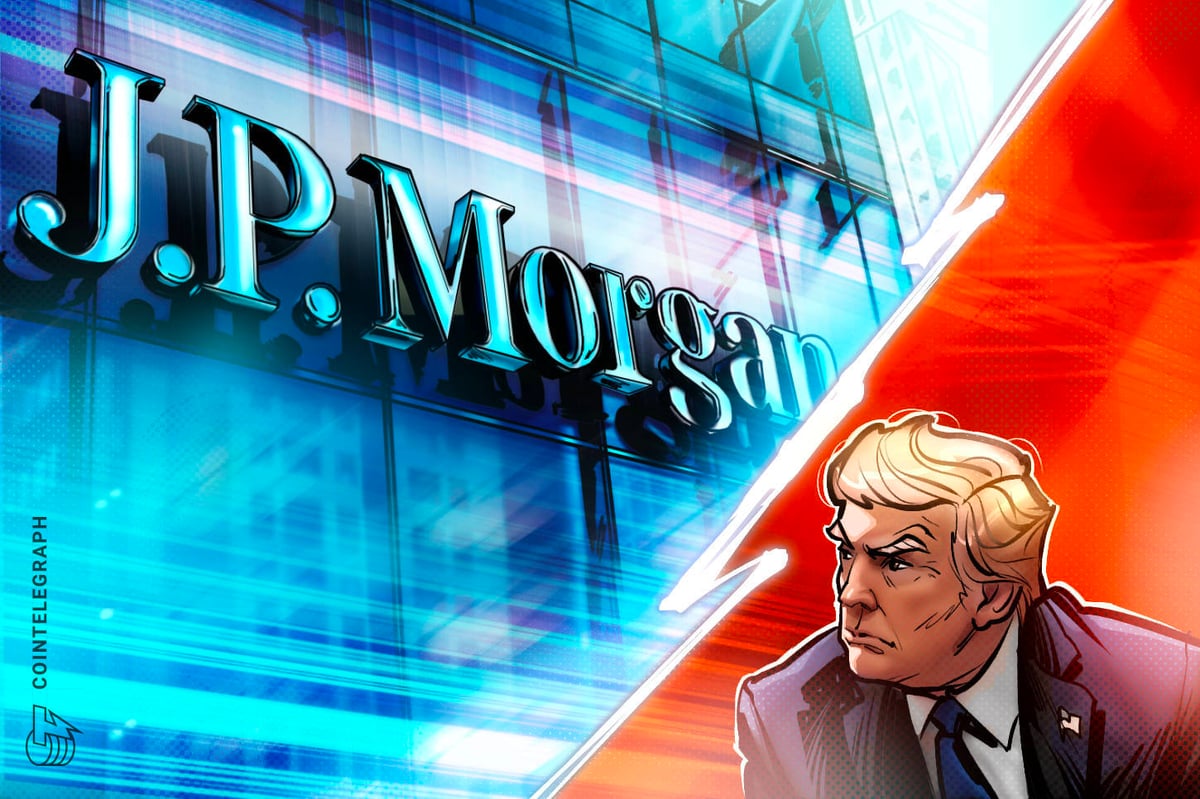
The largest bank in the United States, JPMorgan Chase, has officially acknowledged that it closed accounts associated with former President Donald Trump in the aftermath of the January 6, 2021, Capitol attack. This unprecedented admission, made public through recent court filings, marks the first time JPMorgan has confirmed on record its decision to de-bank the former president, a move that the Trump family contends directly led them to explore and ultimately embrace the world of cryptocurrency. The revelation comes amidst a contentious $5 billion lawsuit filed by Trump against the banking giant, alleging politically motivated financial discrimination.
The Official Admission and Lawsuit’s Genesis
The critical admission emerged from court documents reviewed last week by prominent financial news outlets, including Fortune and CNBC. Dan Wilkening, JPMorgan’s former chief administrative officer, provided a sworn statement confirming the bank’s actions. "In February 2021, JPMorgan informed Plaintiffs that certain accounts maintained with JPMorgan’s CB [commercial bank] and PB [private bank] would be closed," Wilkening stated in a filing related to Trump’s lawsuit against the bank. This statement provides the concrete answer that JPMorgan had previously withheld in both public forums and earlier court proceedings regarding the closure of accounts linked to Trump and his businesses.
For months leading up to this admission, JPMorgan had remained conspicuously silent or evasive on the specific reasons or even the fact of the account closures. This lack of transparency fueled speculation and frustration from Trump’s legal team. The lawsuit, initiated in late January of the current year, accuses JPMorgan of unlawfully terminating his accounts for purely political reasons. Trump’s legal representatives assert that this action inflicted "overwhelming financial harm" and placed him and his family on a reputational "blacklist," thereby justifying the substantial $5 billion in damages being sought.
Upon the public disclosure of Wilkening’s statement, President Trump’s legal team swiftly issued a statement characterizing the bank’s admission as a "devastating concession." They argued that it unequivocally validated President Trump’s entire claim, stating, "JPMorgan Chase admitted to unlawfully and intentionally de-banking President Trump, his family, and his businesses, causing overwhelming financial harm." This development is expected to significantly impact the trajectory of the ongoing legal battle, potentially shifting the burden of proof or bolstering Trump’s arguments regarding the bank’s intent.
A Chronology of Events Leading to the Legal Showdown
The sequence of events underscores the rapid escalation of tensions and actions in the immediate aftermath of the January 6th Capitol attack:
- January 6, 2021: A mob of Trump supporters breaches the U.S. Capitol building following a rally where President Trump spoke. The event leads to widespread condemnation and calls for accountability, intensifying scrutiny on individuals and entities associated with the former president.
- February 2021: JPMorgan Chase formally informs Donald Trump and his associated entities that specific commercial and private bank accounts would be closed. This decision, now confirmed by former CAO Dan Wilkening, initiates the process of de-banking.
- Post-February 2021 – Mid-2023: Following the de-banking by JPMorgan and, as Eric Trump later claimed, by other financial institutions like Capital One, the Trump family begins to actively explore and invest in the cryptocurrency sector. This period marks a significant pivot away from traditional banking reliance.
- August [Previous Year]: Eric Trump publicly details the family’s experiences with de-banking on Fox News, explicitly stating that their "love" for crypto was born out of necessity after being cut off by traditional banks. He also hints at the establishment of a new financial platform.
- Late January [Current Year]: Donald Trump files a high-profile lawsuit against JPMorgan Chase, seeking $5 billion in damages and alleging politically motivated de-banking.
- Last Week [Current Year]: Court filings related to Trump’s lawsuit become public, revealing Dan Wilkening’s explicit admission that JPMorgan closed Trump-linked accounts in February 2021.
- Sunday [Current Year]: JPMorgan spokeswoman Trish Wexler issues a statement to CNN, acknowledging the lawsuit but asserting its lack of merit, while also providing the bank’s general policy on account closures.
This timeline illustrates a direct causal link, from the political turmoil of early 2021 to the financial repercussions for the Trump family, ultimately culminating in a major legal challenge and a strategic pivot into a nascent financial technology sector.
JPMorgan’s Stance and Broader Defense
Despite the admission of account closures, JPMorgan Chase maintains that its actions were not politically motivated. In a statement provided to CNN on Sunday, JPMorgan spokeswoman Trish Wexler reiterated the bank’s position: "While we regret President Trump has sued us, we believe the suit has no merit." Wexler elaborated on the bank’s general policy, asserting that JPMorgan closes accounts that are deemed to pose legal or regulatory risks to the company. Crucially, she emphasized, "We do not close accounts for political or religious reasons."
Wexler’s statement further clarified the bank’s operational principles: "We regret having to do so, but often rules and regulatory expectations lead us to do so." This defense suggests that JPMorgan’s decision stemmed from an internal assessment of risk, likely encompassing reputational, legal, and compliance considerations in the wake of the highly charged events of January 6th. Financial institutions, particularly those as large and interconnected as JPMorgan Chase, operate under stringent regulatory frameworks designed to prevent illicit financial activities, sanctions violations, and mitigate risks to the broader financial system. The bank’s argument will likely center on these compliance obligations and risk management protocols as legitimate, non-political justifications for their actions.
The Catalyst for Crypto: Eric Trump’s Experience
The narrative of de-banking is deeply intertwined with the Trump family’s newfound advocacy for cryptocurrency. Donald Trump’s son, Eric Trump, has been particularly vocal about the family’s forced migration into the digital asset space. He has openly stated on multiple occasions that the family pivoted heavily into crypto after facing significant financial disenfranchisement following the Capitol riots.
In an interview with Fox News in August of the previous year, Eric Trump recounted a particularly jarring experience: "Capital One stripped 300 bank accounts from me in the middle of the night." This assertion, while separate from the JPMorgan admission, paints a broader picture of multiple financial institutions reportedly distancing themselves from the Trump organization. He explained that his "love" for crypto was not initially a choice but a necessity born out of having no other viable options within the traditional banking system.
Eric Trump’s statements highlight a growing sentiment among some who perceive traditional banks as having weaponized their platforms. "It has become the fastest-growing industry anywhere in the world. It has removed a lot of the power from the big banks, who have weaponized their platforms against the American people, and I could not be more proud to be here," he declared. This perspective frames cryptocurrency not just as an investment opportunity but as a bulwark against perceived overreach or political bias within established financial institutions. This personal experience of de-banking appears to have been a pivotal factor in shaping the Trump family’s proactive engagement with the crypto industry.
The Birth of World Liberty Financial (WLFI) and Broader Crypto Push
The direct consequence of this de-banking experience for the Trump family has been the establishment and promotion of their own sprawling crypto platform, World Liberty Financial (WLFI). Eric Trump reportedly spearheaded the initiative to create WLFI, positioning it as a response to the perceived vulnerabilities of traditional finance. While specific details about WLFI’s operations and services are still emerging, it is understood to aim at providing financial solutions that leverage blockchain technology, potentially including foreign exchange and remittance services. This venture signifies a strategic and deeply personal investment by the Trump family into the decentralized finance ecosystem.
Beyond WLFI, the de-banking episode appears to have influenced Donald Trump’s broader political stance on cryptocurrency. During his current presidential campaign, the former president has increasingly positioned himself as a champion for the crypto industry, advocating for positive regulation and expressing support for digital assets. This marks a notable shift from previous administrations, which often approached crypto with caution or skepticism. His current rhetoric suggests a future policy framework that would be more accommodating to crypto innovation, a stance undoubtedly shaped by his own family’s experiences with traditional banking. This alignment with the crypto community could also be a strategic move to attract a younger, tech-savvy voter base increasingly interested in digital assets.
Broader Implications for "De-banking" and Financial Freedom
The JPMorgan admission reignites a critical debate surrounding "de-banking"—the practice of financial institutions terminating or refusing services to individuals or entities. While banks have a legitimate right and regulatory obligation to manage risk, including compliance with Anti-Money Laundering (AML), Know Your Customer (KYC), and sanctions regulations, the perception of political motivation in such decisions raises significant concerns about financial freedom and access to essential services.
Critics argue that de-banking, when not clearly justified by concrete illegal activity, can be used to silence political opposition or discriminate against unpopular groups. This case, involving a former U.S. President, amplifies these concerns, as it suggests that even prominent figures can be vulnerable to financial exclusion based on perceived reputational risk or political pressure. The broader financial services industry will be closely watching the outcome of Trump’s lawsuit, as it could set precedents for how banks assess and manage political and reputational risk, and the extent of their liability when such decisions are challenged. It underscores the delicate balance between a bank’s right to protect its interests and the public’s right to access fundamental financial services without undue political interference.
The Intersection of Traditional Finance and the Crypto Ecosystem
This saga powerfully illustrates the growing intersection and often contentious relationship between traditional finance (TradFi) and the nascent cryptocurrency ecosystem. For individuals or organizations facing de-banking from established institutions, cryptocurrencies offer an alternative, albeit one with its own set of risks and regulatory uncertainties. The decentralized nature of many cryptocurrencies and blockchain networks can be appealing precisely because they are designed to operate outside the direct control of central authorities or large banks.
The Trump family’s pivot into crypto, culminating in WLFI, exemplifies this trend. It highlights how the perceived limitations or biases of the traditional financial system can drive innovation and adoption in the crypto space. As more individuals and businesses explore digital assets as a means of conducting transactions, storing value, or raising capital, the pressure on traditional banks to adapt or face competition will intensify. This case may serve as a significant case study in how political and financial events can accelerate the mainstreaming of cryptocurrency as a viable, alternative financial infrastructure.
Political Dimensions and the Evolving Regulatory Landscape
The legal battle and the Trump family’s foray into crypto also carry significant political implications. Donald Trump’s embrace of crypto regulation, shifting from a previously skeptical stance, indicates a calculated political strategy. By aligning himself with the crypto community, he potentially taps into a demographic that feels underserved or misunderstood by traditional political establishments and financial systems. This could become a key plank in his economic policy platform, particularly if he were to secure another term in office.
A Trump administration potentially more favorable to crypto could lead to a significant reshaping of the regulatory landscape for digital assets in the U.S. This could involve clearer guidelines, reduced bureaucratic hurdles, or even specific legislation aimed at fostering innovation and protecting users, while potentially curbing the power of traditional financial institutions that are perceived to have overstepped. The outcome of the JPMorgan lawsuit, therefore, extends beyond the immediate parties involved; it could influence broader policy discussions on financial access, corporate responsibility, and the future of digital finance under a potentially sympathetic political leadership.
The Path Forward: Legal Battle and Industry Scrutiny
The $5 billion lawsuit between Donald Trump and JPMorgan Chase is now poised to enter a new, more intense phase following the bank’s explicit admission. Trump’s legal team will undoubtedly leverage this concession to argue the merits of their case regarding political discrimination and financial harm. JPMorgan, on its part, will likely double down on its defense, emphasizing risk management, regulatory compliance, and the absence of political motivation in its decision-making process.
Beyond the courtroom, the wider financial industry and political commentators will continue to scrutinize the implications of this case. It raises fundamental questions about the power of large financial institutions, the boundaries of their discretion in client relationships, and the growing influence of alternative financial systems like cryptocurrency. The ultimate resolution of this legal dispute could have far-reaching consequences, shaping future banking practices, influencing regulatory frameworks for digital assets, and defining the ongoing struggle between traditional financial gatekeepers and the burgeoning decentralized economy.