admin
admin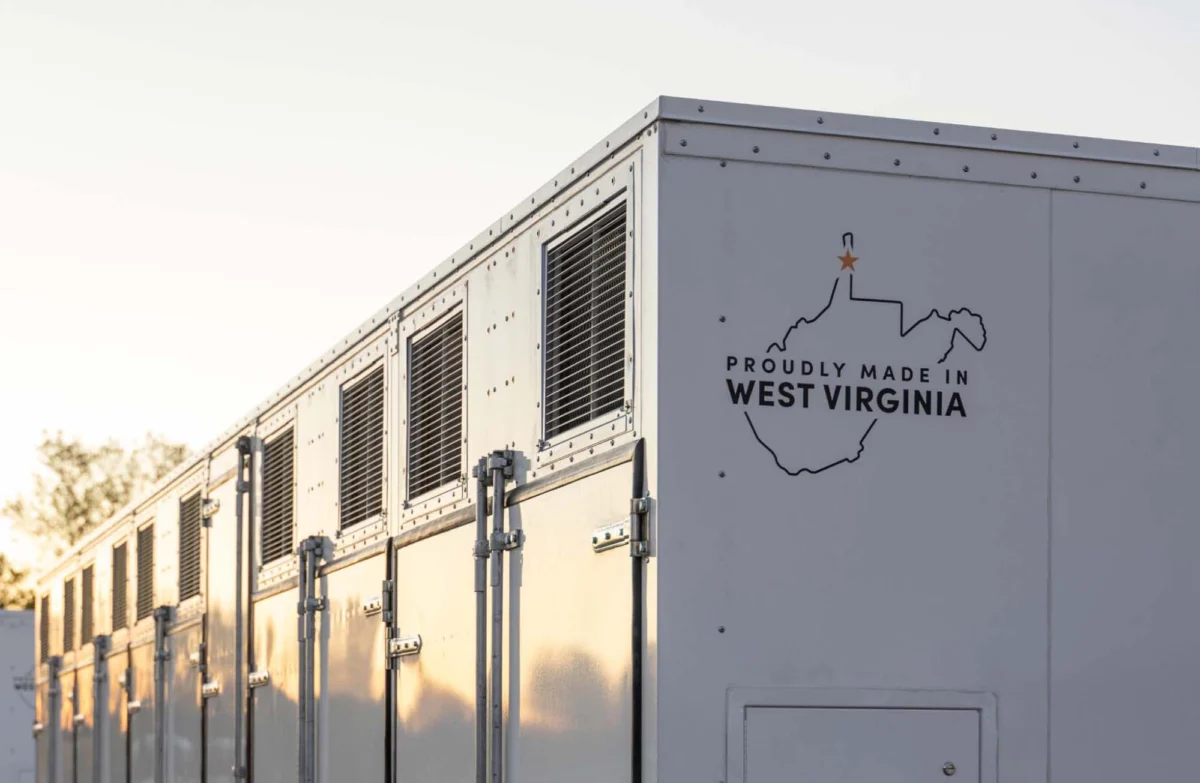
Google has officially finalized a landmark agreement valued at approximately $1 billion to integrate a revolutionary long-duration energy storage system into its upcoming data center infrastructure in Minnesota. This strategic partnership with Form Energy, a Massachusetts-based energy storage startup, marks one of the largest commercial commitments to date for iron-air battery technology. The deal underscores a critical pivot in the technology sector’s approach to sustainability, moving beyond the purchase of renewable energy credits toward the implementation of physical, grid-stabilizing infrastructure capable of supporting 24/7 carbon-free energy (CFE) goals.
The centerpiece of this agreement is Form Energy’s proprietary iron-air battery, a system designed to discharge electricity for up to 100 hours—a duration that far exceeds the four-to-six-hour window typical of conventional lithium-ion battery installations. By providing multi-day storage, the system addresses the inherent intermittency of wind and solar power, ensuring that Google’s massive data processing operations remain powered by carbon-free sources even during extended periods of low wind or cloud cover.
Technical Specifications and the Iron-Air Mechanism
The technology developed by Form Energy represents a departure from the rare-earth mineral dependence that characterizes much of the modern battery industry. The iron-air battery operates on a principle known as "reversible rusting." During the discharge cycle, the battery "breathes" in oxygen from the ambient air, which reacts with high-purity iron pellets within the cell to create iron oxide, or rust. This chemical reaction releases electrons that are then funneled into the electrical grid. When the battery is charged using excess electricity from wind or solar farms, the process is reversed; an electrical current is applied to the rust, converting it back into metallic iron and releasing oxygen.
This electrochemical cycle allows for the storage of vast amounts of energy at a fraction of the cost of lithium-ion. According to technical briefings from Form Energy, the iron-air system can store energy at roughly one-tenth the cost of lithium-ion technology because its primary components—iron, water, and air—are abundant, inexpensive, and non-toxic. For the Minnesota project, the battery system is slated to deliver a continuous 300 megawatts of electricity. This capacity will be integrated with a massive renewable energy portfolio consisting of 1.4 gigawatts of wind power and 200 megawatts of solar power, creating a self-sustaining energy ecosystem for Google’s regional operations.
The Strategic Context of the Minnesota Data Center
The deployment of this billion-dollar battery system is tied to Google’s broader expansion in the Midwest. The tech giant is currently developing a large-scale data center in Becker, Minnesota, a site strategically chosen for its proximity to existing energy infrastructure. The region has historically been home to the Sherburne County Generating Station (Sherco), one of the largest coal-fired power plants in the United States. As Xcel Energy, the local utility provider, moves to decommission its coal units, Google and Form Energy are stepping in to fill the reliability gap with clean alternatives.
This project serves as a blueprint for the "clean energy transition" by repurposing the existing transmission lines that once carried coal-fired power. By installing 100-hour storage at this location, Google is not only securing its own energy future but also contributing to the stability of the regional grid. During periods of extreme weather, such as the "polar vortex" events common in the Upper Midwest, the ability to discharge power for four consecutive days could prevent grid failure and reduce the necessity of firing up gas-peaker plants.
Chronology of Form Energy: From Stealth Startup to Industrial Giant
The $1 billion deal with Google represents the culmination of nearly a decade of research and development. Form Energy was founded in 2017 by a team of industry veterans, including CEO Mateo Jaramillo, who previously served as the head of Tesla’s stationary storage division. The company’s mission was clear from the outset: to solve the "multi-day" storage problem that prevented renewable energy from becoming a primary, baseload power source.
- 2017-2020: Form Energy operated largely in stealth mode, securing early-stage funding from Breakthrough Energy Ventures (backed by Bill Gates), TPG Rise Climate, and various venture capital firms.
- 2021: The company publicly unveiled its iron-air chemistry, demonstrating that it could achieve the 100-hour discharge threshold required for seasonal or weather-driven grid fluctuations.
- 2022-2023: Form Energy announced plans for "Form Factory 1," a $760 million manufacturing facility located in Weirton, West Virginia. This facility was built on the site of a former steel mill, symbolically transitioning the region from old-world metallurgy to new-world energy technology.
- 2024-2025: The company began securing pilot projects with utilities such as Great River Energy and Xcel Energy. However, the Google deal marks its first massive-scale private sector contract.
- February 2026: Google confirms the $1 billion price tag for the Minnesota deployment, and Form Energy announces it is raising an additional $500 million in capital to scale production.
To date, Form Energy has raised a total of $1.4 billion in private equity and venture capital. With the Google contract on its books, the company has signaled its intention to pursue an Initial Public Offering (IPO) in 2027, which would likely value the firm as a leader in the long-duration energy storage (LDES) sector.

Economic Implications and the AI Power Demand
The timing of this investment is not coincidental. The rapid proliferation of Artificial Intelligence (AI) and Large Language Models (LLMs) has led to an unprecedented surge in electricity demand. Data centers, which were already energy-intensive, now require significantly more power to cool and operate the specialized chips used for AI training and inference.
Industry analysts suggest that the $1 billion investment is a defensive move as much as a sustainable one. As the demand for grid power increases, electricity prices are expected to become more volatile. By owning or exclusively contracting long-duration storage, Google can "peak shave"—using its stored wind and solar power when market prices are high and charging its batteries when prices are low or negative.
Furthermore, the deal reflects a shift in corporate procurement. In previous years, tech companies would purchase "Renewable Energy Certificates" (RECs) to claim they were 100% green, even if their data centers were actually running on coal or gas at night. Google’s "24/7 CFE" mandate requires that every hour of electricity consumption be matched by local carbon-free generation. Achieving this is mathematically impossible without long-duration storage, making Form Energy’s technology a vital component of Google’s operational integrity.
Reactions from Stakeholders and Policy Experts
While Google has remained focused on the technical merits of the project, industry reactions have been overwhelmingly positive regarding the economic signals this deal sends. Climate policy experts note that a $1 billion commitment from a single private entity provides the "market pull" necessary to bring down the cost of LDES technology for everyone.
"This is the ‘Tesla Roadster’ moment for long-duration storage," said one energy analyst familiar with the deal. "By being the first mover and paying the premium for this first-of-a-kind massive deployment, Google is effectively subsidizing the learning curve. This will make it cheaper for municipal utilities and smaller cooperatives to adopt iron-air technology in the 2030s."
From a labor perspective, the deal is also being hailed as a win for the "Rust Belt." The batteries for the Minnesota project will be manufactured at the West Virginia factory, supporting hundreds of high-tech manufacturing jobs in a region that has struggled with the decline of the coal and steel industries.
Broader Impact on the Global Energy Transition
The success of the Google-Form Energy partnership could trigger a wave of similar investments across the tech sector. Microsoft, Amazon, and Meta are all facing similar pressure to balance their AI ambitions with their climate pledges. If the Minnesota iron-air system performs as expected, it will prove that the "intermittency problem" of renewables is a solved technical challenge rather than a permanent barrier.
As the global energy grid transitions away from fossil fuels, the role of LDES will become central to national security and economic stability. The ability to store four days of power means that a grid reliant on wind and solar can survive "Dunkelflaute"—a German term for periods with little to no wind or solar production. By proving the commercial viability of iron-air batteries at a billion-dollar scale, Google and Form Energy are not just powering a data center; they are providing a template for the decarbonization of the global electrical grid.
With the Minnesota project scheduled to come online in stages over the next 24 months, the eyes of the energy world will be on Becker. The results of this deployment will likely determine the pace of the energy transition for the remainder of the decade, establishing whether iron-air technology will become the standard for the next generation of industrial-scale energy storage.