admin
admin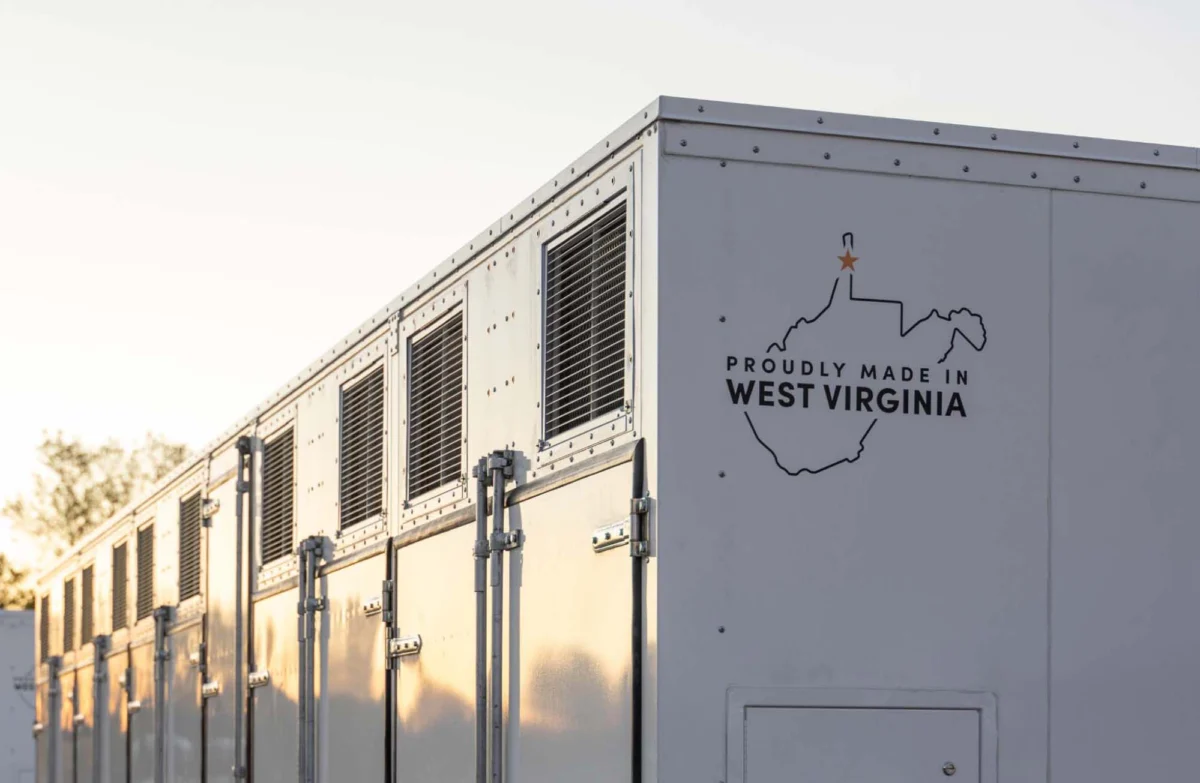
The technology giant Google has finalized a landmark agreement valued at approximately $1 billion with the energy storage startup Form Energy to deploy a massive iron-air battery system at its upcoming data center in Minnesota. This investment represents one of the largest single commitments to long-duration energy storage (LDES) in history, signaling a shift in how hyperscale data center operators manage the intermittent nature of renewable energy. The project, centered in Sherburne County, Minnesota, is designed to provide a continuous 300-megawatt discharge of electricity for up to 100 hours, effectively bridging the gap between renewable generation and the constant power demands of modern artificial intelligence and cloud computing infrastructure.
The deal follows Google’s earlier announcement regarding its new 1.9-gigawatt clean energy portfolio in the Midwest, which includes 1.4 gigawatts of wind power and 200 megawatts of solar capacity. By integrating Form Energy’s unique electrochemical storage technology, Google aims to achieve its ambitious corporate goal of operating on 24/7 carbon-free energy (CFE) by 2030. While traditional lithium-ion batteries are typically optimized for four-to-six-hour discharge cycles, the iron-air system is engineered to maintain grid stability during multi-day periods of low wind or solar output, a critical requirement for a facility that must remain operational every second of the year.
The Mechanics of Iron-Air Technology
At the heart of the $1 billion deal is Form Energy’s proprietary "rusting" battery technology. Unlike lithium-ion batteries, which rely on expensive and supply-chain-constrained minerals like cobalt, nickel, and lithium, Form Energy’s cells utilize iron—one of the most abundant and inexpensive elements on Earth. The battery operates on the principle of reversible oxidation. During the discharge cycle, the battery "breathes in" oxygen from the ambient air, which reacts with the iron inside the cells to create iron oxide, or rust. This chemical reaction releases electrons that are funneled into the electrical grid.
When the battery is being charged—using excess electricity from Google’s wind and solar farms—the process is reversed. An electrical current is applied to the rust, which removes the oxygen and converts the iron oxide back into metallic iron. This cycle can be repeated thousands of times with minimal degradation. Because the primary active materials are iron, water, and air, the cost of the system is estimated to be less than one-tenth the cost of lithium-ion technology on a per-kilowatt-hour basis for long durations. This cost efficiency is what makes a 100-hour discharge capacity economically viable for the first time at this scale.
Chronology of Development and Strategic Partnerships
The partnership between Google and Form Energy is the culmination of years of technical refinement and strategic scaling. Form Energy was founded in 2017 by a team of industry veterans, including CEO Mateo Jaramillo, who previously led Tesla’s stationary storage division. The company spent its early years in stealth mode, focusing on the fundamental chemistry required to make iron-air batteries commercially competitive.
In 2021, the company gained significant traction after closing a $240 million Series D funding round, which allowed it to move from laboratory prototypes to pilot-scale manufacturing. By 2023, Form Energy broke ground on its first major manufacturing facility, "Form Factory 1," located in Weirton, West Virginia. The site, a former steel mill, was chosen for its access to skilled labor and historical ties to the iron industry. The factory is now operational and is the primary source of the battery modules destined for the Minnesota project.
The Minnesota project itself is located at the site of the Sherburne County (Sherco) Generating Station. This location is symbolic of the broader energy transition; Sherco has long been the state’s largest coal-fired power plant. As Xcel Energy, the local utility provider, moves to retire the coal units, the site is being repurposed as a hub for clean energy. Google’s data center and Form Energy’s battery system will utilize the existing high-voltage transmission infrastructure, reducing the time and cost associated with connecting new large-scale energy projects to the grid.
Financial Landscape and Market Implications
The $1 billion price tag reported for the Google contract has significant implications for Form Energy’s financial trajectory. To date, the startup has raised approximately $1.4 billion from a diverse group of investors, including Breakthrough Energy Ventures (backed by Bill Gates), TPG Rise Climate, and GIC. With the Google order now on its books, CEO Mateo Jaramillo confirmed that the company is currently raising an additional $500 million in a new funding round to further scale production capacity.
The company has also signaled its intention to go public as early as 2027. A successful Initial Public Offering (IPO) would provide the capital necessary to build additional factories and compete with global battery giants. Analysts suggest that the Google deal serves as a "proof of concept" for other Fortune 500 companies that have made similar carbon-neutral pledges but have struggled with the logistics of firming up intermittent renewable power.

From a broader economic perspective, the project benefits from the federal incentives provided by the Inflation Reduction Act (IRA) of 2022. The IRA offers significant tax credits for domestic battery manufacturing and for the deployment of clean energy storage systems. These incentives have likely played a role in making the $1 billion price point attractive for Google, as they offset some of the initial capital expenditures and encourage the use of American-made hardware.
Regional Impact and Grid Stability
The integration of 300 megawatts of long-duration storage is expected to provide a substantial boost to the reliability of the Upper Midwest’s electrical grid. In regions like Minnesota, where winter weather can lead to prolonged periods of low solar generation and variable wind speeds, the ability to store 30,000 megawatt-hours of energy is a game-changer. This "firming" of renewable energy prevents the need for utilities to fire up "peaker" plants—usually fueled by natural gas—during times of high demand or low supply.
Xcel Energy, which is collaborating on the broader transition of the Sherco site, has noted that such projects are essential for meeting state-mandated carbon reduction goals. The project is expected to create hundreds of temporary construction jobs in Sherburne County and dozens of permanent technical roles to manage the battery facility and data center operations.
Furthermore, the project addresses a growing concern among grid operators regarding the "AI boom." As data centers grow larger and more power-hungry to support large language models, their impact on local power grids has come under scrutiny. By pairing its data center with a dedicated, massive storage system, Google is effectively insulating its operations from grid volatility while ensuring that its massive energy consumption does not result in an increase in local carbon emissions.
Analysis of the Long-Duration Energy Storage (LDES) Sector
The Google-Form Energy deal highlights a pivot in the global energy storage market. For the past decade, the focus has been almost exclusively on short-duration lithium-ion systems intended to balance frequency and handle evening peaks. However, as the percentage of renewables on the grid increases, the need for LDES becomes undeniable.
Industry experts define LDES as any system capable of discharging power for 10 hours or more. Form Energy’s 100-hour capability places it in a specialized category often referred to as "multi-day storage." While other technologies such as pumped hydro and compressed air energy storage (CAES) offer long durations, they are geographically constrained by the need for specific landscapes or underground salt caverns. The modular nature of iron-air batteries allows them to be deployed anywhere, from urban centers to remote industrial sites.
However, challenges remain. Scaling manufacturing to meet the demands of the global utility market requires massive capital investment and the maintenance of high quality-control standards. The success of the Minnesota project will be closely watched by utilities and industrial players worldwide. If Form Energy can deliver the promised performance at the $1 billion valuation, it could catalyze a wave of similar projects across the globe, potentially ending the dominance of fossil fuels as the primary "backstop" for the electrical grid.
Conclusion and Future Outlook
The partnership between Google and Form Energy marks a milestone in the evolution of the green economy. It moves the conversation beyond simple renewable generation toward the more complex challenge of energy reliability. By investing $1 billion into a relatively new technology, Google is not only securing its own operational future but is also providing the market signal necessary to mature the long-duration storage industry.
As Form Factory 1 ramps up production and the Minnesota site begins installation, the eyes of the energy sector will be on Weirton and Sherburne County. The success of this 100-hour battery will likely determine the pace of the global transition to a truly 24/7 carbon-free grid. For now, the deal stands as a testament to the power of electrochemical innovation and the deep pockets of Big Tech driving the next generation of industrial infrastructure. With an IPO on the horizon and a massive order book, Form Energy is positioned to lead a new era of energy storage, turning the simple process of rusting iron into a cornerstone of the global climate strategy.