admin
admin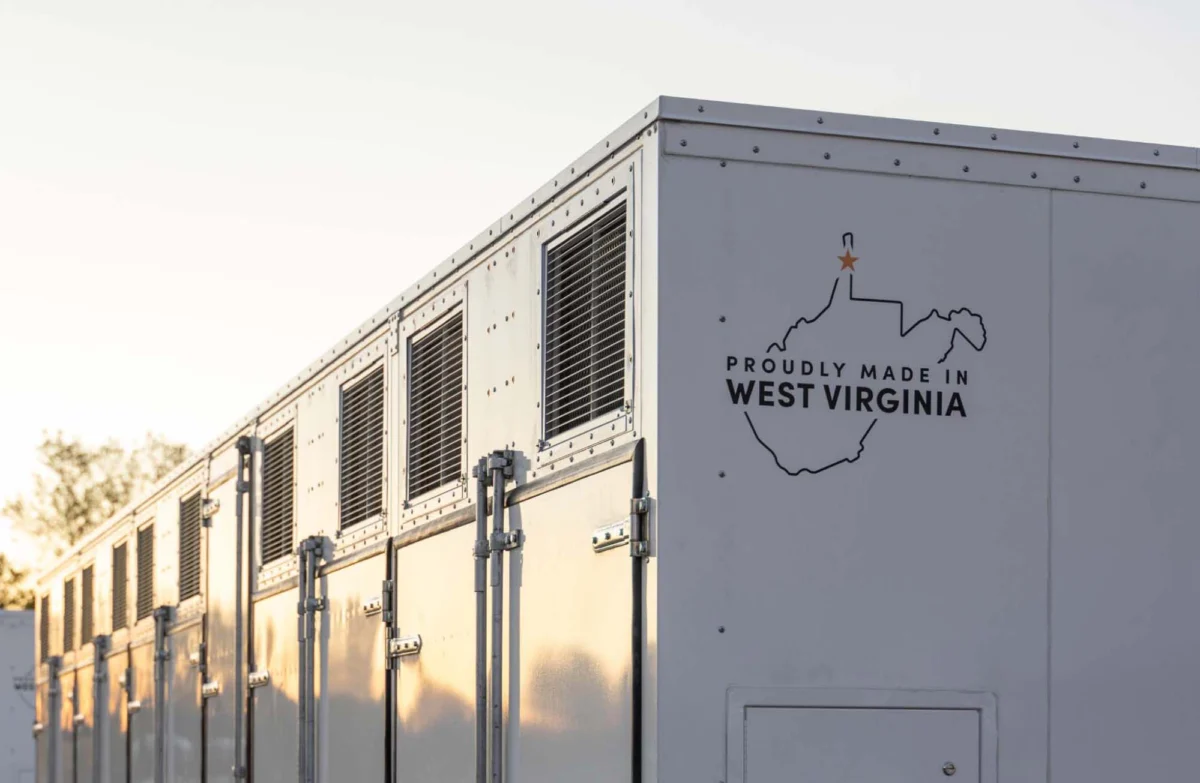
The global transition toward renewable energy reached a significant milestone this week as Google finalized a $1 billion agreement with Form Energy to deploy a massive long-duration battery system at its new data center in Minnesota. This partnership marks one of the largest commercial commitments to date for non-lithium energy storage technology, specifically focusing on Form Energy’s proprietary iron-air battery chemistry. Designed to provide continuous power for up to 100 hours, the battery system will serve as a critical stabilizer for the data center’s 1.6-gigawatt renewable energy portfolio, which includes 1.4 gigawatts of wind power and 200 megawatts of solar capacity.
The deal represents a turning point for the energy industry, which has long struggled with the intermittency of wind and solar power. While lithium-ion batteries have become the standard for short-term storage—typically discharging for two to four hours—they remain prohibitively expensive for multi-day applications. Form Energy’s solution aims to bridge this "multi-day gap," ensuring that Google’s operations remain powered even during extended periods of low wind or cloud cover.
The Mechanics of Iron-Air Technology: A "Breathing" Battery
At the heart of this $1 billion investment is a unique electrochemical process often described as "reversible rusting." Form Energy’s iron-air batteries operate by inhaling oxygen from the ambient air to convert iron metal into iron oxide (rust). This oxidation process releases electrons, which are then channeled into the electrical grid. When the battery is charged using excess electricity from wind or solar farms, the process is reversed: the rust is converted back into metallic iron, and the battery "exhales" oxygen.
The primary advantage of this technology is the abundance and low cost of its base materials. Iron is one of the most plentiful elements on Earth, and unlike lithium, cobalt, or nickel, it is not subject to the same volatile global supply chain constraints or geopolitical tensions. By utilizing iron, water, and air, Form Energy claims it can produce energy storage systems at a fraction of the cost of traditional lithium-ion installations on a per-kilowatt-hour basis for long durations.
The Minnesota installation is specced to deliver a continuous 300 megawatts of power for 100 hours. This equates to 30,000 megawatt-hours of total storage capacity, a scale that dwarfs existing lithium-ion "mega-batteries" currently operating on the global grid.
Project Context: The Minnesota Data Center and Xcel Energy
Google’s decision to locate this project in Minnesota is deeply tied to the region’s shifting energy landscape. The new data center is situated near the Sherburne County Generating Plant (Sherco) in Becker, Minnesota. Historically one of the largest coal-fired power plants in the Upper Midwest, Sherco is currently being decommissioned by Xcel Energy as part of its transition to a carbon-free grid by 2040.
The $1 billion battery system will play a pivotal role in replacing the "firm" capacity once provided by coal. While wind and solar can generate the bulk of the energy needed, they cannot guarantee the 24/7 reliability required by a modern data center, especially one likely tasked with processing intensive artificial intelligence workloads. By integrating Form Energy’s 100-hour battery, Google and Xcel Energy are creating a "firm" renewable energy block that mimics the reliability of a traditional baseload power plant without the associated carbon emissions.
Industry analysts suggest that this project serves as a pilot for a new era of industrial infrastructure. As tech giants face increasing scrutiny over the massive power consumption of AI-ready data centers, the ability to prove that these facilities can run on 100% carbon-free energy—even when the sun isn’t shining—is a vital corporate and environmental objective.
The Financial Growth of Form Energy
The $1 billion payday from Google arrives at a critical juncture for Form Energy. Headquartered in Somerville, Massachusetts, the startup was founded in 2017 by a team of industry veterans, including CEO Mateo Jaramillo, who previously led Tesla’s stationary storage division. Since its inception, the company has been a darling of clean-tech investors, raising approximately $1.4 billion prior to this deal.

In conjunction with the Google announcement, Jaramillo confirmed that the company is currently in the process of raising an additional $500 million in a new funding round. This capital is expected to fuel the expansion of "Form Factory 1," the company’s high-volume manufacturing facility in Weirton, West Virginia. The factory, built on the site of a former steel mill, symbolizes the "Rust Belt to Green Belt" economic transition, employing hundreds of workers in a region traditionally dependent on coal and steel.
The company has also signaled its intention to go public in 2027. A successful IPO would likely make Form Energy one of the most valuable pure-play energy storage companies in the world, providing the liquidity needed to scale its technology to other global markets.
Chronology of Development
The path to this $1 billion deal has been years in the making, characterized by steady technological milestones and strategic partnerships:
- 2017: Form Energy is founded by Mateo Jaramillo and Yet-Ming Chiang (an MIT professor and co-founder of A123 Systems).
- 2020: The company exits "stealth mode" and reveals its focus on iron-air chemistry for long-duration storage.
- 2021: Form Energy secures a major Series D funding round and announces its first pilot projects with utilities like Great River Energy in Minnesota.
- 2022: The company selects Weirton, West Virginia, as the site for its first commercial-scale factory, supported by state and federal incentives.
- 2023: Construction begins on Form Factory 1. The company signs a series of memorandums of understanding with major utilities, including Georgia Power and Xcel Energy.
- 2024: Early production begins at the West Virginia facility. Google enters formal negotiations for a large-scale deployment to support its Minnesota data center expansion.
- 2026 (Present): The $1 billion deal is confirmed, marking the first time a major technology firm has committed to iron-air technology at this scale.
Broader Implications for the Energy Grid
The implications of this deal extend far beyond Google’s corporate sustainability reports. For the broader energy sector, the successful deployment of a 100-hour battery at this scale addresses the "Dunkelflaute"—a German term used by meteorologists and grid operators to describe periods of "dark doldrums" when neither solar nor wind power is available.
As more states and countries mandate 100% renewable energy targets, the need for long-duration energy storage (LDES) becomes an existential necessity for grid stability. Without LDES, grids must maintain expensive and polluting natural gas "peaker" plants to fill the gaps. If Form Energy can prove that iron-air batteries are reliable and cost-effective at the $1 billion scale, it could trigger a massive wave of investment from other utilities and heavy industries.
Furthermore, the deal highlights the impact of the U.S. Inflation Reduction Act (IRA). The IRA provides significant production tax credits (Section 45X) for domestically manufactured battery components and investment tax credits for energy storage installations. These federal incentives have significantly improved the internal rate of return for projects like the Minnesota data center, making the $1 billion price tag commercially viable for Google.
Competitive Landscape and Market Outlook
While Form Energy is currently the frontrunner in the iron-air space, the LDES market is becoming increasingly crowded. Other technologies vying for a share of the grid include:
- Vanadium Redox Flow Batteries: Known for their longevity and ability to scale, though vanadium costs remain a hurdle.
- Gravity-Based Storage: Companies like Energy Vault use motor-driven cranes to lift and lower massive blocks, storing potential energy.
- Thermal Energy Storage: Storing heat in materials like molten salt or crushed rock, which is later converted back to electricity.
- Compressed Air Energy Storage (CAES): Using excess power to pump air into underground caverns.
Form Energy’s advantage lies in its energy density and the use of iron, which allows for a smaller physical footprint than gravity or compressed air solutions, making it easier to site near data centers or existing substations.
Conclusion
Google’s $1 billion commitment to Form Energy is more than just a procurement deal; it is a vote of confidence in the future of long-duration energy storage. By backing a technology that moves beyond the limitations of lithium-ion, Google is setting a new standard for how the world’s largest companies can achieve true 24/7 carbon-free energy.
As Form Energy prepares for its 2027 IPO and scales its West Virginia manufacturing operations, the eyes of the global energy community will be on Minnesota. If the iron-air system performs as promised, discharging 300 megawatts of power for days on end, it will provide the definitive proof of concept needed to finally decouple the power grid from fossil fuels. The success of this project could very well dictate the blueprint for the next generation of global energy infrastructure.