
 Dwi Wanna
Legislative Framework and the June 12 Amendment
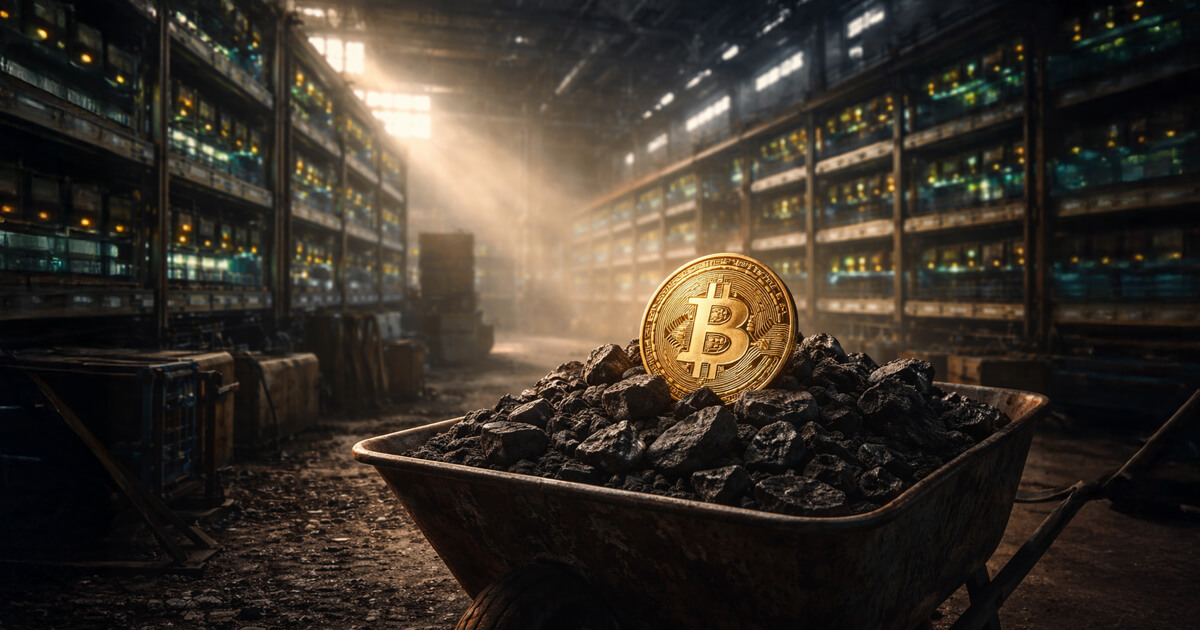
The movement gained momentum following the submission of an amendment to the National Assembly, which specifically advocates for a national review of the crypto-asset mining sector. The document argues that France’s current energy management system faces challenges that could be addressed by the unique operational characteristics of Bitcoin mining. Unlike traditional industrial loads, Bitcoin mining hardware can be activated or deactivated in a matter of seconds without damaging equipment or disrupting complex supply chains. This "interruptibility" is the cornerstone of the lawmakers’ argument.
The proposal suggests that the French government evaluate how these facilities can be strategically positioned near power generation sites to absorb surplus energy that would otherwise be wasted or sold at negative prices to neighboring European markets. The lawmakers emphasize that such a move is not merely a financial endeavor but a technical necessity for modernizing a grid that is increasingly reliant on both inflexible nuclear baseloads and intermittent renewable sources like wind and solar.
The Paradox of French Energy Surplus
France occupies a unique position in the global energy landscape. Since the 1970s, following the Messmer Plan, the country has prioritized nuclear energy to ensure national sovereignty and low carbon emissions. Currently, nuclear power accounts for more than 70% of the nation’s total electricity generation, operated primarily by the state-owned utility Électricité de France (EDF). While this has resulted in France having one of the lowest carbon footprints per capita among industrialized nations, it has also created a persistent problem of oversupply.
Nuclear reactors are designed to provide a steady "baseload" of power. They are less flexible than natural gas or coal plants, which can be ramped up or down relatively quickly to match fluctuating demand. When French demand drops—typically during mild weather or overnight—the reactors continue to produce power. If the surplus cannot be exported profitably, it leads to economic inefficiencies.
According to data highlighted by Raphaël Bloch, co-founder of the French media outlet The Big Whale, France lost approximately €80 million in the first half of 2024 alone due to wasted electricity. This waste occurs when the grid must "curtail" production or pay other countries to take the excess power to prevent grid instability. Lawmakers argue that if this energy had been routed into Bitcoin mining operations, the surplus would have been converted into a liquid digital asset, effectively reclaiming the lost value for the national economy.
Technical Synergy: Bitcoin as a Grid Balancer
The proposal submitted to the National Assembly outlines several technical advantages that Bitcoin mining offers to the national grid. The most prominent is "demand response." In a traditional grid, balancing supply and demand is a constant struggle. When demand spikes, the grid must bring expensive and often carbon-heavy "peaker plants" online. Conversely, when supply exceeds demand, the grid faces the risk of frequency imbalances.
Bitcoin miners act as a "controllable load." By participating in demand-response programs, mining farms can agree to shut down instantly during peak demand periods, freeing up electricity for hospitals, homes, and essential industries. In exchange, they can operate during periods of low demand when electricity is cheapest and most abundant. This helps flatten the demand curve, making the grid more resilient and reducing the mechanical wear and tear on nuclear reactors that would otherwise have to attempt "load following"—the difficult process of adjusting reactor output to meet demand.
Furthermore, the lawmakers point out that mining facilities are highly scalable and geographically flexible. They do not require proximity to urban centers or specific raw materials; they only require an internet connection and a power source. This allows for the deployment of containers at remote power plants or at old industrial sites that have existing high-voltage infrastructure but have lost their original manufacturing base.
Economic Revitalization and the Circular Energy Economy
Beyond grid stability, the French proposal envisions a broader economic impact. The lawmakers suggest that the development of a regulated, low-carbon mining sector could revive "brownfield" industrial sites. These areas, often located in rural or post-industrial regions of France, could be transformed into high-tech hubs, creating jobs in electrical engineering, data center management, and hardware maintenance.
Another innovative aspect of the proposal is the recycling of "waste heat." Bitcoin mining generates a significant amount of thermal energy as a byproduct of the computation process. The amendment suggests that this heat could be harnessed for district heating systems, industrial drying processes, or agricultural greenhouses. By integrating mining into a circular economy, France could improve the overall efficiency of its energy consumption while supporting local industries.
This alignment with decarbonization goals is a key selling point. Because France’s grid is already over 90% carbon-free (combining nuclear and renewables), Bitcoin mined on the French grid would be among the "greenest" in the world. This could position France as a global leader in sustainable digital finance, attracting international investment from ESG-conscious (Environmental, Social, and Governance) funds and technology companies.
Global Context and Competitive Pressures
The French initiative does not exist in a vacuum. It reflects a growing global trend where nation-states are beginning to view Bitcoin mining as a strategic asset rather than a regulatory nuisance.
In the United States, the state of Texas has already integrated Bitcoin mining into the ERCOT (Electric Reliability Council of Texas) grid with significant success. During extreme weather events, such as winter storms or summer heatwaves, Texas miners have shut down their operations to provide hundreds of megawatts of power back to the grid, preventing blackouts.
Other nations are also moving to capture the benefits of energy surplus:
- Pakistan: Recently announced plans to allocate 2,000 megawatts of electricity to support Bitcoin mining and AI data centers, aiming to utilize excess capacity and generate foreign exchange reserves.
- Belarus: President Alexander Lukashenko has previously directed his government to explore mining as a way to utilize the surplus from the country’s new nuclear power plants.
- Bhutan: The Kingdom of Bhutan has been quietly mining Bitcoin using its abundant hydroelectric resources for several years, using the revenue to fund national infrastructure projects.
Lawmakers in France are likely aware that if they do not create a favorable environment for this industry, the capital and expertise will migrate to more welcoming jurisdictions. Daniel Batten, a prominent Bitcoin mining researcher, has argued that Bitcoin mining is the only global industry that can act as a "first responder" to energy waste, providing the necessary economic incentive to build out more renewable energy capacity by acting as a guaranteed buyer of last resort.
Challenges and Official Deliberations
Despite the technical and economic arguments, the proposal faces a rigorous path through the French legislative process. Skepticism remains among some factions of the government regarding the volatility of Bitcoin and the public perception of crypto-assets. Critics often point to the historical price fluctuations of BTC as a risk to state-involved projects.
However, the lawmakers’ request is specifically for a "report," which is a standard first step in French lawmaking to gather empirical evidence before drafting formal regulations. This report would likely involve testimony from the Commission de Régulation de l’Énergie (CRE) and EDF. The focus will be on ensuring that any mining activity does not inadvertently increase electricity prices for French citizens or compromise the nation’s commitment to the European Union’s energy directives.
The official response from the government will be a bellwether for France’s digital and energy policy. If the National Assembly moves forward, it could lead to the creation of a "low-carbon mining" certification or specific energy tariffs for flexible loads, providing a clear legal framework for companies to operate within the country.
Conclusion: A Strategic Pivot Toward Digital Sovereignty
The June 12 proposal represents a sophisticated understanding of the intersection between energy physics and digital economics. By viewing Bitcoin mining through the lens of grid management rather than just financial speculation, French lawmakers are attempting to solve a decades-old problem of nuclear overproduction.
If adopted, this strategy could transform France’s €80 million annual energy loss into a productive economic engine. It would not only stabilize the national grid and support the transition to a more complex energy mix but also cement France’s role as a pioneer in the "Energy-Money" nexus. As the global race for digital and energy sovereignty intensifies, France’s decision to investigate the merits of Bitcoin mining may serve as a blueprint for other nuclear-powered nations looking to optimize their most valuable resource: electricity.