
 admin
admin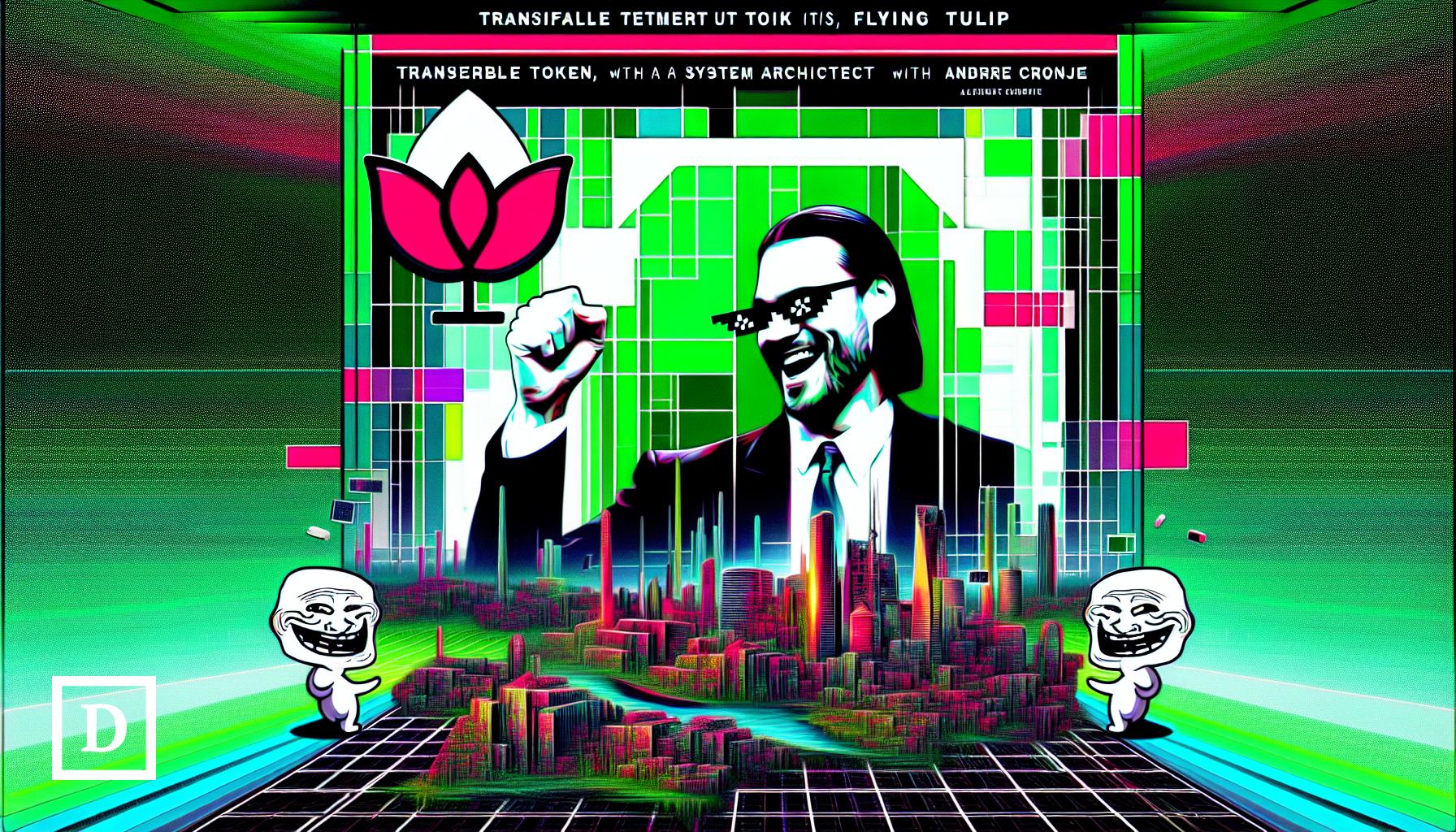
The highly anticipated Flying Tulip (FT) token has officially become transferable and commenced trading on February 23rd, marking a significant milestone for the burgeoning decentralized finance (DeFi) ecosystem. This token generation event (TGE) is particularly noteworthy due to its association with Andre Cronje, a pivotal figure in the DeFi space renowned for his foundational work on protocols such as Yearn Finance and Fantom. The project has secured substantial backing, raising close to $300 million in funding prior to its public launch.
Early trading data from CoinGecko indicates that after an initial dip to approximately $0.08, the FT token has stabilized, trading sideways around the $0.10 mark. This price action suggests a fully diluted valuation in the vicinity of $1 billion, a figure that underscores the significant investor confidence and market anticipation surrounding this new entrant. The unique tokenomics of Flying Tulip, particularly its public sale structure, play a crucial role in interpreting this valuation.
The Innovative Public Sale Mechanism
Unlike conventional token sales, Flying Tulip’s public sale, priced at $0.10 per token, incorporated a novel mechanism designed to offer enhanced investor protection and align participant incentives. Public sale participants were not merely allocated FT tokens; instead, they received ftPUTs. These are non-fungible tokens (NFTs) embedded with a perpetual put option. This innovative feature grants holders the right, under specific predetermined conditions, to redeem their investment at the original public sale price of $0.10. This effectively establishes a floor price for early investors, shielding them from immediate market volatility and offering a degree of security not typically found in nascent DeFi launches.
Andre Cronje himself elaborated on the distinct nature of Flying Tulip’s tokenomics in a recent X post, emphasizing that the project’s Fully Diluted Valuation (FDV) calculation deviates from standard industry practices. Traditionally, FDV is derived by multiplying the total circulating supply of a token by its current market price. However, Flying Tulip’s model is predicated on a collateralization principle. Each FT token is minted only when backed by a corresponding put option, thereby precluding the possibility of unbacked supply entering circulation. Furthermore, when tokens are redeemed through the put option mechanism, they are permanently removed from the circulating supply, further reinforcing the collateralization principle.
Cronje highlighted this innovative approach, stating that "every FT token is effectively collateralized by its own $0.10, making the system closer to a NAV valuation than FDV." This design, he contends, represents a novel departure from existing models and fosters a more equitable alignment of interests among participants. The Net Asset Value (NAV) approach, often used in traditional finance to value funds based on underlying assets, provides a more tangible benchmark for the token’s intrinsic value, as opposed to FDV which can be more susceptible to speculative inflation.
A Unified DeFi Super App Ambition
Flying Tulip is ambitiously positioned as a comprehensive DeFi "super app." The platform aims to consolidate a range of essential DeFi functionalities, including spot trading, perpetual derivatives, and lending services, into a single, intuitive interface. This all-encompassing approach seeks to streamline the user experience, reducing the friction often associated with navigating multiple disparate DeFi protocols. By integrating these core services, Flying Tulip endeavors to appeal to both seasoned DeFi users and newcomers looking for a more accessible entry point into the decentralized financial landscape.
The project’s strategic focus on user experience and integrated functionality is a key differentiator in a rapidly evolving and increasingly crowded DeFi market. The success of such a platform will likely hinge on its ability to deliver robust performance, security, and a seamless user interface that can compete with established, albeit fragmented, solutions.
A Funding Trajectory Leading to Launch
The successful commencement of trading for the FT token is underpinned by a robust funding strategy that secured substantial capital in the months leading up to the launch. As reported in September of the previous year, Flying Tulip had already secured $200 million from prominent institutional investors, including notable names such as Brevan Howard and DWF Labs. This initial significant funding round signaled strong conviction from established players in the crypto investment space.
Following this substantial commitment, the project continued to attract further capital through subsequent funding rounds and public sales conducted on platforms like Impossible Finance and CoinList. These additional infusions, amounting to tens of millions of dollars, further bolstered the project’s financial standing, ensuring ample resources for development, marketing, and operational scaling. The cumulative fundraising effort, nearing the $300 million mark, provides Flying Tulip with a strong financial foundation to execute its ambitious roadmap and navigate the competitive DeFi landscape.
Chronology of Key Events
The journey of Flying Tulip from conception to its public trading debut can be traced through a series of significant milestones:
- Pre-Launch Funding Rounds: Prior to any public announcement of the token, Flying Tulip successfully secured substantial funding from institutional investors. This period likely involved extensive due diligence from venture capital firms and strategic partners.
- September [Previous Year]: The project publicly announced a significant $200 million funding round, with participation from key industry players like Brevan Howard and DWF Labs. This event generated considerable buzz and validated the project’s potential within the DeFi community.
- Subsequent Funding and Public Sales: Following the initial large round, Flying Tulip conducted further capital-raising initiatives, including additional private rounds and public sales on platforms such as Impossible Finance and CoinList. These events broadened the investor base and contributed to the near-$300 million total funding.
- Early February [Current Year]: Andre Cronje began publicly detailing the unique tokenomics of Flying Tulip, particularly the concept of ftPUTs and the alternative valuation model (closer to NAV than FDV). This communication aimed to educate potential users and investors about the project’s innovative structure.
- February 23rd [Current Year]: The Flying Tulip (FT) token officially became transferable, marking the Token Generation Event (TGE). Trading commenced on various exchanges, with initial price action stabilizing around the $0.10 mark, reflecting the public sale price and the inherent floor provided by the ftPUT mechanism.
Data and Market Performance
As of the initial trading hours on February 23rd, data from CoinGecko provided key insights into the FT token’s market debut:
- Initial Price: The FT token experienced a brief dip to around $0.08 shortly after trading commenced.
- Stabilization Point: The token quickly recovered and began trading sideways in the vicinity of $0.10.
- Implied Fully Diluted Valuation (FDV): Based on the trading price and the total supply, the implied FDV was estimated to be around $1 billion. It is crucial to note Cronje’s clarification that this is not a standard FDV calculation due to the collateralization and redemption mechanisms.
- Public Sale Price: The set price for the public sale was $0.10 per FT token.
The trading behavior observed in the initial hours suggests a market that is cautiously optimistic, with the ftPUT mechanism likely playing a significant role in anchoring the price and preventing sharp downward movements that might otherwise be expected in a newly launched token. The stability around the $0.10 mark, which is also the public sale price, can be interpreted as early validation of the project’s tokenomics and its ability to manage initial market sentiment.
Broader Implications for the DeFi Landscape
The launch of Flying Tulip and its innovative tokenomics hold several potential implications for the broader DeFi ecosystem:
- Investor Protection Models: The ftPUT mechanism could inspire other DeFi projects to explore more robust investor protection strategies. By offering a degree of downside protection, such models might attract a wider range of investors, including those who have been hesitant to enter the DeFi space due to its inherent volatility.
- Valuation Methodologies: Cronje’s critique of standard FDV calculations and his proposal for NAV-like valuations could spark a broader discussion and re-evaluation of how DeFi token valuations are assessed. If successful, this could lead to more transparent and grounded valuation practices.
- "Super App" Trend: The ambition to create a unified DeFi platform aligns with a growing trend towards integrated financial applications. The success of Flying Tulip could further accelerate this trend, encouraging other projects to focus on user experience and comprehensiveness rather than single-functionality.
- Institutional Adoption: The substantial funding secured from established players like Brevan Howard and DWF Labs suggests a growing appetite for institutional investment in well-structured DeFi projects. This can pave the way for further mainstream adoption and the integration of DeFi into traditional financial markets.
- Regulatory Scrutiny: Innovative tokenomics, while potentially beneficial for users, can also attract regulatory attention. The unique features of ftPUTs and their redemption rights may be subject to scrutiny by regulatory bodies seeking to understand and classify these instruments within existing financial frameworks.
The successful implementation and long-term viability of Flying Tulip’s model will be closely watched by industry participants. Its ability to deliver on its promise of a seamless DeFi experience while maintaining the integrity of its novel tokenomics will be critical to its lasting impact on the decentralized finance landscape. The project’s trajectory will undoubtedly be a significant talking point in the ongoing evolution of DeFi.