admin
admin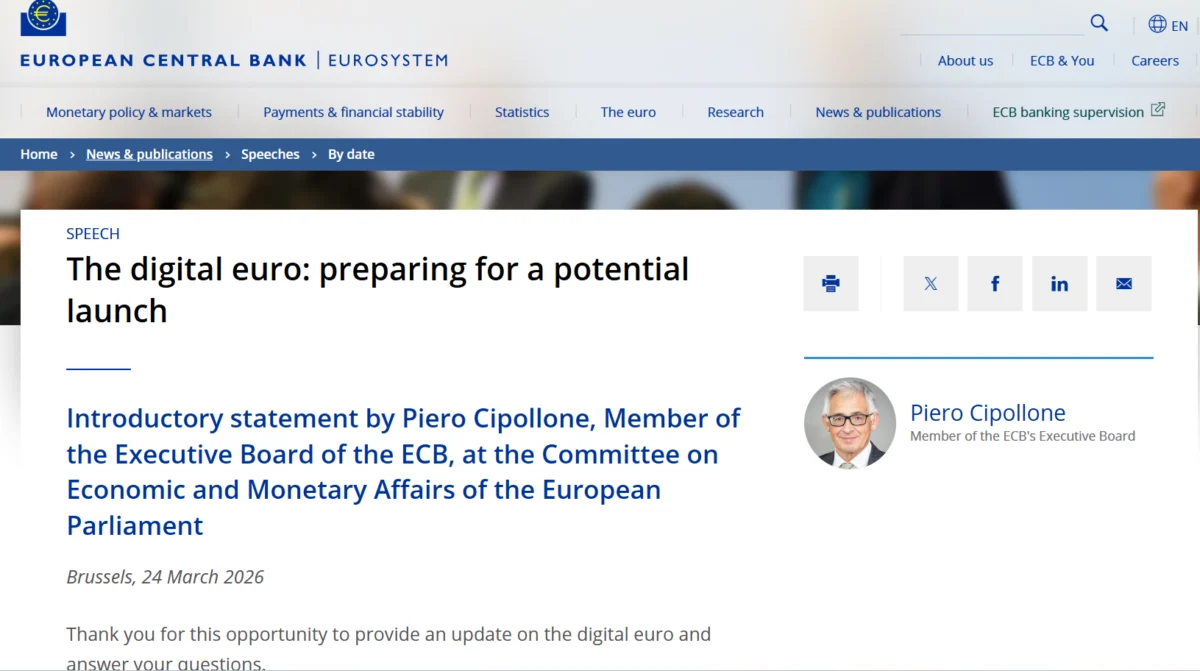
The European Central Bank (ECB) is poised to unveil the foundational European standards for a potential digital euro by this summer, a pivotal move designed to empower payment providers and merchants to initiate system preparations well in advance of any definitive issuance decision. This crucial timeline was articulated by Piero Cipollone, an Executive Board member of the ECB, during a briefing to European Union lawmakers on Tuesday, underscoring the central bank’s meticulous, multi-year strategy to modernize the Eurozone’s payment landscape.
Cipollone emphasized that the forthcoming standards are not merely technical specifications but a strategic blueprint intended to create a harmonized operational environment. Once these standards are formally announced, the ECB plans to engage closely with market participants, including banks, payment service providers (PSPs), and technology firms, to facilitate their prompt integration into existing and future payment terminals, applications, and broader financial solutions. This proactive approach aims to mitigate potential disruption and accelerate the adoption process should the digital euro receive final approval.
Laying the Groundwork: The Rulebook and Legislative Timeline
A key element of this preparatory phase involves the finalization of the digital euro rulebook. This comprehensive document will outline the operational guidelines, technical requirements, and legal framework for the digital currency, ensuring consistency and interoperability across the Eurozone. Cipollone highlighted that a finalized rulebook would enable manufacturers and software developers to embed the necessary infrastructure directly into new payment terminals and applications from the outset. This foresight is designed to give European companies a significant head start, positioning them advantageously once the requisite EU legislation for the digital euro is enacted, an event the ECB anticipates by 2026. This legislative milestone is crucial, as it will provide the legal certainty and regulatory clarity necessary for the digital euro to function within the existing financial ecosystem.
The journey towards a digital euro has been a carefully phased process, commencing with an exploratory phase in 2020, followed by an investigation phase launched in October 2021. The current phase, known as the "preparation phase," began in late 2023, focusing on developing the rulebook and identifying potential providers for the development of platforms and infrastructure. The announcement of standards this summer marks a tangible step forward in this preparation, shifting the focus from theoretical design to practical implementation readiness.
Pilot Programs and Technical Readiness: A Staged Rollout
Further cementing its commitment to technical readiness, the ECB will launch a 12-month digital euro pilot program starting from the second half of 2027. This pilot, for which the ECB opened a call for licensed payment service providers earlier in March, will operate in a controlled environment, meticulously testing person-to-person (P2P) and point-of-sale (POS) payments. The objective is to iron out any technical glitches, assess user experience, and validate the proposed infrastructure’s resilience and scalability. This rigorous testing is part of a broader plan to ensure the ECB is technically prepared for a potential issuance of the digital euro around 2029, contingent upon the successful passage and implementation of the legal framework by EU lawmakers. The phased approach underscores the ECB’s cautious yet determined strategy, prioritizing stability and user confidence.
This timeline reflects a deliberate strategy to ensure robust infrastructure and widespread acceptance. The decision to conduct a comprehensive pilot phase for a full year, starting several years before potential issuance, allows for iterative improvements and addresses concerns regarding technological readiness and operational efficiency. The call for licensed payment service providers highlights the ECB’s intention to leverage the expertise and existing networks of private sector entities, integrating them into the digital euro ecosystem rather than building a wholly new, centralized system from scratch.
Weighing Costs Against Long-Term Strategic Benefits
The introduction of a digital euro, like any major infrastructural overhaul, comes with associated costs. Earlier analysis by the ECB estimated that implementing a digital euro could cost EU banks between 4 billion and 6 billion euros over a four-year period. This figure, reported by Reuters in February, represents approximately 3% of banks’ annual information technology maintenance budgets. While substantial, Cipollone urged lawmakers to view these expenditures through the lens of long-term strategic benefits. He argued that these costs should be weighed against the significant advantages of retaining a greater share of merchant fees within the European economic area and the broader strategic imperative of scaling European payment schemes.
Currently, a substantial portion of transaction fees generated within the Eurozone flows to international card schemes, primarily Visa and Mastercard, which are largely non-European entities. A digital euro, designed as a pan-European payment rail, has the potential to redirect these revenues back into the European economy, fostering greater financial autonomy and resilience. This economic sovereignty argument is a cornerstone of the ECB’s rationale, positioning the digital euro not just as a technological upgrade but as a strategic tool for bolstering European economic independence in the global financial landscape.
A Public Infrastructure with Private Intermediation
A core tenet of the digital euro’s design, reiterated by Cipollone, is its conception as a public payments infrastructure. This model diverges significantly from a direct-to-consumer product offered by the ECB. Instead, private intermediaries, such as commercial banks and payment service providers, would play a crucial role, building user-friendly wallets and offering value-added services on top of the central bank’s foundational ledger. This hybrid approach aims to combine the trust and stability of central bank money with the innovation and customer service capabilities of the private sector.
This architecture has several advantages. Firstly, it avoids disintermediating commercial banks, which has been a significant concern for the banking sector. Banks would continue to be the primary interface for customers, managing accounts, conducting know-your-customer (KYC) checks, and offering integrated financial services. Secondly, it leverages existing private sector infrastructure and expertise, reducing the operational burden on the ECB. Thirdly, it fosters competition and innovation among private providers, who would vie to offer the most attractive and efficient digital euro services to consumers and businesses.

Reducing Dependence and Fostering European Payment Sovereignty
The strategic goal of the digital euro extends to providing robust pan-European payment rails that actively reduce the Eurozone’s dependence on dominant international card schemes. Cipollone articulated a vision where co-badged cards and bank wallets could seamlessly switch between domestic payment schemes and the digital euro across the entire euro area. This interoperability and optionality are critical for fostering a more competitive and resilient European payment ecosystem.
The current landscape sees a significant reliance on a few global players for card payments, which can pose risks in terms of resilience, data sovereignty, and cost. By developing its own digital currency infrastructure, the ECB aims to create a viable European alternative, enhancing the strategic autonomy of the Eurozone’s financial system. This move aligns with broader European initiatives, such as the European Payments Initiative (EPI), which also seeks to create a unified European payment solution. The digital euro could potentially complement and strengthen such initiatives, providing a central bank-backed foundation for innovative European payment solutions.
Complementing Cash and Bank Deposits: Ensuring Inclusivity
Addressing common misconceptions and concerns, Cipollone firmly stated that the digital euro is intended to complement existing forms of money – physical cash and commercial bank deposits – rather than replace them. This stance is vital for maintaining public trust and ensuring a smooth transition. The ECB recognizes the enduring importance of cash for certain demographics and situations, emphasizing that a digital euro would offer an additional choice, not a mandatory substitute.
Furthermore, a strong emphasis has been placed on inclusivity and accessibility in the digital euro’s design. From the outset, the reference app design is being developed with features such as voice commands and large-font displays. This commitment ensures that the digital euro is accessible to all segments of the population, including the elderly, visually impaired, or those less digitally native. Such design considerations are paramount for broad public acceptance and to prevent the creation of a digital divide within the Eurozone. The aim is to create a universally available, easy-to-use digital payment option that caters to the diverse needs of European citizens.
Anchoring Future Wholesale Markets: DLT and Tokenized Finance
Beyond retail payments, the ECB is also actively exploring the role of central bank money in future wholesale markets. Cipollone highlighted the ECB’s strategic objective for central bank money to remain the "anchor" for these evolving markets. This includes initiatives like the Pontes project, which is testing the settlement of tokenized securities in central bank money across various distributed ledger technology (DLT) platforms. The Pontes project aims to explore how central bank money can facilitate instant, secure, and efficient settlement in a DLT-native environment, reducing counterparty risk and operational inefficiencies.
Another significant initiative is the Appia roadmap, which outlines the ECB’s vision for a tokenized European financial ecosystem. This roadmap explores how DLT and tokenization can transform financial markets, from issuance and trading to settlement. The digital euro, or specifically its wholesale variant, would play a foundational role in this ecosystem, providing a trusted and risk-free settlement asset for tokenized securities and other financial instruments.
In a separate speech on Monday, Cipollone further elaborated on how tokenized central bank money could serve as the ultimate settlement asset for stablecoins and tokenized deposits. This concept addresses potential systemic risks associated with privately issued digital currencies by ensuring that their underlying value can be reliably settled in central bank money, thereby bolstering financial stability. This proactive engagement with DLT and tokenization underscores the ECB’s forward-looking approach, preparing the Eurozone for the next generation of financial innovation while safeguarding the stability of the monetary system.
The Broader Context: Global CBDC Race and Geopolitical Implications
The ECB’s diligent progress on the digital euro project is set against a backdrop of increasing global interest and development in Central Bank Digital Currencies (CBDCs). Over 130 countries, representing 98% of global GDP, are now exploring CBDCs, with several having already launched pilot programs or even fully issued digital currencies, such as Nigeria’s eNaira and the Bahamas’ Sand Dollar. China’s rapid advancements with its digital yuan (e-CNY) have particularly spurred central banks in Western economies to accelerate their own research and development, driven by concerns about maintaining monetary sovereignty, enhancing payment system resilience, and fostering innovation.
For the Eurozone, a digital euro is seen as a crucial tool to maintain its strategic autonomy in an increasingly digitalized global economy. It could reduce reliance on non-European payment infrastructures, ensure the availability of central bank money in a digital format, and potentially offer a competitive advantage in cross-border payments. The geopolitical dimension is significant; by offering a robust, secure, and privacy-preserving digital euro, the ECB aims to reinforce the international role of the euro and provide an alternative to other emerging digital currencies, thereby safeguarding European economic interests and values.
Looking Ahead: The Path to Issuance
The announcement of standards by summer marks a critical inflection point, shifting the digital euro project from an investigative phase to a tangible preparation stage. The subsequent phases, including the finalization of the rulebook, the legislative process within the EU, and the comprehensive pilot program, will collectively determine the feasibility and ultimate design of the digital euro. While the potential issuance around 2029 remains contingent on legislative approval, the ECB’s structured and transparent approach signals a strong commitment to bringing a central bank digital currency to the Eurozone. The overarching goal is to create a digital payment solution that is secure, efficient, inclusive, and sovereign, reinforcing the stability and innovation of the European financial system for decades to come. The coming years will be instrumental in shaping the future of money in Europe, with the digital euro poised to play a transformative role.