admin
admin
The global Web3 development community recently converged for "Convergence: A Chainlink Hackathon," an intensive event that brought together developers from across the globe to build sophisticated applications leveraging the Chainlink platform. This year’s hackathon not only marked a significant milestone in participant engagement but also demonstrated a profound evolution in decentralized application (dApp) design, with a record-breaking 554 project submissions. These projects extensively utilized the Chainlink Runtime Environment (CRE) across critical categories, including DeFi & Tokenization, CRE & AI, Prediction Markets, Risk & Compliance, Privacy, and Autonomous Agents, signaling a new era of hybrid smart contract innovation.
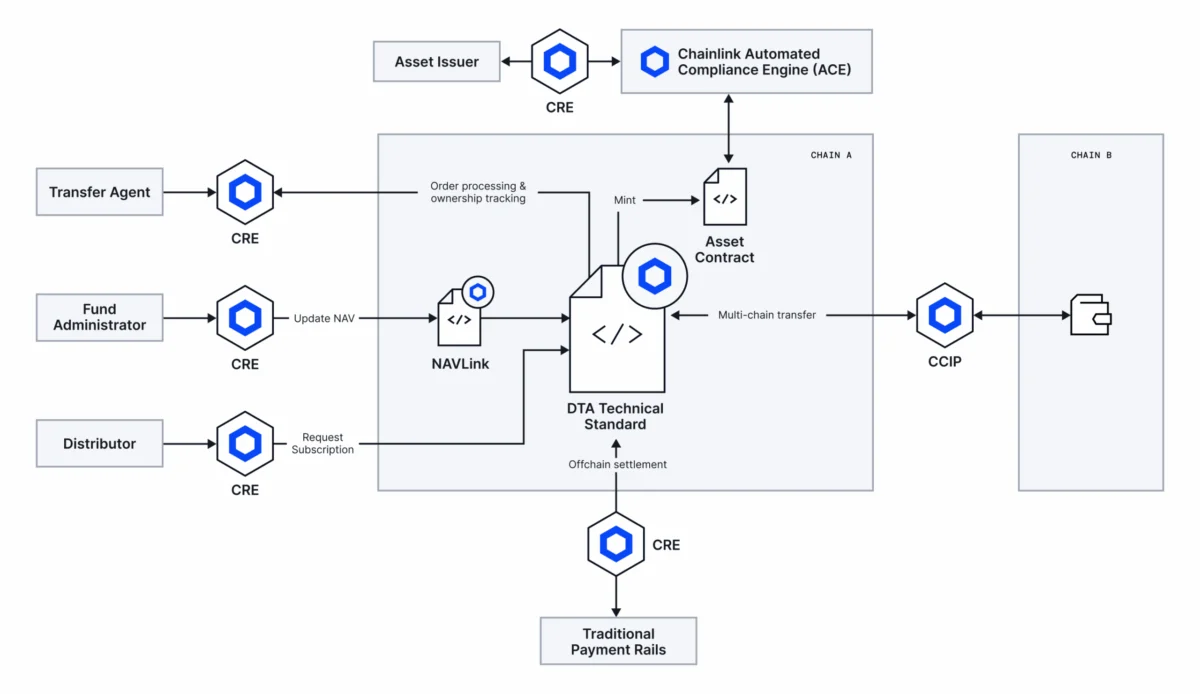
The hackathon, spanning several weeks of intense development and culminating in a rigorous judging process, underscored Chainlink’s pivotal role in fostering a robust ecosystem for Web3 innovation. Chainlink, as the industry-standard decentralized computing platform, provides the necessary infrastructure for smart contracts to securely interact with real-world data and off-chain computation. Its oracle networks are fundamental to the operation of countless dApps, bridging the gap between blockchain environments and the vast array of external data sources and traditional systems. The introduction and increasing adoption of the Chainlink Runtime Environment (CRE) further empower developers by offering a flexible, secure, and verifiable off-chain computation layer, enabling complex logic and data processing that would be impractical or impossible directly on a blockchain.
A New Paradigm in Decentralized Development
The sheer volume and technical sophistication of the 554 submissions highlight a clear shift in how developers are approaching on-chain applications. Gone are the days of isolated smart contracts; the trend is firmly towards full-stack systems that seamlessly integrate off-chain data, computation, and automation with secure on-chain execution. This paradigm, often referred to as "hybrid smart contracts," is essential for building dApps that can rival the capabilities of traditional applications while retaining the core benefits of decentralization, transparency, and immutability.
A spokesperson for Chainlink Labs noted, "The ‘Convergence’ hackathon is more than just a competition; it’s a barometer for the direction of Web3 innovation. The record number of submissions and the advanced use of CRE demonstrate a maturing ecosystem where developers are no longer constrained by the limitations of on-chain resources. They are leveraging Chainlink’s comprehensive toolkit to build applications that address real-world challenges in finance, security, and data management, pushing the boundaries of what decentralized systems can achieve." This sentiment was echoed by many participants who praised the educational resources, mentorship, and technical support provided throughout the event, which enabled them to bring their ambitious ideas to fruition.
Showcasing the Future: Winning Projects and Their Impact
The winning projects across the various categories illustrate the diverse applications and transformative potential of the Chainlink ecosystem, particularly the CRE.
DeFi & Tokenization: Revolutionizing Financial Instruments
The DeFi & Tokenization category saw projects pushing the envelope in decentralized finance, addressing issues of capital efficiency, risk management, and user protection.
1st Place: FlowVault
FlowVault emerged as the top project, presenting a proactive DeFi vault designed to overcome existing limitations in the dynamic vault landscape. Its innovative approach involves continuously ingesting cross-chain indicators—such as stablecoin spreads, perpetual funding rates, bridge flows, and liquidation/RWA signals—to predict capital movements before markets reprice. This predictive capability is facilitated by four distinct CRE workflows that score opportunities and write them on-chain. An orchestrator then selects the highest-conviction opportunity, executing trades with predefined risk gates and position lifecycle rules. This ensures strategy deployment remains disciplined while adapting to real-time shifts in liquidity and market structure, offering a significant leap forward in automated, risk-aware DeFi investing. The project’s emphasis on data-driven, preemptive action could significantly enhance capital efficiency and reduce exposure to sudden market volatility, making it highly attractive for both institutional and retail DeFi participants.
2nd Place: Ghost Finance
Ghost Finance tackled a persistent challenge in public on-chain lending markets: the exposure of users to front-running, sandwich attacks, and other forms of adverse execution due to fully transparent rates and positions. Ghost Finance designed a private lending and borrowing protocol that matches lenders and borrowers privately, keeping negotiated rates out of public view. This enables more customizable outcomes based on individual risk tolerance. By leveraging CRE and Confidential Compute, Ghost Finance ensures that market data and user positions remain private, while still facilitating secure, verifiable lending and borrowing on-chain. This innovation addresses a critical need for privacy in DeFi, potentially unlocking greater institutional participation that demands discretion.
CRE & AI: The Convergence of Intelligent Automation
The integration of Artificial Intelligence with the Chainlink Runtime Environment presents exciting possibilities for autonomous, data-driven decentralized applications.
1st Place: SentinelCRE
SentinelCRE secured first place by introducing an autonomous DeFi agent engineered to protect protocols and digital vaults from exploits, hacks, and extreme market volatility. This system operates 24/7 without human intervention, continuously analyzing on-chain activity in real time. It combines CRE and AI to detect anomalous behavior and automatically trigger preemptive safeguards, such as circuit breakers or withdrawal pauses, before malicious actions can materialize. SentinelCRE employs three control layers: on-chain policy checks, behavioral anomaly scoring, and a dual-AI consensus step, with additional oversight through guardian contracts and CRE workflows that can freeze or challenge agent behavior. This project represents a significant advancement in protocol security, offering always-on, rules-driven protection for high-value DeFi systems. Its ability to autonomously respond to threats could drastically reduce the impact of security breaches.
2nd Place: AI Financial Workspace Legos + Ghost Privacy
This project presented a full-stack privacy finance platform that integrates CRE, the Chainlink Automated Compliance Engine (ACE), private token transfers, and Fully Homomorphic Encryption (FHE). It supports a comprehensive suite of financial operations, including escrow, payments, compliance, and treasury management. The platform leverages CRE to orchestrate 16 workflows across compliance, treasury, attestation, payroll, invoicing, and settlement. It employs AI "contract agents" to review signed documents (e.g., PDFs) and coordinate dispute resolution through an agentic workforce. This innovative blend of technologies showcases how robust, privacy-preserving financial operations can be built on-chain, addressing complex enterprise needs for data confidentiality and regulatory adherence.
Prediction Markets: Enhancing Foresight and Engagement
Prediction markets, a cornerstone of decentralized decision-making and speculation, saw novel applications that improved user experience and accuracy.
1st Place: TAPL
TAPL (Time-Adjusted Price Liquidity) captivated judges as a real-time BTC tap-trading platform. Users express short-term views on BTC/USDT by selecting a $20 price band and a 5-second window, then placing a trade with a single tap. Deviating from traditional directional trading, TAPL transforms micro-volatility into time-bounded outcomes, offering multipliers ranging from ~1.2x (near-spot) up to 100x (farther bands). Settlement is oracle-verified, and pricing is powered by Brownian Bridge math to model the probability of price reaching a given band within the specified window. This platform introduces a novel, fast-paced trading experience, making prediction markets more accessible and engaging for a broader audience.
2nd Place: Memepull Arena
Memepull Arena presented a dual GameFi platform that skillfully blends competitive PvP gameplay with prediction markets. Its PvP Battle mode allows players to choose a side and deposit tokens into a shared pool, with the side achieving the best price performance winning the combined pot. Additionally, the project offers classic template-based Yes/No prediction markets tied to on-chain milestones, such as predicting whether a token reaches a specific price by a defined time. CRE powers the core mechanics by fetching prices and liquidity data, computing outcomes, enforcing rules via anti-manipulation and safety checks, and writing the final, verifiable results on-chain. This integration of GameFi with robust oracle-driven prediction markets demonstrates the potential for highly engaging and fair decentralized gaming experiences.
Risk & Compliance: Bridging Regulation and Decentralization
Compliance and risk management remain critical hurdles for broader institutional adoption of DeFi. These projects offer privacy-preserving solutions.
1st Place: Aegis-Gate
Aegis-Gate secured first place with a privacy-preserving compliance layer for DeFi. It enables users to prove they meet regulatory requirements—such as KYC, AML, or accredited investor status—without exposing sensitive personal or financial data on-chain. Using CRE, Aegis-Gate securely verifies identity via World ID and financial eligibility via providers like Plaid within a trusted execution environment. Instead of publishing raw user data, the system writes a simple on-chain attestation (e.g., "compliant: yes/no") that protocols can use to gate access. This approach allows DeFi applications to enforce compliance while preserving user privacy, directly addressing a core industry trade-off between regulatory mandates and data exposure.
2nd Place: ACE Sandbox
ACE Sandbox is a tokenization platform for compliant digital assets, supporting ERC-3643 permissioned tokens, identity and credential-based policy controls, SIWE-authenticated operator flows, and CRE-powered workflows. It also features asynchronous vault request and claim flows, with cross-chain settlement enabled via the Chainlink Cross-Chain Interoperability Protocol (CCIP). The project effectively demonstrates how CRE, ACE, CCIP, and x402 can be combined to support the full lifecycle of compliant tokenized assets, from issuance and access control to cross-chain distribution and settlement. This showcases a comprehensive solution for bringing regulated real-world assets (RWAs) on-chain.
Privacy: Securing Confidentiality in a Transparent World
Ensuring privacy in inherently transparent blockchain environments is crucial for many enterprise and institutional use cases.
1st Place: SSL – Stealth Settlement Layer
SSL (Stealth Settlement Layer) stood out as a privacy-preserving trading platform for tokenized real-world assets, delivering a "dark pool" style experience on-chain. It allows verified participants to place and match trades without publicly revealing order details, trading intent, or settlement destinations, while still enforcing compliance through World ID and Chainlink ACE. Built using Chainlink Confidential Compute early access, including confidential HTTP response encryption, this architecture directly tackles front-running and copy-trading risks inherent in transparent markets, making it highly relevant for institutional DeFi use cases requiring discretion and market integrity.
2nd Place (shared): TACIT
TACIT is a privacy-preserving OTC (Over-The-Counter) settlement protocol that allows counterparties to execute trades on-chain without revealing trade details. Users agree on terms off-chain, and a CRE workflow manages the full lifecycle: decrypting trade parameters, verifying both parties through sanctions and KYC checks, and executing atomic delivery-versus-payment (DvP) settlement. Upon completion, the system publishes a minimal on-chain attestation confirming execution, preserving both privacy and verifiability. TACIT demonstrates how institutional-grade trading workflows can be executed privately while maintaining compliance and on-chain guarantees, opening doors for more complex financial transactions on decentralized rails.
2nd Place (shared): VeritasX
VeritasX introduced a privacy-preserving prediction market that allows users to place bets and receive payouts without exposing their positions, identities, or transaction amounts on-chain. A CRE workflow orchestrates the market lifecycle end-to-end by routing private bets through Chainlink’s private transactions infrastructure, automatically resolving market outcomes using Gemini AI, and executing private payouts to winners. Once a market concludes, the smart contract records only the aggregate pool totals and the final outcome. This innovation addresses privacy concerns in prediction markets, potentially increasing participation from users who prioritize anonymity.
Autonomous Agents: Intelligent and Self-Executing Systems
The final category, Autonomous Agents, focused on systems capable of independent operation and decision-making within decentralized environments.
1st Place: InControl
InControl presented an AI-powered portfolio intelligence platform that merges traditional financial planning with decentralized infrastructure. It utilizes CRE to provide consensus-verified data, automate investment strategies like dollar-cost averaging, securely access external APIs via Confidential HTTP, and enable agent-based monetization through x402 payments. The system integrates AI agents, on-chain attestations, and private workflows into a unified experience, showcasing how CRE can function as the orchestration layer for agent-driven financial applications and machine-to-machine interactions. This project highlights a future where AI-driven financial advisors and managers operate autonomously and securely on-chain.
2nd Place: CRE Risk Router
CRE Risk Router developed an on-chain risk decision layer specifically designed for autonomous DeFi agents that evaluates trades before execution. When an agent proposes a transaction, it triggers a CRE workflow that runs a series of comprehensive risk checks—including confidence thresholds, market conditions, oracle health, and position sizing—across eight distinct logic gates. The system then writes an on-chain attestation indicating whether the trade is approved, constrained, or rejected, which the agent uses to determine execution. This architecture introduces real-time risk management, auditability, and governance into agent-driven financial systems, providing a crucial layer of safety and control for increasingly sophisticated autonomous operations.
The Strategic Imperative of the Chainlink Runtime Environment (CRE)
A recurring theme across all winning projects is the indispensable role of the Chainlink Runtime Environment (CRE). CRE acts as a secure, verifiable, and highly customizable off-chain computation layer, enabling developers to execute complex business logic, perform intensive data processing, and integrate with external systems without burdening the blockchain or compromising security. This allows for the creation of dApps that are not only more powerful and feature-rich but also more cost-effective and scalable. The hackathon’s emphasis on CRE underscores Chainlink’s strategic vision to provide a complete decentralized computing platform, moving beyond just data delivery to offering comprehensive off-chain services crucial for mainstream Web3 adoption.
Broader Implications and Future Outlook
The "Convergence" hackathon signals a significant maturation of the Web3 development landscape. The focus has moved from experimental proofs-of-concept to building robust, enterprise-grade applications capable of solving real-world problems. The emphasis on privacy, compliance, and advanced risk management solutions indicates a growing push towards institutional adoption of blockchain technology. Furthermore, the seamless integration of AI with decentralized infrastructure, orchestrated by CRE, foreshadows a future where autonomous agents play an increasingly central role in finance, supply chains, and other industries.
Industry analysts suggest that the innovations showcased at Chainlink hackathons often precede broader trends in the decentralized space. The projects’ deep integration of Chainlink’s various services—from data feeds and VRF to CCIP, ACE, and Confidential Compute—demonstrates a comprehensive approach to building verifiable, automated, and secure applications. This holistic development paradigm is critical for transitioning Web3 from niche applications to mainstream utility.
The success of "Convergence: A Chainlink Hackathon" is a testament to the vibrant and growing developer community eager to build the next generation of decentralized applications. It underscores Chainlink’s commitment to empowering these builders with the tools and infrastructure necessary to realize a truly interconnected and intelligent Web3 future. The insights gained from this event will undoubtedly shape the strategic direction of Chainlink’s platform development and the broader decentralized ecosystem for years to come.
For those interested in exploring the cutting-edge of Web3 innovation, all submitted projects from the hackathon can be viewed here. Developers and enthusiasts are encouraged to stay connected for updates on upcoming Chainlink hackathons by following the official Chainlink X account, joining the Chainlink Discord, and exploring the comprehensive resources available at the Chainlink Developer Hub.