admin
admin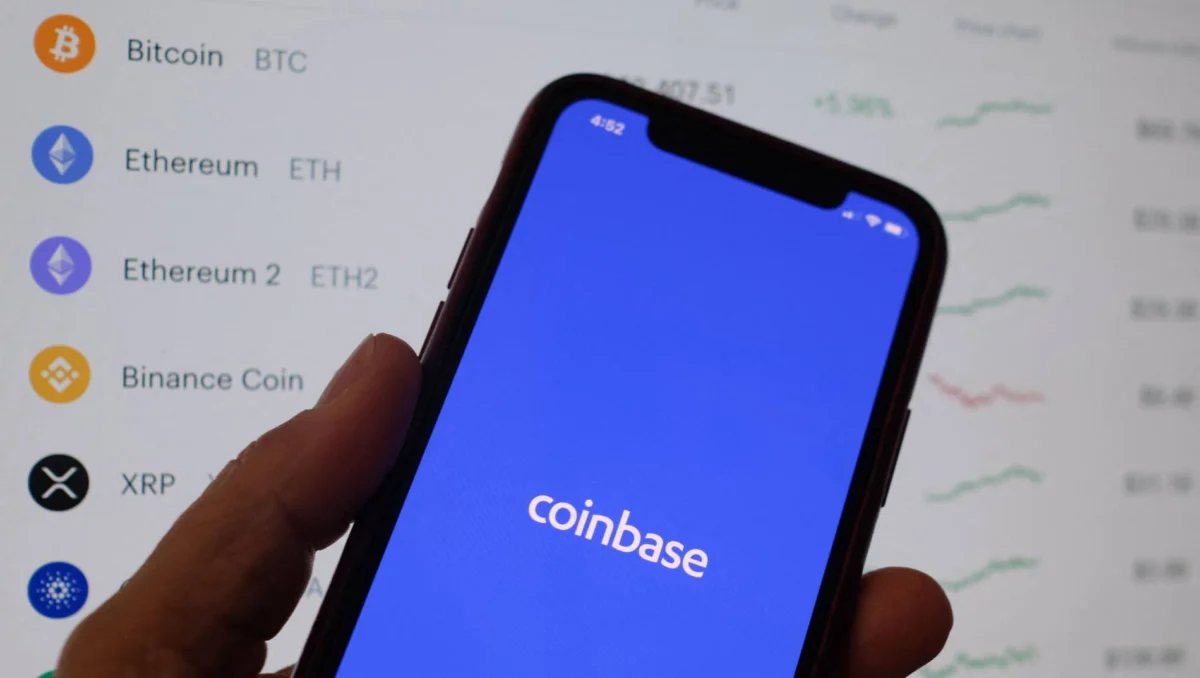
Coinbase, the leading United States-based cryptocurrency exchange, has officially reopened its mobile application for user registrations in India, marking a significant return to the world’s most populous nation after a hiatus of more than two years. Speaking at the India Blockchain Week (IBW) in Bangalore, John O’Loghlen, Coinbase’s Managing Director for the Asia-Pacific (APAC) region, confirmed that while the platform currently supports crypto-to-crypto trading for Indian residents, the company is working toward a comprehensive localized service. A pivotal component of this strategy involves the introduction of a fiat on-ramp—allowing users to purchase digital assets using Indian Rupees (INR)—which is currently slated for a 2026 rollout. This phased reentry underscores a cautious but committed approach to a market characterized by high retail interest and a complex, often stringent, regulatory environment.
A Strategic Pivot Toward Regulatory Alignment
The resumption of services follows a period of intense restructuring and regulatory engagement. Coinbase’s previous attempts to penetrate the Indian market were met with immediate structural resistance. In early 2022, the exchange attempted to leverage the Unified Payments Interface (UPI), India’s ubiquitous real-time payment system, to facilitate transactions. However, the National Payments Corporation of India (NPCI) issued a public statement clarifying that it did not recognize the legal standing of any crypto exchange using the UPI network for such purposes. This regulatory friction led to a swift suspension of UPI services and, eventually, a total cessation of operations for Indian users in late 2023.
To facilitate this new chapter, Coinbase has prioritized compliance with the Financial Intelligence Unit (FIU) of India. The FIU, an agency under the Ministry of Finance, is responsible for receiving, processing, and analyzing information related to suspect financial transactions. By registering as a reporting entity with the FIU, Coinbase has signaled its intent to operate within the formal legal framework of the Prevention of Money Laundering Act (PMLA). This move distinguishes its current presence from its 2022 launch, which was criticized for lacking clear regulatory clearance. O’Loghlen emphasized that the company chose to "burn the boats"—entirely off-boarding previous customers from overseas entities to ensure a "clean slate" regulated under Indian norms.
Chronology of Coinbase’s Evolution in the Indian Market
The journey of Coinbase in India provides a microcosm of the broader challenges faced by global digital asset firms in the country. The timeline of the exchange’s involvement is defined by rapid expansion, abrupt retreats, and a eventual shift toward institutional compliance.
April 2022: The Initial Launch and Immediate Pushback
Coinbase held a high-profile launch event in Bangalore, announcing support for UPI payments. Within 72 hours, the NPCI released a statement saying it was "not aware of any crypto exchange using UPI." Faced with the loss of its primary payment gateway, Coinbase was forced to disable INR deposits, rendering the platform effectively unusable for new retail investors.
September 2023: The Total Exit
Following months of operational limbo, Coinbase sent emails to its remaining Indian users, advising them to withdraw their funds and close their accounts. The company cited a need to update its standards and focus on markets with clearer regulatory frameworks. At the time, this was viewed as a significant blow to India’s standing as a potential crypto hub.
2024: The Road to Re-entry
Throughout 2024, Coinbase engaged in quiet diplomacy with Indian regulators. The company began the process of FIU registration, a path also taken by other global giants like Binance and KuCoin after they were briefly banned for non-compliance. In October 2024, Coinbase initiated a "soft launch" via early access to test its systems under the new regulatory requirements.
December 2024: Full App Availability
The current phase sees the app fully open to all Indian users for crypto-to-crypto trading. The company is now focusing on the technological and banking infrastructure required to re-enable INR transactions by 2026.
Navigating India’s Stringent Crypto Taxation Framework
One of the primary hurdles for Coinbase and its users remains India’s aggressive taxation policy on virtual digital assets (VDAs). Introduced in the 2022 Union Budget, the tax regime includes a flat 30% tax on any income derived from crypto transactions, with no provision to offset losses against profits. Furthermore, a 1% Tax Deducted at Source (TDS) is levied on every transaction above a certain threshold, a move intended to track the movement of funds but one that has significantly dampened high-frequency trading volumes.
Data from Indian crypto research firms suggests that since the implementation of these taxes, trading volumes on domestic exchanges plummeted by over 80% as traders moved to decentralized platforms or non-compliant offshore exchanges. O’Loghlen acknowledged that while Coinbase is adhering to these rules, the company remains hopeful for future policy shifts. The high tax burden acts as a barrier to mass adoption, and Coinbase’s strategy involves advocacy for a more balanced fiscal approach that protects investors while allowing the industry to grow.
Deepening Roots Through Venture Capital and Human Capital
Despite the regulatory and fiscal headwinds, Coinbase’s commitment to India extends beyond its retail application. The company has long viewed India as a critical talent hub for its global engineering and product development efforts. Currently, Coinbase employs over 500 personnel in India, and the company has announced plans to expand this workforce. These roles are not merely for local market maintenance but are integral to Coinbase’s global operations, focusing on blockchain engineering, security, and customer support.
Furthermore, Coinbase Ventures, the company’s investment arm, has remained highly active in the Indian ecosystem. Most notably, Coinbase participated in a recent funding round for CoinDCX, one of India’s largest homegrown exchanges, valuing the company at approximately $2.45 billion. By investing in local champions, Coinbase maintains a strategic stake in the Indian market’s growth even during periods when its own direct-to-consumer services were restricted. This dual-track approach—building its own platform while funding the local ecosystem—positions Coinbase as a foundational player in the Indian Web3 landscape.
Market Implications and Competitive Landscape
The return of Coinbase introduces a formidable competitor to local exchanges such as WazirX, CoinDCX, and CoinSwitch. While local exchanges have the advantage of existing fiat integrations and established user bases, Coinbase brings a global reputation for security and a sophisticated user interface.
O’Loghlen’s reference to "super apps" like Zepto and Flipkart indicates that Coinbase intends to compete on the quality of the user experience (UX). In the Indian market, where mobile-first consumers expect seamless, high-speed interactions, the "trusted exchange" branding is a direct attempt to win over retail investors who may be wary of the security lapses seen in some local platforms. The promise of a "matter of minutes" onboarding process suggests that Coinbase has streamlined its Know Your Customer (KYC) protocols to align with India’s digital infrastructure, likely utilizing the Aadhaar-based e-KYC system.
However, the lack of a fiat on-ramp until 2026 remains a significant limitation. Currently, Indian users must already possess cryptocurrency in other wallets to trade on Coinbase, or use peer-to-peer (P2P) methods which carry their own set of risks and regulatory scrutiny. The two-year lead time for INR integration suggests that Coinbase is taking a deliberate path to secure robust banking partnerships, avoiding the "move fast and break things" approach that led to its 2022 shutdown.
Broader Economic and Global Context
Coinbase’s persistence in India is part of a broader "Go Broad, Go Deep" international strategy. As the company faces regulatory challenges in the United States from the Securities and Exchange Commission (SEC), it has sought to diversify its geographic footprint. India, with its massive population and high ranking on the Chainalysis Global Crypto Adoption Index, represents a high-reward, high-complexity frontier.
The Indian government’s stance on cryptocurrency has also evolved. While a "ban" was once a looming possibility, the focus has shifted toward global coordination. During its G20 presidency, India advocated for a global regulatory framework for crypto-assets, emphasizing the need for international cooperation to manage risks related to financial stability and money laundering. Coinbase’s alignment with the FIU is a direct response to this maturing regulatory environment.
Conclusion: A Long-Term Bet on the Indian Digital Economy
The reopening of Coinbase’s app in India is more than a simple product relaunch; it is a calculated bet on the long-term viability of the Indian digital asset market. By accepting the current crypto-to-crypto limitations and focusing on 2026 for full fiat integration, Coinbase is signaling that it is prepared to navigate the "marathon, not a sprint" that is the Indian regulatory landscape.
Success for the exchange will depend on its ability to maintain its "clean slate" with the FIU, secure stable banking relationships for its 2026 goals, and convince the Indian retail investor that its platform offers superior security and ease of use compared to both domestic and other international rivals. As the Indian government continues to refine its stance on Web3 and blockchain technology, Coinbase’s presence will serve as a significant barometer for the health and openness of the country’s crypto ecosystem.