admin
admin
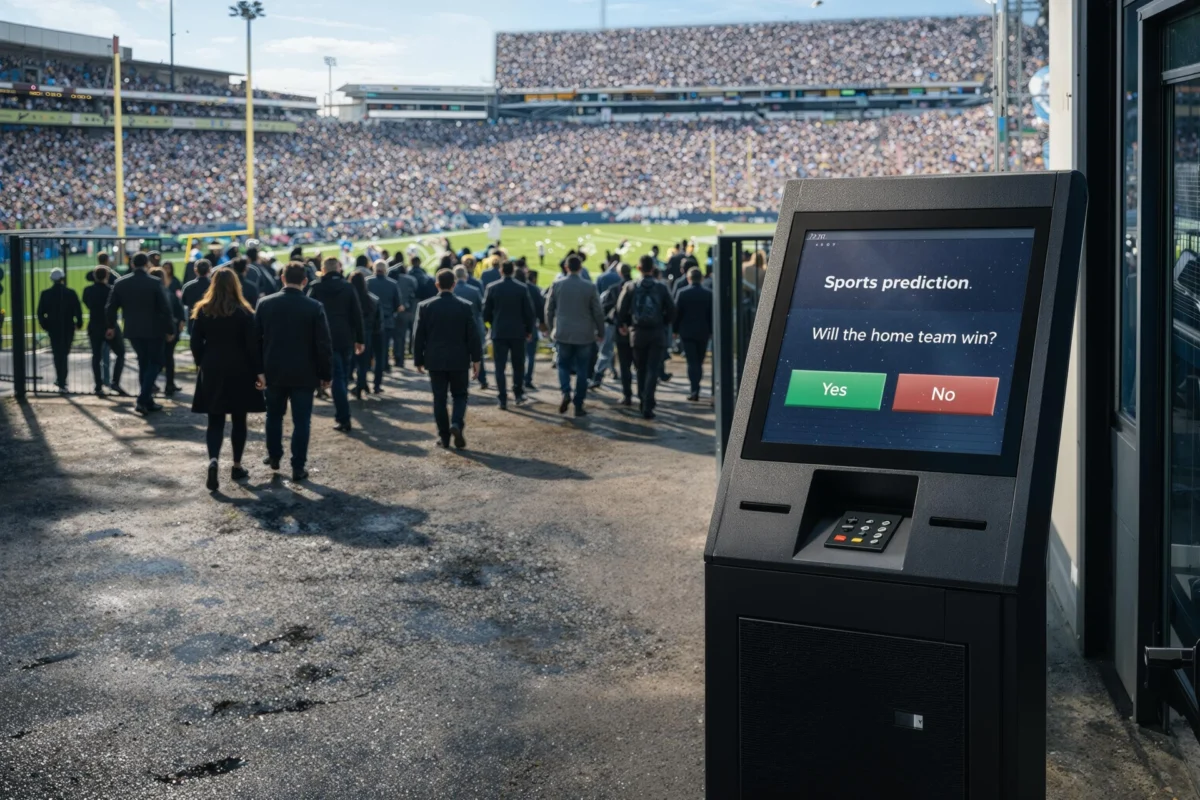
Cryptocurrency exchange Coinbase is currently embroiled in significant controversy, drawing widespread negative reactions for its aggressive use of mobile notifications to promote event contract bets during the popular March Madness basketball tournament. Users, many of whom primarily utilize the platform for traditional cryptocurrency trading, have voiced frustrations ranging from "annoying" to "absurd," accusing the exchange of pivoting towards what they perceive as sports gambling. This development comes on the heels of Coinbase’s January rollout of prediction market bets for US-based users, a service facilitated through a partnership with Kalshi, and further exacerbates an already complex regulatory environment surrounding prediction markets.
The core of the discontent stems from the sheer volume and nature of notifications pushing users towards betting on college basketball game outcomes. Social media platforms, particularly X (formerly Twitter), have become a hub for user complaints. One prominent user, AvgJoesCrypto, articulated their exasperation on Thursday, stating, "I have received three separate notifications about College Basketball from Coinbase in the past hour alone. It is absurd that, amidst arguably the worst collapse in trust in this industry’s history, the largest American CEX has completely pivoted to trying to get their customer base hooked on sports gambling, so that they can extract even more exorbitant fees." This sentiment underscores a deeper concern among the crypto community about the perceived shift in Coinbase’s operational focus and its potential impact on user trust, especially in a post-FTX and Terra/Luna collapse landscape where confidence in digital asset platforms is already fragile.
The Genesis of Coinbase’s Prediction Market Push
Coinbase’s foray into prediction markets is not a sudden whim but a calculated strategic move that began to unfold publicly in late 2023. In December, anticipating the launch of its prediction market service, Coinbase took a proactive and somewhat aggressive legal stance by filing lawsuits against state regulators in Connecticut, Illinois, and Michigan. The exchange’s primary argument in these lawsuits was that the US Commodity Futures Trading Commission (CFTC), a federal regulator, should hold "exclusive jurisdiction" over its prediction market offerings, rather than state-level gambling authorities. This legal maneuver aimed to preempt potential regulatory challenges and establish a more favorable federal oversight framework for its new venture.
The actual launch of the prediction market bets for US-based users commenced in January, in collaboration with Kalshi, a regulated event contract exchange. Kalshi operates under the direct oversight of the CFTC, which has classified its offerings as "event contracts" rather than traditional gambling. This distinction is crucial for Coinbase, as it allows them to offer these services nationwide, circumventing the patchwork of state-specific gambling laws. Prediction markets, in essence, allow users to bet on the outcome of future events, ranging from economic indicators and political elections to, more recently and controversially, sports results. Participants buy "yes" or "no" contracts, with the price of these contracts fluctuating based on market sentiment and the perceived probability of the event occurring. If an event occurs as predicted, the contract settles at a predetermined value (e.g., $1), and the investor profits. If not, the contract expires worthless.
User Outcry and Eroding Trust
The transition of a platform primarily known for cryptocurrency trading into a conduit for sports betting has evidently rattled a segment of Coinbase’s user base. Many users originally gravitated towards Coinbase for its perceived reliability, security, and focus on digital assets. The introduction of frequent, unsolicited notifications promoting March Madness bets has been interpreted by some as a betrayal of that core mission. John Palmer, co-founder of PartyDAO, echoed these concerns, articulating a broader philosophical issue. He stated, "This is essentially encouraging me to gamble. What does that say about the internal philosophy around money management? Can I trust the yield sources on USDC interest, can I trust internal risk management, etc."
Palmer’s comments highlight a critical point: the perceived blurring of lines between investment and gambling. For a platform that holds significant user assets and offers various financial services, including yield-bearing products, a perceived pivot towards encouraging speculative betting can raise fundamental questions about the company’s internal risk management philosophy and its commitment to prudent financial practices. This erosion of trust could have long-term repercussions for Coinbase’s brand image and its standing within the broader financial and crypto communities. Users who previously saw Coinbase as a gateway to innovative financial technology may now view it with increased skepticism, potentially impacting retention and new user acquisition.
A Chronology of Controversy and Regulatory Battles
The journey of prediction markets into the mainstream, and specifically Coinbase’s involvement, has been marked by a series of significant events:
- December 2023: Coinbase files lawsuits against state regulators in Connecticut, Illinois, and Michigan, arguing for CFTC’s exclusive jurisdiction over its impending prediction market offerings. This move signals Coinbase’s intent to aggressively pursue this new business line.
- January 2024: Coinbase officially rolls out prediction market bets for US-based users through its partnership with Kalshi. The service is framed as offering "event contracts" under CFTC oversight.
- March 2024: During the peak of the NCAA March Madness basketball tournament, Coinbase users report an overwhelming barrage of notifications promoting bets on college basketball games, leading to widespread user complaints on social media.
- Ongoing: Prediction market platforms, including Kalshi and Polymarket (another prominent player), continue to face various lawsuits filed by state-level authorities. These lawsuits often challenge the "event contract" classification, asserting that these offerings are, in practice, unregulated gambling.
- Recent Past: Amidst these state-level legal challenges, the federal regulator, the US Commodity Futures Trading Commission (CFTC), has been actively pushing for "exclusive jurisdiction" over the prediction market sector. This stance creates a direct conflict with state authorities who seek to regulate these platforms under existing gambling laws.
This chronology illustrates a concerted effort by Coinbase to establish and expand its prediction market footprint, met with persistent pushback from state regulators and, more recently, a significant portion of its own user base.
The Regulatory Minefield: State vs. Federal Jurisdiction
The legal and regulatory landscape for prediction markets in the United States is notoriously complex and highly contested. The crux of the issue lies in whether these "event contracts" fall under the purview of commodity futures regulation (CFTC) or traditional gambling laws (state-level authorities).

The CFTC has generally taken a more permissive stance, viewing certain prediction markets as legitimate financial derivatives that can provide valuable price discovery mechanisms, akin to futures contracts. By classifying them as "event contracts," the CFTC asserts its authority under the Commodity Exchange Act (CEA). This federal oversight is attractive to platforms like Kalshi and Coinbase because it offers a single, national regulatory framework, potentially bypassing the arduous and often prohibitive process of obtaining individual state gambling licenses.
However, state-level authorities, including Attorneys General and gambling commissions, often view these products through a different lens. They argue that regardless of the federal classification, betting on the outcome of a sports game or political event, where participants stand to win or lose money based on chance, constitutes gambling under their state laws. They contend that these platforms operate outside the established regulatory and consumer protection frameworks designed for traditional gambling, posing risks to consumers and potentially facilitating illicit activities. The lawsuits filed against prediction market platforms by states are a direct manifestation of this fundamental disagreement over jurisdiction and classification. This regulatory tug-of-war creates significant legal uncertainty for operators and participants alike.
Broader Industry Implications and Congressional Scrutiny
The controversy surrounding Coinbase’s prediction market push extends beyond user dissatisfaction and regulatory battles, touching upon broader concerns about market integrity and public trust. The prediction market industry as a whole has been under increased scrutiny, particularly from US lawmakers. Allegations of insider information being used to profit from bets on platforms like Polymarket have prompted calls for new legislation.
One notable incident involved allegations that someone within the US government used Polymarket to profit from a bet concerning the removal of Venezuelan President Nicolás Maduro. Such incidents raise serious ethical questions about the potential for individuals with privileged information to exploit these markets for personal gain, undermining the integrity of both financial markets and government processes. In response, bills have been introduced in Congress seeking to ban any US President or member of Congress from using prediction market platforms, aiming to prevent conflicts of interest and insider trading.
In an effort to preempt stricter government regulation and to address public concerns, some prediction market platforms have already implemented self-regulatory measures. Kalshi, for instance, has stated it would ban political candidates from trading on event contracts related to their own campaigns. Similarly, Polymarket has introduced measures to limit easily manipulated or ethically sensitive markets. These actions highlight the industry’s awareness of the reputational and regulatory risks associated with certain types of bets and participants.
For Coinbase, entering this contested space with such aggressive marketing tactics carries significant reputational risk. As one of the largest and most recognized cryptocurrency exchanges globally, its actions are closely watched by regulators, investors, and the general public. A perception that Coinbase is promoting gambling, rather than facilitating legitimate financial innovation, could harm its standing and potentially invite more stringent regulatory oversight not just for its prediction market offerings, but for its entire suite of crypto services. This could complicate its ongoing efforts to achieve greater regulatory clarity and acceptance for the broader crypto industry.
Coinbase’s Unanswered Questions
Despite the growing chorus of user complaints and the intensifying scrutiny, Coinbase has maintained silence on the matter. Cointelegraph reached out to Coinbase for comment regarding the user complaints but had not received a response at the time of publication. This lack of an official statement leaves many questions unanswered regarding the exchange’s strategy, its response to user feedback, and its long-term vision for its prediction market venture.
The decision not to address public criticism can be interpreted in several ways. It might signify a strategic calculation that the benefits of expanding into prediction markets outweigh the current backlash, or it could indicate a desire to avoid fanning the flames of controversy further. Regardless, the silence creates a vacuum that is quickly filled by user speculation and negative sentiment, potentially deepening the mistrust among its customer base.
Conclusion: A Risky Gamble for Trust and Reputation
Coinbase’s aggressive promotion of March Madness prediction market bets marks a significant and controversial shift in its business strategy. While the company likely views this as a diversification into a new revenue stream, leveraging its partnership with CFTC-regulated Kalshi, the execution has triggered a strong negative reaction from its user base and intensified scrutiny from regulators and lawmakers. The fundamental tension between federal and state jurisdiction over prediction markets, coupled with ethical concerns about insider trading and the potential for encouraging gambling, creates a highly volatile environment.
The current backlash serves as a critical test for Coinbase’s brand and its relationship with its users. In an industry still grappling with trust issues and striving for mainstream legitimacy, actions perceived as prioritizing short-term gains from speculative betting over user confidence could have lasting consequences. The outcome of the ongoing regulatory battles and Coinbase’s future approach to its prediction market offerings will undoubtedly shape its trajectory and influence the broader narrative surrounding the intersection of cryptocurrency, financial derivatives, and traditional betting markets. The question remains whether Coinbase’s gamble on prediction markets will pay off, or if the cost to its reputation and user trust will ultimately prove too high.