admin
admin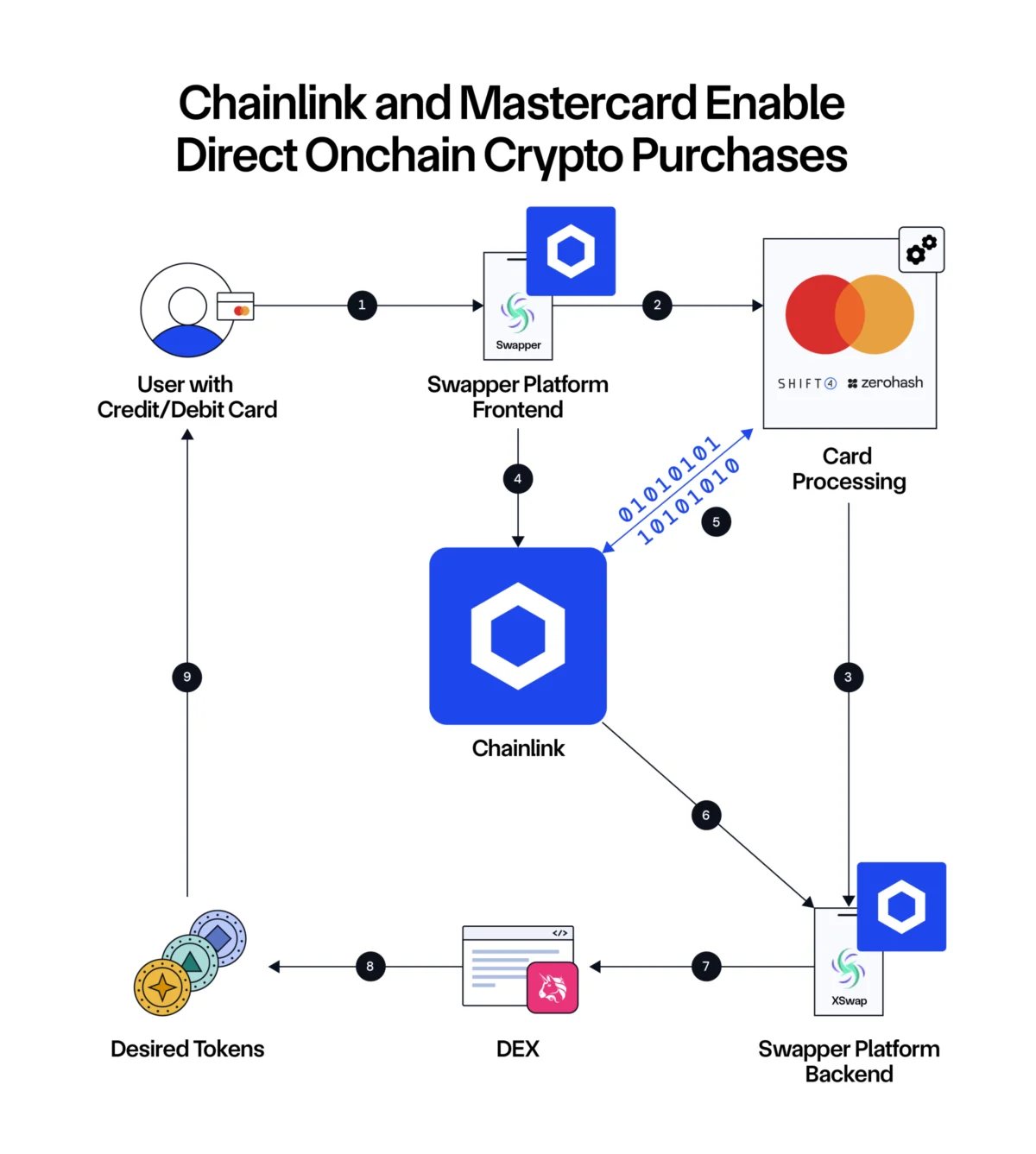
January 29, 2026, marks a pivotal moment for Chainlink as it reflects on a monumental 2025, a year characterized by an unprecedented acceleration in the integration of traditional financial institutions with blockchain technology. This period saw Chainlink solidify its position as the indispensable decentralized oracle network, laying robust foundations for a future where on-chain finance is not just a niche but a central pillar of the global economy. As articulated by CEO Sergey Nazarov in his forward-looking remarks for 2026, the trajectory established in the past year is poised to redefine financial infrastructure, driven by Chainlink’s secure and reliable data and interoperability services.
A Pivotal Year: 2025 in Review
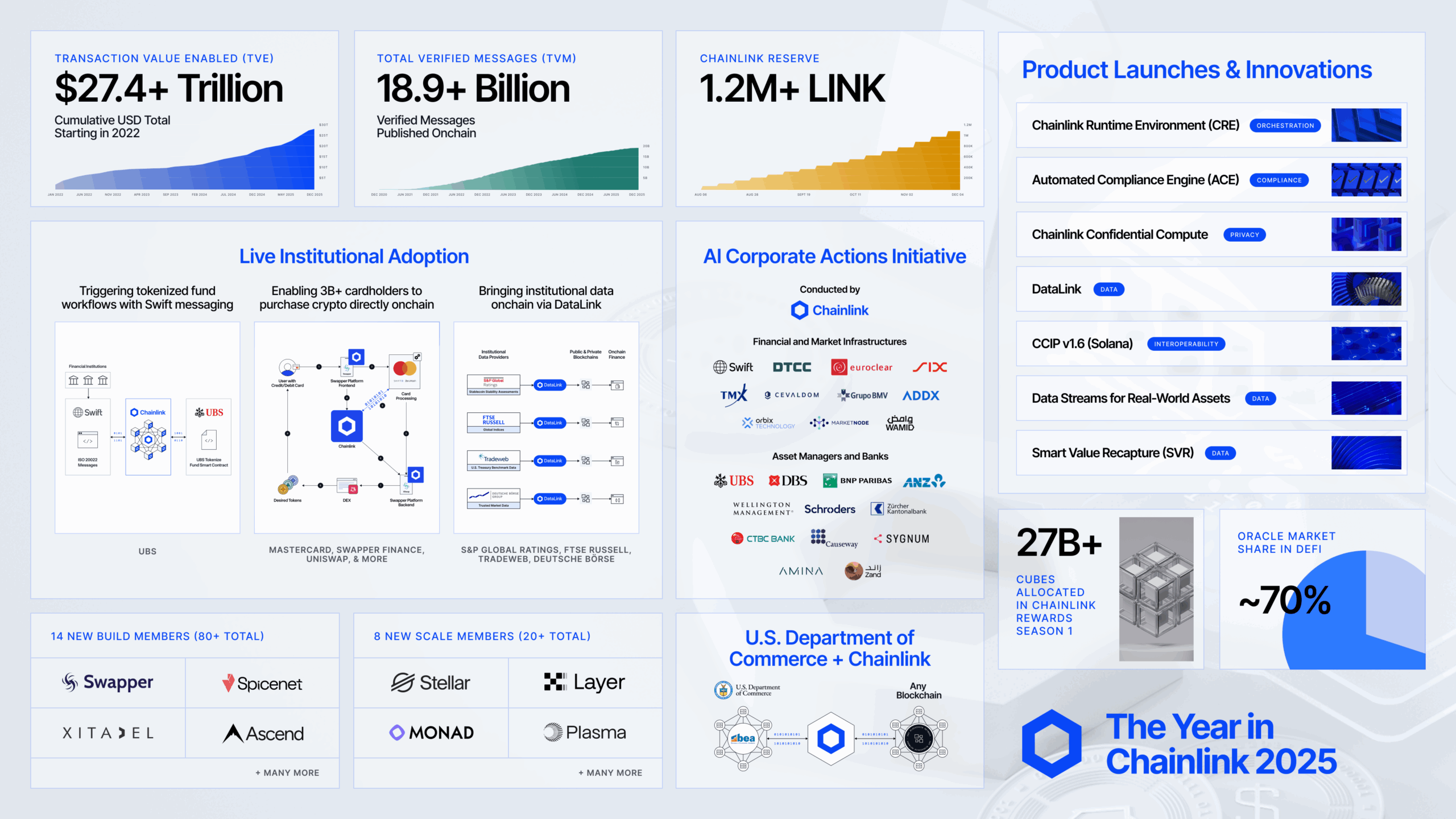
The year 2025 represented a significant inflection point for Chainlink, transitioning from foundational development to widespread institutional adoption and real-world impact. The strategic engagements and technological advancements made throughout the year underscored Chainlink’s critical role in bridging the gap between the burgeoning decentralized finance (DeFi) ecosystem and the deeply entrenched traditional financial (TradFi) sector. This era was defined by a clear move towards production-grade solutions, where theoretical frameworks were rigorously tested and deployed in live environments by some of the world’s largest financial entities. The comprehensive overview of Chainlink’s 2025 journey highlights a year of remarkable growth, marked by key partnerships and technological breakthroughs that are now setting the stage for 2026.
Perhaps the most symbolic event of 2025 was the White House Digital Asset Summit, where Chainlink CEO Sergey Nazarov delivered opening remarks to President Donald J. Trump. This high-level engagement signaled a profound shift in the perception of blockchain technology, moving from speculative interest to serious governmental and institutional consideration. The visible handshake between Nazarov and President Trump became an iconic image, representing a growing acknowledgment of decentralized infrastructure’s potential at the highest echelons of global leadership. This event provided critical validation for Chainlink’s mission and underscored the strategic importance of secure, interoperable blockchain solutions for national and international financial stability. It not only brought Chainlink into the mainstream political discourse but also highlighted the urgency for regulatory clarity and robust technological standards to support the evolving digital asset landscape. The summit’s focus on digital assets and their implications for the future of finance emphasized the need for trusted intermediaries like Chainlink to facilitate secure and compliant transitions for traditional systems.
Beyond political recognition, 2025 saw Chainlink’s technology deeply embedded across a spectrum of financial applications. From powering sophisticated DeFi protocols to enabling complex institutional workflows, Chainlink’s oracle services became synonymous with reliability and security. The year’s achievements demonstrated a clear pathway towards integrating real-world assets (RWAs) onto blockchains, facilitating seamless cross-chain transactions, and providing critical data feeds that underpin a myriad of decentralized applications. This extensive adoption across diverse use cases underscored Chainlink’s versatility and its capability to serve as a foundational layer for a truly interconnected global financial system. The collective efforts throughout 2025 have not only propelled Chainlink to new heights but have also accelerated the broader industry’s march towards a more efficient, transparent, and digitally native financial future.

Bridging the Divide: Institutional Adoption and TradFi Integration
The strategic integration of Chainlink with major traditional financial players was a defining characteristic of 2025. These collaborations were not merely exploratory but involved tangible deployments and proofs-of-concept aimed at unlocking trillions of dollars in value by bringing conventional assets and services onto blockchain networks. This marked a significant departure from earlier years, indicating a mature understanding and commitment from TradFi giants to leverage decentralized technologies.
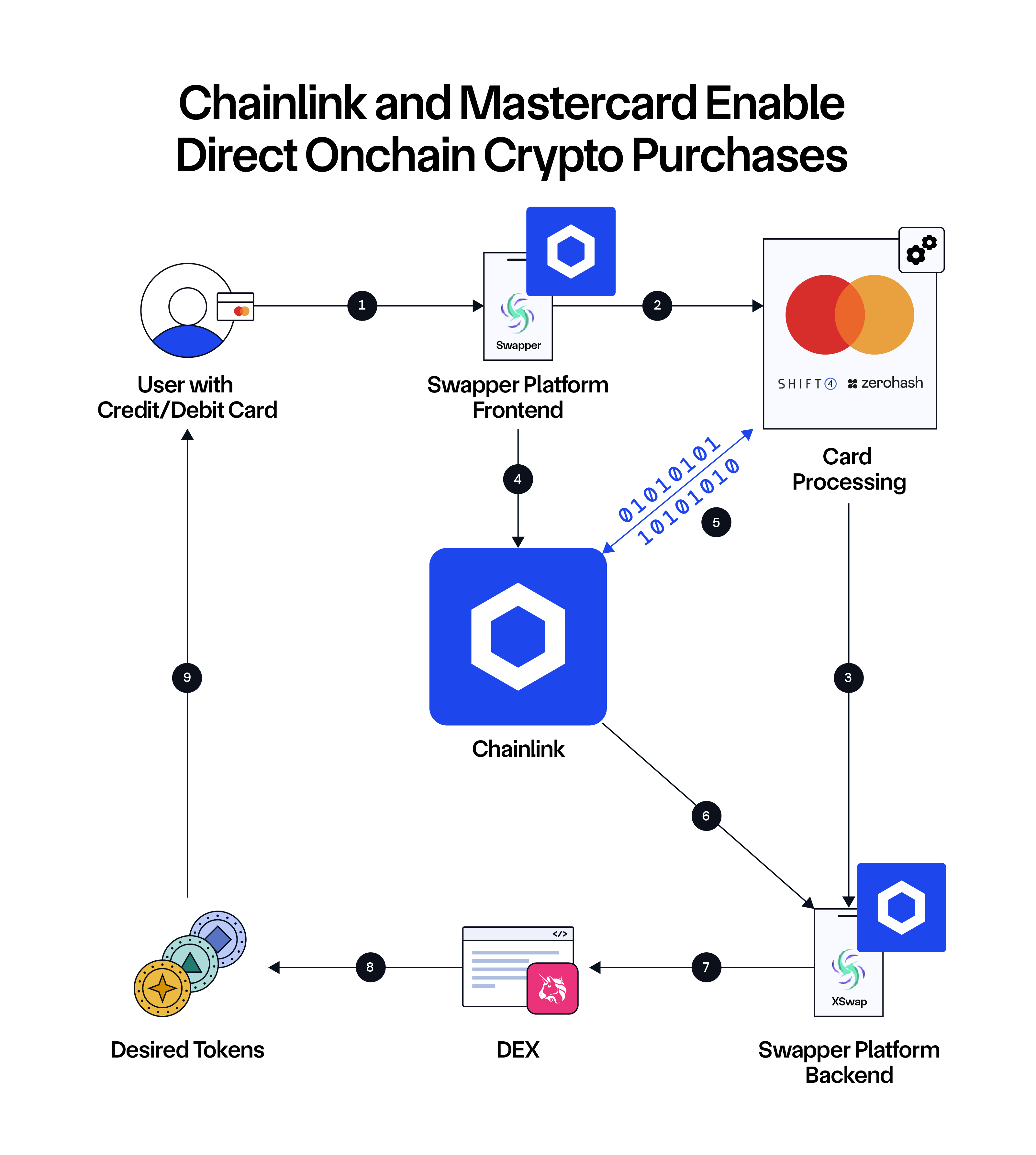
One of the most impactful developments was the partnership with Mastercard, aimed at enabling over 3 billion payment cardholders to purchase crypto assets directly on-chain. This initiative dramatically simplified the on-ramping process for a global audience, removing significant barriers to entry for mainstream users. By integrating Chainlink’s secure oracle services, Mastercard could ensure reliable pricing and transaction execution, thereby enhancing trust and accessibility in the digital asset space. This move by a global payments behemoth highlighted the growing convergence of traditional payment rails with decentralized networks, with Chainlink acting as the critical middleware. The implications are vast, suggesting a future where crypto assets are as easily accessible as any other digital purchase, fundamentally expanding the market reach of on-chain finance.
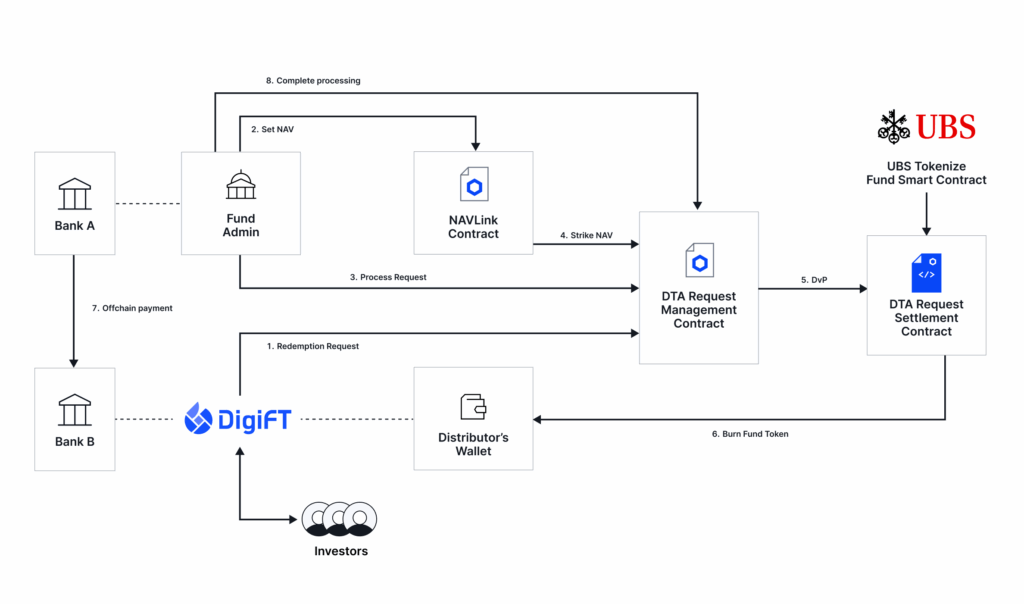
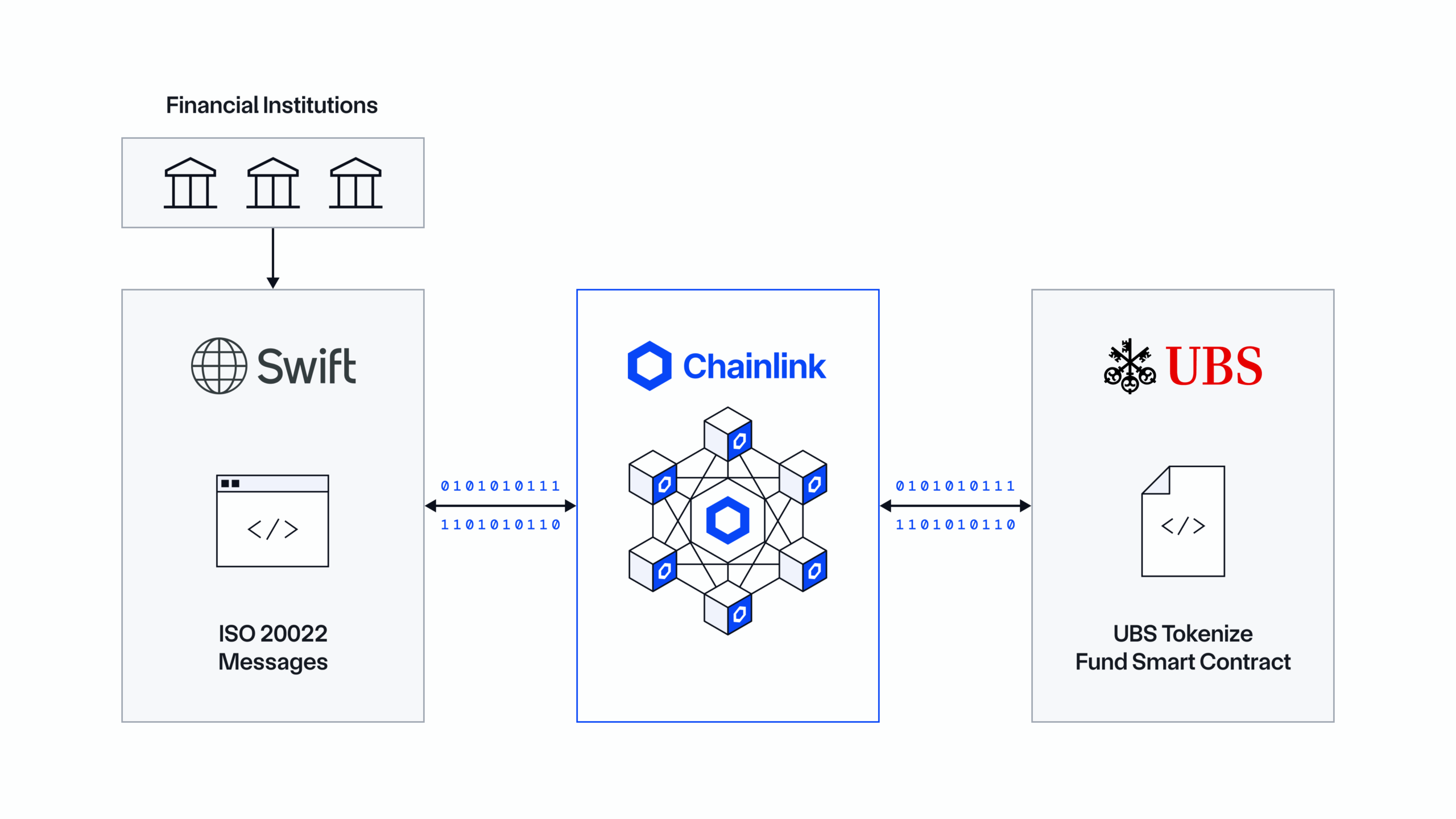
Furthermore, Chainlink played a central role in UBS’s pioneering tokenization efforts. Through the Chainlink Cross-Chain Interoperability Protocol (CCIP), financial institutions could send ISO 20022 messages via Swift, which then triggered on-chain subscription and redemption workflows for UBS tokenized funds. This integration demonstrated how existing financial communication standards could seamlessly interact with blockchain-based assets, overcoming a significant hurdle for large-scale institutional adoption. The ability to tokenize traditional financial instruments like funds on a blockchain, while maintaining compatibility with established messaging systems, showcases Chainlink’s capacity to facilitate highly complex, regulated financial operations in a hybrid environment. This development is crucial for the future of real-world asset (RWA) tokenization, promising greater efficiency, liquidity, and transparency for global capital markets.
JPMorgan’s continued advancements with Project Onyx, particularly the inferred "JPMondo" initiatives, also leveraged Chainlink’s capabilities. While specific details often remain proprietary, the trend suggests that major banks are increasingly exploring blockchain for interbank payments, wholesale finance, and tokenized deposits. Chainlink’s oracle solutions are vital for providing the external data and cross-chain connectivity required for such complex, permissioned blockchain networks to interact with both public chains and off-chain data sources securely and reliably. This demonstrates a deep, fundamental shift in how large financial institutions perceive and integrate blockchain technology, moving beyond mere experimentation to strategic infrastructure development.
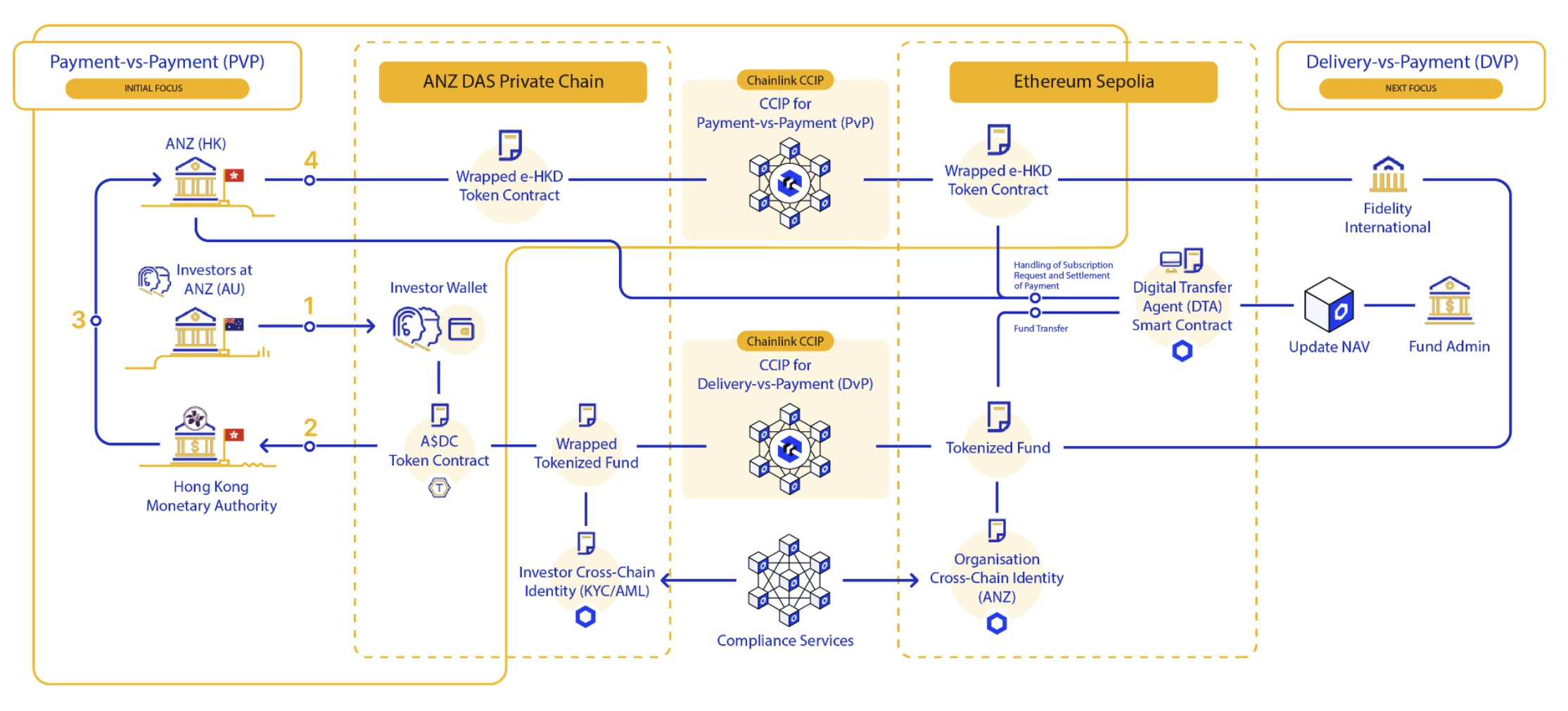
In the realm of Central Bank Digital Currencies (CBDCs), Chainlink’s CCIP facilitated a groundbreaking cross-chain exchange between an Australian stablecoin (A$DC) and a Hong Kong CBDC. This pilot program, involving institutions like ANZ, showcased the practical application of CCIP for secure and efficient cross-border CBDC transactions. Such initiatives are critical for national economies exploring the future of digital money, demonstrating how Chainlink can enable the secure and interoperable movement of sovereign digital currencies across different blockchain networks, a key component of future global financial settlement layers.
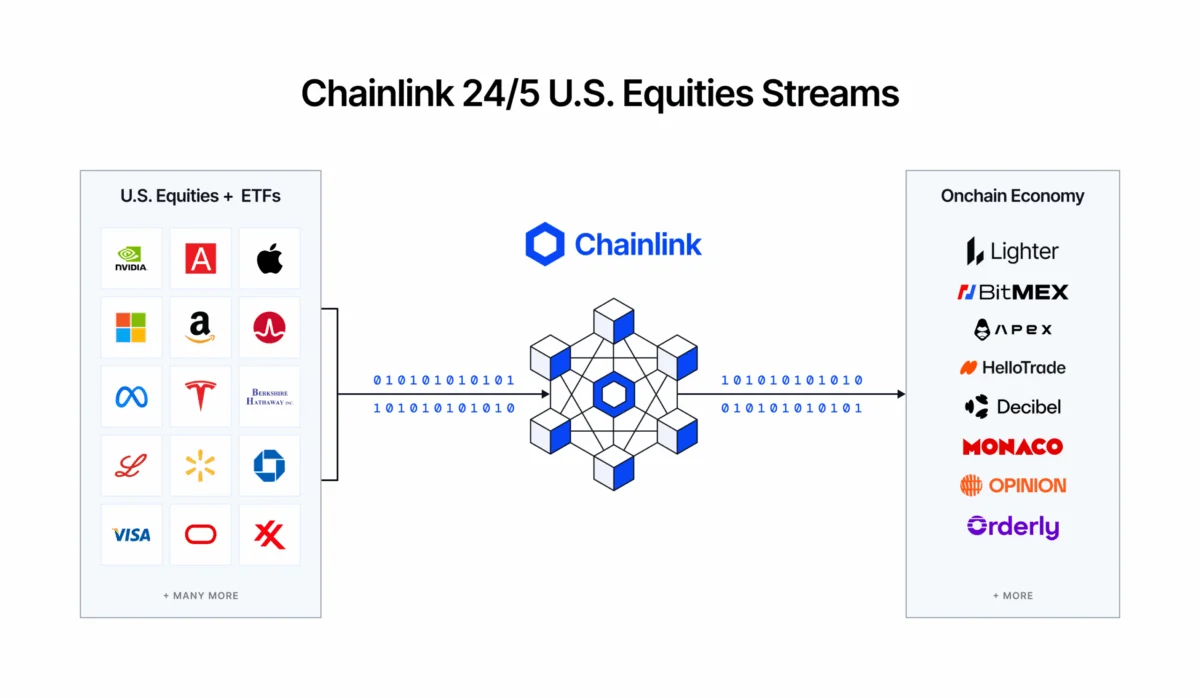
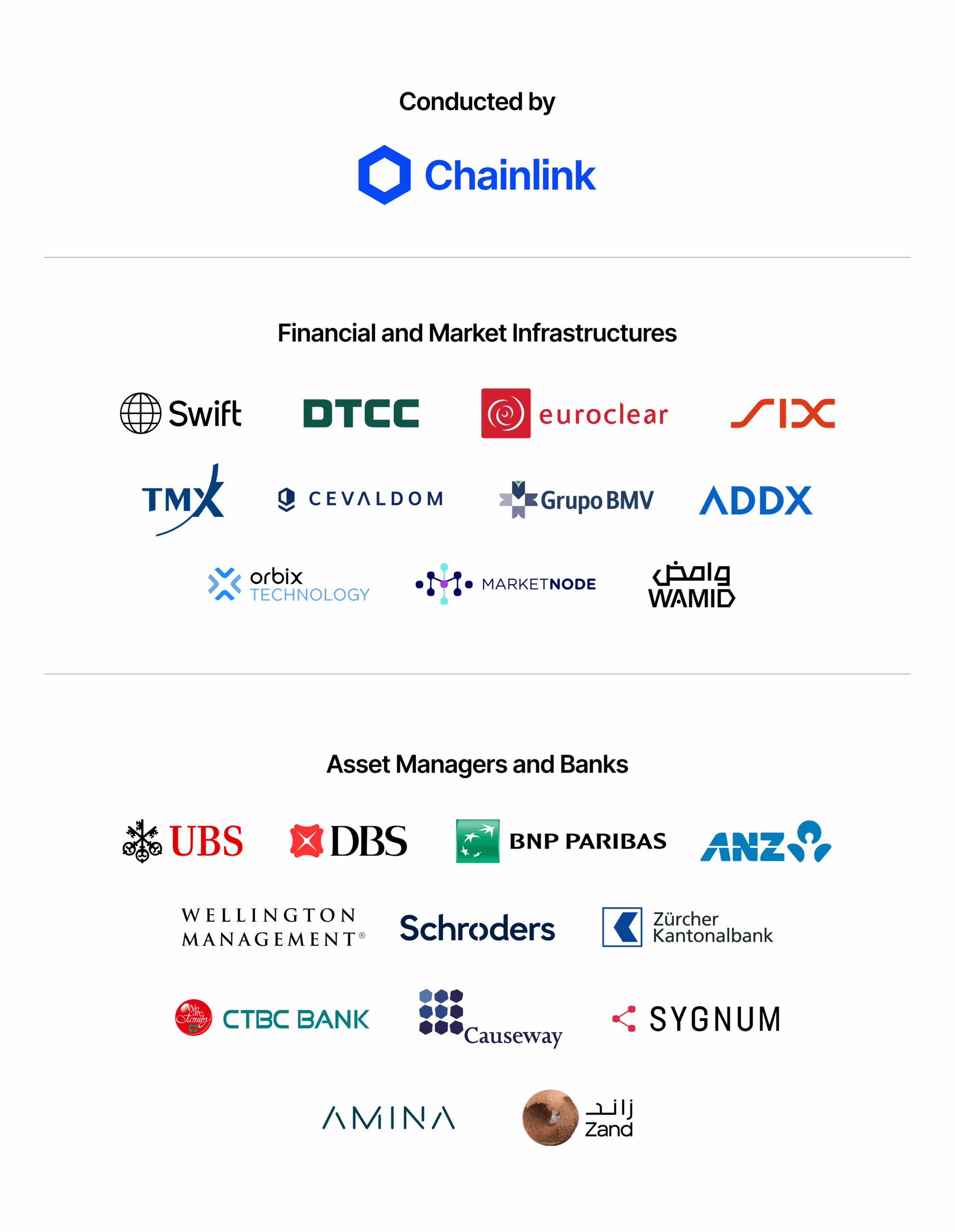
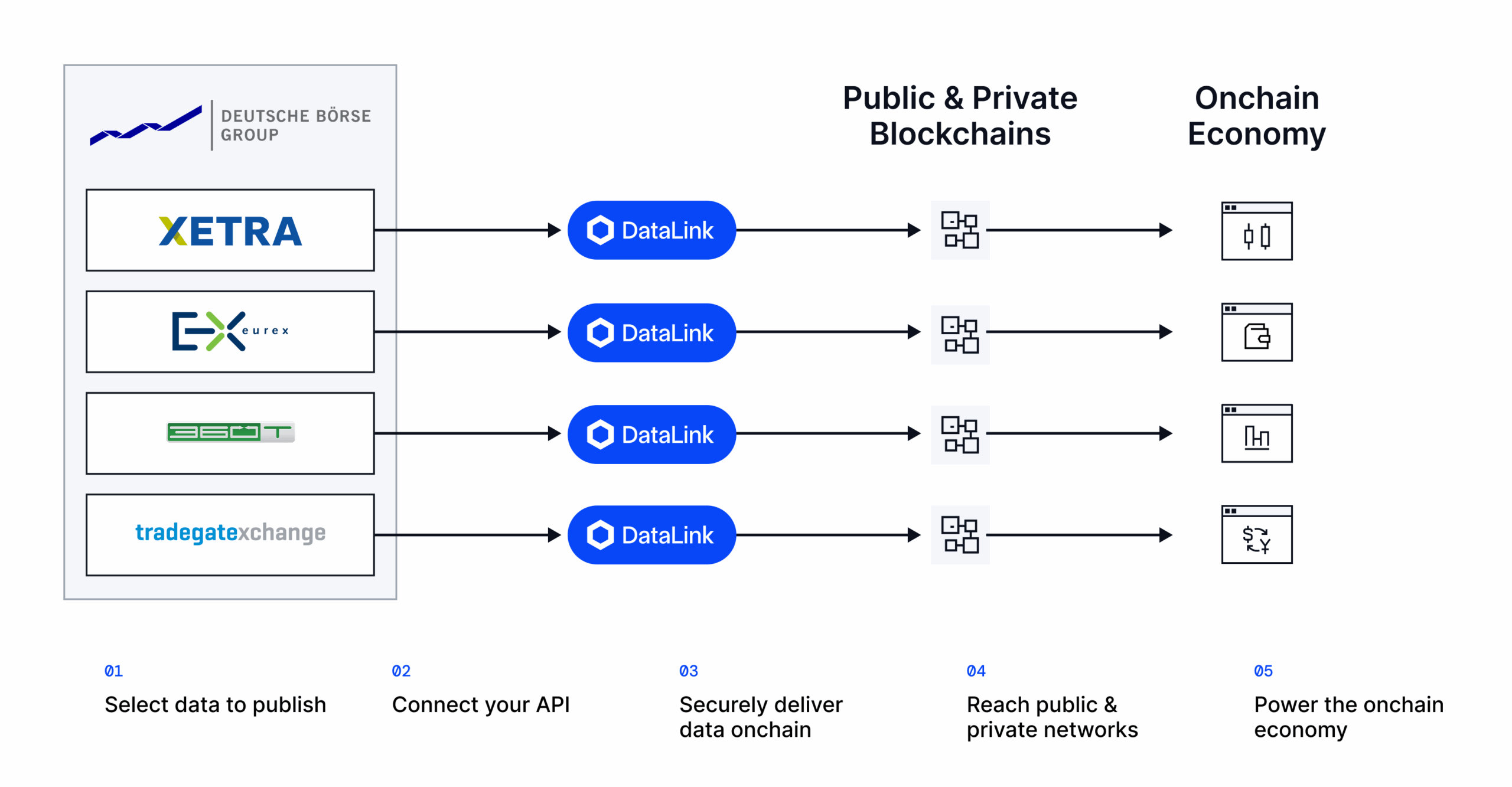
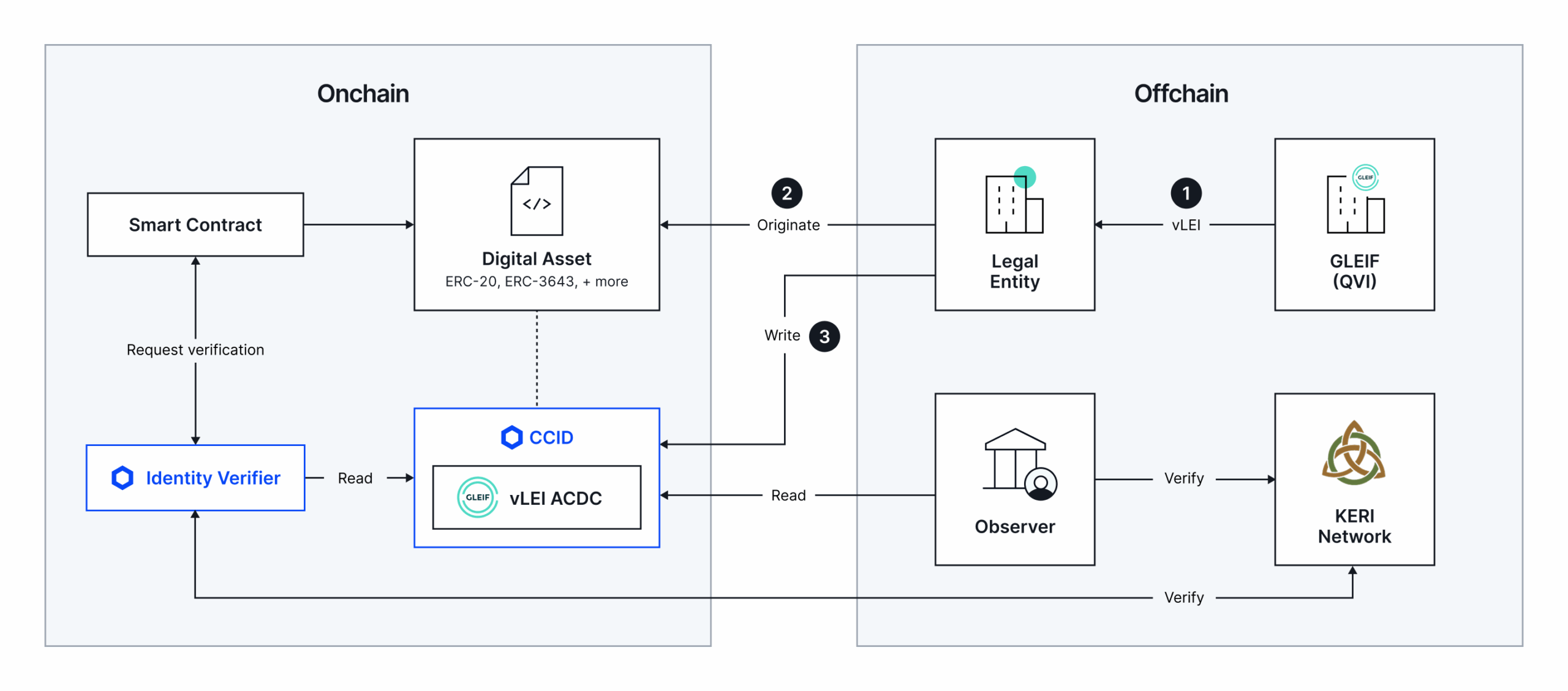
Further expanding its enterprise footprint, Chainlink partnered with Deutsche Börse for DataLink, a service designed to bring high-quality, tamper-proof market data directly onto blockchain networks. This collaboration addressed the critical need for institutional-grade data feeds for decentralized applications and tokenized markets, ensuring that on-chain financial products are built on the same reliable data that powers traditional markets. Additionally, Chainlink’s integration with GLEIF for vLEI (verifiable Legal Entity Identifier) provided a decentralized identity solution for institutions, enhancing transparency and compliance for on-chain entities. These diverse partnerships collectively underscore Chainlink’s role as the foundational "connective tissue" enabling a secure, data-rich, and interoperable global financial system.
Dominance in DeFi and Ecosystem Expansion
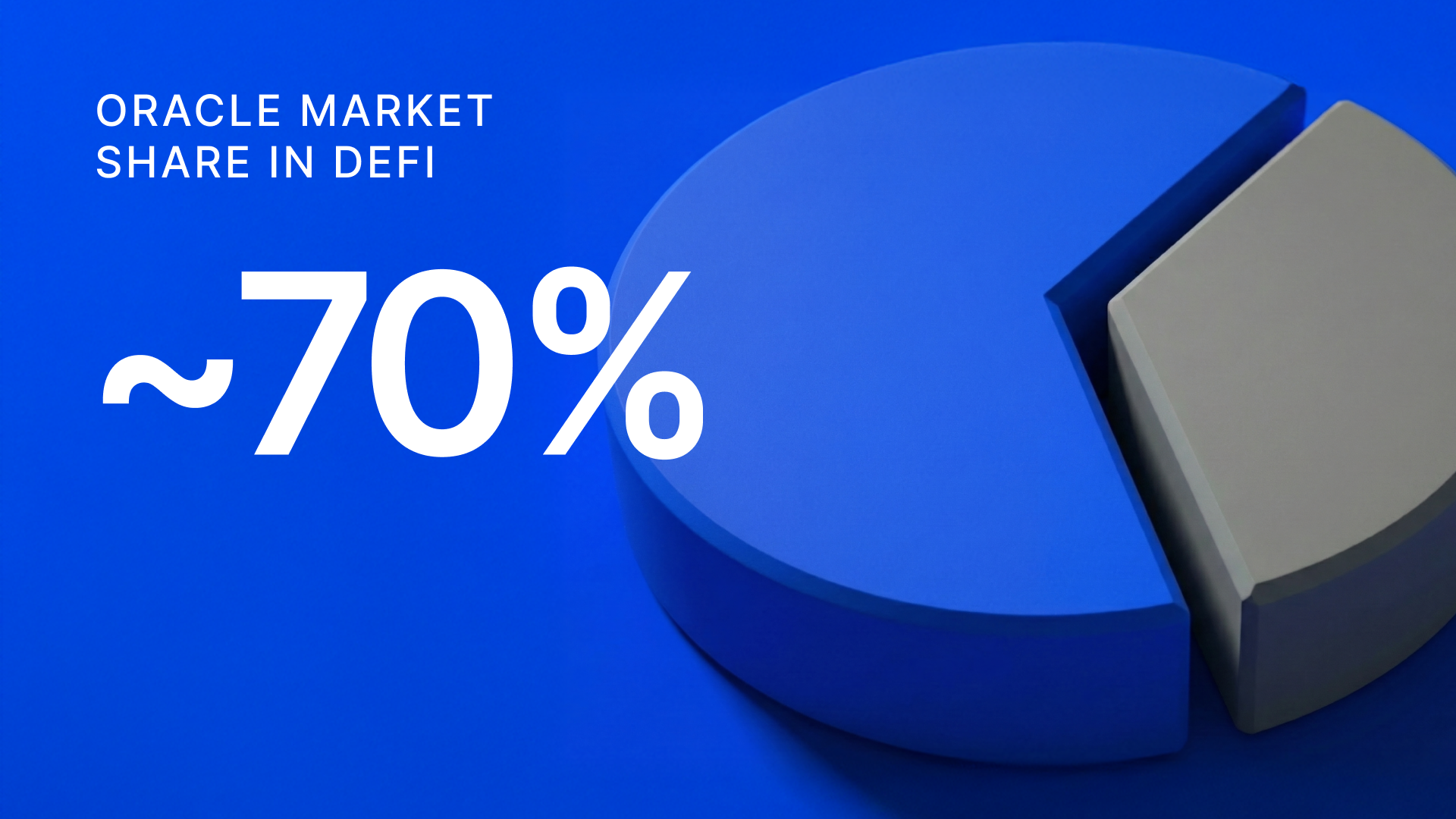
While deeply engaging with TradFi, Chainlink simultaneously maintained its dominant position within the decentralized finance (DeFi) ecosystem throughout 2025. The decentralized oracle network continued to be the most widely adopted and secure solution for bringing external data to smart contracts, enabling a vast array of DeFi applications. Chainlink’s market share in the oracle space remained unparalleled, underscoring its reputation for reliability, accuracy, and robust security – qualities that are non-negotiable for the billions of dollars secured by DeFi protocols.
The "Oracle Market Share Blog" image vividly illustrates Chainlink’s continued leadership, securing the vast majority of total value locked (TVL) in DeFi that relies on oracle services. This dominance is not merely about volume but about the breadth and depth of its integration, supporting everything from lending protocols and stablecoins to derivatives and insurance products. Beyond price feeds, Chainlink’s suite of services, including Verifiable Random Function (VRF), Automation, and Functions, saw increased adoption. VRF powered provably fair outcomes in NFTs and gaming, while Automation enabled smart contracts to trigger functions based on predefined conditions, increasing the sophistication and autonomy of decentralized applications. Chainlink Functions provided a serverless developer experience, allowing smart contracts to connect to any web2 API with minimal code, further expanding the design space for dApp developers.

The Chainlink ecosystem also experienced significant growth through initiatives like the Chainlink BUILD program. This program fostered innovation by providing resources and support to early-stage projects leveraging Chainlink services, thereby cultivating a vibrant and diverse community of developers and entrepreneurs. The "Chainlink Ecosystem Map" highlights the extensive network of projects building on Chainlink, demonstrating a healthy and expanding ecosystem committed to decentralized innovation. This continuous innovation and strong community support are vital for Chainlink’s long-term sustainability and its ability to adapt to evolving market needs. The network’s value flow diagram further illustrated the robust economic model underpinning Chainlink, showing how value accrues back to the network through increased utility and demand for its services.
Advancing Interoperability: The Cross-Chain Era
A cornerstone of Chainlink’s 2025 strategy was the significant advancement of its Cross-Chain Interoperability Protocol (CCIP), positioning it as the industry standard for secure cross-chain communication. As the blockchain landscape became increasingly fragmented with multiple Layer 1 and Layer 2 solutions, the need for a universal, secure, and reliable interoperability layer grew paramount. CCIP emerged as the answer, enabling secure token transfers and arbitrary message passing between disparate blockchain networks.
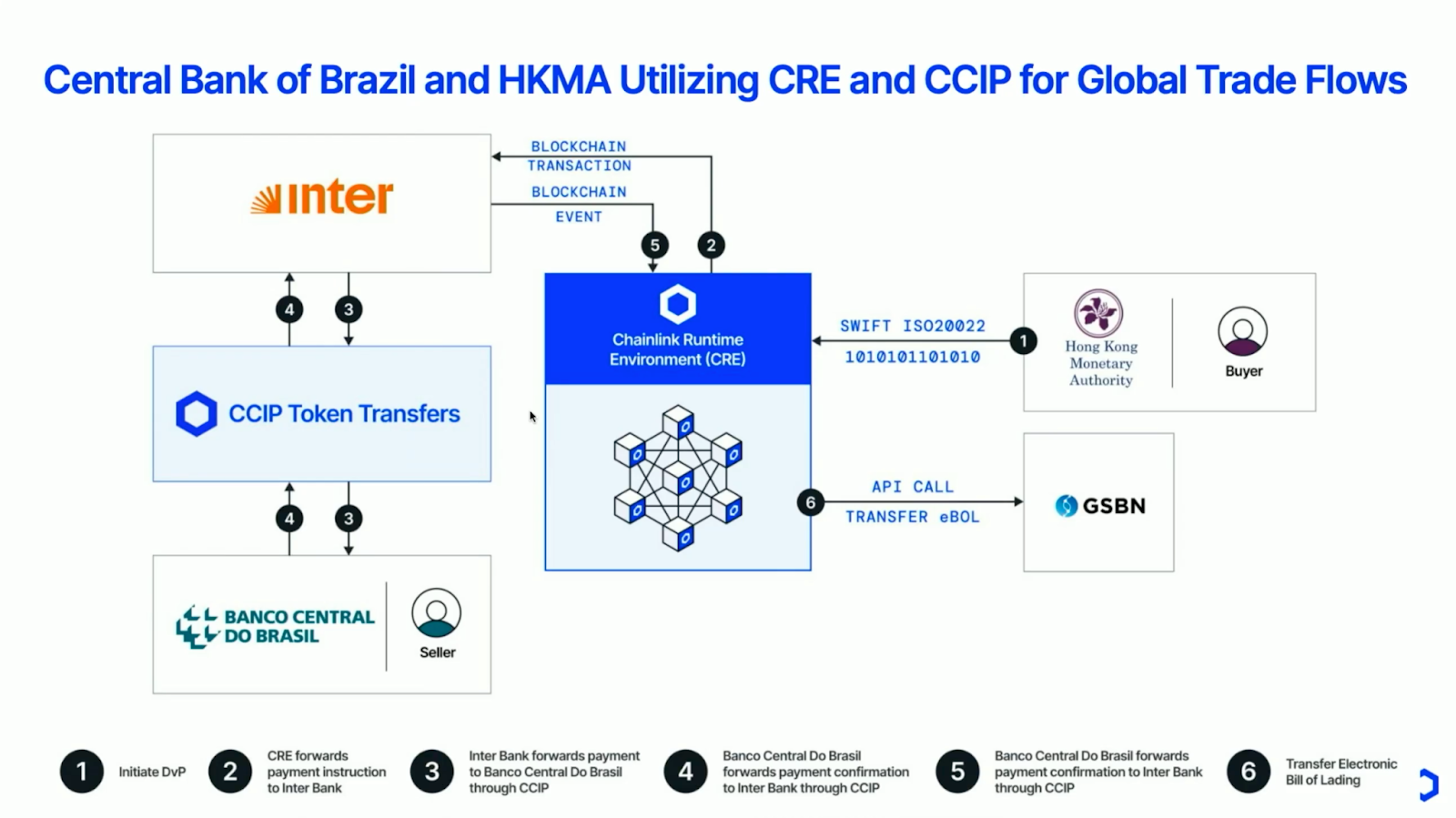
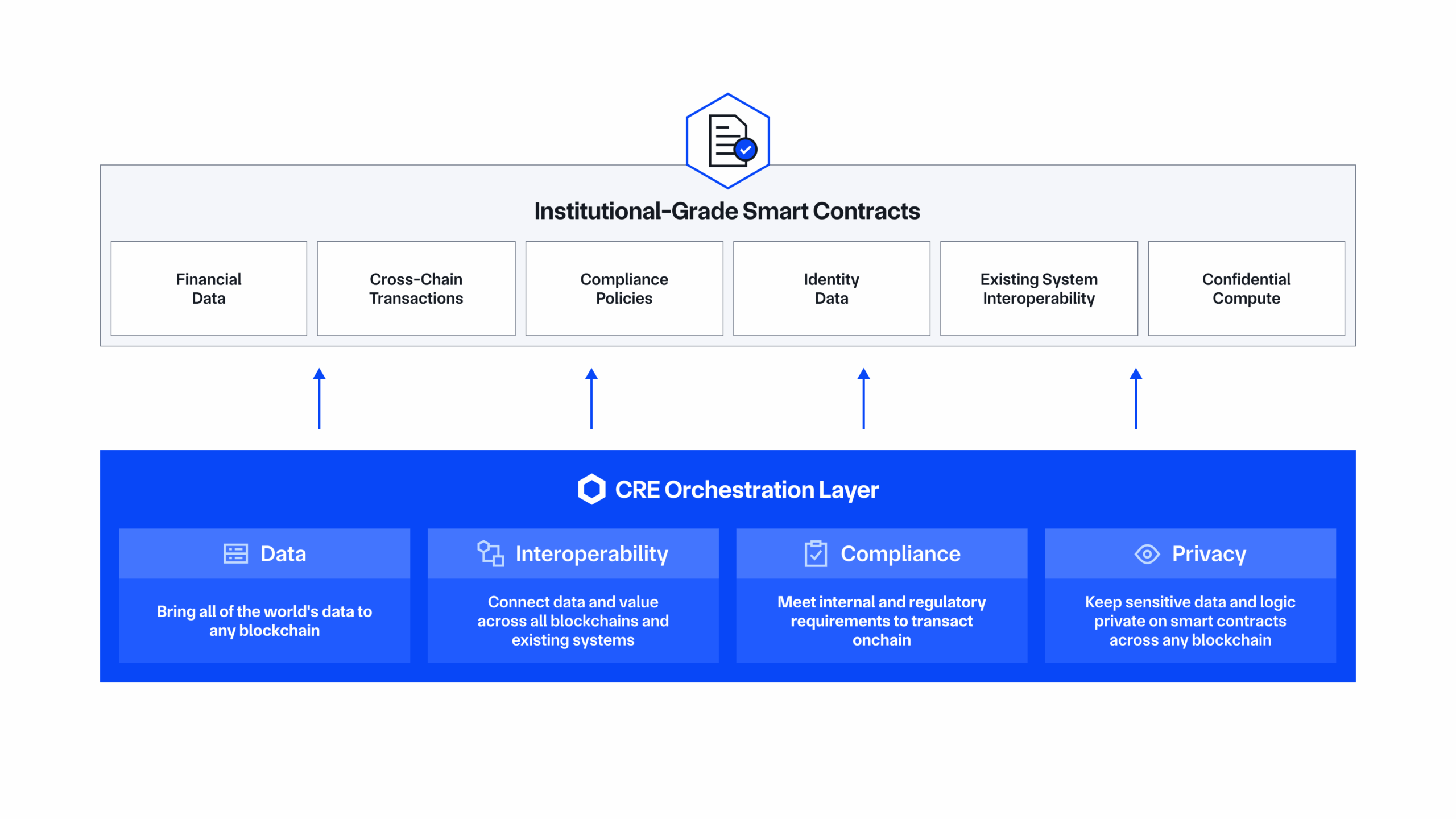
The deployment and maturation of CCIP saw it facilitate a growing volume of cross-chain transactions for both DeFi protocols and institutional clients. The "CRE Orchestration Layer" diagram depicted how CCIP acts as a sophisticated middleware, allowing for complex financial workflows that span multiple blockchains. This orchestration layer is crucial for institutions looking to manage tokenized assets and execute transactions across various public and private chains without compromising security or integrity. The ability to orchestrate multi-chain operations securely and reliably is a key enabler for the future of institutional DeFi and the broader tokenized economy.
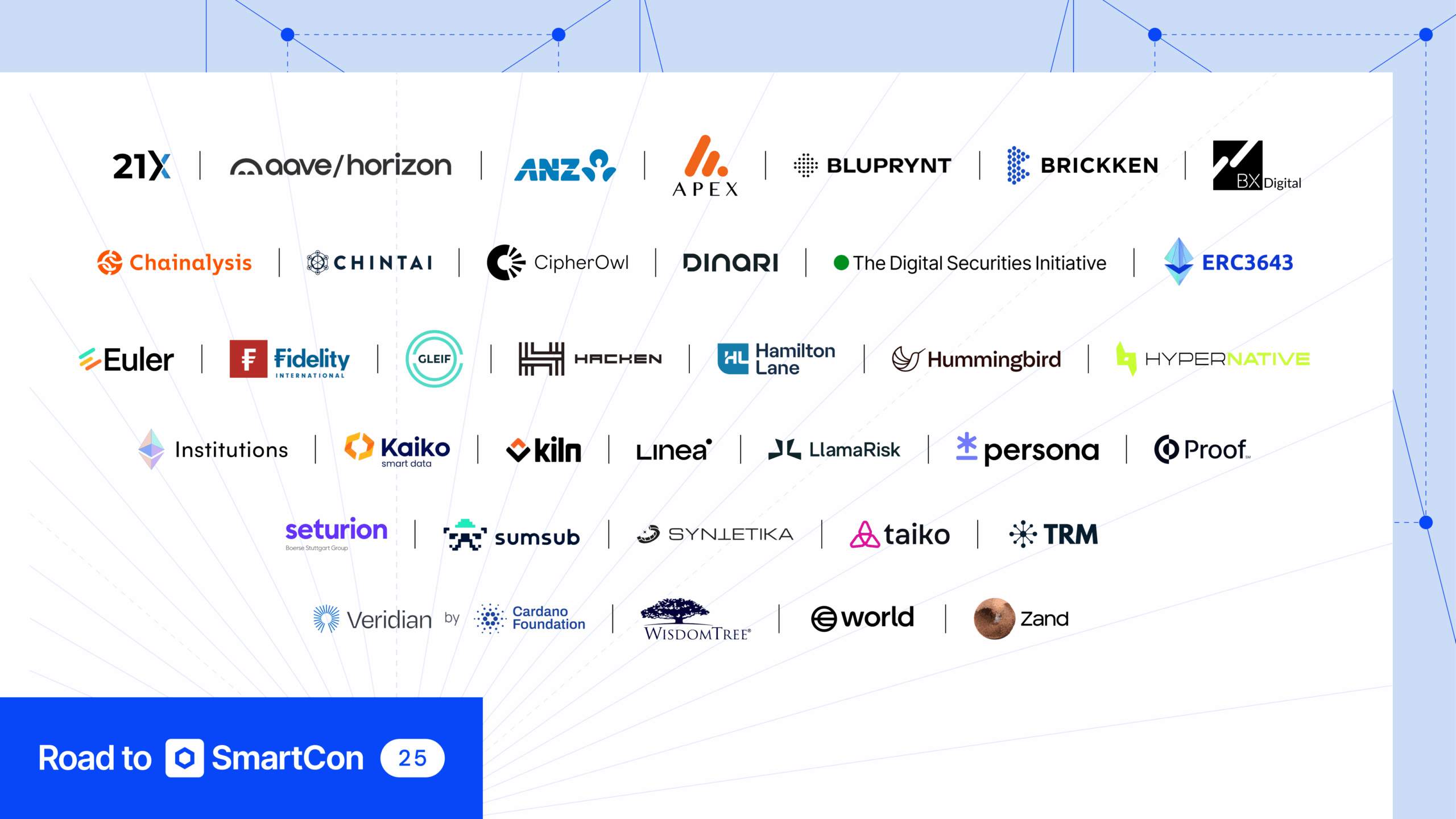
Strategic "ACE Partnerships" further expanded the reach and utility of CCIP and Chainlink DataLink. These alliances with leading blockchain networks, enterprises, and data providers cemented CCIP’s position as the de facto standard for secure cross-chain interactions. The "Road to SC25 Announcement Banner" highlighted these collaborations, underscoring the collective effort to build a truly interconnected blockchain economy. These partnerships are critical not only for technical integration but also for fostering a shared vision of a multi-chain future where assets and data can flow freely and securely.
The "DataLink Diagram" illustrated how Chainlink’s robust data feeds, combined with CCIP, enable cross-chain data delivery, a vital component for sophisticated decentralized applications that require real-time information from multiple sources. The seamless integration of high-quality, off-chain data with on-chain execution across different networks unlocked new possibilities for financial products and services. The implications of these interoperability advancements are profound. By solving the fragmentation problem, Chainlink CCIP is unlocking trillions of dollars in value currently siloed within individual blockchain ecosystems, paving the way for a more unified, efficient, and accessible global financial system. This comprehensive interoperability solution is not just about moving tokens; it’s about enabling complex business logic and data flows across the entire Web3 landscape.
Network Economics and Community Strength
Chainlink’s robust network economics and vibrant community were also key drivers of its success in 2025. The introduction and expansion of staking mechanisms provided a new layer of security and economic incentive for LINK token holders, further decentralizing the network and enhancing its cryptoeconomic security. Staking allows participants to commit their LINK tokens to support the security and reliability of Chainlink services, earning rewards in return. This mechanism strengthens the network by increasing the cost of attack and aligning the incentives of network participants with the overall health and performance of the oracle services.
The "Network Ecosystem Metrics 2025" image underscored the impressive growth in network participation and overall ecosystem health. These metrics showcased increasing adoption across various blockchain networks, a rising number of active data feeds, and a growing community of node operators. The continuous expansion of Chainlink’s network of independent, security-reviewed oracle nodes further enhanced the decentralization and reliability of its services. This strong foundation of network participants, combined with rigorous security audits and continuous protocol upgrades, ensured that Chainlink remained the most trusted oracle solution in the industry.
Community engagement and developer activity also reached new heights, with Chainlink hosting numerous hackathons, workshops, and developer conferences globally. These events fostered a collaborative environment, enabling developers to build innovative applications leveraging Chainlink’s expansive suite of services. The "Chainlink Ecosystem Map" also highlighted the vast array of projects and developers contributing to the network, showcasing a thriving, self-sustaining ecosystem. This collective effort from developers, researchers, and community members is instrumental in driving innovation and expanding the utility of Chainlink beyond its current applications, ensuring its continued relevance and leadership in the rapidly evolving Web3 space.
The Road Ahead: Chainlink’s 2026 Vision
Building on the transformative achievements of 2025, Chainlink is poised for an even more impactful 2026. The coming year will focus on consolidating the gains made in institutional adoption, cross-chain interoperability, and DeFi leadership, while simultaneously expanding into new frontiers. The vision for 2026, as articulated by Sergey Nazarov, centers on establishing Chainlink as the foundational decentralized meta-layer for the entire global financial system.
Key priorities for 2026 include further deepening integrations with traditional finance, particularly in the areas of real-world asset (RWA) tokenization and enterprise data solutions. Expect to see more financial institutions leverage Chainlink CCIP for seamless cross-border transactions and the secure movement of tokenized securities, funds, and derivatives across various public and permissioned blockchains. The success of pilot programs in 2025 will transition into scaled deployments, bringing a new wave of capital and innovation into the on-chain economy.
The expansion of Chainlink’s core services will also be a significant focus. This includes enhancing the capabilities of Chainlink VRF, Automation, and Functions to support increasingly complex and performant decentralized applications. The goal is to provide developers with an even more robust and flexible toolkit to build the next generation of Web3 applications, spanning gaming, insurance, supply chain, and more. Furthermore, the network’s economic model, including staking, will continue to evolve, aiming to further enhance the security and value accrual mechanisms for the LINK token, reinforcing its role as the economic backbone of the decentralized web.
In 2026, Chainlink will continue to champion the development of a fully interconnected, multi-chain world where assets, data, and computation can flow securely and reliably between any blockchain and any off-chain system. The relentless pursuit of secure interoperability and the provision of high-quality, tamper-proof data will remain at the heart of Chainlink’s mission. By empowering both decentralized innovators and traditional enterprises, Chainlink is not merely adapting to the new global financial system; it is actively powering its construction, ushering in an era of unprecedented financial transparency, efficiency, and accessibility. The journey ahead promises to be as dynamic as the innovations it enables, with Chainlink firmly at the helm of this financial revolution.
For a deeper dive into Chainlink’s comprehensive vision and technological capabilities, visit chain.link/everything.